New wines from old Spanish vines
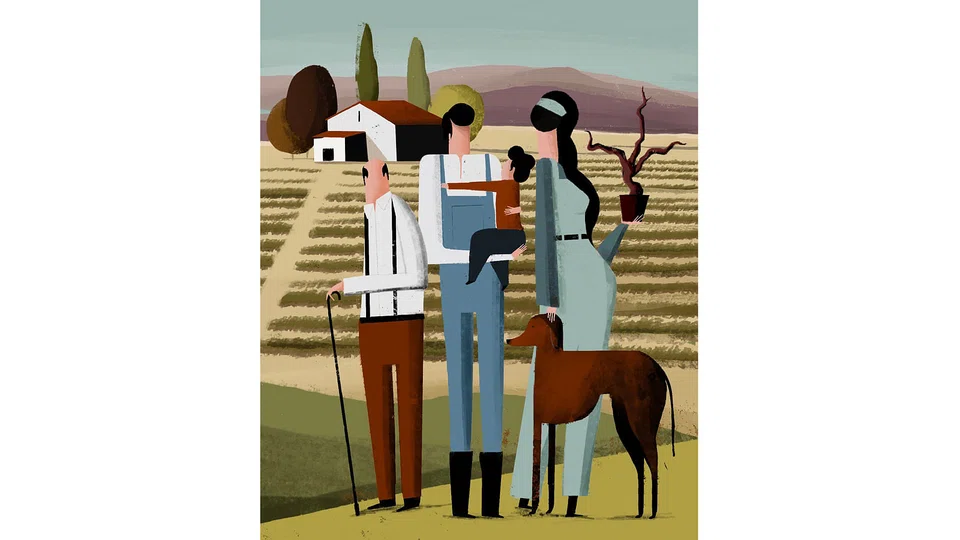
[NEW YORK] It may seem paradoxical that the new wave of producers who have been energising the Spanish wine industry over the past 20 years are mostly focused on resources that are very old. That's because all over the country - from the Mediterranean coast to the Atlantic, and even to the Canary Islands off the coast of Morocco - Spain possesses a great wealth of ancient vineyards, some well into their second century.
Today these vineyards are cherished by growers and producers with an understanding and appreciation of the importance of heritage and tradition.
The vineyards not only offer important insights into the viticultural thinking of older generations, but they permit a continuity of culture, which sometimes evolves in unexpected directions. And, in the opinion of many growers and producers, old vines offer grapes of unsurpassed quality, even if age has diminished their productivity.
The understanding of their importance has been fairly recent and not at all universal. Wine, like architecture, is regularly tugged between preservation and development, tradition and fashion, protecting history and clearing the way for new visions.
For the last month we've been examining red wines from 3 of these newer Spanish producers who've been rejuvenating the notion of what Spanish wines are all about. Their stories are particular to Spain, but similar tales are told all over the wine-producing world, wherever winemaking history stretches back to the 19th century or earlier.
Throughout Europe, in California and Chile, Australia and South Africa, old vineyards have been grubbed up and replaced, either with newer vineyards that were more productive or with grapes deemed more in demand. Sometimes they were simply paved over for housing, office buildings and factories.
It has taken visionary farmers and producers the world over to recognise both the potential of these vineyards to make great wines and the value of their cultural heritage.
Travelling through Spanish wine regions, you can see in places like Manchuela or Sierra de Gredos where merlot vines replaced older vines. But now the situation has been reversed. International grapes go wanting, while producers prospect for older heritage vineyards.
That's been the case for the producers of the 3 bottles I suggested for drinking over the last month. They were: Envínate Ycoden-Daute-Isora Benje Tinto 2020, Laura Lorenzo Daterra Viticultores Camino de la Frontera Viño Tinto 2019 and Goyo García Viadero Ribera del Duero Joven de Viñas Viejas 2019.
All 3 producers embody a similar ethos: respect for the land and culture, and a desire to express their characteristics in the wine. They all farm without chemicals or artificial treatments and make wines with minimal manipulation.
Envínate is a group of 4 friends from different parts of Spain who met in oenology school and who are now making wines from the Canary Islands, Ribeira Sacra and other regions. The Benje Tinto is a sort of introduction to their range, made from old-vine grapes grown at high elevation on Tenerife in the Canaries. The wine is mostly listan prieto, a grape brought to South America by the conquistadors. It's known as país in Chile and mission in the United States.
In both Chile and California, the grape has been pulled out, buried in blends or reserved for local consumption. But more recently, producers in both places have been making and selling fascinating wines with the grape.
As many readers noted, the Envínate Benje had a slightly funky aroma, which smelled to me like flowers and red fruits, with a touch of rotten egg. Sometimes, this quality can arise when a wine is made in airtight conditions, but this wine was fermented in concrete and aged in old barrels, both of which permit a small degree of oxygenation, so that would not have been the cause.
I asked the importer, José Pastor, about this, and he speculated that it might have been a result of the vines growing in volcanic soils with low pH and few nutrients. Regardless, I decanted the wine to give it some air and the funk was soon gone. The wine itself was light-bodied, almost delicate, with a lacy texture and earthy, mineral, floral flavours. It was lovely with pan-roasted steelhead trout.
Laura Lorenzo of Daterra works mostly in Galicia, the northwest corner of Spain, where she has either acquired or rents old heritage vineyards that are sometimes full of little-known indigenous grapes.
Her wine, Camino de la Frontera Tinto, comes from an ancient vineyard a little south of Galicia, in a nature refuge west of the city of Salamanca near the Portuguese border. It's made mostly of a grape called Juan García, with other local varieties and tempranillo, and it's gorgeous - exuberantly perfumed with aromas of dried flowers and red fruits. Like the Envínate, it's light-bodied but full of energy and life, and absolutely delicious.
By contrast, Goyo García Viadero works in a more established region, Ribera del Duero, and largely with tinto fino, as the well-known tempranillo grape is called in the region. But unlike many Ribera producers, who work in a modern fashion, García has tried to preserve older ways; he often uses heritage vineyards in which red and white varieties, like tinto fino and albillo, grow side by side. He ferments them together as well.
The Joven de Viñas Viejas - literally, young of old vines - is made strictly of old-vine tinto fino. "Joven" indicates it's largely unaged - fermented in steel vats and intended for early consumption, as it's the introductory bottle to his range.
It's richer and more textured than the other 2, as I'd expect from a wine coming from a warmer region, lightly tannic and sumptuous, with intense flavours of dark fruits and flowers. It's beautiful and versatile, a wine you can drink with a rich fish like steelhead trout or a steak.
As one of the great wine-producing countries of the world, Spain's reputation would be secure with its history of Rioja and sherry along with more recently emerging wines like Priorat and albariño. But these 3 fresh and vibrant bottles, and what they represent, offer another important perspective on Spanish wine. NYTIMES
Decoding Asia newsletter: your guide to navigating Asia in a new global order. Sign up here to get Decoding Asia newsletter. Delivered to your inbox. Free.
Share with us your feedback on BT's products and services