No need to burn midnight oil at this 'Harvard' for horror
New York
A FIGMENT of HP Lovecraft's wicked imagination, Miskatonic University is the Harvard of his horror stories. It appears to be a typical New England college, but elements of the occult are never far from the surface.
In contrast, at the Miskatonic Institute of Horror Studies, which takes its name from the fictional university, frights are the reason it's alive.
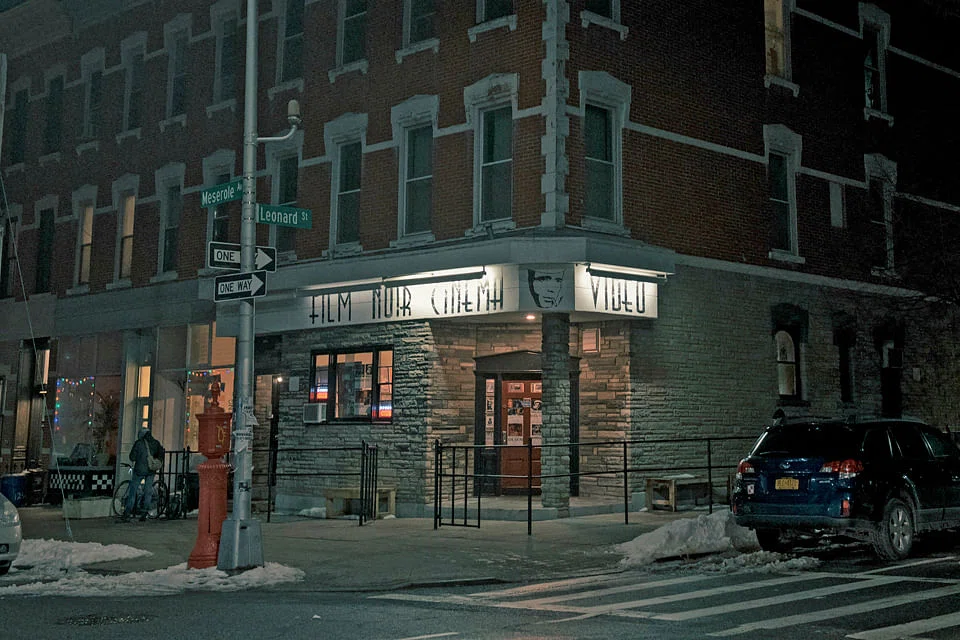
During a recent class in the darkened hall at Film Noir, a Greenpoint, Brooklyn microcinema that houses the real Miskatonic, the topic was Penda's Fen, an obscure 1974 film about a sensitive boy who has encounters with an angel and a crucified Jesus. A ghost light illuminated the instructor's face.
Formed eight years ago in Canada but now existing in branches in New York and London and one set to open this fall in Los Angeles, Miskatonic is the brainchild of Kier-La Janisse, a film writer and programmer. Ms Janisse started it after she grew tired of people dismissing horror "because they thought it was for complete morons," as she put it.
The institute has operated out of its current Brooklyn location since September, offering courses led by writers, scholars, directors and others with a passion for the genre. This spring, classes in New York are about 21/2 hours, and cost US$12 (in advance), US$15 (at the door), or US$50 for a semester pass. Teachers are paid. There are no homework assignments or tests, and students who attend every class both semesters are considered graduates.

"When I was a teenager, I hated school," Ms Janisse, who lives in Toronto, said. "But I read Lovecraft and became obsessed with this idea of how we romanticised academic life, with scholars that worked in libraries and solved mysteries. It made me want to go back to school." Ms Janisse, the author of House of Psychotic Women, about female neuroses in horror films, runs the Brooklyn Miskatonic branch with writer Joe Yanick. In addition to exploring film, classes this semester will also cover the novelists John Gilmore and Shirley Jackson, and the preservation of genre cinema.
The Miskatonic course calendar would look at home in any film studies curriculum; its next class, on Feb 13, is called Black Horror: The Revolutionary Act of Subverting the White Gaze. Its scholarly approach follows decades of horror studies that have produced influential texts such as Carol J Clover's Men, Women, and Chain Saws: Gender in the Modern Horror Film. The field has its own journal, and there are stand-alone courses and webinars on the subject. But the institute is unique in its all-horror focus.
Sukhdev Sandhu, who taught the class on Penda's Fen, said the school was an example of "underground scholarship". "People are creating spaces in their living rooms affordably and cheaply in order to create a different model of education, and Miskatonic is part of that," said Mr Sandhu, an associate professor of English at New York University, where he runs the Colloquium for Unpopular Culture.
But Miskatonic is also tapping into the golden age of horror in the wider culture, propelled in part by the Oscar-nominated films Get Out and The Shape of Water. Adam Lowenstein, a professor of English and film and media studies at the University of Pittsburgh, cited Miskatonic as one of many passionate players in "a watershed moment for the study of the horror film". This fresh academic embrace dovetails enthusiastically with the new vogue for horror, which hasn't resonated with such urgency since 1968, the year of Night of the Living Dead and Rosemary's Baby, Mr Lowenstein said.
"To understand the change, it would be like if Night of the Living Dead got an Academy Award nomination like Get Out did," said Mr Lowenstein, the author of Shocking Representation: Historical Trauma, National Cinema and the Modern Horror Film.
What's different now is a new generation of horror filmmakers who are hitting the raw nerves exposed by current social movements. A feminist critique of horror has long been a staple of horror studies, thanks to the genre's fixation with male villains and female victims. But with Jordan Peele's Get Out, a Twilight Zone-style indictment of liberal racism, it's race that's most prominently capturing scholarly attention.
The writer Dianca London Potts, who is teaching Miskatonic's Black Horror class, said Peele's film was a sobering conversation-starter. "The movie creeped me out in a way I haven't experienced since the original The Hills Have Eyes," she said, mentioning Wes Craven's 1977 exploitation shocker about a family terrorised by psychopaths.
Ms Janisse said this new reckoning is good news for Miskatonic and its quest for a "balanced education" of history, theory, production and, perhaps most important, community building. "A lot of us come from a place where horror was maligned," she said. "But in the classroom, people are enthusiastic about horror."NYTIMES
Share with us your feedback on BT's products and services