Nostalgic charm meets modern update in refurbished East Coast townhouse
Don’t be fooled by the 70s-era exterior of this terrace house – its interior has been overhauled to yield a remarkably elegant, modern look
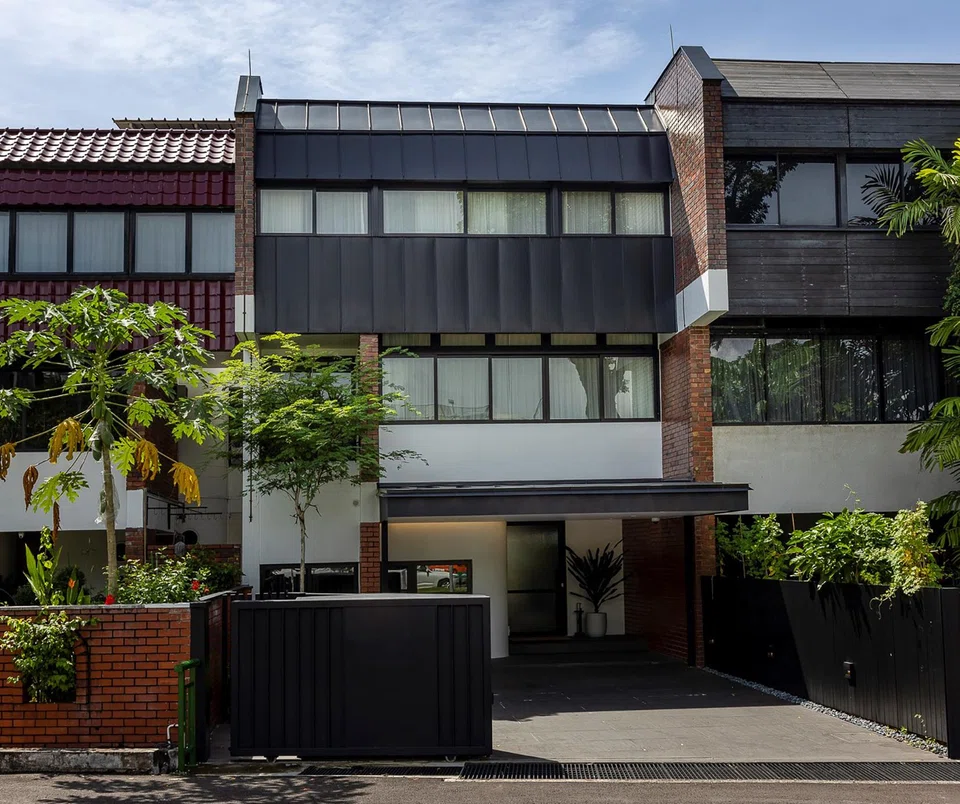
A CLUSTER of four townhouses with distinct red brick facades stands on a charming stretch of East Coast Road. The original three-storey property is wider than most typical intermediate terraces as the entire row of houses was purpose-built and designed by the original architect for himself and his extended family.
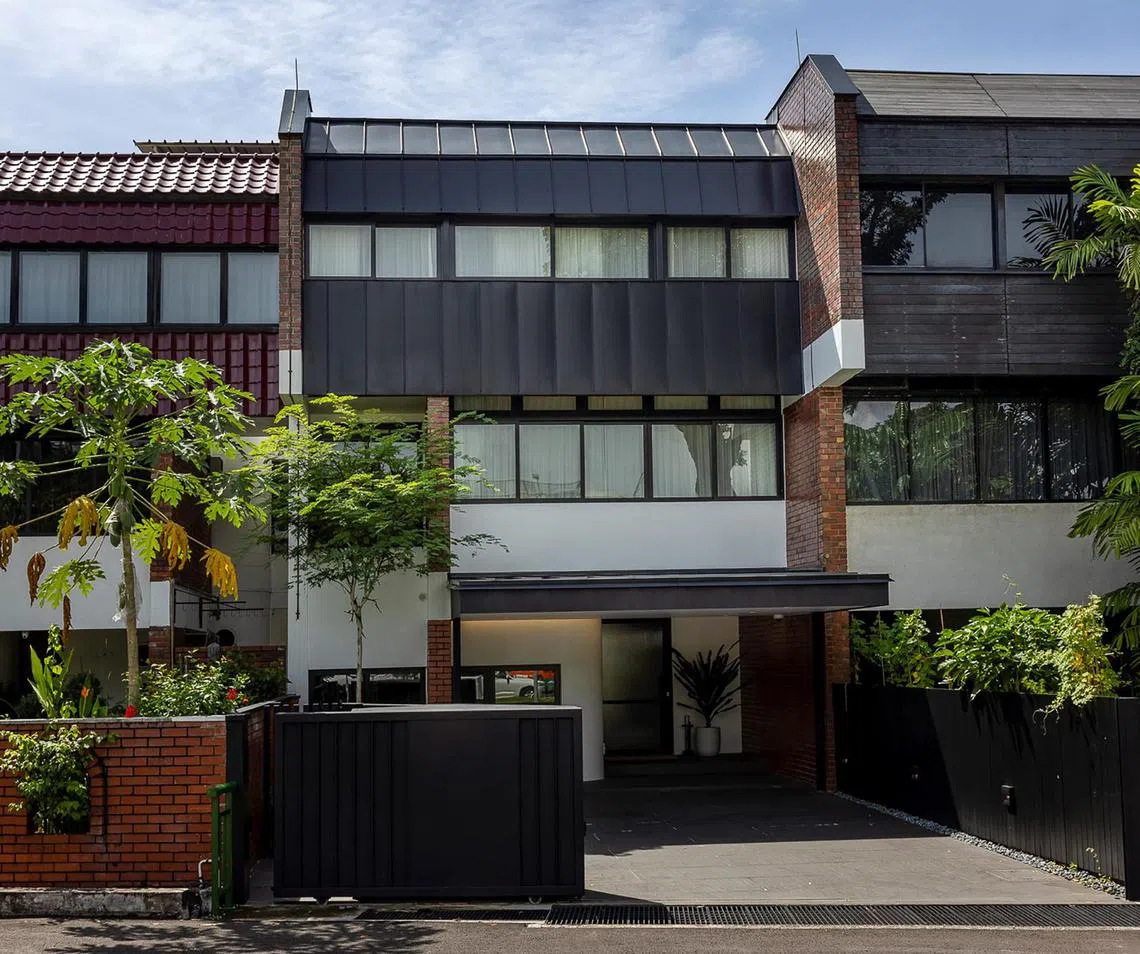
Current owners Daphne Lim and her husband wanted to retain the existing 1970s-style red brick exterior and curved geometric interiors but revamp the residence to suit their modern lifestyle. The couple, who have a young child, also wanted to preserve the neighbourliness of the street, so they chose to keep the low boundary brick walls between the units.
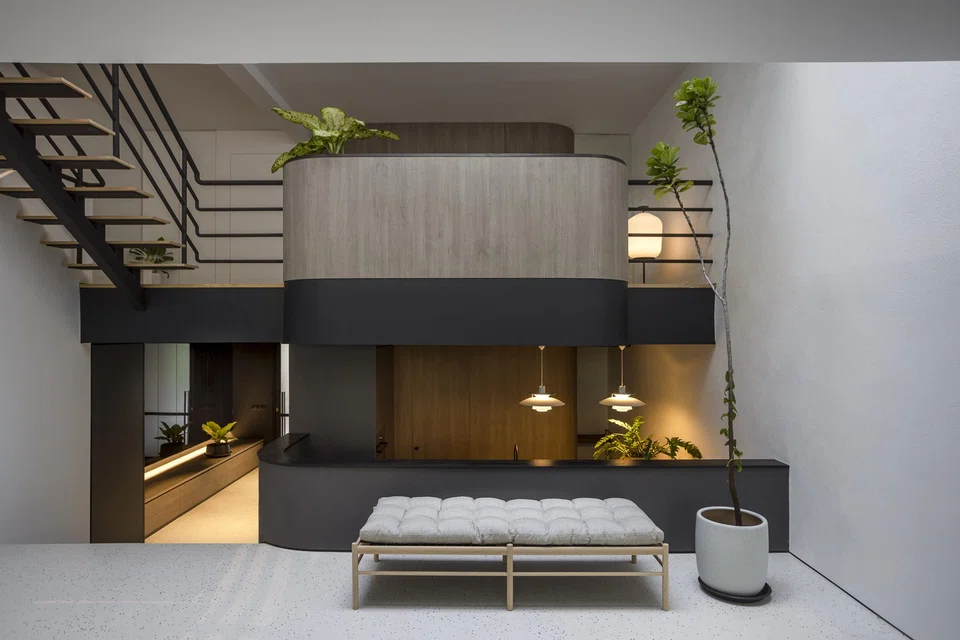
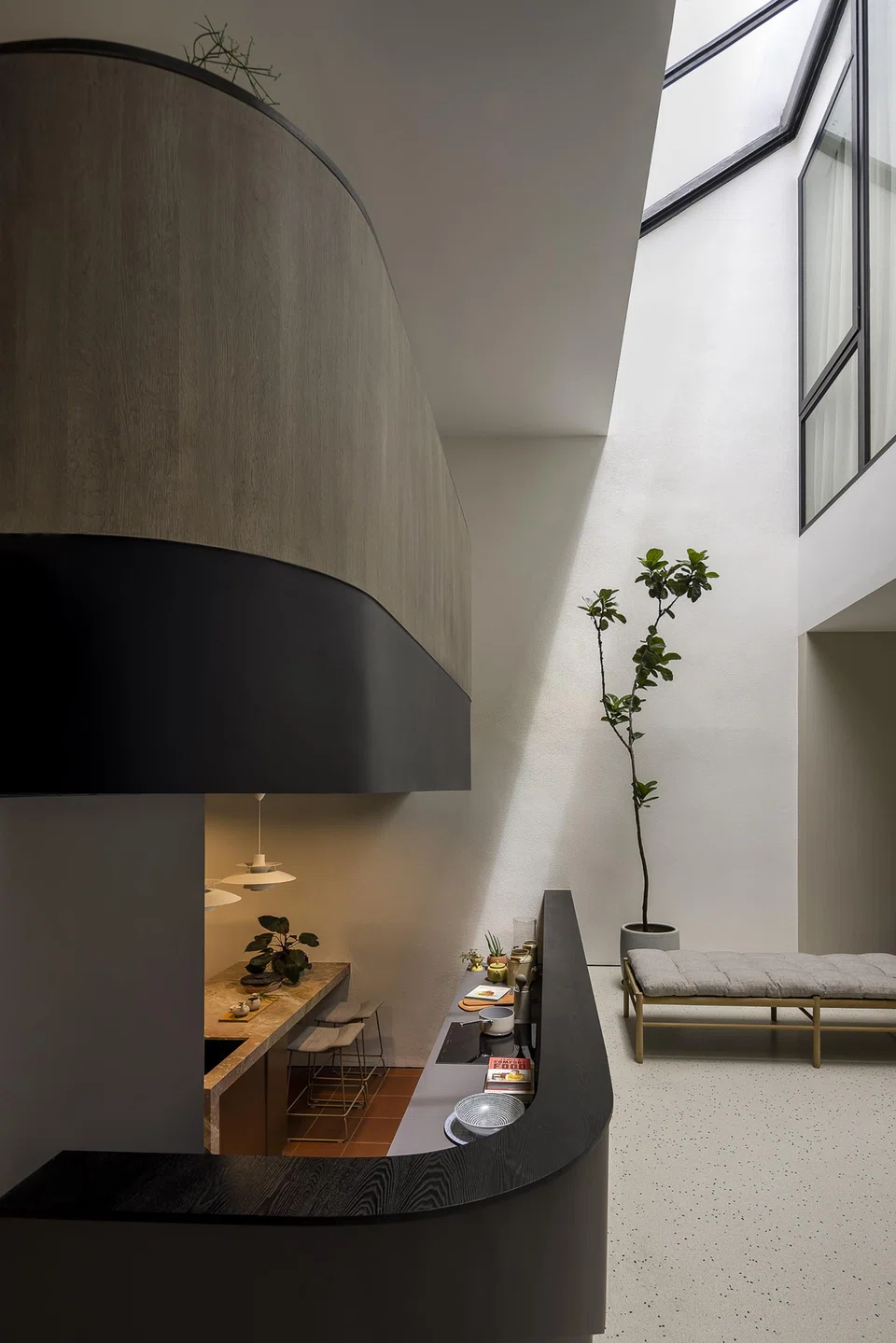
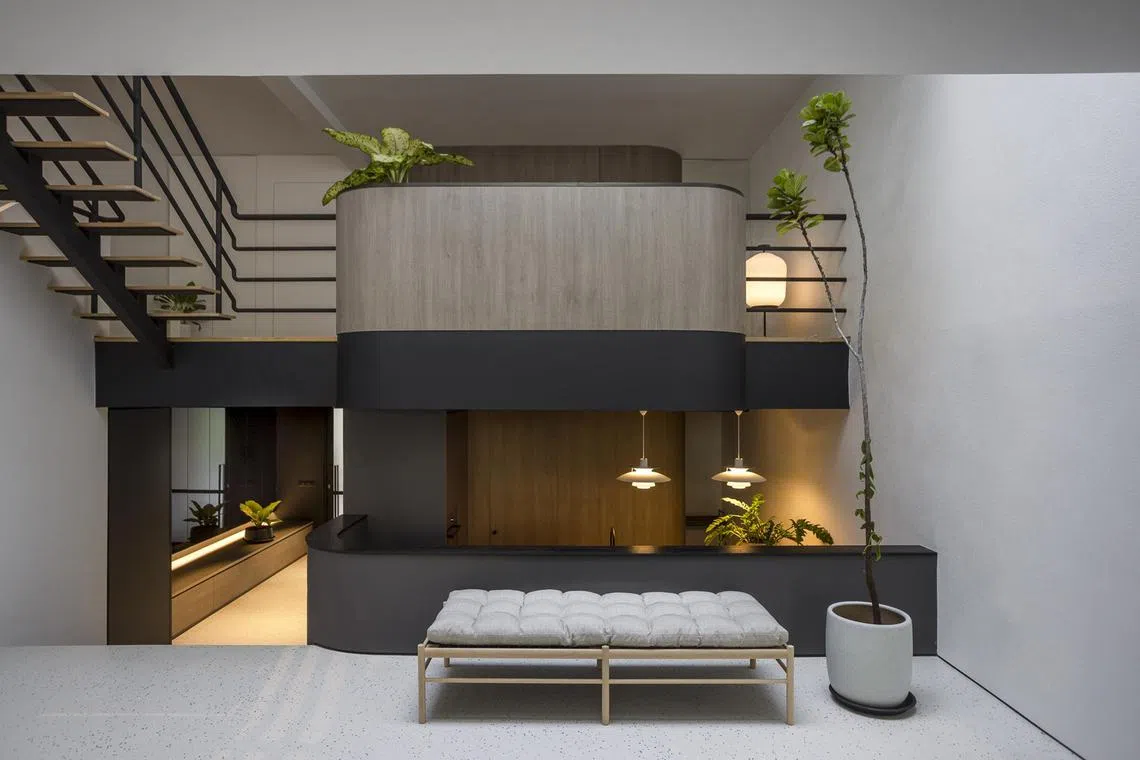
Gwen Tan, principal designer of Studio iF, was engaged to reconfigure the interior layouts while retaining the curved walls, glass skylight atrium and light timber staircase. The house also boasts split levels that allow different pockets of space within the atrium.
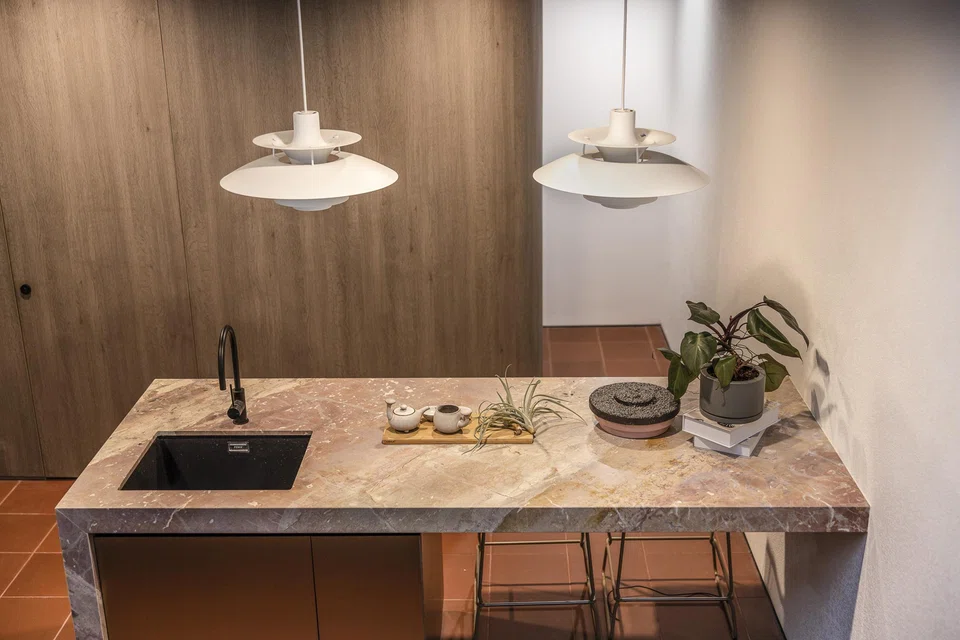
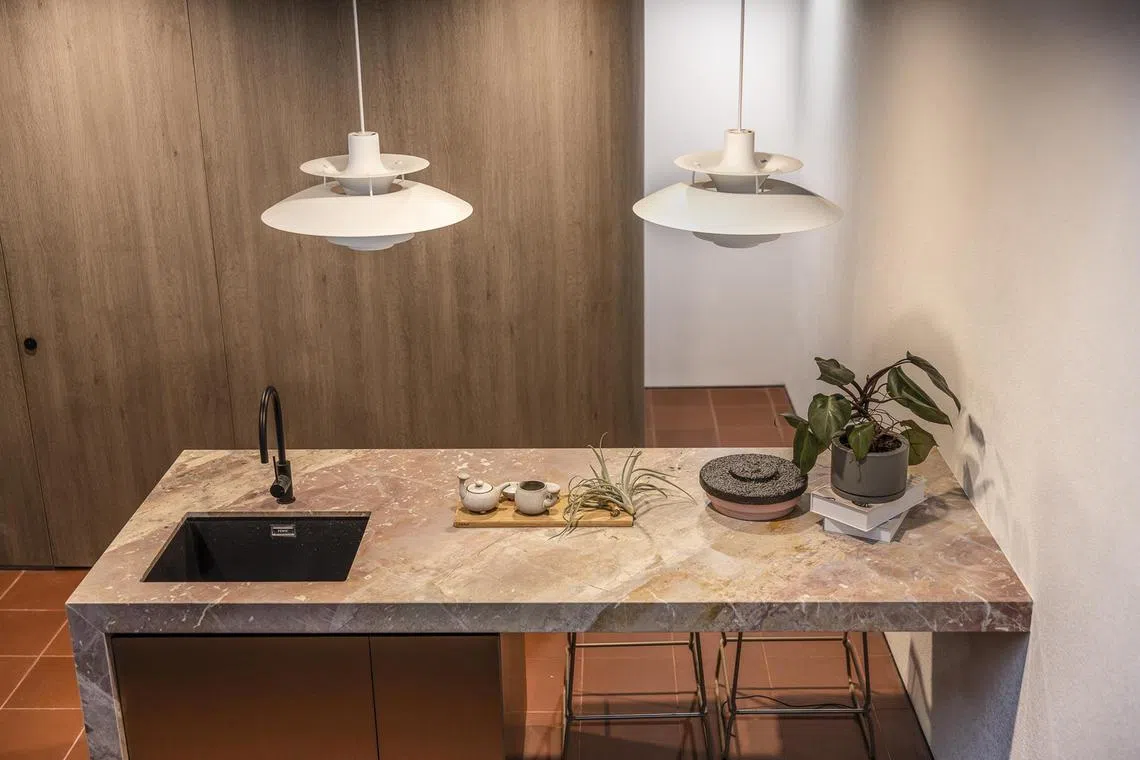
To replicate the distinct red brick colour throughout the home, Tan used contemporary materials such as terracotta clay tiles for the shower room and a terracotta-coloured marble for the counter in the sunken dry kitchen.
Let there be light
This project was named The Light House, for the way that the skylight reflects daylight within the house.
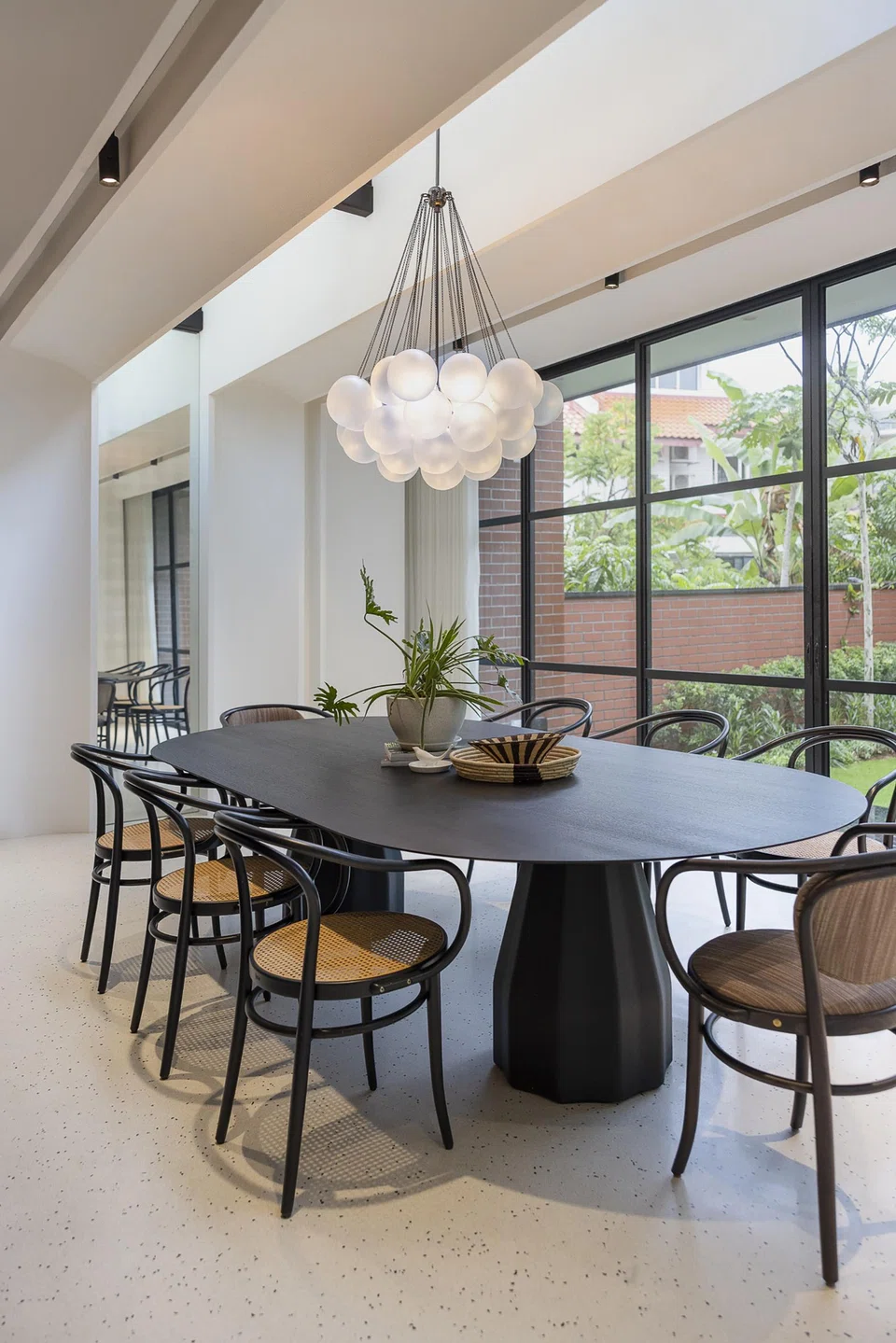
“I recall first viewing the property and being drawn to the little garden at the back of the house,” says Lim, the second-generation owner of laminate company EDL. “We added an extension behind, where the dining room now sits. This is one of our favourite spaces – from the new skylight to the curved ceilings and the garden in the backdrop. The space is always naturally lit and feels very open – almost like a sanctuary. Besides dining, we also enjoy working there.”
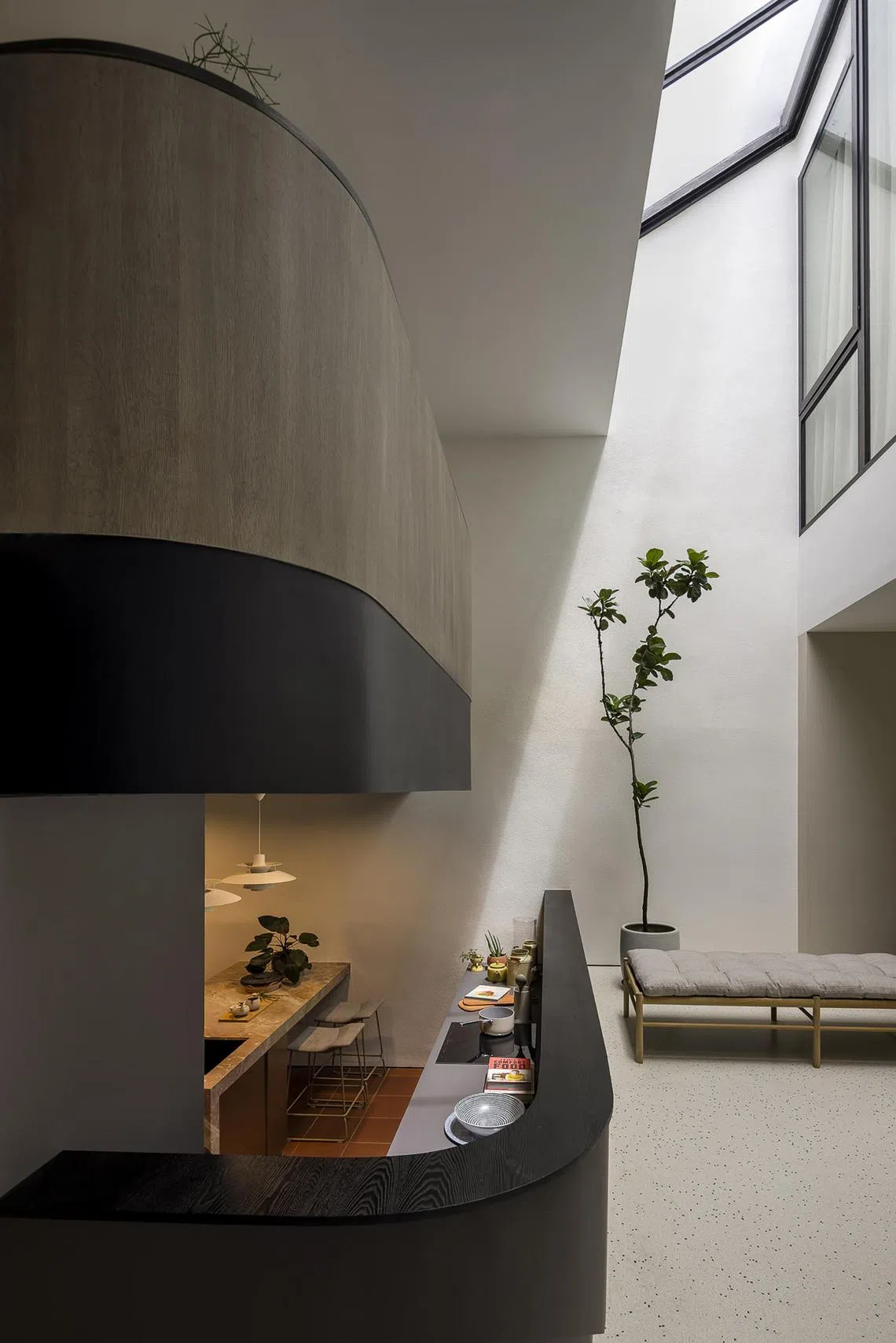
The sunken kitchen and mezzanine feel cosy and private while still being connected to the rest of the house. As the setting is open yet private at the same time, the couple can host both larger parties and intimate sessions.
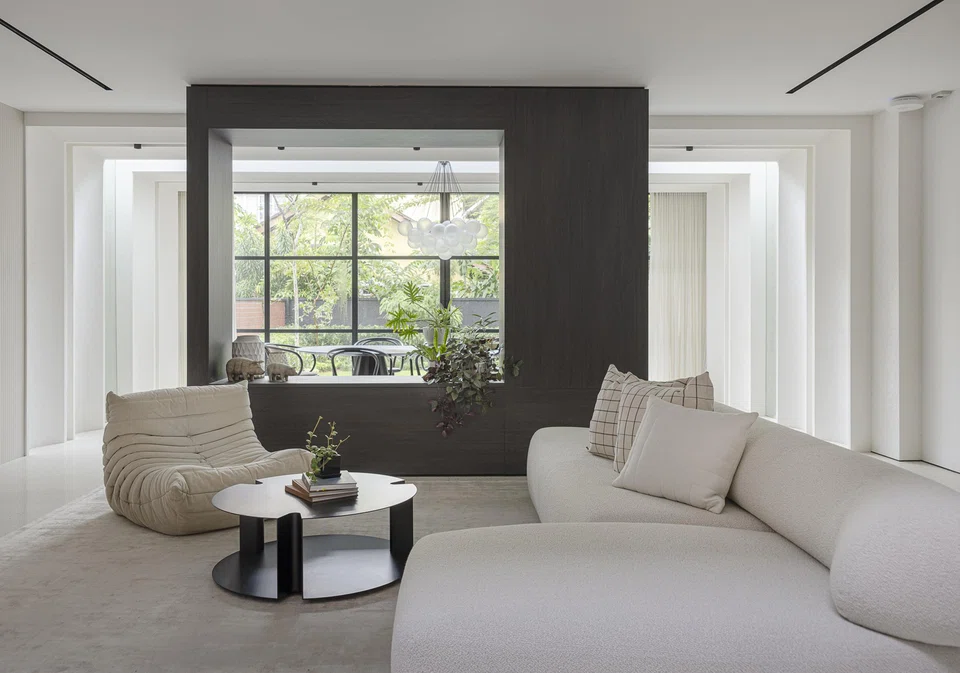
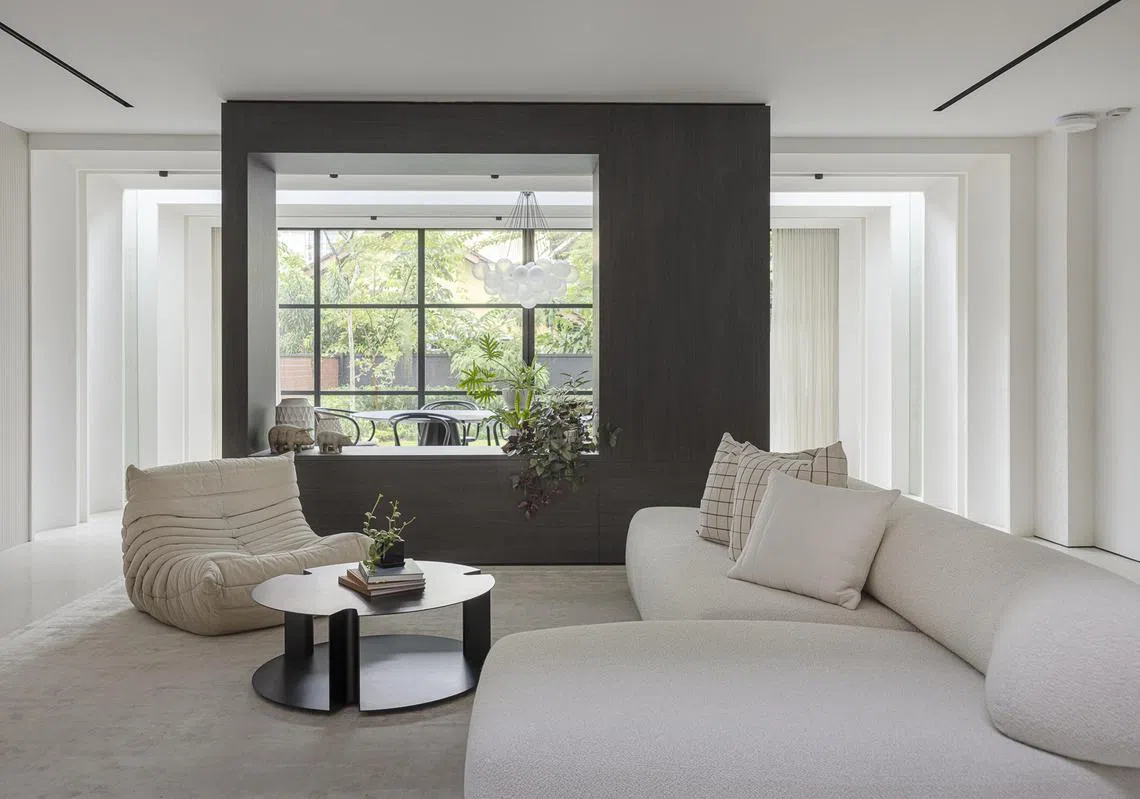
Furthermore, views of the garden can be enjoyed from both the dining and living areas. The design studio customised a divider – between the living and dining rooms – which serves different purposes. Tan explains that the divider conceals a waste pipe that runs down from the floor above and houses two air-conditioning units. “In addition to having hidden functions and storage to support dining and living needs (concealed bar, cutlery and crockery storage), we also wanted the divider to be a point of reference for one space looking into the other. So from the living space, the dining room and garden are perfectly framed through the divider’s opening, and vice versa.”
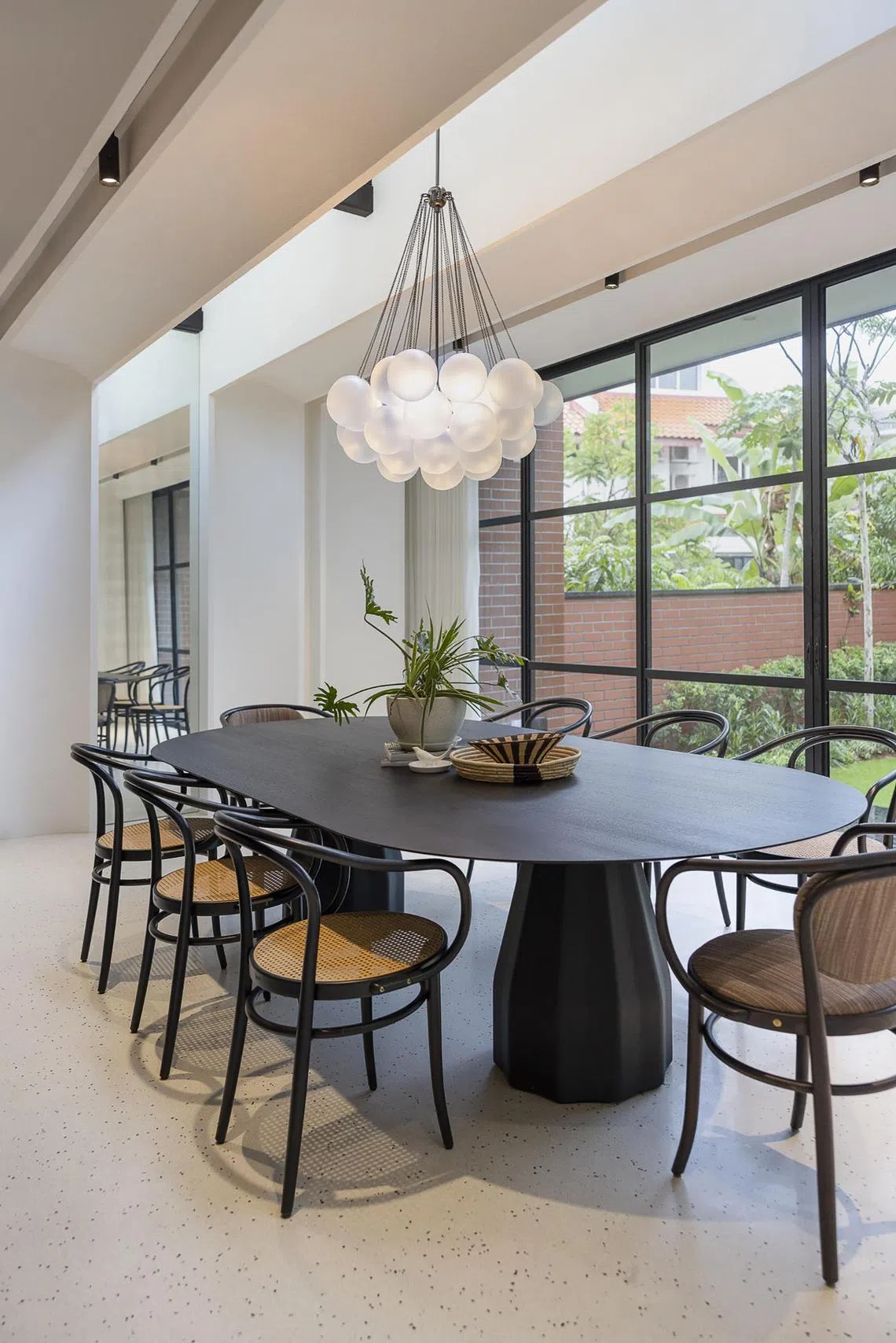
Meanwhile, the dining room is adorned with a handcrafted Cloud lamp (made of aged brass and frosted glass) by Apparatus. This is one of the couple’s favourite pieces. “This suspended sculpture is meant to be appreciated from the living room through the framed divider as well as within the dining space,” says Tan.
As intermediate terrace houses usually lack sunlight, Studio iF tried to maximise light from various sources. They also designed a full glass facade (with sliding doors), which is reminiscent of a glass house overlooking the rear garden.
Reconfiguring the interiors
The original house’s laundry yard and kitchen were interestingly positioned at the front. Tan relocated the laundry right next to the roof terrace on the third storey as it was the best place to dry clothing without marring the facade. “The original laundry yard facing the front of the house was not very appropriate as it would mean closing off the house from a nice front garden. Also, it would be rather unsightly to hang laundry in an area that faces the main road,” says Tan.
“As the husband handles some household chores like laundry and ironing, it makes sense that the laundry room is located on the same floor as his study and games/gym room. These rooms are flexible enough to be converted into bedrooms in the future or whenever required by the young family.”
Tan also relocated the powder room into the property’s curved structural core and extended the house on the ground floor towards the front garden to cater for a new wet kitchen and a cosy helper’s room. A lightweight and minimalist car porch canopy was added to provide the necessary shelter.
“While the original architecture places the bigger bedrooms at the front, we found the rear to be a lot more tranquil and attractive.”
Tan reconfigured the entire upper part of the house to fit the master room at the back, overlooking the single storey extension of the dining room.
Interesting yet practical
For the flooring, Studio iF chose to use epoxy terrazzo with a black aggregate – a unique concoction that makes the floor look almost black and white. Terrazzo, which was fashionable in the 1970s and 80s, is paired with epoxy base, a new and long-lasting material that creates a seamless floor without the need for joints.
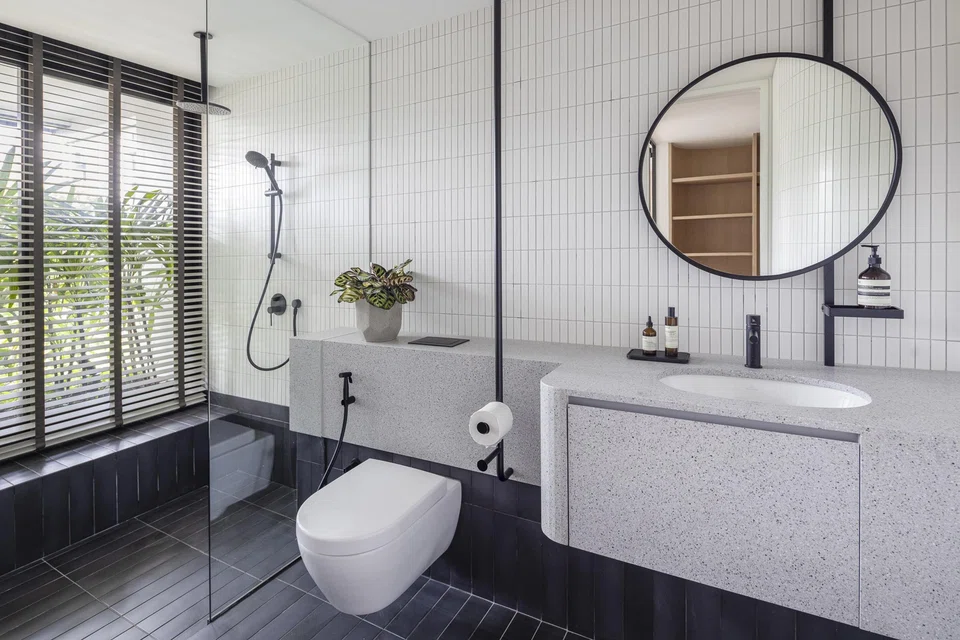
Tan says: “Because we loved the existing black metal pipework staircase railing design so much, we were inspired to create matching design details and bespoke accessories in the bathrooms. To further accentuate the black and white theme in the master bathroom, we picked out a classic Arabescato marble.”
This Italian marble is characterised by its beautiful white background and dramatic grey veining.
When it came to the furnishings, Lim and her husband were mindful of repurposing furniture from their previous home. She adds: “The house is still a work-in-progress and as we live in it, we hope to fill it up with meaningful pieces.”
Decoding Asia newsletter: your guide to navigating Asia in a new global order. Sign up here to get Decoding Asia newsletter. Delivered to your inbox. Free.
Share with us your feedback on BT's products and services