

Not so solitary
Running is hardly a solo sport where all that matters is a ticking stopwatch

Kelly Ng
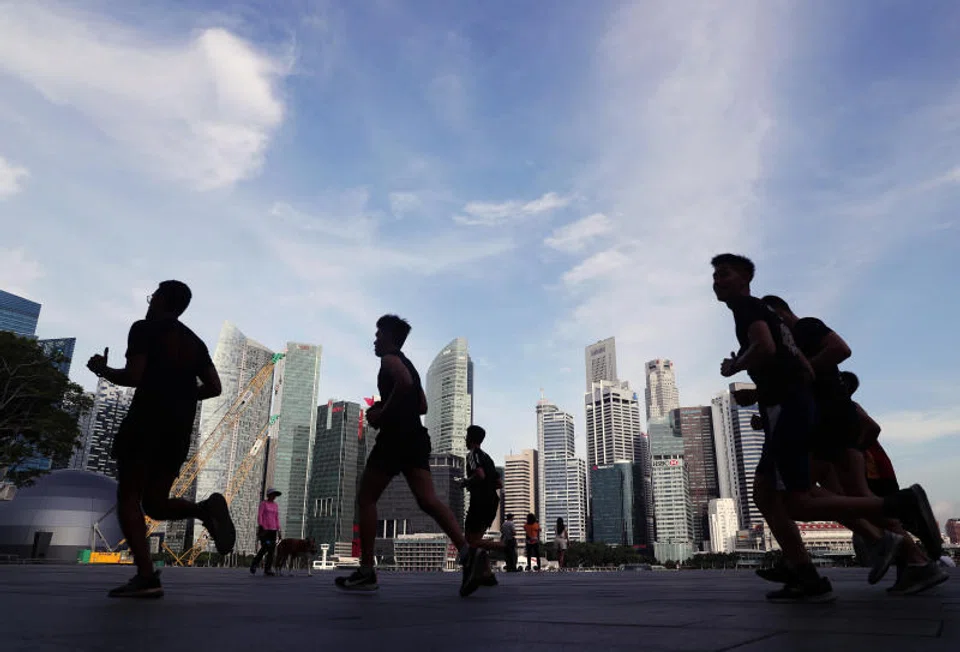
WHEN Eliud Kipchoge broke his own world record at the Berlin Marathon two weeks ago, another man shared in the praise and applause the 37-year-old Kenyan runner received.
Claus Henning-Schulke, a 56-year-old amateur triathlete who had volunteered to pass Kipchoge his personalised bottles of nutrition throughout the marathon, featured prominently in pictures and videos put up online, including one of four pictures Kipchoge had tweeted after the record-breaking race.
“Bottle Claus”, who is a construction engineer by day, has volunteered as a bottle passer since 1998. He has been Kipchoge’s “bottle bro” three times – including in 2018 when Kipchoge set the previous world record – and is by now synonymous with Kipchoge’s success. Henning-Schulke also manages a team of 34 other volunteers who undertake this crucial task of handing elite athletes their bottles during the race.
Even for the best of runners like Kipchoge, this is not a solitary sport. It may not appear to depend on teamwork as explicitly as, say, a game of netball or water polo. But there are many others involved in the making of each runner, amateur or professional.
Mutual motivators
During my brief stint as a competitive runner in university, I experienced the benefits of training with a team. Not only did we help one another get faster through competition, the camaraderie was often what helped us push through hard workouts in the evenings after a long day of lectures and tutorials.
Many times I’d arrive at these sessions thinking that would be the evening of my poorest showing, but I often managed to keep up as teammates egged me on. Our team had the practice of giving a brief series of claps to runners that pass you by, and I always looked forward to that auditory encouragement – it was a reminder that while the training is tough, I am not in it alone. I had no foundation in competitive running prior to university; if not for my coach and teammates, I would never have known what it felt like to train for any race, much less manage a podium finish.
Even now, as a recreational runner, I often see others’ involvement in my pursuit of the sport. For one thing, I would probably be working out less if not for friends who invite me for group runs. The supporters at organised races are often instrumental too. When you hit the dreaded marathon “wall”, even a high-five along the route is a precious adrenaline booster.
More than a competition
In many cases, running is more about connecting than competing, and can also be a platform for building communities.
Runninghour, a running club in Singapore set up in 2009, brings runners together, including those with physical, visual or intellectual challenges. A group of fitness enthusiasts serve as volunteer running guides. For instance, the guide could be tethered to a visually impaired runner, who will then set the pace for their run – lending a literal interpretation of the club’s motto “Run to bond, run so others can”.
SEE ALSO
It started out as a group of 10. More than a decade later, the club has grown into a community of some 500 guides and beneficiaries. Apart from runs, it now also organises sporting events such as rock-climbing and Zumba.
In the United States, a non-profit organisation called Back on My Feet recruits members at shelters and transitional facilities, with the aim of getting homeless individuals “back on their feet” through marathon training. The organisation believe that restoring individuals’ confidence, strength, and self-esteem through regular training will better equip them with the resilience to tackle rough roads ahead.
Members who have committed to 30 days of early morning runs then enter the next phase of its programme, which includes job skills training and financial literacy. According to Back on My Feet’s website, over 7,500 of its members are now housed and employed, and some 150,000 have volunteered with the organisation since it was set up in 2007.
Running is hardly a solo sport where all that matters is a ticking stopwatch. Even the professionals cannot do it alone. As for the rest of us, the sport can grow community in various forms and help us build one another up – and that, I think, is far more precious than any personal best record.
To the far east This route has so much to offer, from beautiful sunrises and birds in the day, to fireflies at night. It’s always a reminder for me to take a pause and be amazed by the natural world.
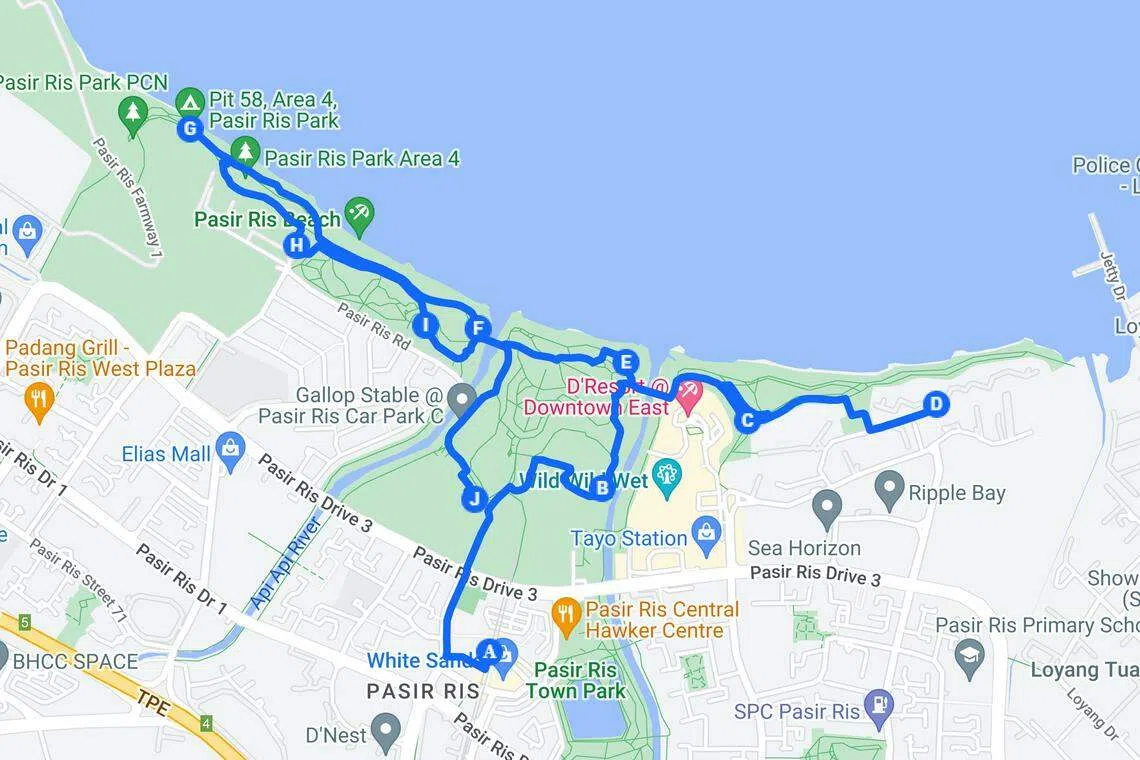
Distance: About 9km
Route markers (A) Pasir Ris MRT (B) Pasir Ris Park mangrove boardwalk (C) Pasir Ris park connector near Downtown East (D) Aloha Loyang (E) U-turn to Sungei Tampines (F) Sungei Api Api (G) Pit 58, Area 4 (H) U-turn to Carpark E (I) Carpark D (J) Carpark C, then continue to end at Pasir Ris MRT
Decoding Asia newsletter: your guide to navigating Asia in a new global order. Sign up here to get Decoding Asia newsletter. Delivered to your inbox. Free.
Copyright SPH Media. All rights reserved.
TRENDING NOW
World’s largest offshore wind platform by Seatrium consortium on track to be completed by 2028

Is stamp collecting enjoying an analogue revival or are its best days over?

GovTech retrenches another 38 staff in second round of layoffs
MBS adjusted property Ebitda falls 20.6% in Q3 with fewer high-roller visits, weaker hold

