
A notoriously jinxed concert hall is reborn, again
 Add BT as a preferred source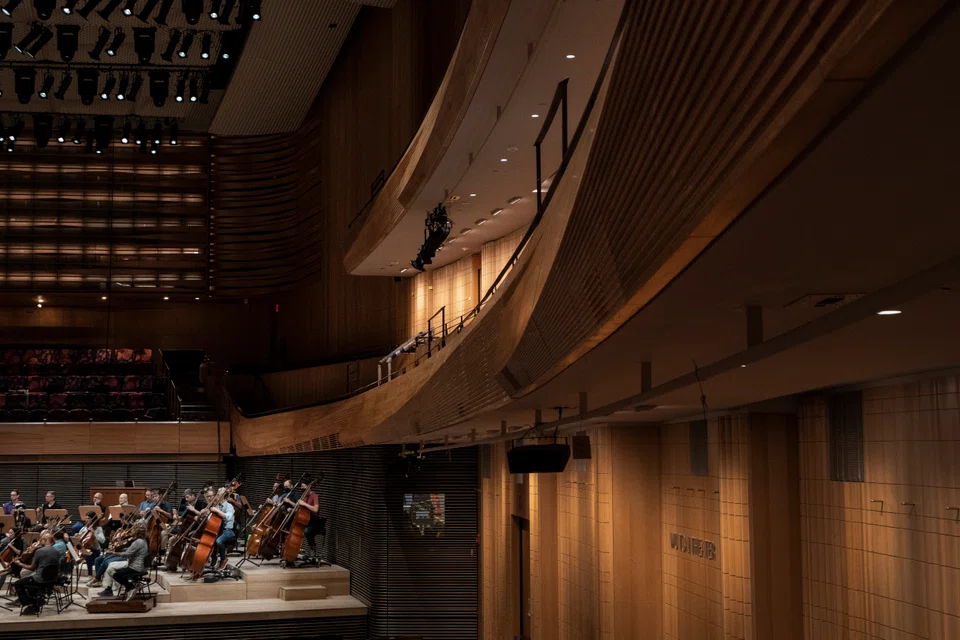
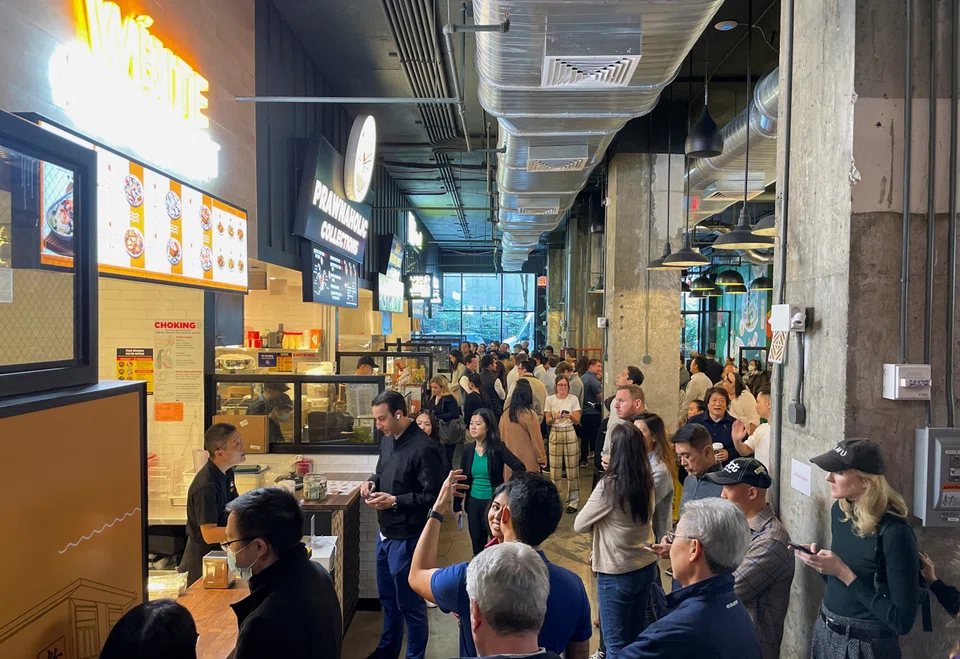
THE hall has shrunk and become warmer, more intimate. The audience now surrounds the stage, with some seats close enough to hear wind players breathe between phrases and watch beads of sweat form on the conductor’s brow. Banished from the lobby, the DMV-style ticket booths have been replaced by a hangout zone with a 50-foot-wide (15 m) digital screen that will broadcast concerts live and free to anyone who cares to stop by. A garage door opens onto the plaza. A new Afro-Caribbean restaurant plans to put bodega-style chopped cheese sandwiches and braised oxtails on the menu.
After years of missteps and false starts, David Geffen Hall in New York is reopening in early October following a US$550 million renovation – an optimistic sign in a still-pandemic-battered city – and the stakes could hardly be higher for the New York Philharmonic or Lincoln Center.
The oldest symphony orchestra in the United States, the Philharmonic is hoping that it has finally seen the last of its star-crossed auditorium’s notoriously troublesome acoustics and that it has devised a world-class hall enticing to new generations of concertgoers. Its audience has been ageing, averaging 57 years old, and its model of selling tickets by subscription is just as creaky. Both the Philharmonic and Lincoln Center, its landlord, keep struggling to forge stronger ties with wider and more diverse audiences – a promise still largely unfulfilled after six decades.
New York has a lot riding on Geffen’s success, too. The pandemic has wreaked havoc on tickets sales for live performances, a tent pole of the city’s economy and identity. Tourism has yet to recover.
The question is whether new architecture – more welcoming, transparent, and, fingers crossed, acoustically improved – can alter Geffen’s karma.
It was the first theatre to open at Lincoln Center, in September 1962. Patrons, dressed to the nines, tiptoed through still-wet concrete. The Philharmonic had moved the dozen or so blocks from Carnegie Hall after a classic New York landlord-tenant dispute. Privately owned, Carnegie during the 1950s was losing money and the real estate market was hungry for midtown office towers. For a brief moment – before outraged musicians and preservationists rallied the city to save the building – Carnegie was on the verge of demolition to make way for a 44-storey red-porcelain-clad office tower designed by Ralph Pomerance.
Navigate Asia in
a new global order
Get the insights delivered to your inbox.
Philharmonic Hall, as the orchestra’s new residence was originally called, promised musicians and music lovers a fresh start. Unlike Carnegie, it had air-conditioning – for year-round programming – and was engineered to mute the noise of passing subways. Max Abramovitz was the architect.
His design summed up the centre’s white-shoe, middlebrow ambitions. The project was monumental and modern, with earnest allusions to ancient Athens. A tapered, travertine colonnade encased glass walls that revealed a soaring, cream-coloured foyer. Through the glass, mingling crowds inside could be glimpsed from outside, animating a building that looked a bit like a mausoleum.
That first evening, patrons – Jackie Kennedy, Nelson Rockefeller, Dean Rusk and Adlai Stevenson among them – mounted escalators to an auditorium that was a symphony in deep blue and gold, with swooping balconies. Leonard Bernstein, classical music’s answer to the Beatles, strode onstage. The New York Philharmonic exploded with the first exultant notes of Gloria from Beethoven’s Missa Solemnis.
And everyone with ears instantly realised that the new hall was a disaster.
Musicians could not hear each other. Listeners could not hear the violas and cellos. Trumpets, trombones and clarinets echoed like yodellers in the Alps. Bernstein later described an “acoustical-psychological” effect: In such an extremely big, long hall, where nearly a third of the audience was more than 100 feet from the stage, the orchestra, which does not use amplification, sounded distant because it appeared as if “through the wrong end of a telescope”.
“Tear the place down and start over again,” was George Szell’s verdict after conducting the Cleveland Orchestra there.
Instead, the Philharmonic and its new landlord, Lincoln Center – often feuding like the Capulets and Montagues – have spent the succeeding half-century and more struggling to fix the acoustics and the architecture, a tale that in many ways tracks the economic and cultural evolution of the city.
The last total revamp was in 1976, after the building had been rebranded Avery Fisher Hall.
“This time they did it right,” is how Ada Louise Huxtable started her review in the New York Times. In charge of that renovation were Philip Johnson and John Burgee – architects of the yet more grandiloquent New York State Theater, across the plaza. They partnered with the acoustician Cyril Harris.
Gutting the auditorium, they devised a shoe box layout with a proscenium arch, in the style of Boston’s Symphony Hall. Like a ship in a bottle, the new theatre was engineered within the shell of Abramovitz’s building.
Gone were the fan-shaped rows of seats. Gone were the swooping balconies, replaced by new balconies in regimental tiers with seats that oddly faced the opposite side of the hall, providing New York chiropractors with scores of patients who had spent hours craning their necks. Old-world touches like antique greenish walls and gold highlights mitigated the austere geometry of the layout. More seats were added.
It is useful to recall that the city was on the ropes in 1976. New Yorkers were hungry for good news. With a roll of the dice, Huxtable declared Avery Fisher “as good to look at as it is to listen to”.
It was in fact better than before, but still not great.
The new design team included Gary McCluskie of the Toronto-based firm Diamond Schmitt Architects; Joshua Dachs, the veteran theatre consultant, and the architects Tod Williams and Billie Tsien, who upholstered Geffen’s seats (and the plaza-facing wall in the foyer outside) with a midnight blue-fuschia-and-orange fabric that suggests falling flower petals. It is a striking dose of colour in a hall that is a sea of beige beechwood.
The team also included the acoustician Paul Scarbrough, of the firm Akustiks. In past iterations of the building, acousticians always played second fiddle to architects. It says a lot about Geffen’s priorities that Akustiks got to set the specifications for the hall, recommended the layout and signed off on everything.
Geffen is now some 500 seats smaller than Avery Fisher, down to 2,200 seats from 2,738, which, Scarbrough said, should create a major acoustical improvement. Boston’s Symphony Hall, with 2,600 seats, would actually fit around 2,200 seats if it were built today to modern specifications, he pointed out. In lieu of Fisher’s shoe box, Geffen is also a “vineyard” design, meaning rows of lower balcony seats envelop the stage – embodying how sound is meant to envelop the audience.
Rows of seats on the main floor are steeply raked, improving sightlines. The stage has been thrust 25 feet (7.5m) into the auditorium, roughly where Row J used to be. Geffen’s designers clearly took a page from Pierre Boulez’s experimental Rug Concerts of the 1970s, when the Philharmonic removed seats, moved out into the auditorium and listeners were invited to surround the players – and also, more recently, from a similar configuration that Mostly Mozart set up for its summer concerts.
Lincoln Center rests on the rubble of a demolished community. It occupies the site of San Juan Hill, a vibrant Black neighbourhood before the World War I, the home of Thelonious Monk, which during the 1940s attracted increasing numbers of Puerto Rican migrants.
That was when city housing authorities designated the area a slum and targeted it for redevelopment. Thousands of homes were destroyed, and families displaced during the late 40s and early 50s, when the city’s urban planning czar, Robert Moses, struck a deal to turn it into a new cultural centre, and John D Rockefeller III enlisted the architect Wallace Harrison to come up with a design.
Harrison’s Cold War vision involved an acropolis of the performing arts, which, to Moses, Rockefeller and their social circles, meant western classical music, musical theatre, opera and ballet. The campus rested on a plinth above the neighbourhood. It turned its back to the public housing developments along Amsterdam Avenue.
At the time, classical music in America was still a growing, aspirational brand of middle-class entertainment. Cities across the country were not able to build concert halls big and fast enough. Lincoln Center advertised itself as the cultural model for post-war urban redevelopment. When it was announced that Abramovitz’s hall would seat fewer people than Carnegie, critics cried elitism. Lincoln Center ordered Abramovitz to squeeze in 180 loge seats in lieu of boxes, reconfiguring the hall’s balconies, among other things – “fateful decisions”, as Scarbrough put it, because the changes exacerbated the hall’s acoustic problems.
Skip forward to the turn of this century. The urbicide of San Juan Hill had faded from many New Yorkers’ memories. Lincoln Center had come to be regarded with a little more affection, as part of the civic furniture, an oasis in the city grid, its facilities in need of an upgrade. A plan to refresh the campus emerged, which was to begin with Avery Fisher. Then, in 2003, the Philharmonic suddenly informed Lincoln Center of its intention to move back to Carnegie. A few months later, the move was off, but the damage was done. Lincoln Center shoved Avery Fisher to the back of the line for renovations and allowed the drab hall to deteriorate further while the rest of the campus was redone.
These were the years when Hugh Hardy devised the lovely Claire Tow Theater for the top of the Beaumont. David Rockwell conceived the Elinor Bunin Munroe Film Center. The architects Diller Scofidio + Renfro refreshed Lincoln Center’s plazas, adding a restaurant whose angled roof is a sunning lawn, built a new bridge across 65th Street, enhanced Pietro Belluschi’s great Brutalist Juilliard School and, most remarkably, remade Alice Tully Hall, the center’s home for chamber music.
The changes nudged Lincoln Center towards more openness. But the site was still not attracting a particularly diverse audience, and the pool of subscribers for classical music was dwindling.
Ultimately, the delayed renovation may have turned out to be providential for Geffen. By the time construction began in 2019, the formerly unthinkable notion of shrinking the auditorium had become thinkable. Acoustic science had evolved. And the broader mission of the centre, to address a public not limited to a taste for Bach, Stravinsky and The Nutcracker, had expanded.
The project was jump-started in 2015 by a US$100 million gift from the entertainment mogul David Geffen, which earned him renaming rights to the hall. Disagreements over the design and several years of management tumult at Lincoln Center (four different leaders in five years) delayed progress. Then a new team coalesced.
Most crucially, Deborah Borda, who ran the Philharmonic during the 1990s, and left to open Frank Gehry’s billowing, stainless steel-paneled Walt Disney Hall in Los Angeles, returned as the Philharmonic’s president with a mandate to get Geffen built. Katherine Farley, as chair of Lincoln Center, made the hall her top priority, and hired a new president and chief executive, Henry Timms, who ushered in an era of greater stability. With Borda, he helped get the project back on track. Officials from the centre started attending tenants’ meetings at the public housing projects in the neighbourhood, organising performances there, transforming the centre’s public spaces into pop-up parks and testing pay-what-you-wish concerts to attract a new audience to hear music that is also more diverse. At Geffen, for example, a multimedia piece by the composer Etienne Charles called San Juan Hill has been commissioned to open the hall and an Afro-Punk festival is slated for this winter.
“We are focused now on the issue of civic space,” was how Timms explained the centre’s philosophy. “We always brought in great artists, but there are many different kinds of great artists out there who belong here.”
Covid cost the Philharmonic more than US$27 million in anticipated ticket revenues. But it also reinforced the urgency to cultivate a wider public and, at the same time, to pay off a moral and cultural debt. The democratic impulse that enlarged the hall in the 1960s has now led Lincoln Center to make Geffen smaller and to tweak the hall’s architectural mojo in other ways.
Maybe it was a good omen that the pandemic’s shuttering of the hall made it possible to scuttle what originally was a longer construction schedule that would have forced the orchestra to move in and out of an unfinished building for nearly two more years, extending a risky vagabondage.
Carter Brey, the orchestra’s principal cellist, said he played some Bach suites on the front of the new stage and the acoustics in the empty hall seemed “clear and true”. He sounded optimistic.
Decoding Asia newsletter: your guide to navigating Asia in a new global order. Sign up here to get Decoding Asia newsletter. Delivered to your inbox. Free.
Share with us your feedback on BT's products and services

