

Novelist Kristin Hannah reinvented herself; says America can do the same
In The Four Winds, the author of The Nightingale and The Great Alone takes readers back to another era of environmental disaster, economic collapse and fresh starts
 Add BT as a preferred source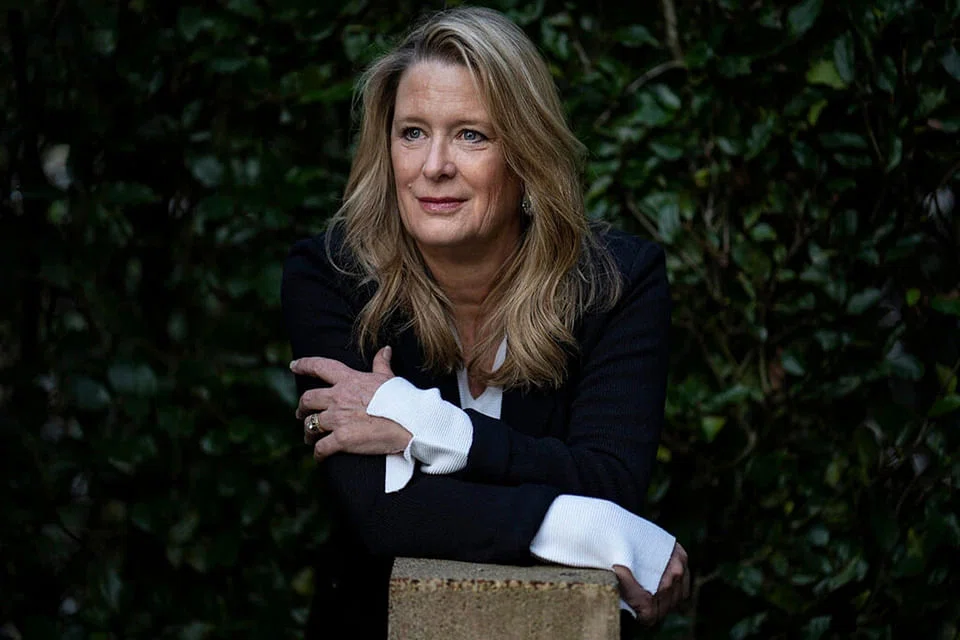
GROWING up in California and the Pacific Northwest, Kristin Hannah never wanted to become a novelist. It was a career for dreamers, she thought, kids who took creative writing classes and scribbled stories from the time they were 6.
"I just wasn't that person," she said in a video interview from her home outside Seattle. "Until I was in my third year of law school and my mother was dying of breast cancer. Every day I would visit her and complain about my classes. One afternoon my mother said, 'Don't worry, you're going to be a writer.' " This was news to Hannah. The two decided to write a romance novel set in 18th-century Scotland.
"That was her choice," Ms Hannah said. "I would have written horror. But it gave us something to talk about." In 1985, the day she wrote the first nine pages - her inaugural foray into fiction - she received a call from her father, telling her she needed to get to the hospital. There, before her mother died, Ms Hannah, then 24, had a chance to whisper, "I started."
But she put the book on hold and resumed her original plan, practicing law at a Seattle firm - until, she said, "a few years later, I went into labour at 14 weeks and was bedridden until my son was born. I realised that I probably wouldn't have more children and I wanted to be home for the first few years. So I thought, I'll try writing a book." But not the one she started with her mother. "That was a terrible, terrible book," Ms Hannah said. "It's now in a box that says 'Do Not Publish Even After Death.' "
She published her debut novel, A Handful of Heaven, in 1991. It was a historical romance set in Alaska - a place she returned to almost three decades later in The Great Alone, which sold 2 million copies in the United States.
Bigger breakout hit
Navigate Asia in
a new global order
Get the insights delivered to your inbox.
Ms Hannah experienced an even bigger breakout hit with The Nightingale, her 2015 historical novel, which sold 4.5 million copies worldwide. Her books have now been translated into 43 languages, her name is an anchor tenant on bestseller lists, and you would be hard pressed to find a book club that has not discussed one of her novels.
Of her mother's long-ago prediction, Ms Hannah said, "I tell you, this woman is somewhere with a martini and a cigarette telling all her friends, 'I told you so.' " Hannah, 60, lives with her husband; her son is now grown. Gone are the days when she had to squeeze in bursts of writing around naps and school hours. She works from 8 am to 4pm most days, writing drafts in longhand on yellow legal pads. "I can write in my backyard, by the fire, on the beach, on an airplane," Ms Hannah said. "It helps to be disciplined, but I also believe creativity follows discipline."
Her 24th book, The Four Winds which came out on Tuesday, seems eerily prescient in 2021, with its Depression-era tale of blighted land, xenophobia, fear of contagion - and determination to join forces and rebuild. Its message is galvanising and hopeful: We are a nation of scrappy survivors. We've been in dire straits before; we will be again. Hold your people close. Her publisher, St. Martin's Press, is planning an initial printing of 1 million copies.
"I wanted to tell a quintessentially American story," Ms Hannah said. "The Dust Bowl was the greatest ecological disaster in American history, and that, combined with the partisan divide of the Great Depression, really spoke to me." The protagonist of The Four Winds is Elsa Martinelli, a single mother of two who, in 1935, leaves a parched family farm in Lonesome Tree, Texas, for California. She is unmoved by brochures promising milk and honey in the "Land of Opportunity". She needs steady work and fresh air for her son, who is recovering from "dust pneumonia", a then-common ailment on the Great Plains. (Readers who feel inconvenienced by cloth masks may feel differently after spending time with characters who wear gas masks in their homes.)
Friendship is a lifeline
In the San Joaquin Valley, the Martinellis trade one set of terrible circumstances for another. Work is scarce. Locals are cruelly suspicious of newcomers, who they believe carry disease. Nobody will rent to "Okies", as migrants were known - regardless of whether they were from Oklahoma - so the family settles into a squalid camp on the banks of an irrigation ditch.
How Elsa claws her way out is the crux of The Four Winds. Friendship is a lifeline, as it is for many women in Hannah's books, including the pair in Firefly Lane. On Wednesday, Netflix begins streaming its television adaptation of that book, starring Katherine Heigl and Sarah Chalke.
"I deeply value my female friendships. That's something that has been reinforced in this pandemic," Ms Hannah said. "So it made sense to me that Elsa finds a mother and a girlfriend. Those relationships give her the power to stand up for herself.
As she worked on The Four Winds, Hannah was inspired by Dorothea Lange's photographs, especially Woman of the High Plains - "You can see how tired, afraid and heroic she is, all at once" - and by the writings of Sanora Babb, an aspiring journalist who documented life in migrant camps for the Farm Security Administration, only to have her own novel in progress scooped by The Grapes of Wrath. "She took copious notes on conversations with residents, what they cared about and what they were having trouble with,"Ms Hannah said before describing how Ms Babb's boss funnelled these observations to John Steinbeck.
"Amazing, right?" She smiled ruefully. "I'm devoted to putting women in the forefront of historical stories. The Four Winds includes a few lines from Ms Babb's novel, Whose Names Are Unknown, which was finally published by the University of Oklahoma Press in 2004: "One thing was left, as clear and perfect as a drop of rain - the desperate need to stand together . . . They would rise and fall and, in their falling, rise again." NYTIMES
Decoding Asia newsletter: your guide to navigating Asia in a new global order. Sign up here to get Decoding Asia newsletter. Delivered to your inbox. Free.
Share with us your feedback on BT's products and services
TRENDING NOW
Middle East-linked energy supply shocks put Asean Power Grid back in focus
Strengthening Asean’s economic resilience through RCEP’s 2027 review
How China’s young workers are securing their future even as AI disrupts job market, triggers pay cuts

US-China rivalry and the Kindleberger Trap: Why inaction – not escalation – is the biggest risk

