

The Odyssey review: Nolan delivers gods, monsters and grandeur
Despite emotional shortcomings, the star-packed ancient epic is a visual and technical triumph
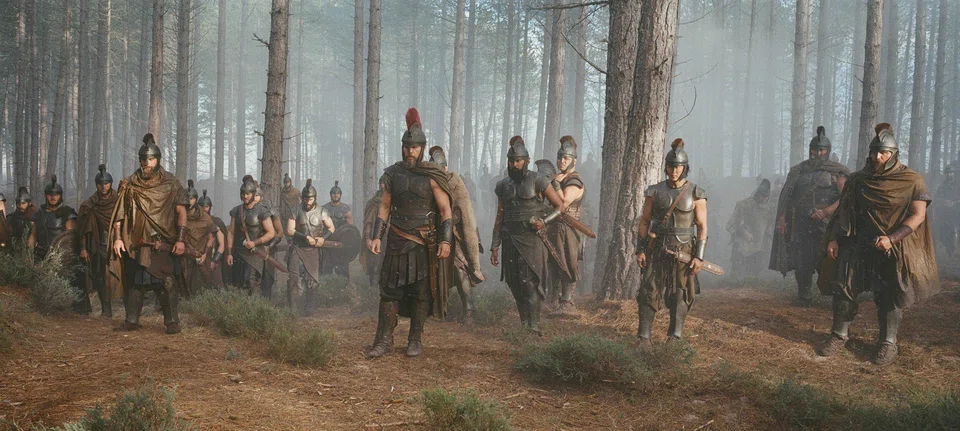
[SINGAPORE] Few films arrive carrying expectations as colossal as The Odyssey. It is Christopher Nolan’s first feature since Oppenheimer (2023) – which won seven Oscars, including Best Picture – and his attempt to turn one of the oldest classics of Western literature into a star-packed summer blockbuster.
Composed around the eighth or seventh century BC, The Odyssey is 12,109-line poem by Homer that has endured for some 2,700 years. Nolan reportedly spent US$250 million to bring it to the screen, assembling a starry cast and shooting the entire production with Imax film cameras.
The film, thus, promised something increasingly rare in contemporary Hollywood: a monumental studio spectacle founded not on superheroes or an existing entertainment franchise, but on the belief that ancient myth, practical filmmaking and the big-screen experience could still draw mass audiences.
Faithful adaptation
In writing the screenplay, Nolan consulted multiple translations of The Odyssey, and the resulting movie is an impressively faithful adaptation of the story with a modern twist.
Ten years after the Trojan War, the hero Odysseus (Matt Damon), whose idea for the Trojan horse allowed the Greeks to infiltrate and sack Troy, has still not returned to his homeland of Ithaca.
His wife, Queen Penelope (Anne Hathaway), is under pressure to remarry so that the kingdom will not remain leaderless. Their son, Telemachus (Tom Holland), has grown up listening to stories of Odysseus’ wartime exploits but barely knows his father.
For three years, Penelope and Telemachus have been forced to host an unwanted contingent of suitors intent on marrying the queen.
Taking advantage of the sacred laws of hospitality, these unruly men – led by the cruel Antinous (Robert Pattinson) – threaten Telemachus and abuse Odysseus’ frail but faithful servant Eumaeus (John Leguizamo).
In desperation, Telemachus secretly leaves for Sparta to learn more about his father’s whereabouts from another veteran of the war, King Menelaus (Jon Bernthal), husband of Helen of Troy (Lupita Nyong’o) and brother of King Agamemnon (Benny Safdie), both key figures in the Trojan conflict.


Meanwhile, Odysseus has been living on an island with the nymph Calypso (Charlize Theron). Rendered amnesiac by a diet of lotus flowers, he slowly begins to remember the epic journey that brought him there – and the one he must complete to reunite with his wife and son.
This framing allows much of the story to unfold, in typical Nolan fashion, through a series of strategic flashbacks until the action catches up with the present.
Movie adaptations of Greek myths frequently have to confront the problem of the fantastic.
Do they depict the gods, who lend colour, chaos and caprice to the narrative? Or do they flatten the supernatural elements in favour of a grounded approach, as seen in Troy (2004) or The Return (2024)?
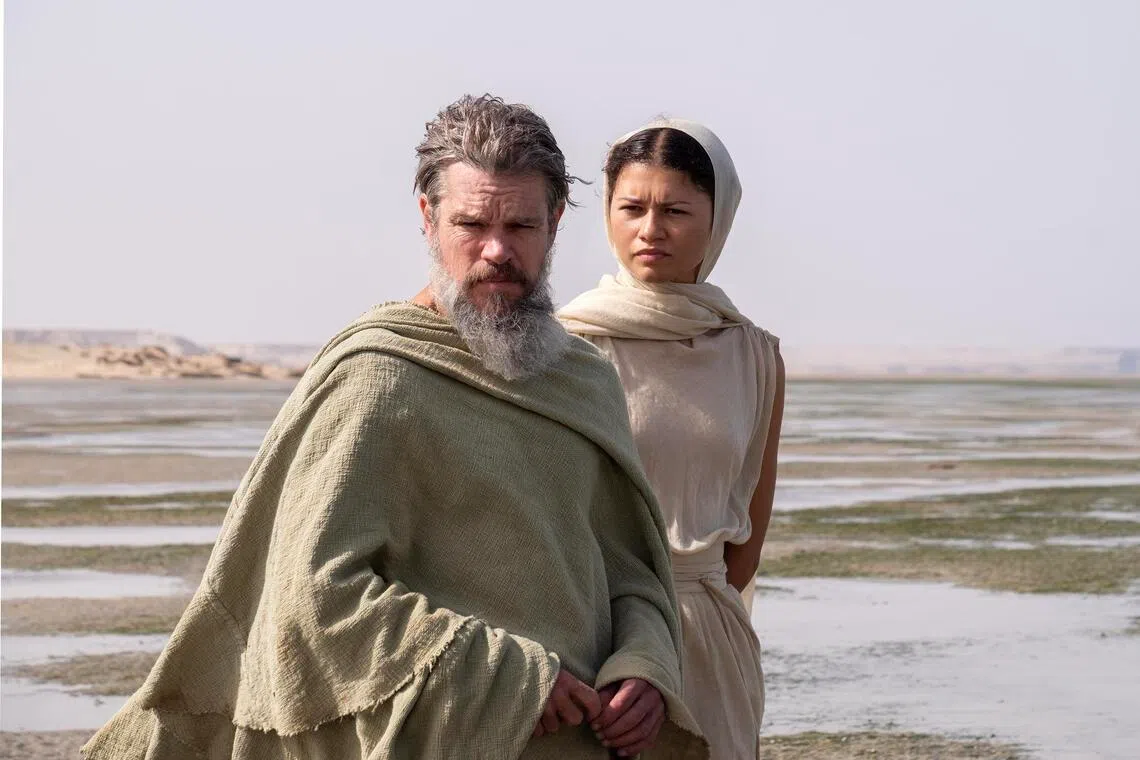
Nolan’s vision largely manages to have it both ways, presenting a human-centred story without stinting on spectacle.
Many of the strange and wondrous episodes from Odysseus’ journey – including an encounter with a Cyclops and a visit to the underworld – are filmed with visceral realism.
With the exception of Athena (Zendaya), who appears only to Odysseus, the gods remain unseen. Their imposing presence is nevertheless registered through thunder, storms and the seemingly arbitrary violence of the natural world.
A modern movie
There is a sense of scale and physical weight in almost every scene, helped by Nolan’s well-known preference for practical effects.
That tactility extends from the encounters with monsters to the seafaring passages and battle sequences: ships heave against violent waters; bodies collide in combat; and the landscapes appear less like digitally constructed backdrops than forbidding environments through which the characters must physically struggle.
But as its contemporary American accents and plain-spoken dialogue suggest, The Odyssey is also an unabashedly modern movie.
Nolan gives the story a psychological framework intended to make its ancient hero more comprehensible – and perhaps more palatable – to contemporary audiences.
By interpreting Odysseus and his fellow survivors through the modern language of post-traumatic stress disorder, the film gives Homer’s story an unsettling contemporary resonance at a time when wars continue to leave soldiers, families and entire societies carrying their consequences.
His Odysseus, not unlike his Oppenheimer, confronts the world’s dangers with courage and formidable cunning, yet remains haunted by the moral cost of his own ingenuity and the consequences of actions he once considered necessary.
The psychological damage inflicted by the Trojan War is borne by those who survived it, particularly Penelope and Helen, and even by the dead, including the conflict’s chief architect, Agamemnon.
That psychological modernisation does not always produce equally persuasive human drama.
Nolan remains more instinctively fluent in the architecture of suspense than in the subtleties of personal relationships. The dialogue can be bluntly expositional, while the domestic drama can occasionally seem workmanlike.
But The Odyssey is ultimately a filmmaking triumph.
It is enormous, exhilarating and, above all, great fun: a work made with palpable conviction by a director still passionately committed to the physical machinery and communal possibilities of cinema.
Nolan does not merely illustrate Homer’s monsters, battles and tempests; he gives them mass, danger and the capacity to inspire genuine awe.
In the face of such ambition, craftsmanship and belief in cinema, his familiar sins are easy to forgive.
Decoding Asia newsletter: your guide to navigating Asia in a new global order. Sign up here to get Decoding Asia newsletter. Delivered to your inbox. Free.
Copyright SPH Media. All rights reserved.
TRENDING NOW

LTA proposes combining car COE categories, adding rebate-surcharge system

StarHub to acquire MyRepublic’s mobile business amid ongoing telco consolidation

DBS, OCBC, UOB rout lops billions off STI as inflation, rate concerns spook investors

Grab CEO’s wife Chloe Tong on life with Anthony Tan and finding her purpose

