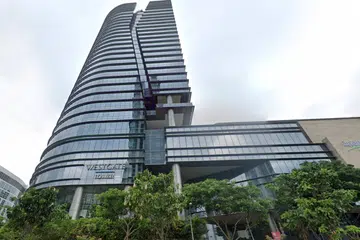
Olafur Eliasson’s sensory spectacle at SAM
“Is that a live ocean on the ceiling?” Art world superstar keeps you guessing

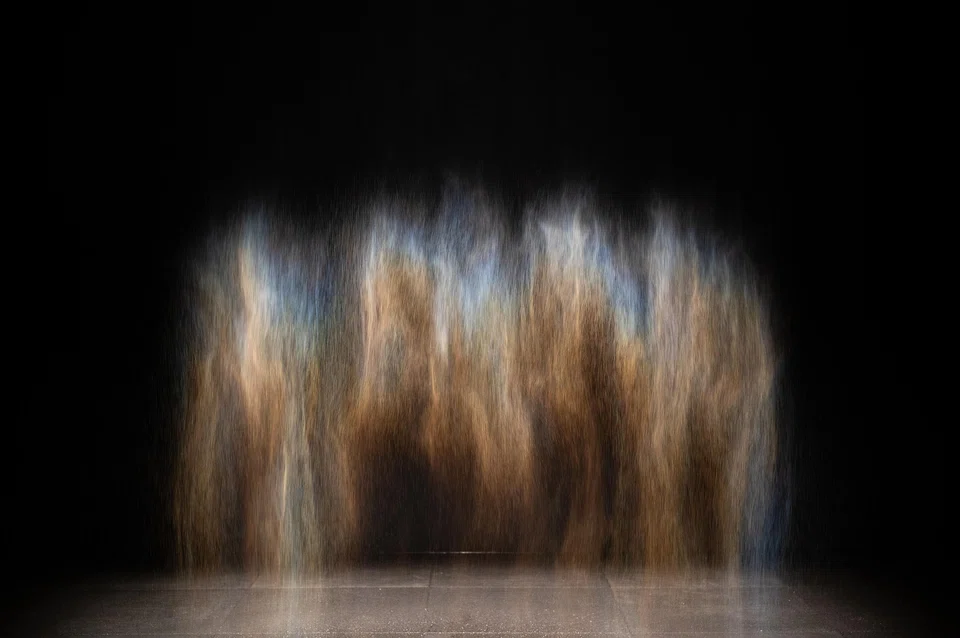
ONE of the world’s most celebrated artists, Olafur Eliasson, has just opened a solo show at the Singapore Art Museum (SAM). The showcase of 17 of his important works incorporate elements such as light, water, wind and temperature to constantly challenge the viewer’s perception of the world.
The Danish-Icelandic artist is best known for his extraordinary 2003 installation at London’s Tate Modern, which gave visitors the illusion of standing incredibly close to the sun, with its powerful rays artfully piercing the misty atmosphere. The work was so elemental and hypnotic that British critics rank it as the 11th most important artwork of the 21st century.
Eliasson is also credited for co-inventing Little Sun, a small solar-powered LED lamp that has been a godsend for rural communities with little access to proper electricity. Using these lamps, hundreds of thousands of people living in off-grid areas have been able to cook, study and work at night.
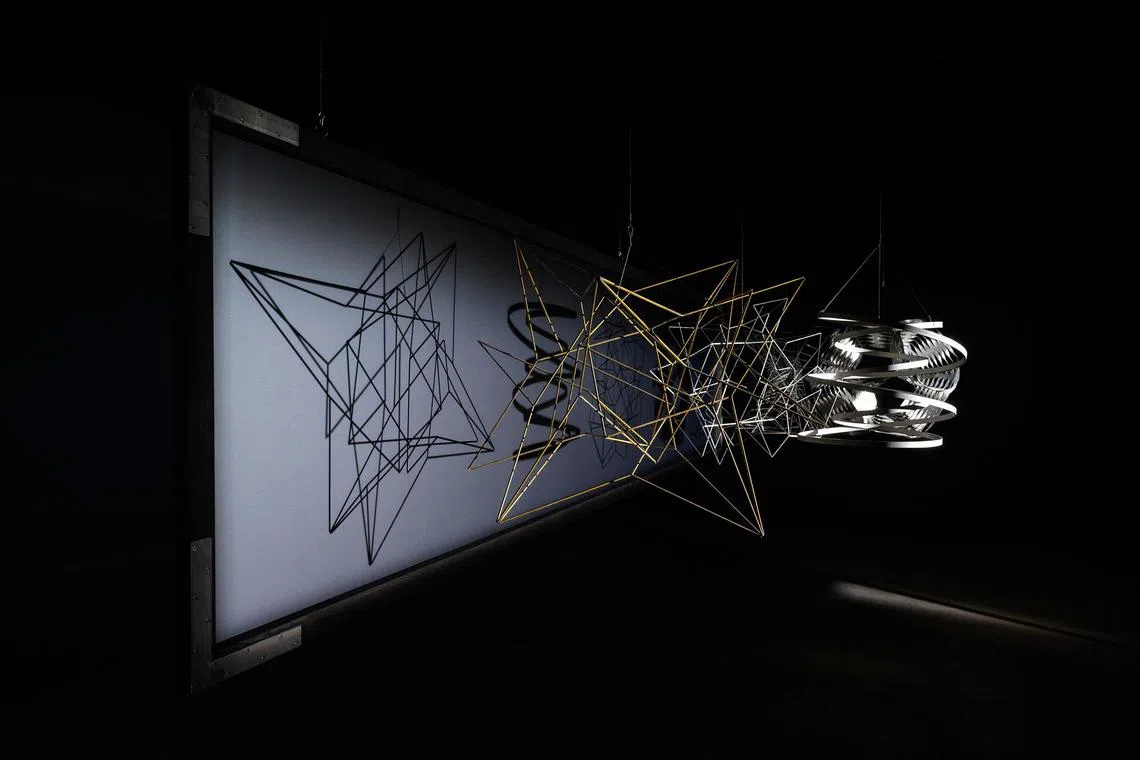
His show at SAM – the first stop in a three-year, five-city tour – offers ample proof of his talent in creating works that use materials innovatively and engage deeply with issues such as climate change and sustainability. Each work operates in unique ways to awaken visitors’ awareness of their immediate and larger environment.
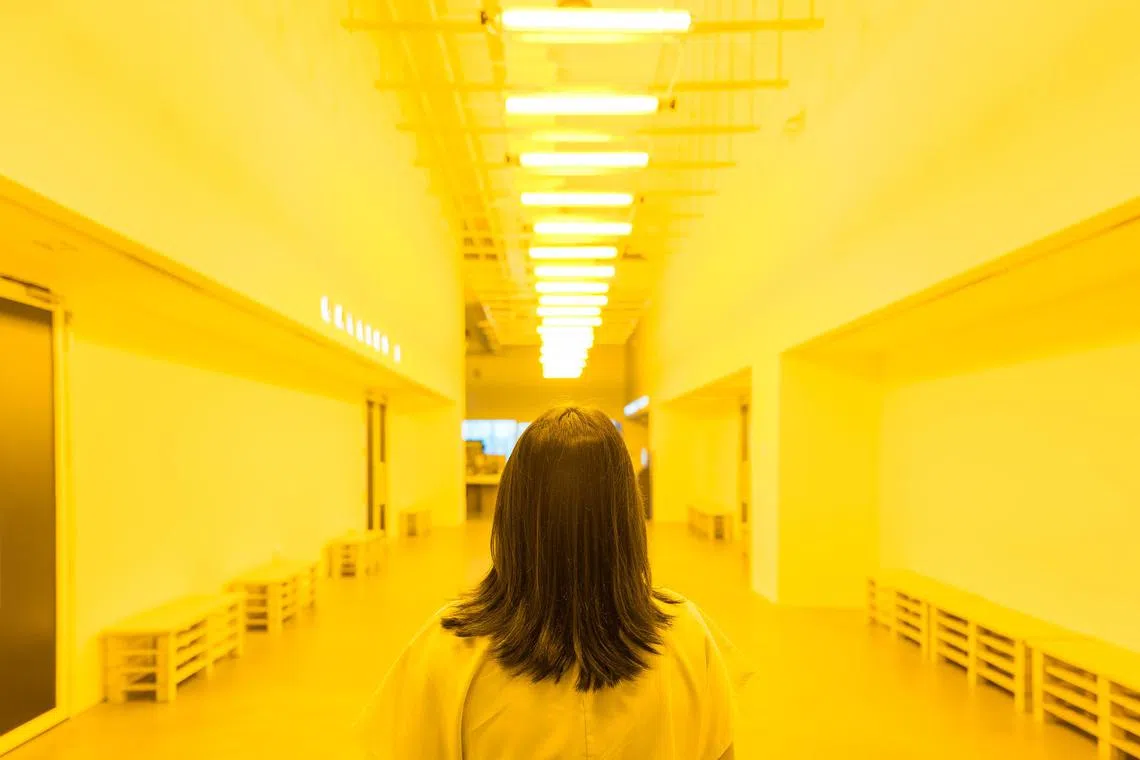
The first artwork to greet visitors at the showcase is a row of mono-frequency yellow lights lined along the entrance corridor. Visitors might initially find nothing amiss, but a closer look at their surroundings would show them that the light desaturates everything it hits. Every colour from red to violet fundamentally vanishes, placing everyone momentarily on the same grey colour spectrum – a metaphor for equality, however fleeting.
In the gallery are several works critical to Eliasson’s career. One of them is Beauty, an early 1990s creation that essentially conjures an indoor rainbow using a spotlight and a constantly moving spray of water. Visitors are invited to pass through the shape-shifting rainbow, getting lightly wet. But the sheer joy Eliasson elicits by creating a natural phenomenon up close for the visitor is a hallmark of his long practice.
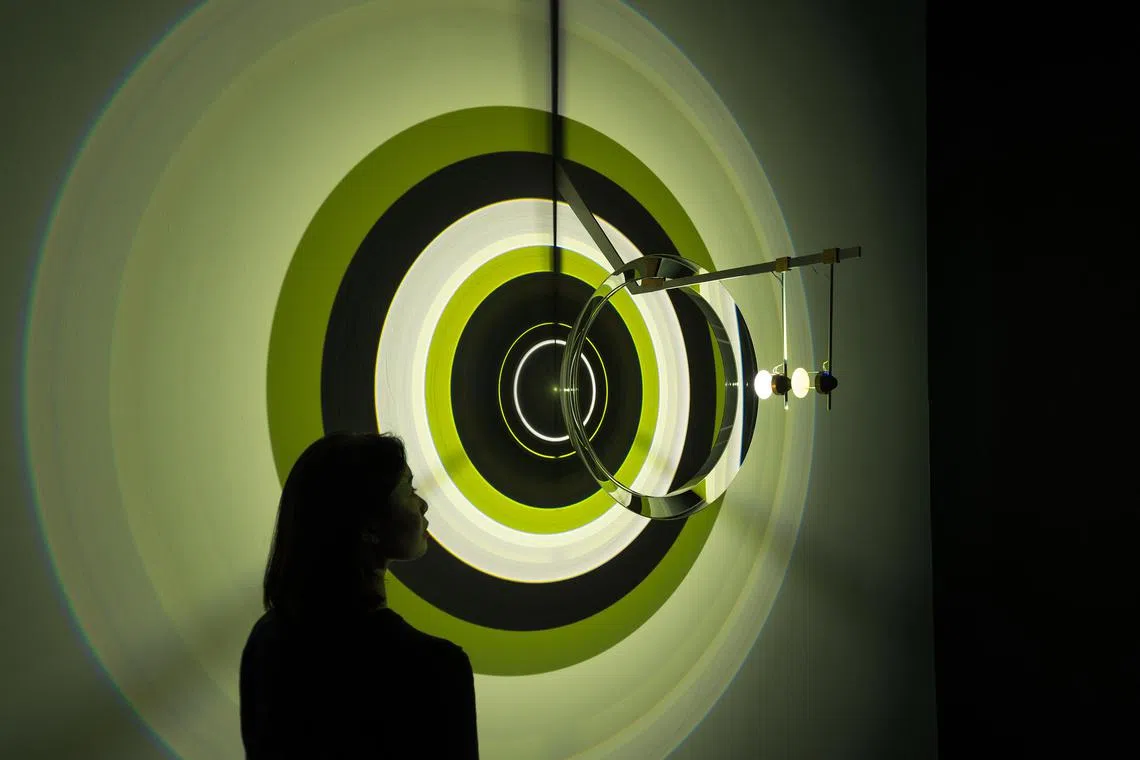
A much later work, titled Circumstellar Resonator, evokes similar joy with its burst of colours. At the outset, it appears like an ordinary wall painting. But closer inspection reveals it is made of LED lights trained on a prismatic lenticular surface that creates multiple rings of light. The work draws upon the principles of a Fresnel lens used in lighthouses to communicate with ships. Here, Eliasson once again capitalises on a long-known natural phenomenon to create a contemporary work to fascinate today’s spectators.
Elsewhere, the artist expresses his profound concerns for climate change through several works (such as The Last Seven Days Of Glacial Ice and The Seismic Testimony of Distance) and the fact that many components of the exhibition have been transported via sea, not air.
Works such as Object Defined By Activity (Then) – a flowing water feature that seemingly “freezes” through the effects of strobe light – feels like a masterful display of smoke and mirrors; it mesmerises one by raising the question of what is real, and what is merely an illusion crafted through scientific principles and artistic innovation.


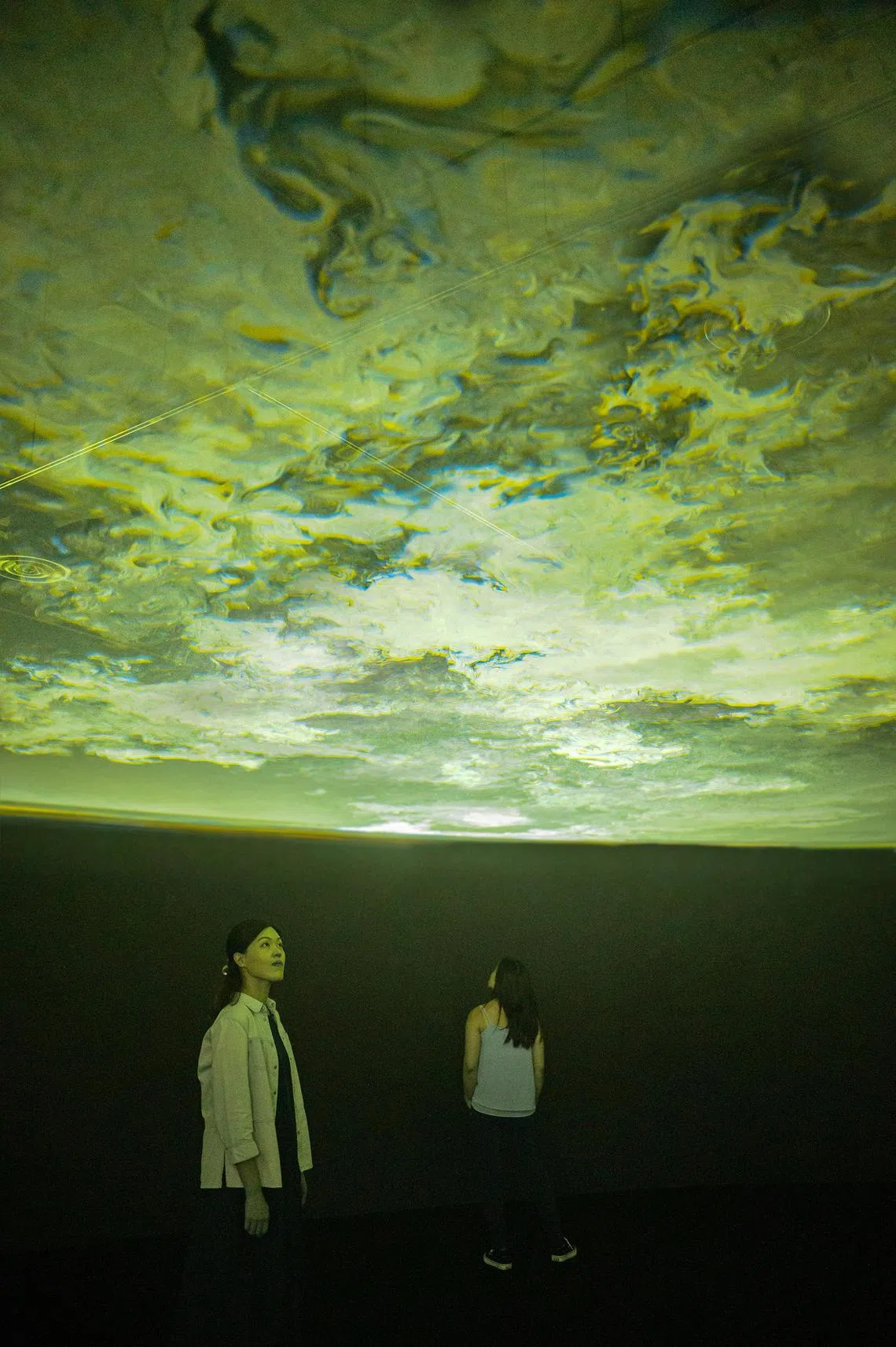
The show’s largest work is its piece de resistance. Situated on the third floor of the building, the room-sized exhibit titled Symbiotic Seeing features a surreal ceiling that seems to wash and swirl like liquid. Here, Eliasson uses coloured laser lights on periodically released mist to effect his psychedelic trick. But by creating layers of reality, he exposes the layers of how we interpret the sensory world around us.
Speaking to reporters, the 57-year-old artist says he was deeply influenced by the 2013 book Hyperobjects by Timothy Morton. The book posits the idea that concepts such as global warming have such vast temporal and spatial dimensions that they defy our understanding of what a thing is in the first place. Morton calls such entities “hyperobjects”.
Eliasson says: “I have always been interested in phenomenology. I think that the way we relate to an artwork, or the way we relate to each other, to society or to systems in general, are constantly changing. If we can maintain a relationship with how we see something that’s constantly changing, this ‘relativity of reality’ will keep us constantly intrigued… That is how I have stayed engaged in my own practice all these years.”
Olafur Eliasson: Your Curious Journey runs at the Singapore Art Museum at Tanjong Pagar Distripark from May 10 to Sep 22. Tickets for adults range from S$10 to S$20.
Decoding Asia newsletter: your guide to navigating Asia in a new global order. Sign up here to get Decoding Asia newsletter. Delivered to your inbox. Free.
Copyright SPH Media. All rights reserved.