

Out of Africa, into Asia
A hundred artists have put forth works for an ambitious exhibition combining art from the two continents

AFRICAN art has been rising in global prominence over the past few decades, gaining widespread recognition and contributing to a re-evaluation of African artistic expression. An upcoming exhibition staged by the Singapore-based non-profit The Institutum sheds light on this phenomenon, but pairs it with Asian art to find commonalities and convergences between the peoples of the two regions.
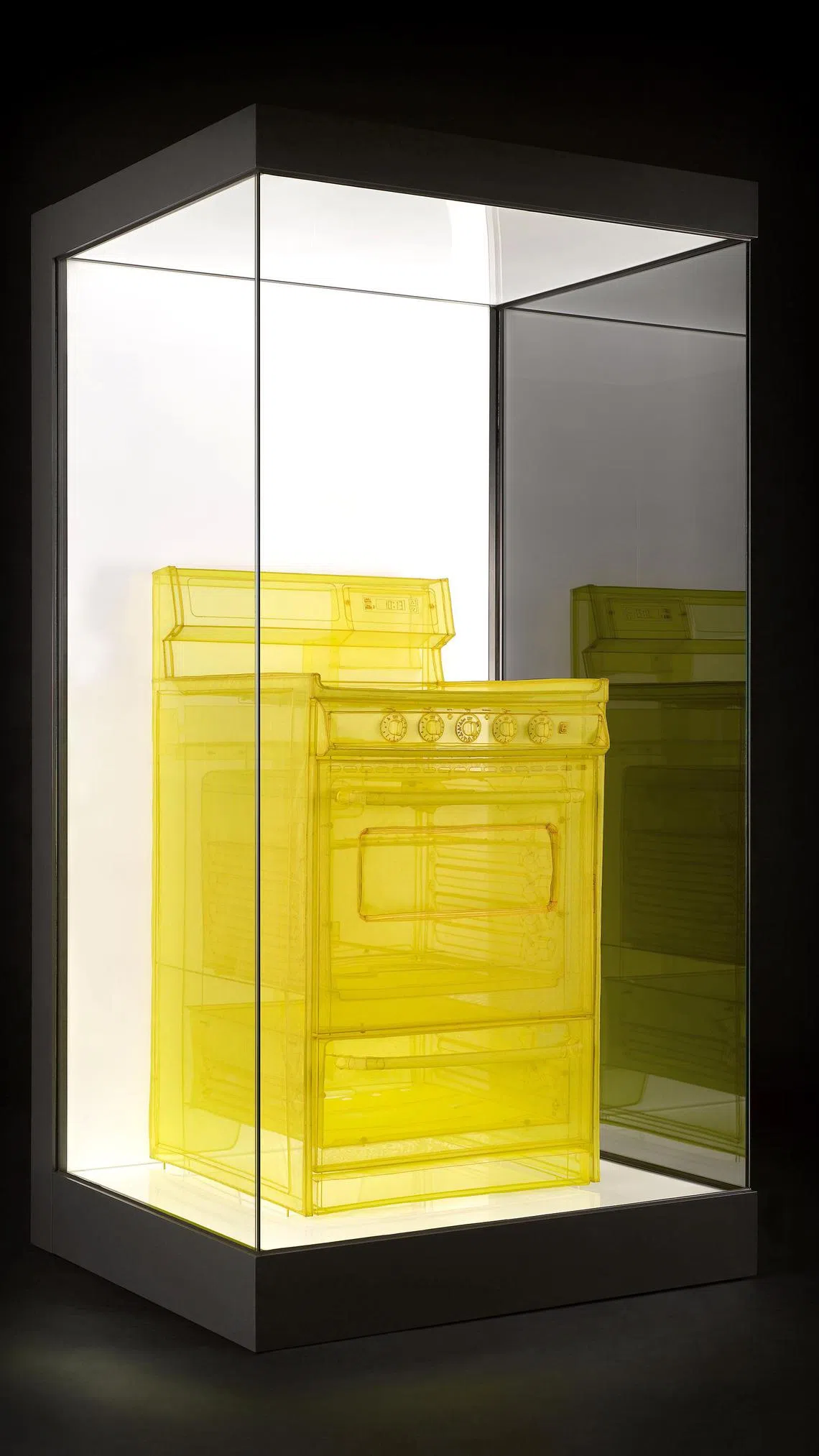
The ambitious show titled Translations: Afro-Asian Poetics features a galaxy of 100 stars of African and Asian descent. They include prominent practitioners such as El Anatsui, Theaster Gates, Zanele Muholi, Nick Cave, Noah Davis, Gordon Parks and Faith Ringgold – all of whom hail either from Africa or its diasporic communities scattered across the world – as well as Do Ho Suh, Tang Da Wu, Pacita Abad, Prabhavathi Meppayil, Lee Seung-taek, Martin Wong, Tuan Andrew Nguyen, Apichatpong Weerasethakul, Robert Zhao and other art giants of Asian heritage.
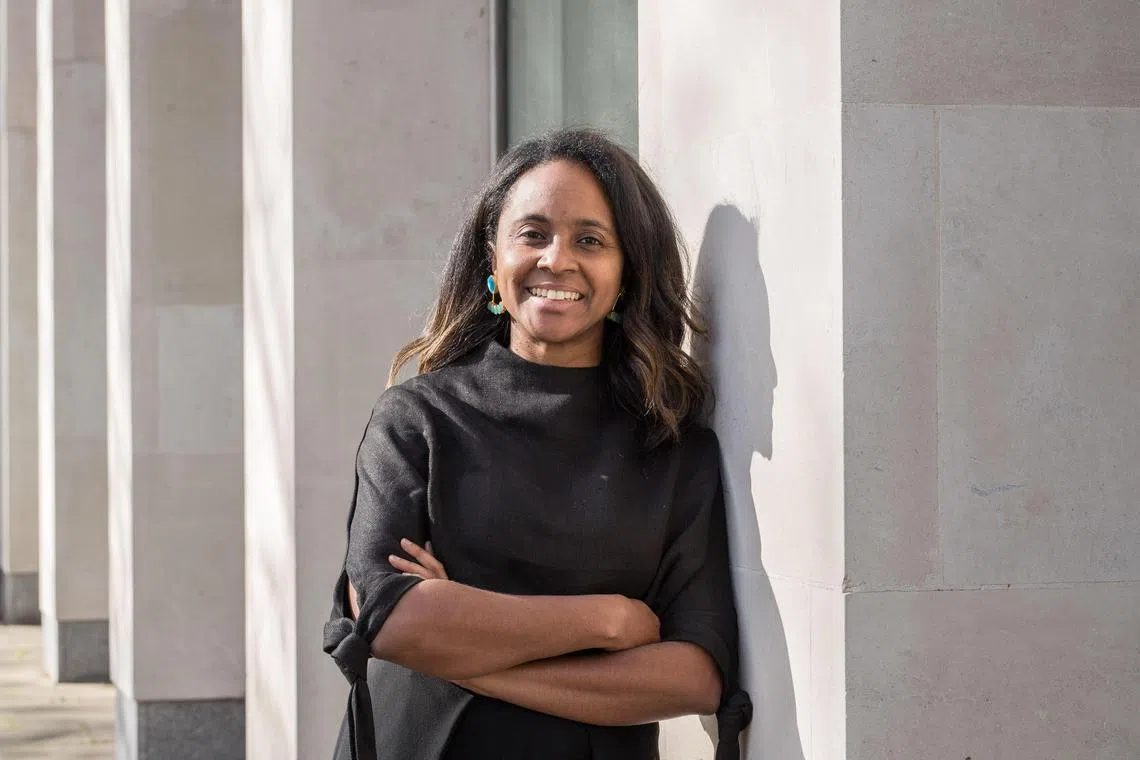
Set to open during Singapore Art Week, the show is curated by Zoe Whitley of London’s Chisenhale Gallery, who says: “Translations is really an opportunity to help us understand the synergies and shared experiences across a multitude of experiences. Whether they’re about diasporic experiences of displacement, or how we love our families and communities, or how we have to create new bonds with chosen families due to various circumstances, these works delve into a range of human experiences that are present across the African and Asian regions and their diasporas.”
Even with assistance from Singapore curator Clara Peh, Whitley found it a challenge to select just 100 artists for the landmark show. She says: “Because of the nature and complexity of the diasporic experience, we could have 200 or 300 artists and still not be finished. But I think coming up with this list of 100 will kick start the conversation, while at the same time not over-determining the direction of that conversation.”
The works include several large-scale installations displayed across multiple venues, including various sites in Gillman Barracks and the Michelin-starred Nouri restaurant on Amoy Street. What’s more, the show will be supported by other collaborations: chef Ivan Brehm of Nouri and Ghanaian chef Selassie Atadika are teaming up to present a distinctive Crossroads Of Afro-Asian Flavours four-hands dinner; Gillman Barrack’s Creamier ice-cream parlour will unveil a new flavour inspired by the foods of the two continents.
African gems
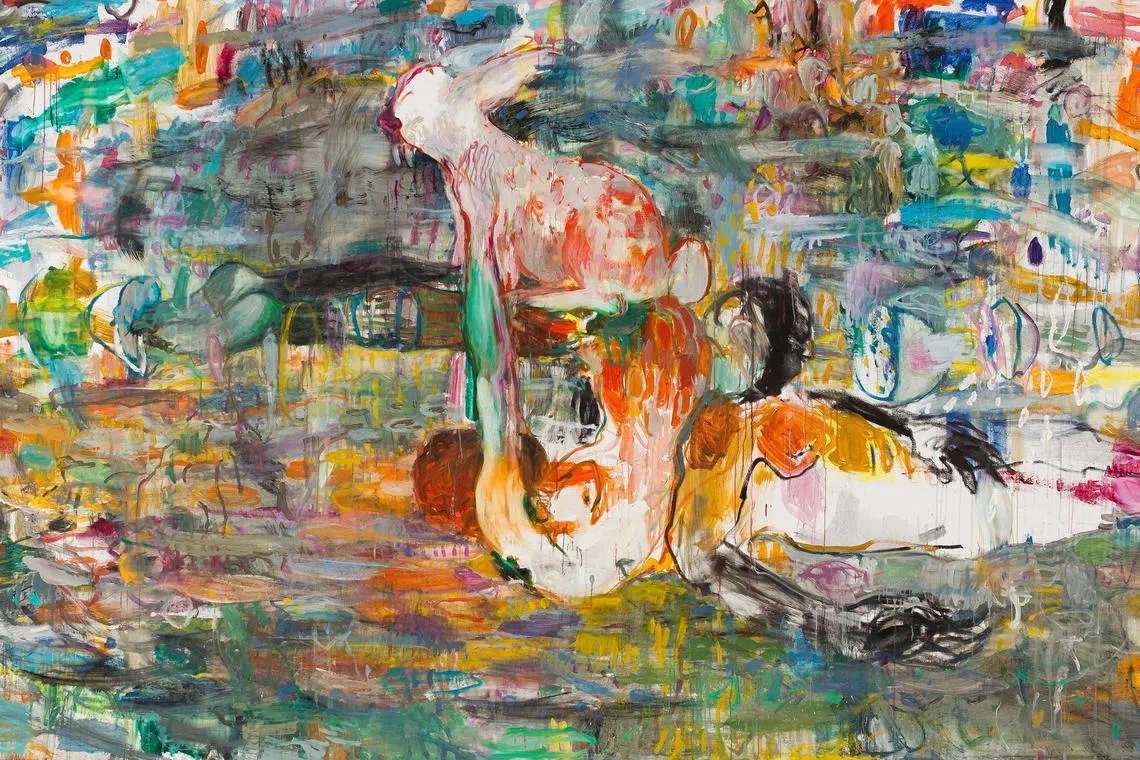
Among the show’s highlights is a gorgeous painting by Zimbabwean painter Misheck Masamvu. The pioneering artist typically explores the sociopolitical and economic turmoil of post-independence Zimbabwe through a rich and dynamic blend of abstraction and figuration on canvas.
Of the painting titled Smooth, Masamvu says: “Smooth is a celebration intertwined with a violent dance, where a convergence of colours gives birth to a chaotic composition, and the figure undergoes a state of transformation… Within this enigmatic space, the figure seamlessly merges with its surroundings, reminiscent of revisiting fragmented memories. The canvas serves as a powerful reflection of metamorphosis, with the figures gradually assimilating into their environment, evoking a sense of rebirth and new consciousness.”
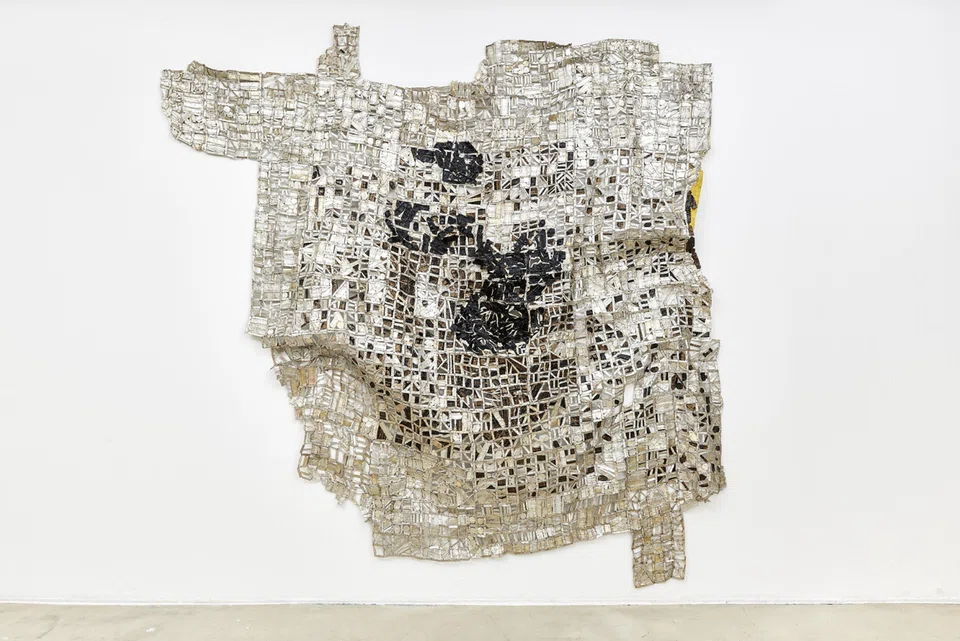
Meanwhile sought-after Ghanaian sculptor Anatsui is set to charm visitors with his large wall installation made up of repurposed aluminium cans and bottleneck foils. Anatsui is widely recognised for his groundbreaking use of discarded materials, transforming these seemingly ordinary materials into monumental and visually stunning tapestries and sculptures. These shimmering artworks often mimic the appearance of traditional West African textiles such as kente cloth, but on a much larger and more monumental scale.
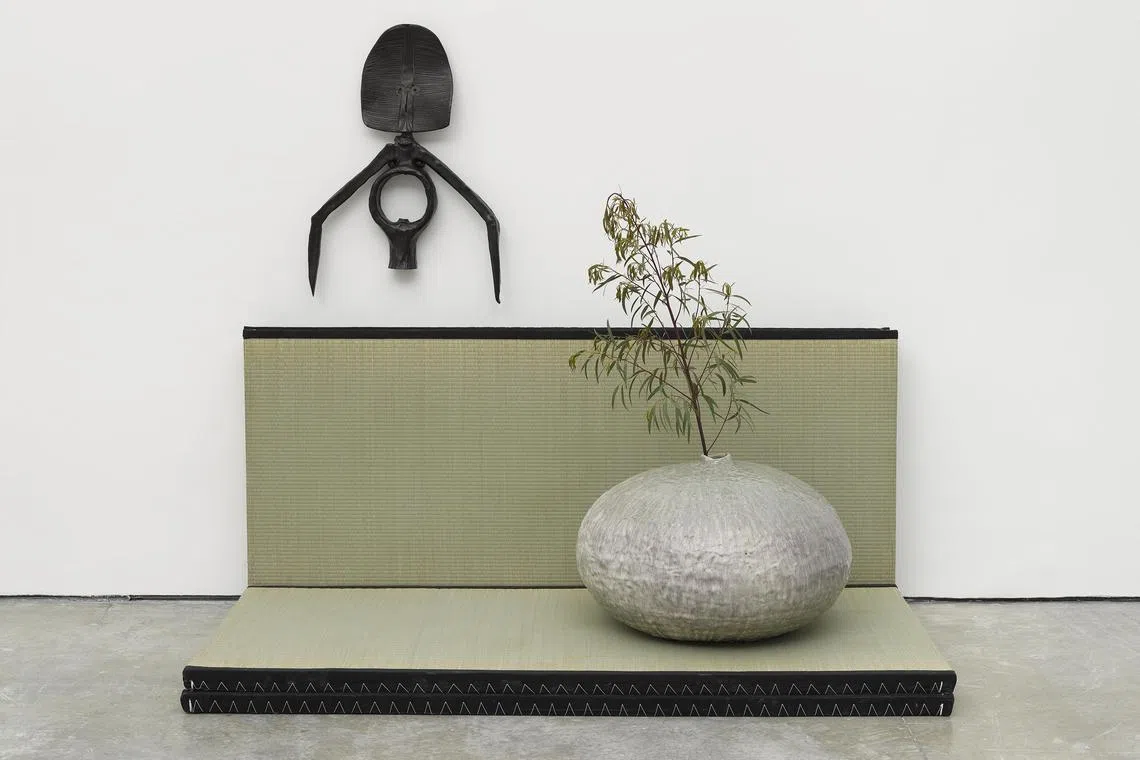
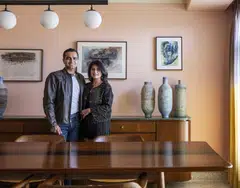
Another work to look out for is Gates’ sublime spiritual and cross-cultural installation made out of stacked tatami mats, a large clay vase and a cast bronze wall sculpture resembling a mask. Gates’ practice frequently revolves around themes of urban planning, social justice, and cultural preservation in the African-American community. But here his work titled Afro-Ikebana seeks inspiration from African and Japanese Shinto belief systems and iconography to create a hybrid spiritual structure that evokes its own kind of hushed and sacred reverence.
Asian sensations
On the Asian side, there are also many outstanding works. But one of them is particularly notable for its coincidental resonance with African culture: Singapore artist Chen Yanyun’s installation exploring keloid scars and their cultural implications. While some indigenous African cultures see keloid scars as a mark of beauty or ethnic identity, Singaporeans often see them as skin abnormalities that should be hidden or else removed through painful and costly procedures.
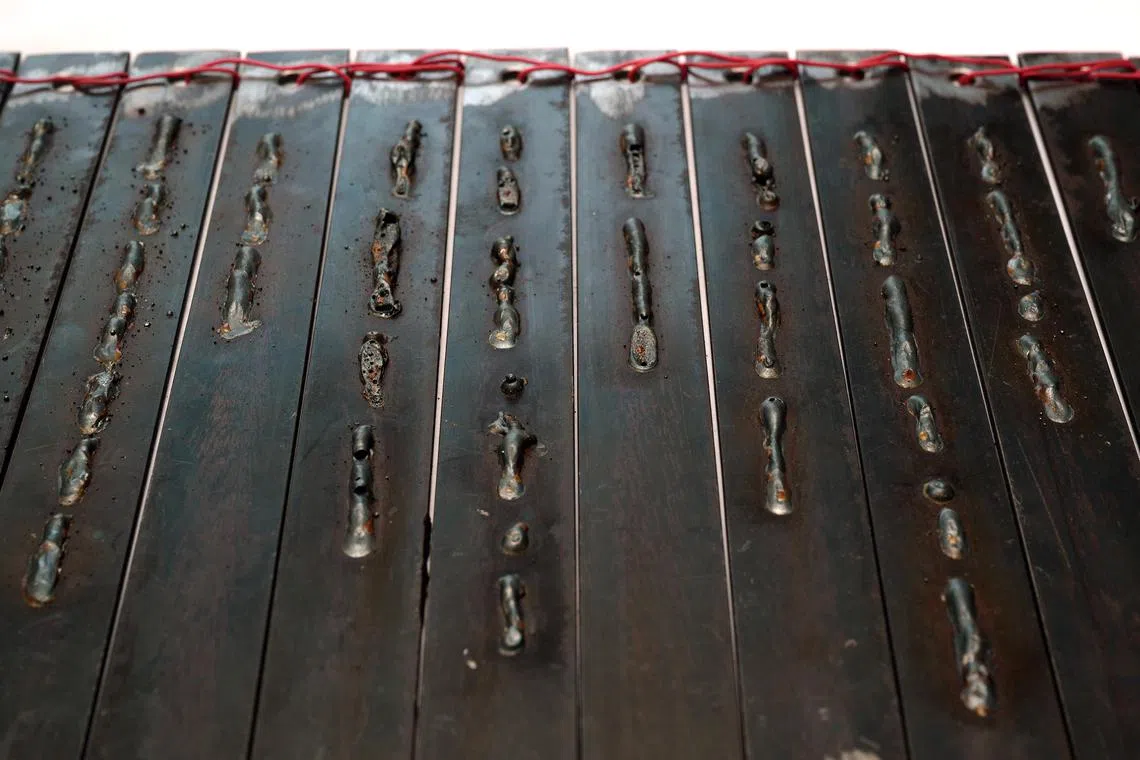
In her work Scar Writings, Chen engraves keloid-like marks onto thin steel plates and arranges them to resemble a traditional Chinese bamboo scroll, symbolically referencing bodily scars as a unique form of communication. Keloid scarring runs in her family, and the work feels like an attempt to challenge its stigma and celebrate its resistance in the face of societal norms, telling an alternative story of strength, endurance and familial connections.
Curator Whitley says: “There are so many recurring themes in the exhibition that deal with our collective experience as diasporic communities from Africa and Asia. Themes such as displacement; the sense of trying to find one’s community, belonging and family; the sense of finding our place in this world; the sense of finding poetry in our everyday life… We’re looking for synergies between the two continents, rather than a clash of cultures.”
Translations: Afro-Asian Poetics runs from Jan 18 to 30, 2024, at six venues in Gillman Barracks and Nouri restaurant on Amoy Street, as part of Singapore Art Week. Admission is free.
Decoding Asia newsletter: your guide to navigating Asia in a new global order. Sign up here to get Decoding Asia newsletter. Delivered to your inbox. Free.
Copyright SPH Media. All rights reserved.






