

Over half of Singaporeans rely on social media to discover new restaurants: study
New research also examines how Singaporeans classify their dining personalities
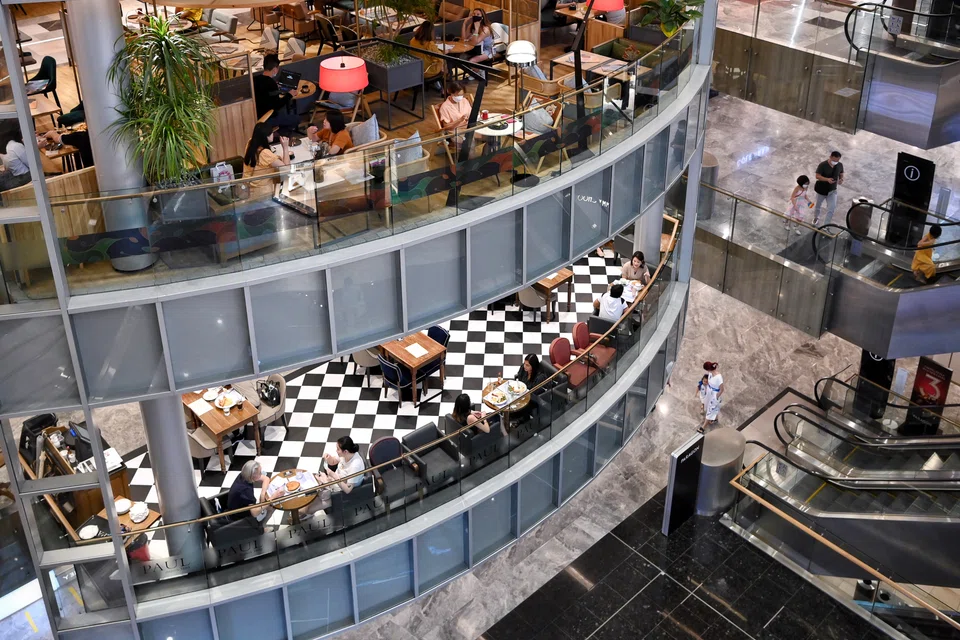
SINGAPOREANS rely heavily on social media and personal referrals when looking for information on new restaurants, and prefer to book directly with eateries, thanks to incentives that come with direct reservations.
This is according to new research by guest experience and retention platform, SevenRooms and independent consumer research agency Antenna, the findings of which were shared with The Business Times. SevenRooms handles, for example, reservation, waitlist and table management, online ordering, review aggregation and e-mail marketing in the hospitality industry.
The research team polled 1,021 Singaporeans aged over 18 across the nation in March.
The study, which sought to understand the relationship between venues and consumers, showed that more than half (52 per cent) of Singaporeans used restaurant profiles on social media; 43 per cent relied on influencers on social media to hear about and discover new dining options.
Social media discovery was surpassed only by personal referrals from friends and family, at 71 per cent. For Gen Zs, however, 59 per cent said they relied on restaurants’ and influencers’ social media posts, topping Google as a primary channel of discovery, which came in at 43 per cent.
For the general population, the most prominent social media channels were Facebook, Instagram and TikTok, with 37 per cent of Singaporeans using Facebook, 33 per cent turning to Instagram and 24 per cent, to TikTok to discover restaurants.
Among 18- to 34-year-olds, however, Facebook was a distant second to Instagram, which 61 per cent of them used, compared to the 38 per cent for Facebook and 37 per cent for TikTok.
Singapore is a saturated hospitality market where competition is high, notes Paul Hadida, SevenRooms’ general manager (Asia-Pacific): “At the discovery phase, if venues simply sit back and rely on reputation or foot traffic, they’ll lose out on all the consumers who are using Google, social media, referrals, direct websites and more to discover and engage with venues.”
The study identified the top three most important factors for Singaporeans when dining at a new restaurant: convenience (78 per cent), cuisine (74 per cent) and personal referrals (47 per cent).

When making reservations, Singaporeans were found to prefer booking their upcoming meal directly with a restaurant through its website (59 per cent), a phone call (45 per cent) or in person (24 per cent). SevenRooms says this is supported by its internal data, which shows direct bookings accounting for 97 per cent of all covers booked with Singaporean venues.
Singaporeans making direct reservations were more likely to be drawn by a better seating location (44 per cent), better overall dining experience (40 per cent) or complimentary drink or appetiser (39 per cent). Further, 52 per cent of respondents said they were more likely to book directly if that made it easier for staff to manage their reservation preferences, such as allergies or preferred seating location.
Restaurants can leverage on this.
Hadida says: “When guests book directly with a venue, that venue can collect approved guest data that can be used to provide personalised experiences based on their habits and preferences. When guests feel like they’re understood on a personal level like this, rather than targeted with a one-size-fits-all experience, their loyalty increases.”
Noting that personal referrals from friends and family “always have, and always will be incredibly impactful for venues”, he says this is why guest experiences from acquisition through engagement to retention are so important.
“Dining out is about more than just a meal,” he points out. “It’s a holistic experience.”
The research also looked into how Singaporeans classified their dining personalities.
“Spontaneous diners”, or people who dine out frequently but rarely book ahead, made up 28 per cent of the respondents. “Special-occasion diners”, defined as those who dine out largely for special occasions and who spend ample time researching suitable venues and menu, accounted for 23 per cent.
A further 23 per cent considered themselves “less-is-more” diners; they have a handful of go-to venues and always book ahead. These are the loyalists.
Operators should therefore tap into data to build holistic, real-time profiles of guests and use this information to deliver meaningful experiences that keep them coming back.
“For example, venues can segment customers by a love of wine, seafood, spending habits or visit frequency, and then target them with offers, discounts and communications based on these behaviours,” says Hadida. “When these personalised experiences are provided, retaining that ‘less-is-more diner’ is infinitely easier.”
Decoding Asia newsletter: your guide to navigating Asia in a new global order. Sign up here to get Decoding Asia newsletter. Delivered to your inbox. Free.
Copyright SPH Media. All rights reserved.
TRENDING NOW
‘My grandfather’s legacy’: Sherman Kwek lays out three-year plan for CDL to drive returns

He built the Vingroup empire. Now South-east Asia’s richest man is handing some key roles to his sons

Canada is upping oil flows to Asia, but South-east Asia’s refineries aren’t ready to handle them yet
What role can Japan play in Asean’s future?

