Pandan Initiative aims to help growth stage companies measure, prove social impact programmes
It specifically targets companies between eight and 30 years old
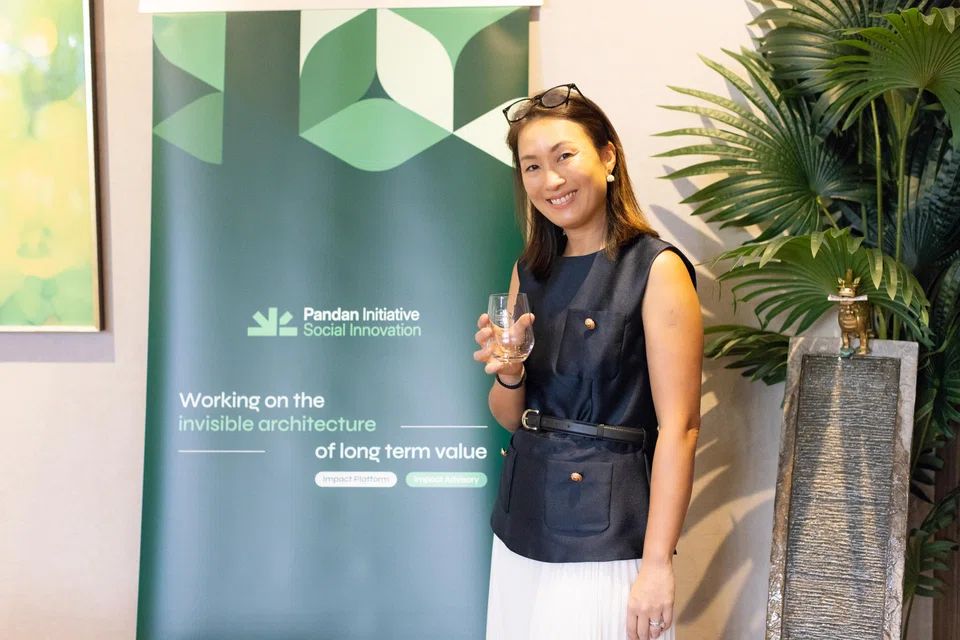
[SINGAPORE] Non-profit advisory platform Pandan Initiative aims to help 50 companies develop long-term social impact programmes and verified impact measurement reports by 2030.
CEO and founder Lyn Sia Rosmarin said the platform helps companies measure and prove their social impact, similar to how they look at financial returns. Pandan Initiative does advisory work and runs workshops for leadership teams on impact.
“There is no shortage of goodwill in Singapore’s system, from the government all the way to philanthropy. Everyone wants to do good, but the gap I identified was: There was no credible way at the decision-making level to see how much goodwill we are actually doing,” she said.
Pandan Initiative specifically targets companies between eight and 30 years old.
“I want to be able to help companies who are in the space of growing further, or already a mature company who’s done it right,” Rosmarin noted. “When a company goes up to that age, they are past survival mode. They are at the growth stage.”
She added that these companies have the resources to develop and implement social impact programmes, but lack the guidance and know-how.
Providing guidance
When Rosmarin first works with a company, she has a diagnostic interview with the founders to find out what impact they want to make. She does about three workshops with them to teach about impact, before crafting out a community programme.
Since Singapore does not have a standardised impact measurement framework, Rosmarin draws on international frameworks – such as social return on investment (SROI) and economies of mutuality – that can be adapted for each company. Lastly, she will help the company develop an impact report.
As someone who previously worked in finance for more than 10 years, Rosmarin emphasised the importance of data and reporting. She stated that having an impact measurement report makes a company more “creditworthy” and could help with expansion plans.


“There is no ROI to impact. You are doing it purely because you want to do impact, and I think this is where fear comes constantly for a lot of businesses. It’s a cost… But it’s long-term value. You differentiate yourself as a company.”
This is especially important as many Gen Zs care about the integrity and reputation of a company, and will be attracted to companies that engage in social impact, she said.
Rosmarin observed that companies nowadays have a fear of impact washing, which occurs when organisations misrepresent the positive social and environmental impact of its practices. The impact space also has confusing jargon that could be used wrongly.
“Tackling impact washing is important because we have to make sure that for whatever work that we do, there must be some verification process. Even when I’m doing my own advisory, I’m choosing frameworks that are being used overseas,” she said.
Pandan Initiative in action
For example, over five months, Rosmarin worked with a pelvic health physiotherapy clinic called Physio Down Under to develop a community programme helping underserved women – such as migrant workers and domestic helpers – access treatment under a sponsored or subsidised model.
The eight-year-old company is currently seeking philanthropic partners to fund subsidised pelvic healthcare for beneficiaries who have no insurance cover. “As an indication of scale, a programme of around S$100,000 can fund a full course of care for roughly 70 women,” Pandan Initiative stated.
In this case, the initiative is using two tools to measure the programme’s impact.
One is the Patient Wellbeing Impact Score, which tracks levels of pain, function, mental health and workforce participation.
The other uses SROI methodology, mapping activities to productivity regained, healthcare cost avoidance and quality-of-life improvement.
Based on Pandan Initiative’s early-stage modelling, it is projecting a two to 2.5 times SROI score for Physio Down Under. This indicates that the cost of investment generated twice the cost in investment social value.
For now, Pandan Initiative will help the first 10 companies on a pro bono basis, but Rosmarin said it may start charging companies for its services to be sustainable.
“In Singapore, we are all doing good every other day, but I feel... companies can do a lot more, and take it to a different level,” she said.
Decoding Asia newsletter: your guide to navigating Asia in a new global order. Sign up here to get Decoding Asia newsletter. Delivered to your inbox. Free.
Copyright SPH Media. All rights reserved.