On the path to net zero, architects race to design greener
As Singapore aims for net-zero emissions by 2050, architects are rethinking building design to meet that goal

Tay Suan Chiang
WHEN office folks need a break from staring at their laptops all day, nipping into the pantry or the nearest cafe may well be the most obvious options.
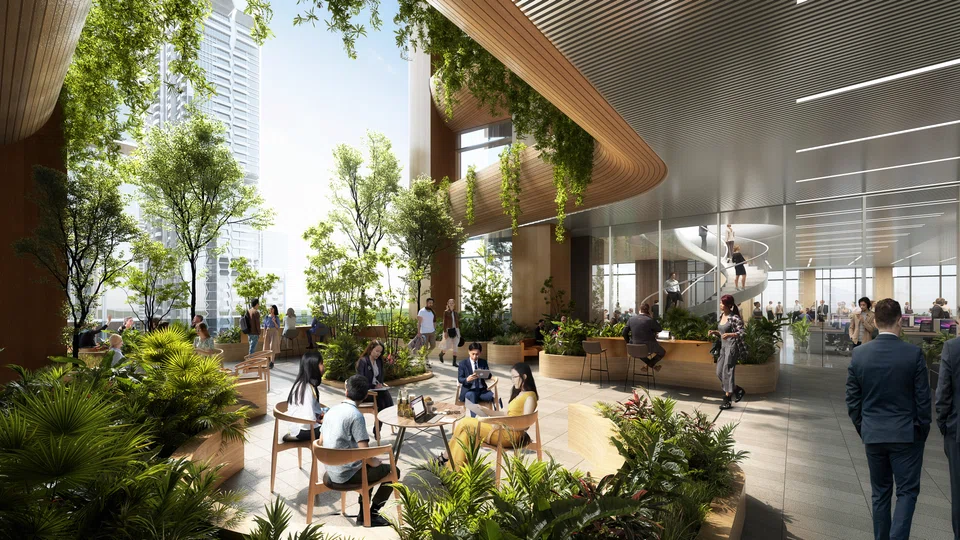
But imagine being able to step out for fresh air at an outdoor terrace whenever you want, or working with a panoramic view of the city or sea without leaving the building. For future tenants at 8 Shenton Way, that will be a reality when the 63-storey tower is completed in 2028.
The building, designed by American architecture firm Skidmore, Owings & Merrill (SOM), aims to obtain the Building Construction Authority’s (BCA) Green Mark Platinum certification, the highest sustainability certification in the region. For this, the building must have a 55 per cent energy reduction compared to the benchmark.
Regardless of typology and size, sustainable design is more often than not expected for new buildings and projects, and will help Singapore towards its commitment to achieve net-zero emissions by 2050.
8 Shenton Way
Built on the former AXA Tower site, 8 Shenton Way will house public and retail spaces, offices, a hotel and residences on the topmost floors. Owned and developed by Perennial Holdings and its consortium of investors, the building is designed by SOM, together with local architecture firm DCA Architects.
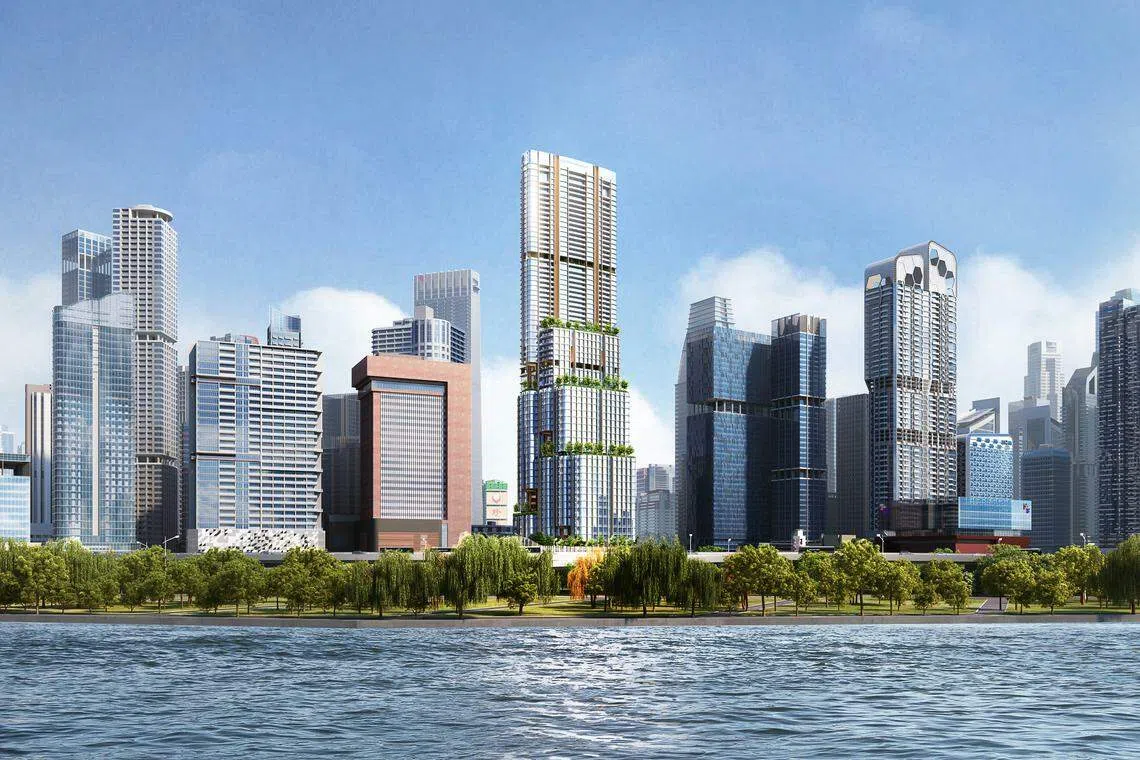
SOM’s design partner, Mustafa Abadan, says that the 305 m building will not only be the newest landmark in Singapore, but “the most sustainable vertical tower to be designed at the moment”.
'%3e%3cpath%20d='M12.1475%2025.5262C13.7713%2025.4295%2014.94%2023.913%2014.94%2021.8832C14.94%2019.5359%2013.474%2018.093%2011.5917%2018.093C11.3745%2018.093%2010.9582%2018.093%2010.8393%2018.1413V25.2086L11.8891%2025.5745C11.8891%2025.5745%2012.207%2025.5262%2012.1475%2025.5262ZM11.4934%2017.6281C13.2567%2017.6281%2014.3843%2016.4292%2014.3843%2014.4501C14.3843%2012.372%2013.275%2011.2973%2011.4339%2011.2973H10.8393V17.6305H11.4934V17.6281ZM6.66078%2025.6482L7.39265%2025.5492C8.02617%2025.4502%208.26403%2025.3053%208.26403%2025.1097V11.6149C8.26403%2011.4193%208.1451%2011.3709%207.23484%2011.249L6.68137%2011.173L6.6219%2010.7588H11.9508C15.7153%2010.7588%2017.0624%2012.0797%2017.0624%2014.1578C17.0624%2015.9666%2015.7748%2017.1909%2013.4969%2017.6305V17.7041C16.111%2017.948%2017.6571%2019.5382%2017.6571%2021.7636C17.6571%2024.3318%2015.8937%2026.0417%2012.1109%2026.0417H6.60132L6.66078%2025.6482Z'%20fill='%232B2B2B'/%3e%3cpath%20d='M20.6287%2025.6505L21.5596%2025.5515C22.1725%2025.4779%2022.4104%2025.3076%2022.4104%2025.112V11.249H21.9346C20.073%2011.3479%2018.982%2013.0095%2018.408%2014.6227L18.1907%2015.5018H17.6555L18.1701%2010.7588H29.3837L29.6421%2015.4787H29.1664L28.9491%2014.6227C28.3728%2012.8645%2027.3047%2011.2743%2025.5002%2011.249H24.9856V25.1856C24.9856%2025.3812%2025.1251%2025.4548%2025.9965%2025.5515L26.7695%2025.6505L26.829%2026.0417H20.5693L20.6287%2025.6505Z'%20fill='%232B2B2B'/%3e%3c/g%3e%3cdefs%3e%3cclipPath%20id='clip0_5242_21648'%3e%3crect%20width='24'%20height='16.8'%20fill='white'%20transform='translate(6%2010)'/%3e%3c/clipPath%3e%3c/defs%3e%3c/svg%3e)
Abadan says there’s no one single feature that allows him to make that claim, but rather, an aggregate of several elements.
For starters, 8 Shenton Way will reuse part of the existing foundation and infrastructure. SOM’s design principal Nicolas Medrano says this helps to minimise material use and also lower the carbon footprint.
Natural materials will also be used for the building facade, including champagne-coloured terracotta and engineered bamboo. Energy-efficient glazing will be used on its glass windows, while recyclable aggregates are incorporated in its concrete structure.
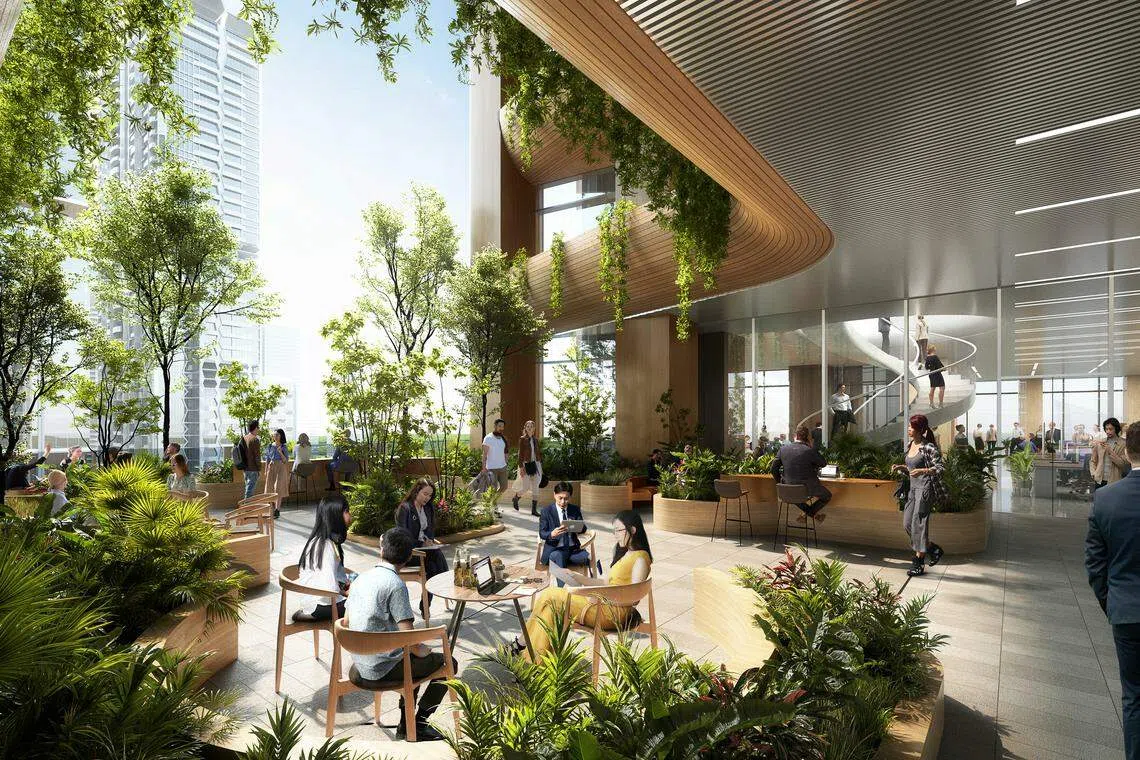
Abadan says a large part of energy consumption will go towards cooling the building, so 8 Shenton Way is tapping into the district’s cooling plant to be more energy efficient.
The orientation of the building, facing Tanjong Pagar to the north and the South China Sea in the south, will also help keep the building cool.
Abadan adds that 8 Shenton Way “will be one of the first post-pandemic mixed-used towers in the world incorporating health and wellness as its primary design drivers”.
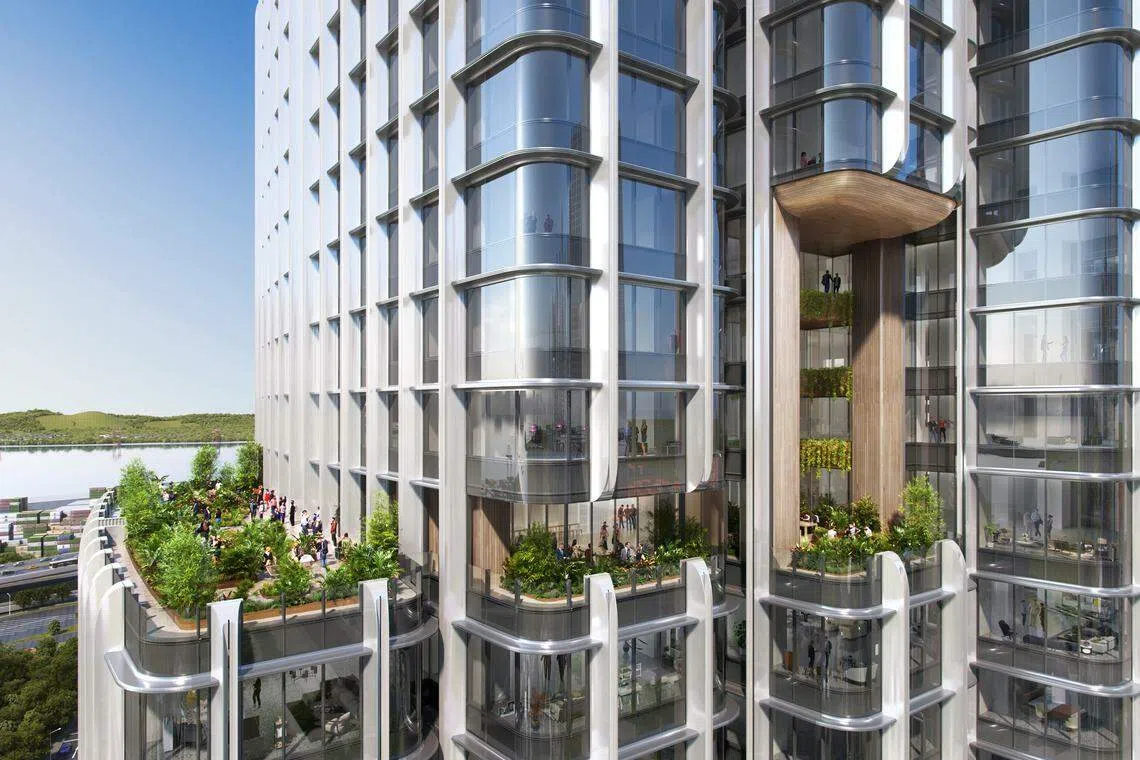
There will be several landscaped sky gardens and terraces throughout the height of the tower, giving occupants outdoor chill-out spots.
Within the building, contactless technology predominates, along with antimicrobial materials, adaptable interior spaces such as multi-floor offices with connecting stairs, and enhanced air flow and filtration systems.
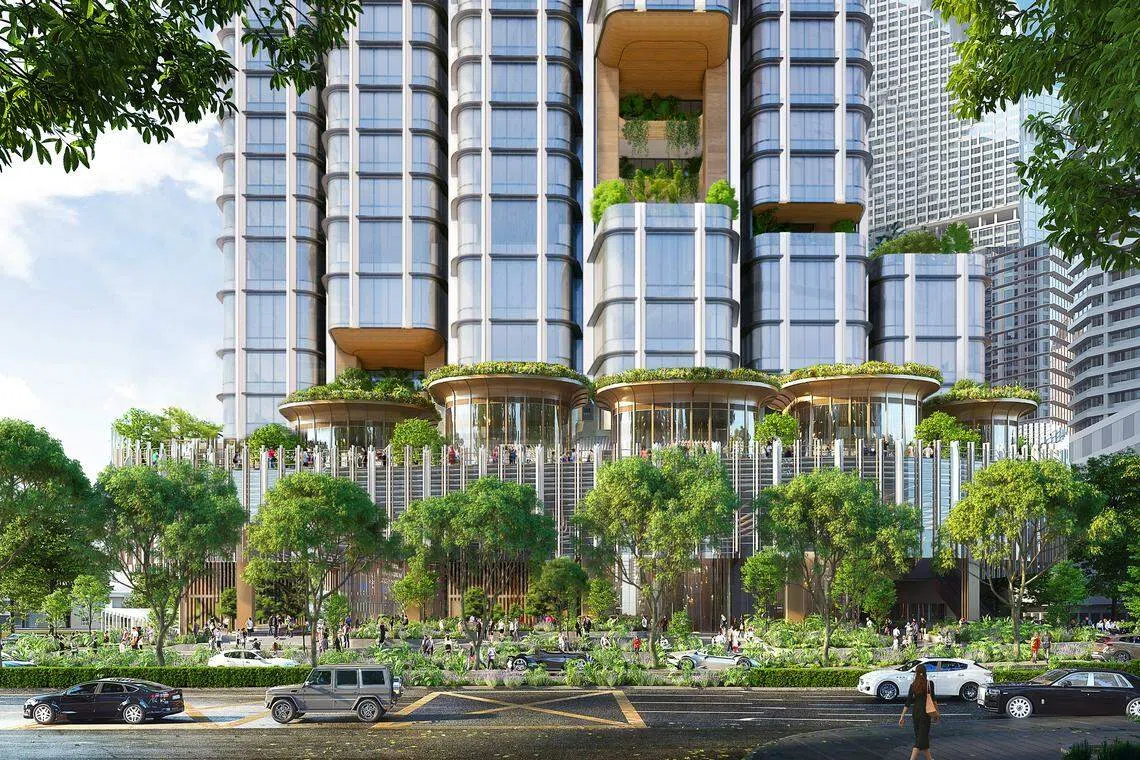
The public will also get to enjoy the outdoor spaces on the ground floor and on the second floor; there will be an open-air green space, with restaurants in a garden setting.
In all, SOM has designed more than 10,000 square metres of elevated, public green space, which exceeds the footprint of the entire site.
SaladStop! CapitaSpring
When customers tuck into a salad or a protein bowl at SaladStop!’s CapitaSpring outlet, they aren’t just dining at one of the chain’s 14 locations in Singapore. Instead, they are also contributing to the firm’s goal of reducing its carbon emissions.
SaladStop!, which started in 2009 and now has 69 outlets across seven countries, has made it its goal to become the first Asian food and beverage chain to achieve net zero across all its new and existing outlets by 2030.
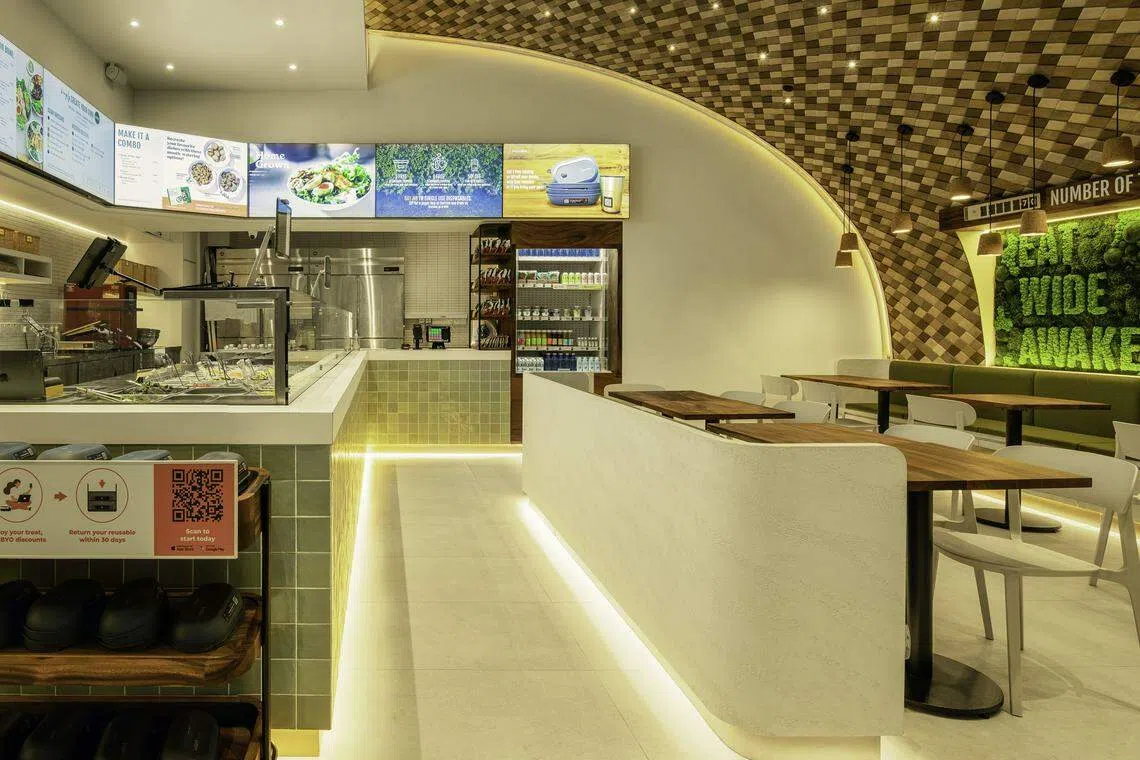
Net zero is about achieving the balance between the amount of greenhouse gases produced, and the amount removed from the atmosphere.
Adrien Desbaillets, chief executive officer and co-founder, says the company has always focused on developing environmentally conscious food and operations since day one. But rather than pay lip service, two years ago, it decided to make a commitment to achieving net zero.
He adds: “By evolving our business strategy to include net zero, we are transforming our governance and processes, making sure we have the right structures in place to not only monitor progress, but make long-term decisions about our future.”
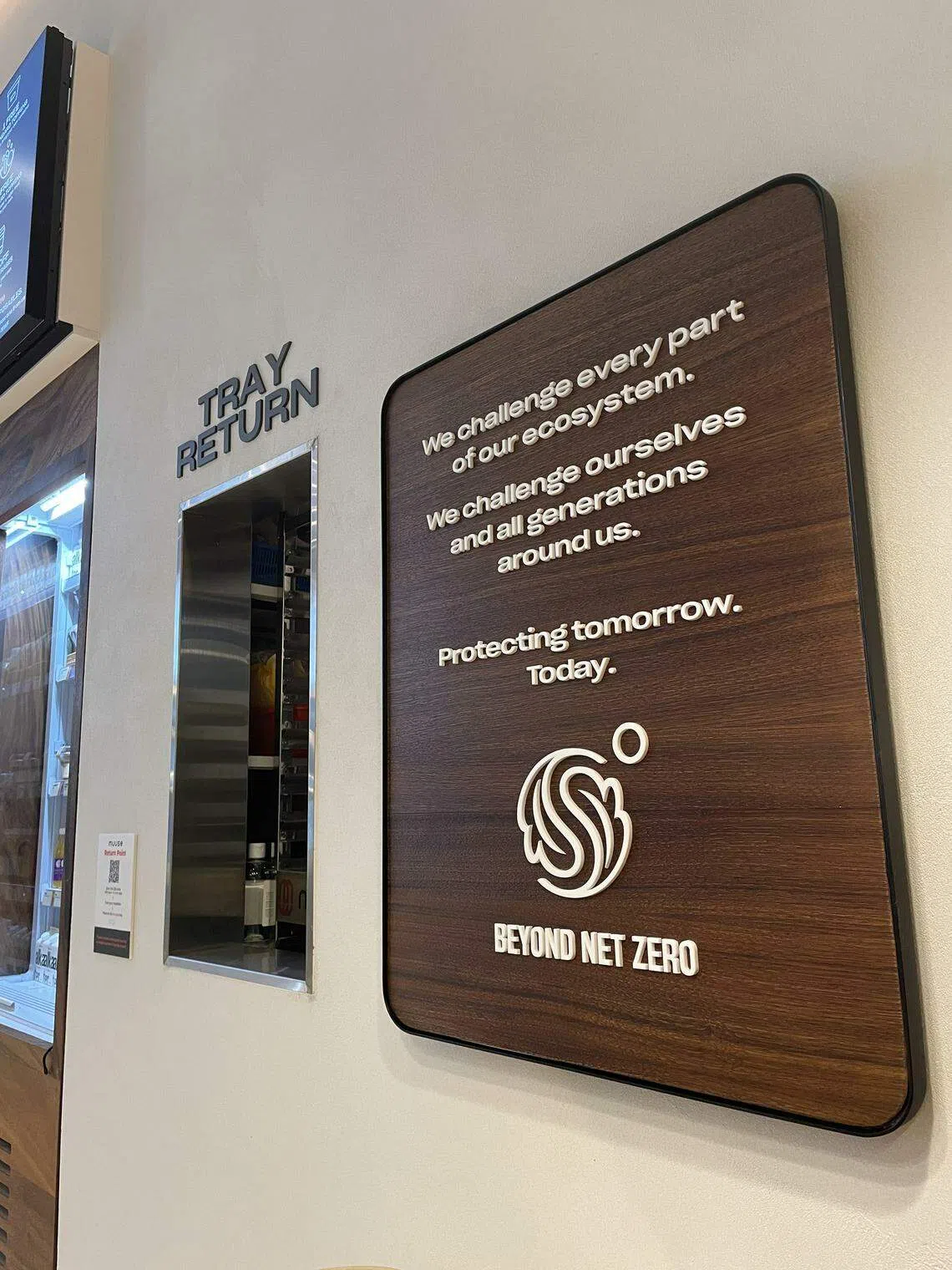
Its first net-zero store at CapitaSpring has been two years in the making, starting with a full carbon assessment by Unravel Carbon, which helps companies track and reduce their carbon emissions.
The assessment looks into how and where the outlet can reduce carbon emissions, such as taking into consideration its design, and ways to offset any remaining emissions.
To help with the design of the net-zero store, SaladStop! enlisted the help of award-winning design firm Pomeroy Studio, which is no stranger to designing sustainable projects. In 2015, it designed the first carbon-negative home in Singapore.
Led by founder Jason Pomeroy, the team incorporated upcycled and recycled materials into the design.
For example, the tiles on the ceiling, which come in various shades of grey and white, are made of plastic waste. The chairs are recycled plastic, while the tables are made of wood from trees felled for urban development.
The green feature wall is created using plants that have been treated with a biodegradable liquid that reduces the need for frequent watering.
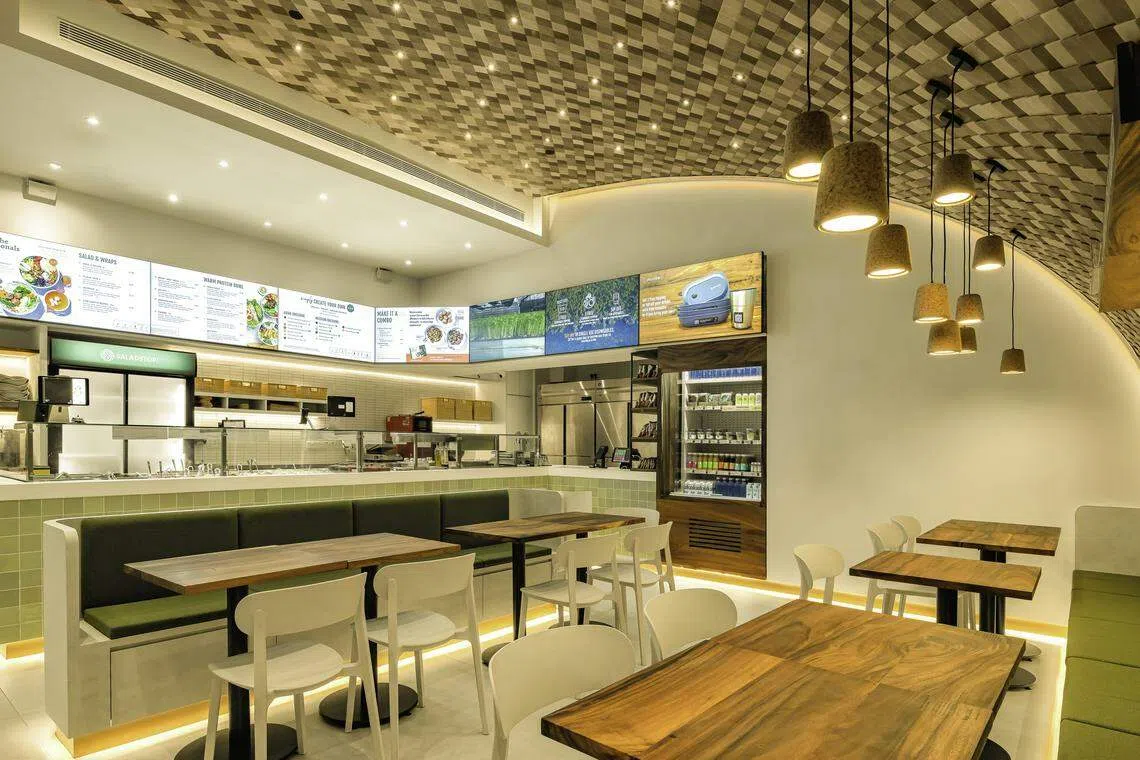
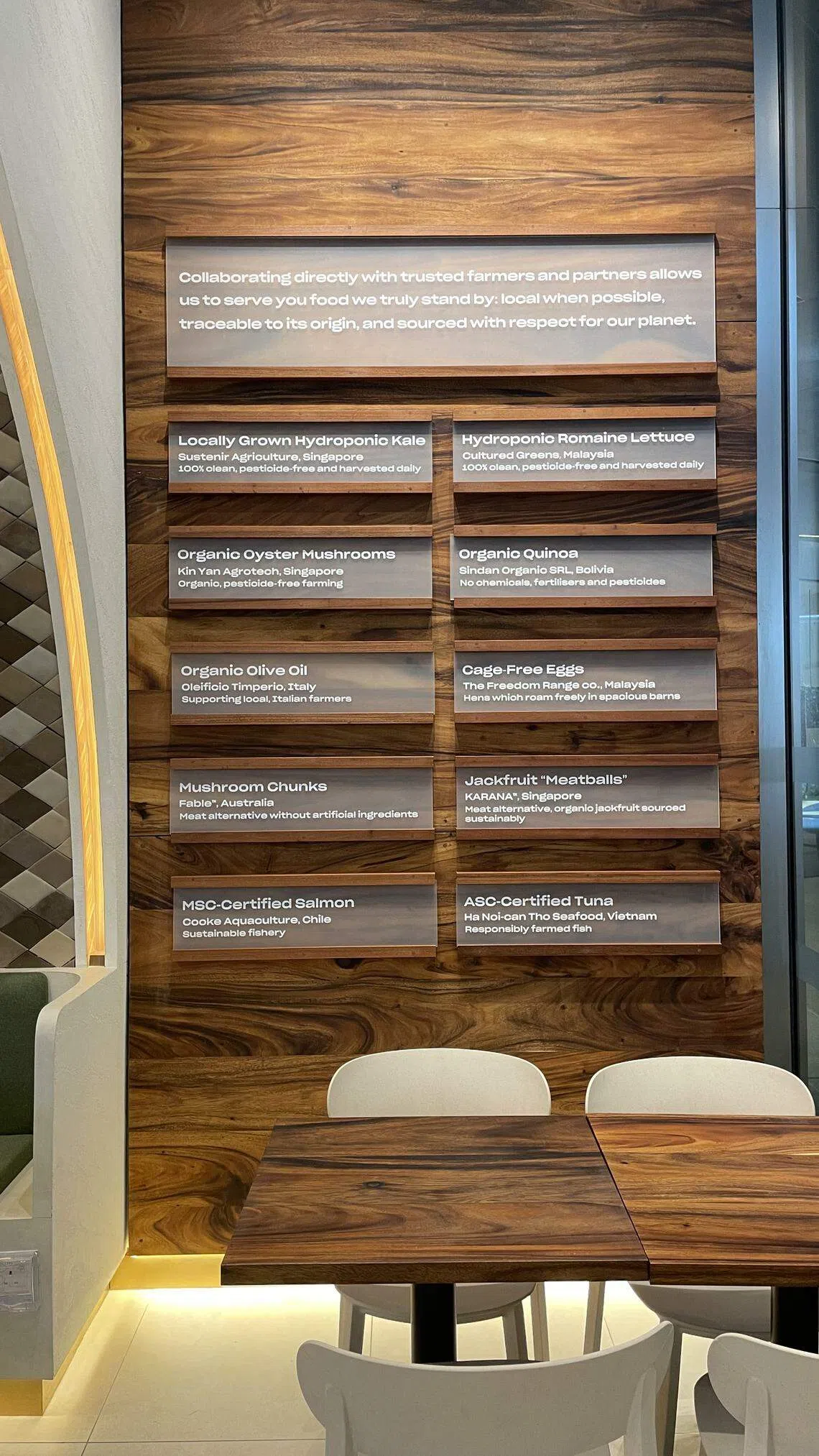
This net-zero store offers more than just sustainable design. Its operations have also been redesigned to help lower carbon emissions. For example, ingredients are sourced from sustainable farmers, customers have the option to borrow reusable containers for their takeaways, and food deliveries from this outlet are done by foot or on bicycle, to ensure that no carbon is emitted during the delivery journey.
SaladStop! also supports a mangrove reforestation project by planting trees for every meal sold.
According to Unravel Carbon, the CapitaSpring store is estimated to have operational emissions of 117 tonnes of carbon dioxide equivalent (CO2e) annually, compared to 126 tonnes of CO2e per year in an older SaladStop! store and 558 tonnes CO2e per year as an average across the food-and-beverage industry for a similar-sized quick service restaurant.
Pomeroy says, “Clients are now more interested in incorporating sustainable features into the design of their spaces.” The outlet’s sustainable design can be replicated in other stores.
He believes more of such net-zero spaces will be more common in the future, “especially when this is a people-driven direction rather than a policy-driven one”.
Frontier at National University of Singapore
Those who are of a certain vintage would remember the old canteen at National University of Singapore’s science faculty as this big structure which served good food, but wasn’t the most pleasant environment to dine in – the way the canteen was designed trapped hot air under the ceiling.
All that is gone and in its place is Frontier, a two-storey building with the student centre on the second floor and an open-air canteen on the first.
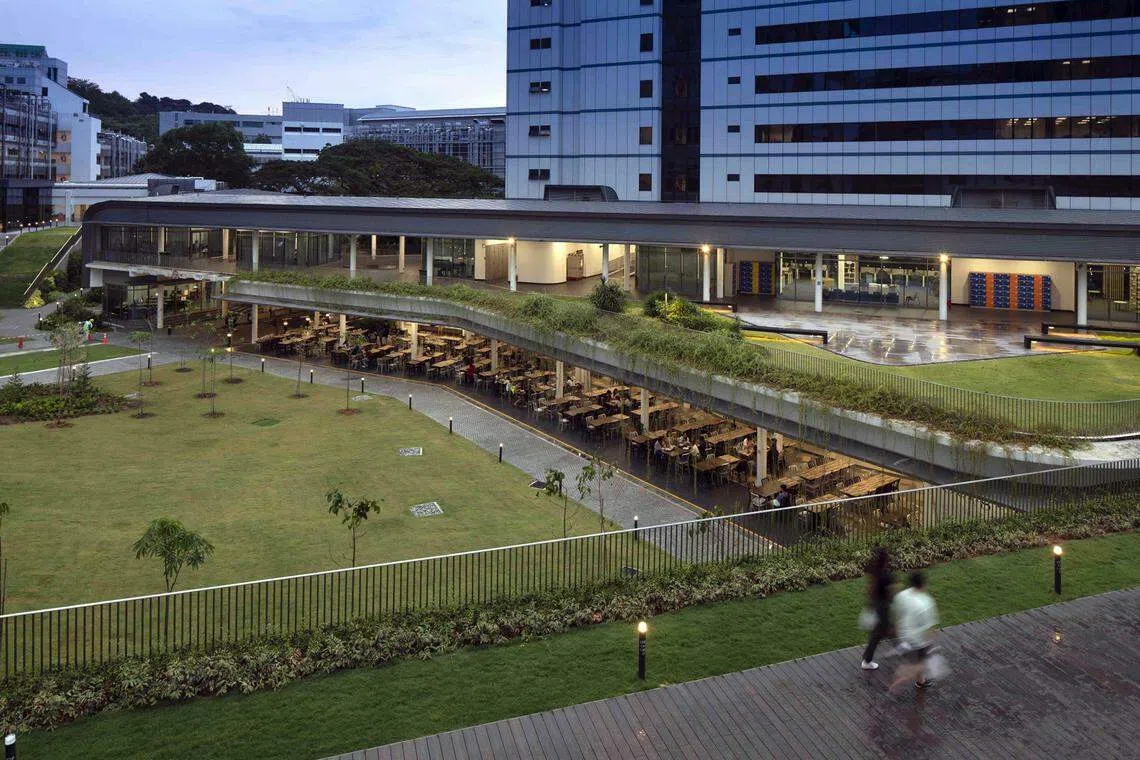
The building was designed by AR43 Architects, which has designed several other buildings in NUS during the last decade.
For Frontier, its founder Lim Cheng Kooi designed the building to blend with the existing landscape, taking into consideration the existing undulating terrains with minimal excavations and earth fills, while still managing to provide seamless connectivity to the surrounding buildings.
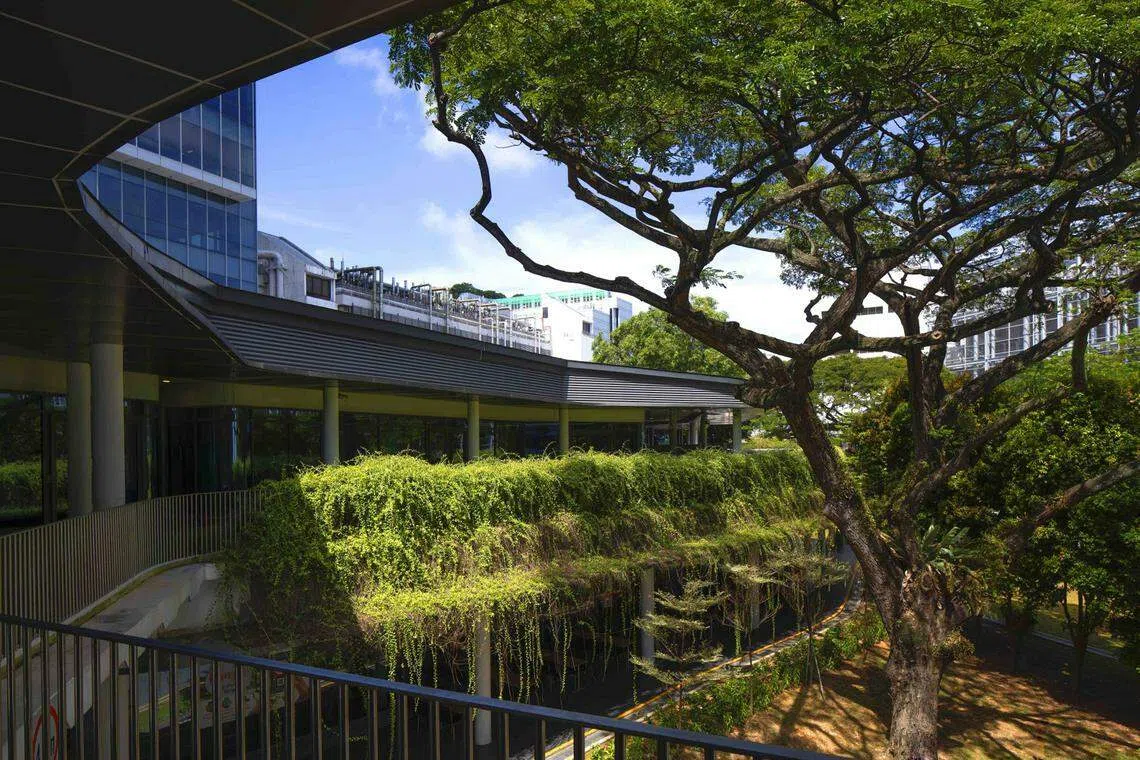
While there was no requirement to do so, Lim kept the existing mature rain trees on site, which serve as landmarks and give the building an organic shape.
Wind flow studies were done during the design stage to ensure that the building would enjoy the most air flow. For example, the canteen seats are sited near an open green space, not only for the view, but so the area would have the breeze flowing through. The creation of an air well near the entrance of the canteen also helps increase air circulation.
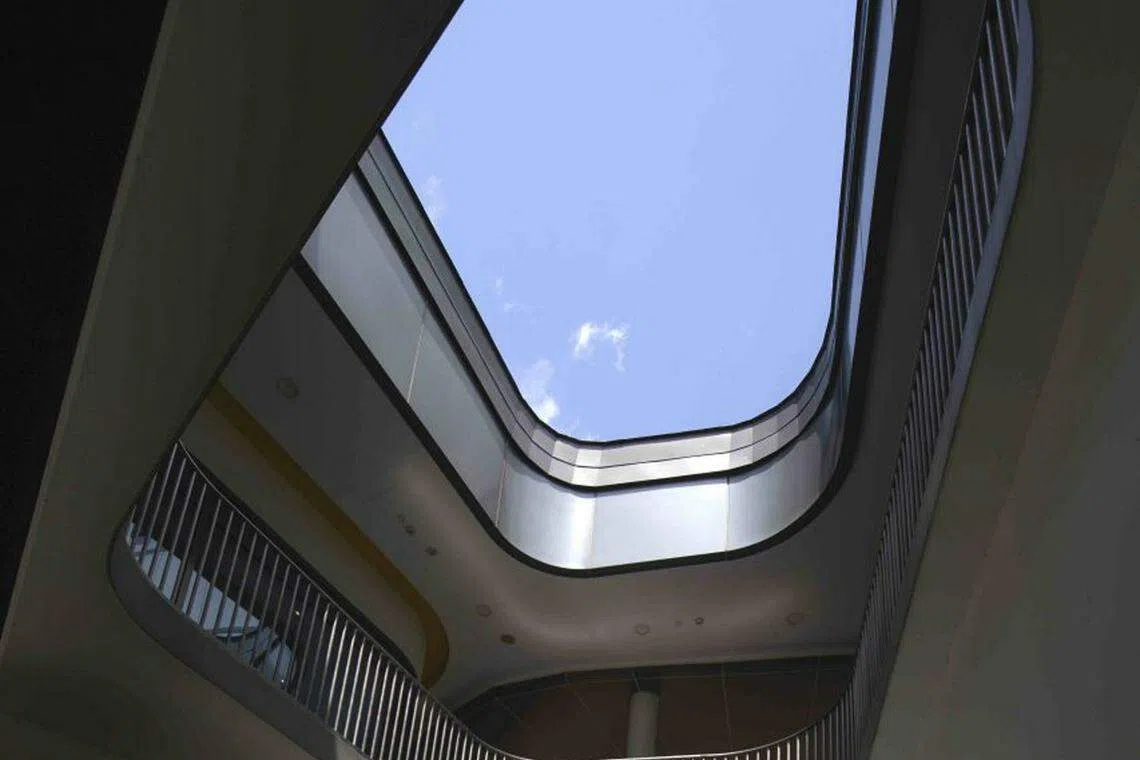
Despite Frontier being sited next to the open green space, Lim added more green spaces on the second level. He says that the additional greenery not only provides visual relief to the vicinity, but also enhances the community space – students are known to hang out here in between lectures.
Having greenery instead of heat-absorbing surfaces also helps keep rooms on the second level cool.
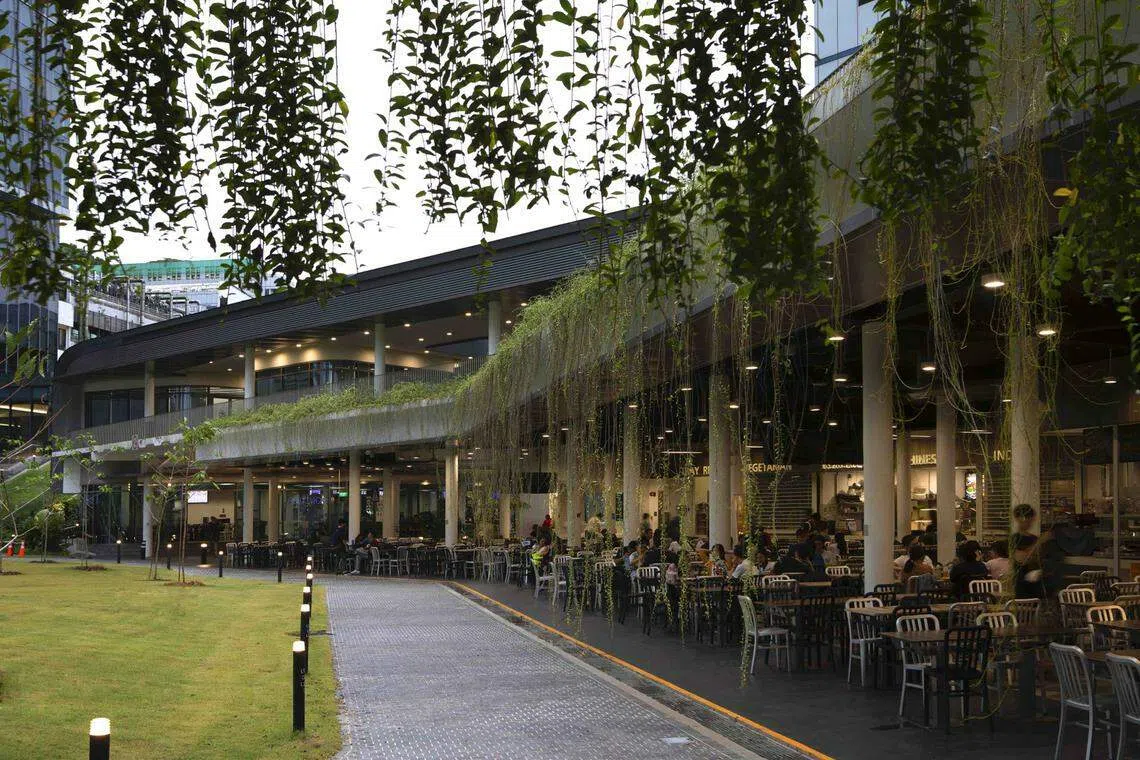
The use of shrubs and creepers on the second floor growing down towards the canteen gives the space a hanging garden-like feel. “They serve as a visual screen, as a shading device and also help keep heavy rain out,” says Lim.
Frontier has won three awards for its sustainable design. They include the BCA Green Mark Platinum award in 2017, the Asean Tropical Building - Energy Efficient Building Award 2020 and the Zero Energy Building award at the Asean Best Practices for Efficient Buildings Awards this year.
Lim says: “The project reiterates our design approach in acknowledging a deep responsibility to the built environment, understanding both the physical and emotional reconstructive potential of architecture.”
Lazada One
Tearing down an old building and rebuilding a new one from scratch is common in Singapore, but a more sustainable approach is to reuse the existing building.
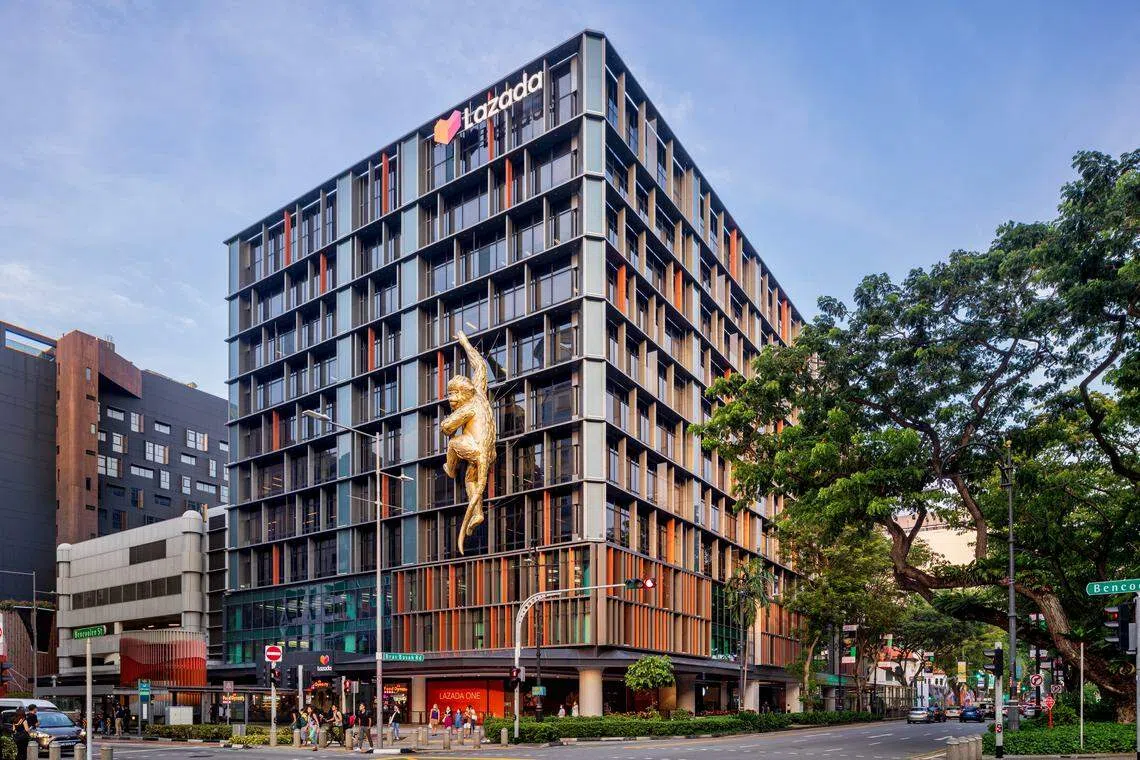
DP Architects is no stranger to regenerative design, seeing how they have refurbished a 1989 development to become the new Lazada One building at Bras Basah Road.
The architecture team says that doing this significantly reduces carbon emissions through simple but well-thought design intervention.
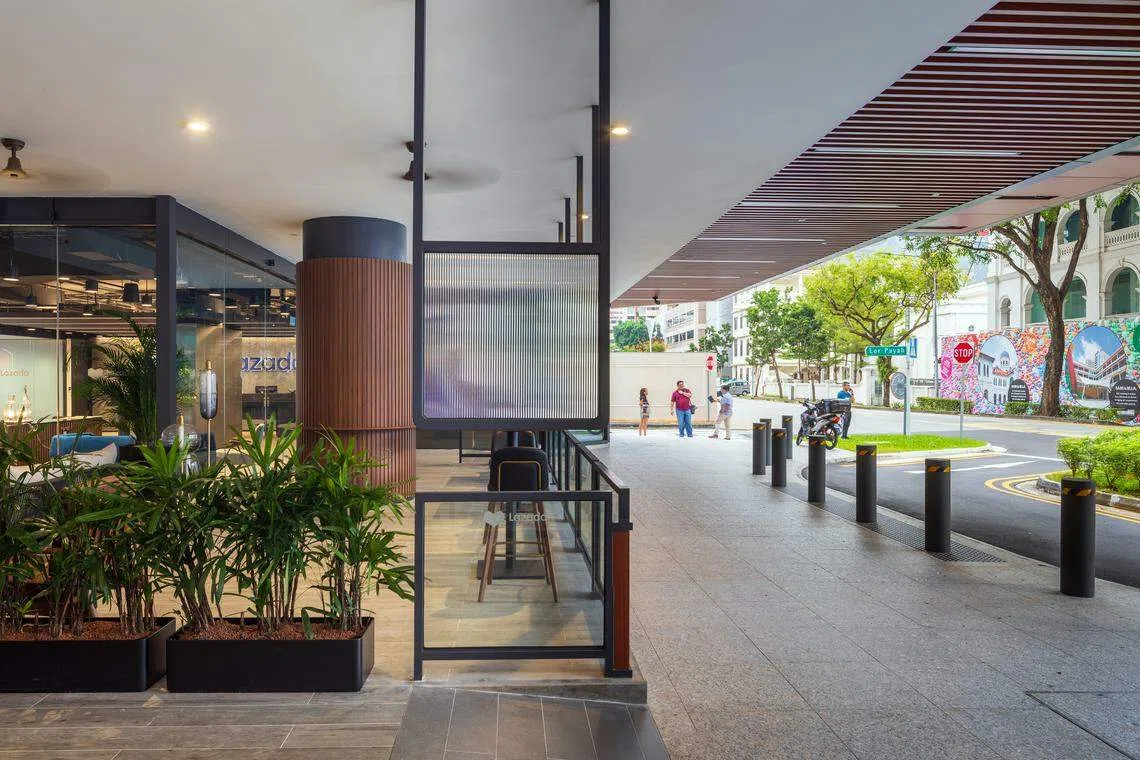
As part of the rejuvenation, the team focused on circulation, connectivity and context.
For better circulation, the ground floor was designed with pedestrian movement and smooth traffic flow in mind. This, in turn, generates better connectivity between the office building and its adjacent MRT station.
At the same time, commercial spaces on the ground floor were also revitalised.
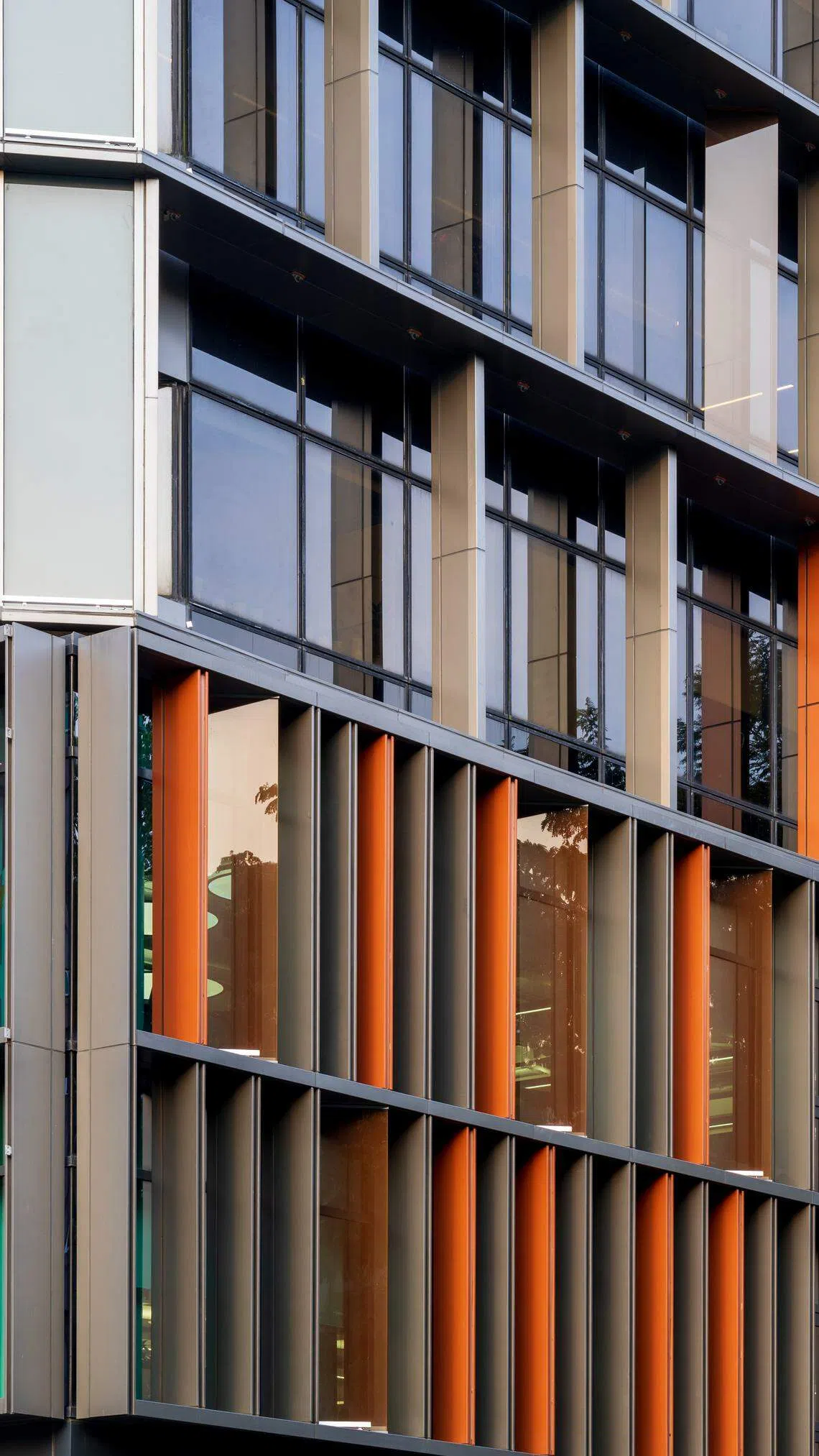
To keep the building’s original architectural character, the existing curtain wall structure was kept, thereby minimising construction waste. The addition of colourful vertical fins gives the building facade a more contemporary look, while at the same time providing shade to the internal spaces and reducing heat by 40 per cent.
For its sustainable design interventions, the project was accorded Green Mark Platinum by BCA.
Bukit Canberra integrated sports and community hub
For Sembawang residents, the new Bukit Canberra integrated sports and community hub will be the hotspot in the neighbourhood for food and sporting activities.
But residents will also appreciate the sustainable features that have gone into the design of the hub by DP Architects.
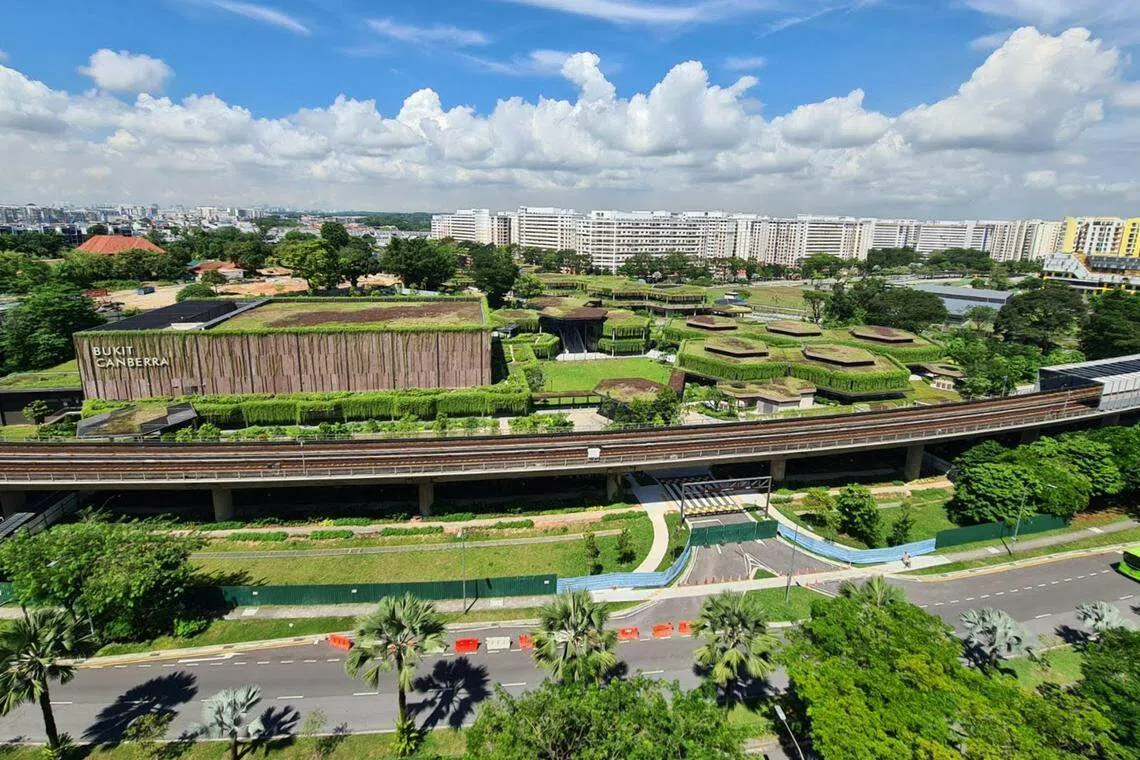
The architectural team says that Bukit Canberra was designed in alignment with community aspirations and sustainability goals to create a sense of identity and contribute to positive climate change, respectively.
The lush greenery, including 460 existing trees that have been retained, creates a park-like environment around Bukit Canberra, while cycling and jogging trails connect to the larger park connector network.
Inside the sports hall, materials such as glued laminated wood and cross-laminated timber for the roof provide a rustic charm. The use of these two materials reduces the need for piling, which minimises negative environmental impact in the high-granite area of Sembawang.
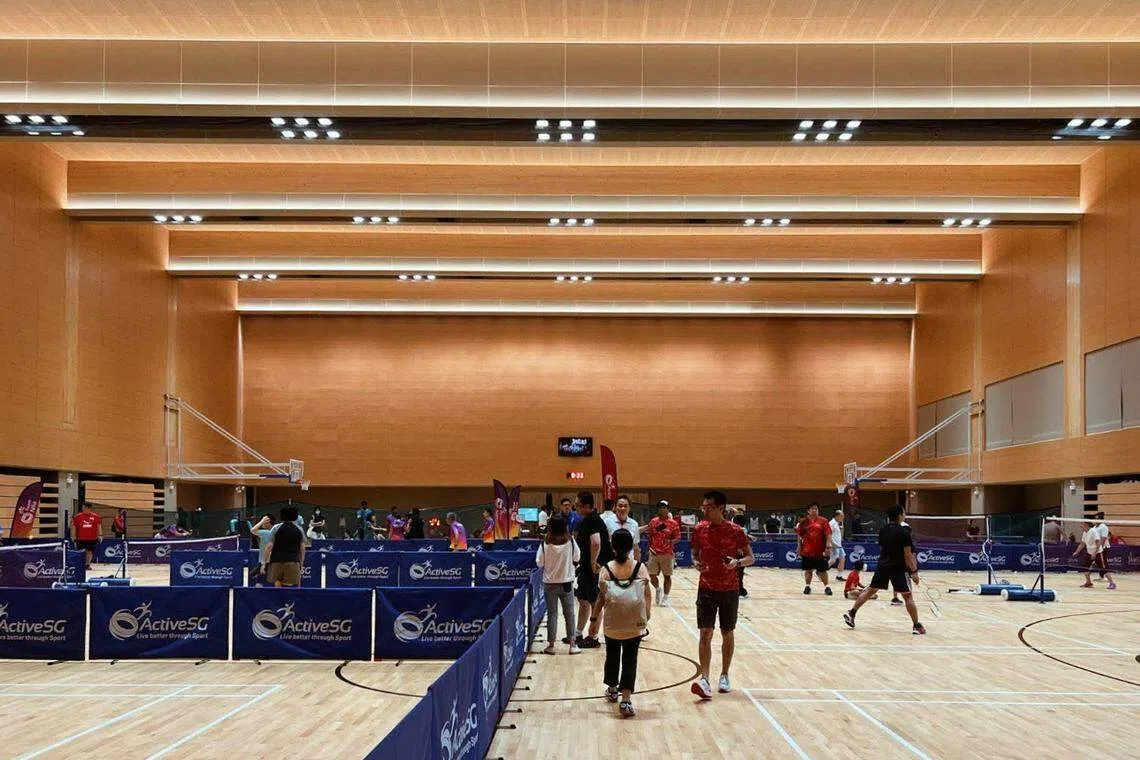
Next to the sports hall are hexagonal modules which house different functions such as the hawker centre, health labs and other studios. The team says that the hexagonal form allows for better natural air circulation between the various spaces, while at the same time mimicking the layout of a village.
Each module also has high ceilings and large canopy overhangs to reduce ambient temperatures.
Greenery on the roof of the modules and the sports hall also helps reduce heat on the buildings, while allowing the community to enjoy the therapeutic gardens and rooftop playgrounds.
Decoding Asia newsletter: your guide to navigating Asia in a new global order. Sign up here to get Decoding Asia newsletter. Delivered to your inbox. Free.
Copyright SPH Media. All rights reserved.