

Pleasure from inexpensive wines
Examples of such wines abound and they are just as enjoyable as the more expensive ones.
IN light of the sombre economic situation, it seems timely to take a good look at the world of inexpensive and good wines available today. There is a wide variety from both traditional and more recent sources, wines which are not just enjoyable but able to take on almost all Asian cuisine, except perhaps for the most fiery.
I refer to them as inexpensive and enjoyable rather than the pejorative "cheap", a label often interpreted as "cheap and nasty"!
A small clarification first. The term "Second wines" refers to wines such as Carruades de Château Lafite and Les Forts de Latour ; these are wines from barrels from the same vineyards as those which were bottled as First Wine, such as Château Lafite, but which are not considered good enough to go into the blend for the Grand Vin. In other words, they are not as good as other better barrels of the same wine.
On the other hand, a wine such as Flor de Pingus is not the second wine of Pingus. It is another label, and a less-expensive one made by the wine grower, in this case Peter Sisseck, from fruit grown in vineyards other than that which provides the fruit for Pingus.
Flor de Pingus is Peter Sisseck's second wine, not Pingus's second wine. This distinction is very important. The second wine of Château Latour, Les Forts de Latour could be thought of as a "junior" Latour, while Flor de Pingus is not a "junior" Pingus! It is a second label from the same winery.
Incidentally, "second wines" are peculiar to Bordeaux, not any other major wine region.

Grand Cru, Premier Cru, Village
Burgundy, for instance, does not have "second wines" of Grands Crus. The classification of Burgundy wines is differently structured. The tier system of Burgundy's wines is simple and easy to understand. Grand Cru, Premier Cru and Village are in the official nomenclature. In airline language: First, Business and Economy!
There are no official or published classifications, as with those of Bordeaux and Burgundy, for wines from the Rhone Valley, Germany, Spain or, indeed, for the rest of the world. Very democratic, but making the life of the wine-lover more difficult. One needs then to understand and master the system individual to each vineyard region, which can be quite difficult.
German wines, for instance, are a minefield for wine-lovers. One needs to know what Kabinett, Spaetlese, Auslese, Goldkap Auslese, Beerenauslese and Trockenbeerenauslese mean. These are the names of the different classes of German wines, a system which is based on the degree of ripeness of the grapes - in other words, the sugar content of the wines. It is not difficult once you understand the basis of the classification. The best way is to visit the wineries and the growers, talk to them and taste their wines; it is a practical way of learning the meaning of those classifications. They are more than happy to welcome visitors. It is like being in a science laboratory! You get to taste each category or class of wine.
Inexpensive and enjoyable wines not only abound from every wine region but more and more new inexpensive wines are being made by top-flight growers in all major wine regions.
We begin as usual with Bordeaux. Here, the second wines of the Firsts are still rather expensive, well above S$100. It is wiser to look at the second wines of the Châteaux below the Firsts, especially those from the Third Growth downwards and into the non-Classified Growths, such as Château Bernadotte, Haut Medoc, a non-classified Château, in Bordeaux, inland from Pauillac, and owned by Château Pichon-Longueville Lalande. It makes very inexpensive, lovely enjoyable wines, drinkable young and which also age well.
There are lots more of such non-classified Bordeaux Châteaux on both banks of the Gironde River.
Generally, for more spicy dishes, I would look for a Bordeaux wine from the right bank of the Gironde, from Saint-Emilion or Pomerol. Merlot-based, they are softer, fruitier and more lush than the Cabernet Sauvignon-dominated wines of the Medoc. A no-brainer is Hubert de Bouard's Fleur de Bouard in the Lalande-de-Pomerol. Reliable, soft, round, rich and fruity, it is inexpensive, generally less than S$50 before GST. Its double the price of bigger brother is Le Plus de la Fleur de Bouard, very good, very rich and better structured. These two are very good no-brainers!
There are many more Bordeaux wines similar to the two above. Second wines of First Growths cost more than S$100. Pichon Lalande's second wine, La Reserve de la Comtesse, a lovely wine, is a very good one to start with. Thoroughly recommended also is Château Langoa Barton, Third Growth, the other Château owned by Anthony Barton of Château Leoville Barton. This Third Growth is always reliable whatever the vintage, quite full-bodied and balanced wine, lovely to drink, and costs a good, average price of around S$100. A wine for all seasons.
There are lots more Bordeaux wines similar to these, on both sides of the Gironde River. To go upmarket a little, Château Canon, Premier Grand Cru Classe "B" (Saint-Emilion) seriously merits consideration. I visited Canon last September and was very impressed by the huge improvement, not only in the wine, but in the entire property. Its 2014 (cask sample) and older brothers were very, very good.
Magnificent restoration
John Kolasa, the recently retired director of both Château Canon and Château Rauzan-Segla (Second Growth, Margaux), did a great job in restoring both properties, not just to their previous glory, but to even greater heights. I had known both properties and their wines under their previous owners, and am very happy to see how much further he has taken them.
Incidentally, Rauzan Segla, in the commune of Margaux on the Left Bank, may be just over budget in the context of this week's column, but if the budget can be stretched just a little, it is well worth the little additional expense. Very fine now, and very much a Margaux wine.
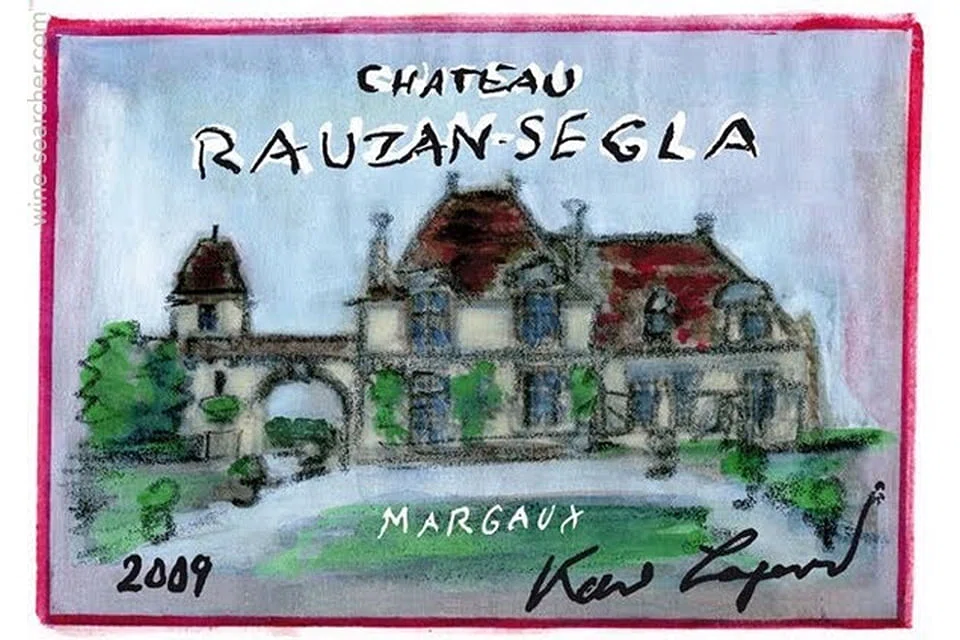
Château Rauzan Segla 2009, with its label designed by Karl Lagerfeld and commissioned by the Wertheimer family, owners of the famous fashion house of Chanel, is glorious (once you get past the label)! It is slightly out of the budget laid down for this week's column, but I have found these two Châteaux so enormously restored in recent years, not just to their previous heights, but well beyond, that I do wish to draw attention to these two Châteaux, Rauzan Segla, Deuxieme Cru Classe, and Château Canon, Saint Emilion Premier Grand Cru Classe "B".
Just for clarification, I am not involved in the commercialisation of these two wines. I just enjoy them.
Share with us your feedback on BT's products and services
TRENDING NOW

Nvidia reinstates Jensen Huang as CEO; Trump says move poses no national security risk

Beyond the greenback, Vietnam’s big borrowers turn to Asian-currency bonds

Indonesia’s coal tycoon Low Tuck Kwong replaced as Bayan Resources president-director

Six workers file employment claims against Crystal Jade Food Manufacturing

