

The priorities, purchasing habits and pain points of millennials
Results from a recent survey show that these digital natives are also reducing their online time

ARE you a millennial?
Because if you are, not only do you belong to one of the most influential demographic groups in the digital era, you are also a big part of the workforce. Currently aged 27 to 42, the youngest millennials have grown into fully-fledged adults, along with the relationships and responsibilities that come with adulting. Many are also married and have or are expecting to start families.
A recent report on what matters most to millennials, by audience research company GWI, found that while three-quarters of them are now employed full-time, less than a third identify as “career-focused”. This demographic is also less likely than Gen Z (the next generation) to say that being successful is important to them.
In the current economic climate, over a third of Singapore millennials are looking for ways to cut their bills, with a 29 per cent year-on-year increase in those who expect their finances to worsen in the near future.
And while millennials are the most likely generation to say they are spending more than they did in 2022 and to make luxury purchases in general, 47 per cent of them expect to reduce allocation to such treats this year.
What they are willing to continue splashing out on is travel, with 24 per cent planning vacations abroad.
“In the past years, millennials have undergone a transformative shift in goals,” says Sun Jo Ling, senior trends analyst at GWI. “The pandemic’s upheaval and uncertainties seem to have prompted a re-evaluation of their life goals and as a result, we’re seeing growing emphasis towards personal growth, mental well-being and passion projects – suggesting that millennials are seeking a more holistic definition of stability.”
The generation grew up alongside the proliferation of digital devices, but compared with their 2017 peak, millennials are spending 45 minutes less per day online – a sign of a change in lifestyle, but possibly also because they’re taking a break from the digital world. This is unlikely to see a U-turn, given more millennials are busy raising families and climbing the corporate ladder, says the report.
Singapore millennials spend the majority of their online time on social media. As at Q1 2023, they spend 2 hours and 27 minutes on social media daily – 65 minutes more than broadcast TV and online TV/streaming, the next highest media channel.


This group was also the first to be exposed to influencer marketing and the report found that despite concerns over misinformation, 74 per cent of millennials trust influencers to any extent, and they are 15 per cent more likely than the average consumer to trust them completely.
They are the most likely generation to believe that influencers are knowledgeable about the products they promote.
Given GWI’s findings, we speak to five millennials to get insights into their priorities – and find out if it is true they place so much faith in influencers.
Basil Teo, 36, director at a public relations company

When Teo was below 30, he was chiong-ing (Hokkien for “rushing” or “charging”) too much. “It was very fun, and when you’re younger, you also need to establish competencies,” he says. “But when you’re older and your salary is decent, you use that as a foundation for other things.”
Today, career success is still valued by Teo, but only to the extent that he reaches a certain level of compensation and competency. “In terms of trying to aim for the highest, I think that as long as I fly above average, that’s fine.”
Families, however, “are the foundation of our identity”, so he tries to achieve a balance between career and family, which is “a very important adult skill”.
He now seeks progression across his career, family life and the pursuit of personal passions.
In the face of inflation, the collector of whiskeys, niche perfumes and fashion has cut down on buying clothes and “decluttered” his whiskey and perfume collections by selling them to other hobbyists.
“In the past, I’d just buy for the sake of buying. But I realised, ‘what’s the point?’ There are other things to do.”
The foodie and his girlfriend also made a conscious decision to dine less often at Michelin-starred restaurants.
However, he won’t cut back on spending on his family or on gym memberships, hairdressing and monthly facials, as these are part of self-care, which is very important to him. He’s also willing to spend on luxury goods, but most likely only when he travels to Europe where they can be purchased tax-free.
Speaking of travel, Teo says he’s always been smart about it – travelling economy class, booking four-star hotels in good locations and taking advantage of platform discounts. “You just need to put aside time to do your homework,” he says, adding that he has set aside funds for when his Build-To-Order (BTO) flat is ready in 2025.
Teo considers himself “a sceptical shopper” and what determines his purchase decisions are reviews by trusted and unbiased experts. “An influencer who pitches on Instagram or YouTube with sponsorship links and discount codes is a confirmed shill.”
As he sees it, the online world is “the polished best version of the business or person”. “Nowadays, people meet online, and you hear a lot of stories about how the person they met doesn’t look like their profile picture,” he says. “So I tell them, ‘maybe you should go out and actually meet people!’”
Phang Yu Kei, 28, digital analyst at an oil and gas company

You could say Phang had an epiphany after buying one or two branded handbags.
“You have to be so careful using them because they’re so expensive, you almost feel like you’re wrapping your life around them,” she says, recalling how a light drizzle would force her to seek shelter to protect her bag, which she also opened ever so gently to prevent creases from forming.
“With non-branded bags, you just open and throw things in, you don’t even think about it. So luxury items are at the bottom of my priority list. I just don’t enjoy them that much, they can be stressful to use and are unnecessary.”
It’s the same hard-headed approach Phang adopts when it comes to work. Having only joined the workforce five years ago, career is her central focus at this stage in her life.
“This is the period where I can build my knowledge without too many commitments and responsibilities because my parents are still working,” she says. “Going by how much time I spend at work and upskilling myself, I definitely want to see achievements come out of it.”
She feels the effects of inflation keenly and battles it by managing her budget on a weekly basis.
“I allocate budgets for different things – meals, gym and coffee – and try to stick to them,” she says. “If we have a celebration lunch and eat at a restaurant today, then the next day, I will eat somewhere cheap.”
Phang, who likes TikTok because it is “short, sweet and interesting”, says what helps her purchase decisions are ordinary, relatable folks demonstrating online that something works. “I think they should do more of such demos, a bit like how they used to sell mops!” she laughs.
Travel is non-negotiable for her, as she wants to see more of the world, create experiences with her loved ones and recharge. “I value my holiday time, so I will search for better hotels and transportation,” she says. But to stay within budget and still travel comfortably, she’s now choosing destinations closer to home.
She expects her personal finances to get more difficult in the future, as she and her fiance have just put down a deposit for a new private property.
“We belong to that segment where we don’t qualify for a BTO flat but have our own struggles paying for private property,” she says.
Lynnett Yip, 33, freelance copywriter
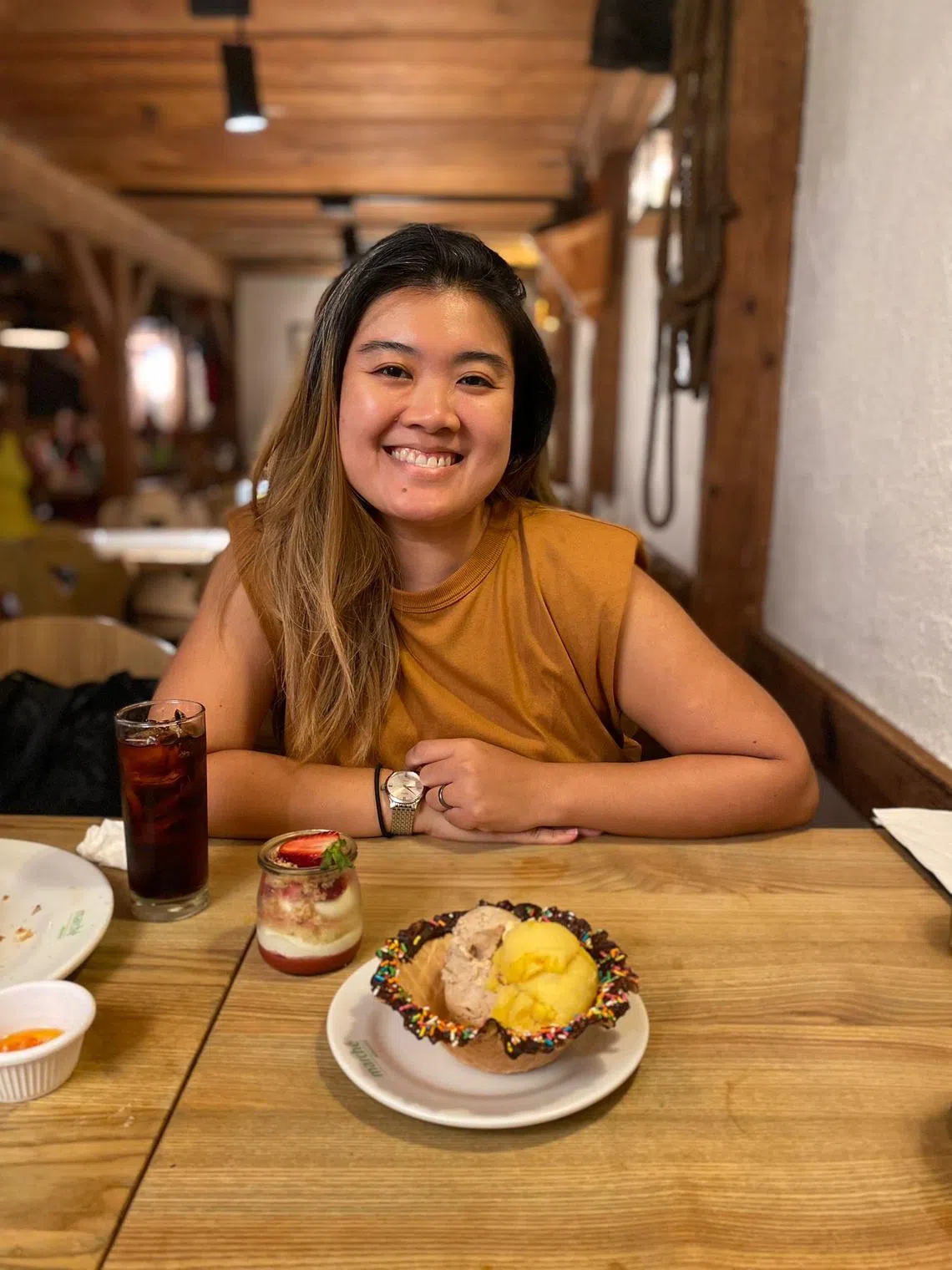
Lately, Yip has been feeling rather discouraged because of the lacklustre job market. “I want to go back to a full-time job in public relations or the media,” she says. “So I’ll keep looking.”
Having said that, she no longer sees career success as important as she did years ago. This is so that if something “goes a bit off tangent”, she doesn’t equate it with failure. “We now know job security is non-existent, yet, many pour ourselves into work to prove ourselves.”
Having freelanced for over a year, she is more careful about her spending. It’s been a while since she’s done any major shopping or travelling and she eats out less often.
Yip concedes money management was never on her radar, and is working on improving her finances through side hustles and doing more freelance work. This is especially important given that her landlord hiked rental by close to 50 per cent when she renewed her contract recently.
But sustainability matters to her, so brands that keep their green promises appeal to her, as do those that offer good after-sales service.
Instagram is her go-to social media platform, with the influencers she follows being the ones who “post more real and relatable content, not just selfies with sponsored products”.
Nigel Giam, 29, entrepreneur

Fresh out of university seven years ago, Giam started digital agency Corsiva Lab. The team has since grown to around 90-strong across Singapore, Malaysia and Vietnam. Giam is also involved in the hospitality and food and beverage sectors.
“So, yes, I am career-focused,” he admits. “However, success is not a checklist of having achieved this and that; it’s a force of motivation and sense of achievement and growth for myself and my team.”
Being career-driven, he accepts that it is hard to expect a balance between work and family life. “Instead of striving for equal time, I focus on spending quality time with my family each week,” says the father of a two-year-old girl. “I just sleep less now!”
As he and his wife bought a BTO flat right after graduation, their loan repayment is manageable. But as an entrepreneur, he is always trying to prepare for potential headwinds.
“The economy is super unpredictable, so I focus on building a robust financial safety net, which includes emergency funds and diversified investments that I can liquidate fast if needed.”
While Giam hasn’t cut back on spending, neither is he an “active shopper”. The luxuries he would spend on are vacations, golf trips and dining experiences.
As for influencers, he only follows those he knows on a personal level, or business leaders whose advice he trusts. He uses Instagram for catching up socially, LinkedIn to keep tabs on industry movements and TikTok for interesting content from which he learns new things about running a business.
Cheryl Ho, 31, associate director of sales at a financial services company

Since becoming a mother to a five-year-old boy and a three-year-old girl, Ho, while still career-focused, has become more mindful of her working hours. “Previously, working overtime wouldn’t really be an issue to me,” she says. “But now, I want to spend quality time with my kids.”
Inflation hasn’t affected her much, though she is more conscious of how the family consumes electricity and water, and has also reduced discretionary spending.
As Ho and her husband “do quite a bit of gifting”, she goes for brands that offer good and consistent quality. Better still if they also have a strong story behind them and build a community by interacting with their followers on social media.
She’s willing to spend on luxuries such as bags and watches if they have timeless designs and can be passed down to her kids. “Of course, if the luxury item can hold its value, that’s a bonus,” she adds.
Despite the mortgage rate for her landed home increasing “by quite a bit” soon, it’s still manageable as the couple had already planned for the higher payments.
They also continue to travel at least a few times a year, often to Europe, with or without the kids.
Since Instagram changed its algorithm such that posts don’t appear chronologically, Ho has reduced her time on her favourite social media platform. “Before the kids came along, I used it a lot more,” she says.
The food and fashion influencers she follows are those whom she feels are “very real” in their recommendations. “You can tell when someone is honest in their reviews,” she says.
Decoding Asia newsletter: your guide to navigating Asia in a new global order. Sign up here to get Decoding Asia newsletter. Delivered to your inbox. Free.
Copyright SPH Media. All rights reserved.
TRENDING NOW

Britain’s mansion tax shows the difficulty of targeting wealth

Once staunchly pro-China, Malaysian Chinese businesses are now distancing themselves from Beijing

The only common thing in S-E Asia is that we all eat rice: Cisco’s Asean president

Singapore data centre operator DayOne opts for US IPO at likely US$20 billion valuation

