

Pursuing the elusive industry of art
From childhood playthings to the accompaniments of modern travel, everyday objects reflect the fusion of art and industry.

Asad Latif
THERE exists a false dichotomy between industry and art. To many, industry signifies the impersonal operation of machines that transform natural materials into commodities to be traded on the anonymous market for corporate profit. By contrast, art is seen as an unconditional act of imagination through which the agency of free individuals forms itself into a sonnet, sonata or dramatic scene that rescues humankind from the realm of necessity and conveys it to the borders of freedom.
Industrial art destroys this artificial difference. It combines the economic and aesthetic value of natural materials through a process of manufacture that produces objects of both consumption and appreciation – from intricate handicraft created by rural artisans, whose skills have been transmitted through generations in face-to-face societies, to mass-produced artefacts rolling out from the conveyor belts of anonymous urban factories.
Clay, plastic, wood and steel attest to the fusion of art and industry in my life.
Clay comes first. As a child, I was presented with a miniature replica of the Bengali kitchen in clay. An oven, pots, pans, ladles, spoons and plates – all of them hand-painted painstakingly to resemble the utensils present in an adult kitchen – alerted me to the domain of women at work: my mother, my aunt, and the family’s domestic helper. Tiny repositories of visual recognition, produced by artisans whom I would never meet, the toys were affectionate pieces of imagination at work which related me to the real women who were raising me.
I grew up to treat actual ovens, pots and pans not as inanimate objects of freedom from hunger, but as fellow-subjects of my place in time. I became a vicarious cook at the age of 7 amid the taste of magical aromas emerging from imagined utensils. In the adult world, pots and pans were made of iron, plates of ceramic, and spoons of steel, but clay, produced by the industry of unknown human hands, reigned in my child’s universe.
My playthings are long gone. I have grown up. But so has the world with me.

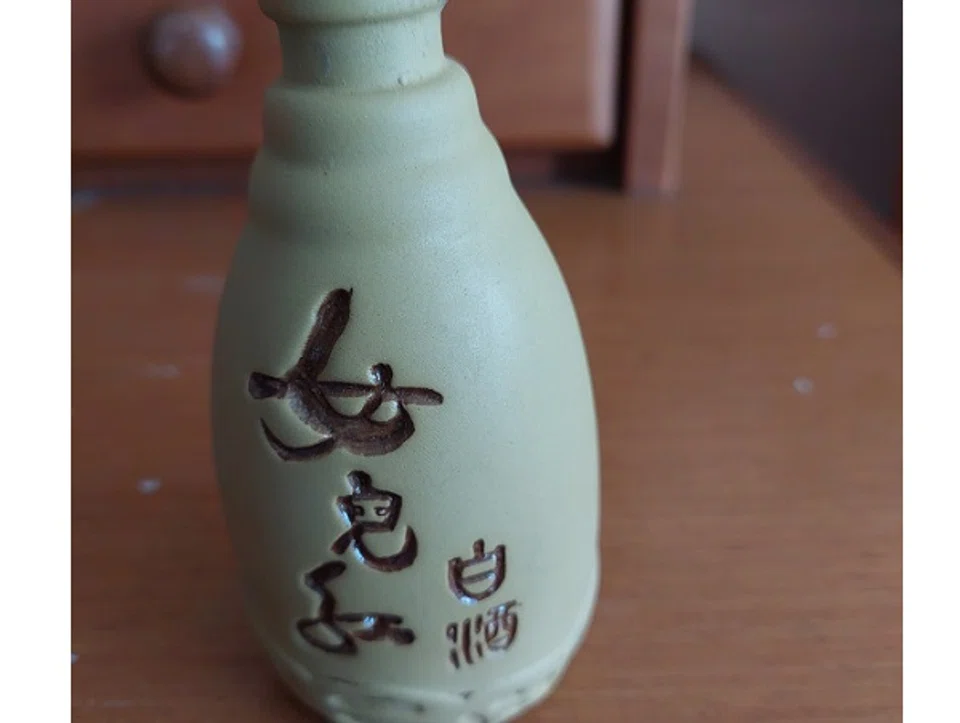
A few years ago, on a visit to Shanghai that took me to Wuxi as well, I was transfixed by the sight of Chinese wine being sold in small clay bottles by a hawker. I ended up writing a poem, Wuxi:
Who would have thought on an everyday kind of day with tourists fading away you’d be hawking ancient wine? How old is this wine, I say, how far did I stray to make it mine again? Language rises like death between us. I pay 12 yuan to go my wordless way. This wine will last but an evening. The jar will stay till you wait on a Wuxi street for your wayfarer again every thirsty day.
I have that clay bottle with me still. The hawker and the stall probably have vanished away.


Now I revel in the plastic world.
On a recent flight to Sydney, I was mesmerised by the sight of Paul Sapin’s Petit Voyage Sauvignon Blanc in a 187 ml resealable plastic bottle with a recyclable cup, sealed for hygiene.
What captured my imagination was the label, which featured a translucent depiction of a vineyard in an illustration where the silver-and-blue colouring made it appear that passengers were not only drinking the wine but witnessing the shifting light of an undulating landscape thousands of feet below and away from them.
Nothing served on a flight needs to be so enticingly beautiful. But that bottle was. French artistry had transformed an act of momentary consumption into an act of tangible affiliation with a national culture that prizes beauty as a good in itself. A small bottle of wine in a plastic bottle would remain in the memory long after departure had turned into destination.
Wood awaited me at my destination. The noodles in a Sydney stall in a mall came with disposable wooden chopsticks. The wood was tactile – that is, it responded to the touch by speaking of faraway trees and the soil that had nourished them once. The ecological sensation was so overpowering that I ate the noodles with my fingers and brought away the chopsticks, conjoined still, as a kind of trophy. Likewise, the plywood fork and spoon provided at a restaurant revealed themselves as totems of industrial art.
Of course, there is a problem with all single-use items: They are a monumental form of environmental abuse. I could blame the industry of art, but neither industry nor art can be held responsible for ecologically dysfunctional markets. The blame lies squarely at the door of politics, which should decide the balance to be struck between consumer rights and ethical responsibilities in a finite and, today, a fragile world.
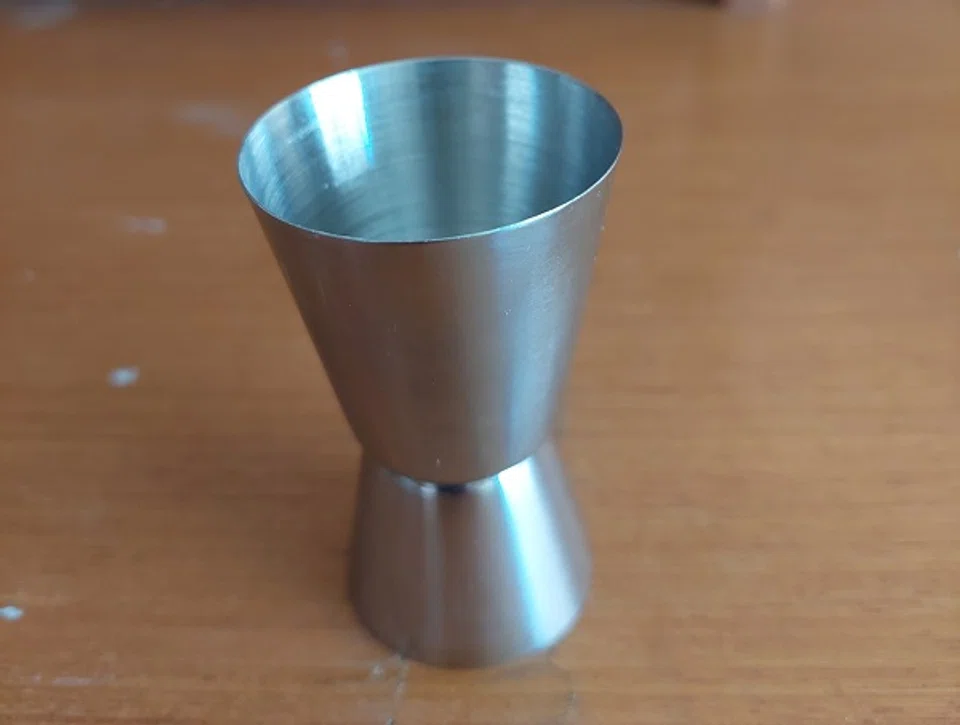
Steel remains somewhat solid in that world. My ecological mood recovered somewhat at the sight, in a store, of a double jigger made of gleaming stainless steel. As a cocktail measuring cup, it represents functionality at its best. However, the symmetric inviolability of its shape suggests that the double jigger was not made to measure cocktails but that cocktails were made to be measured by it. The double jigger represents the triumph of form over functionality.
Artefacts in clay, plastic, wood and steel keep their faith with both industry and art as I navigate my way in the world.
The writer is a Singapore journalist. He can be reached at asad@sph.com.sg
Decoding Asia newsletter: your guide to navigating Asia in a new global order. Sign up here to get Decoding Asia newsletter. Delivered to your inbox. Free.
Copyright SPH Media. All rights reserved.
TRENDING NOW

Inside Jensen Huang’s last hours as Nvidia CEO

Higher rates, weaker spending: Is the Philippines entering stagflation?

‘I’ll be buying more’: Singapore investors pour into Nvidia shares on Jensen Huang’s exit

Demand, tech capabilities position Apac and AI as Skyscanner’s next growth frontiers: CEO Bryan Batista

