

Raised for meat, dogs in South Korea get new lives as pets abroad
Wonju, South Korea
ON A FARM nestled between hills of trees, the ageing Spitz has had an easy life. She follows her owner, Gong In Young, everywhere. And he dotes on the dog, whose name is Snow White.
Yet on his farm in a valley south-east of Seoul, Mr Gong, 55, also raises dogs for their meat.
Locked up in steel cages their entire lives, the animals are fed with discarded food that Mr Gong collects from restaurants in nearby towns until they are ready to be sold to the slaughterhouse, 200 to 300 each year.
Referring to the lives of Snow White and the dogs raised for meat, he admits: "It's the difference between heaven and hell."
Mr Gong recently struck a deal with Humane Society International, an animal-rights group that has begun a campaign against dog farms in South Korea. It is offering financial incentives to farmers - US$2,000 -60,000 depending on the number of dogs involved - who give up their animals to be adopted as family pets in the US and elsewhere, and switch to other livelihoods, such as growing pepper or blueberries. Since last year, the group says it has shut down five farms.

Mr Gong agreed to free his 260 dogs only weeks before many of them were scheduled to die.
It is difficult to measure the global dog-meat trade, an industry that is deplorably regulated. Animal rights groups estimate that 30 million dogs, mostly stolen or feral, are killed each year for their meat in Asia.
South Korea has industrialised its dog-meat trade. Each year, more than 17,000 dog farms, some of them raising more than 1,000 animals each, supply two million dogs to meet the country's centuries-old appetite for dog meat, according to government data.
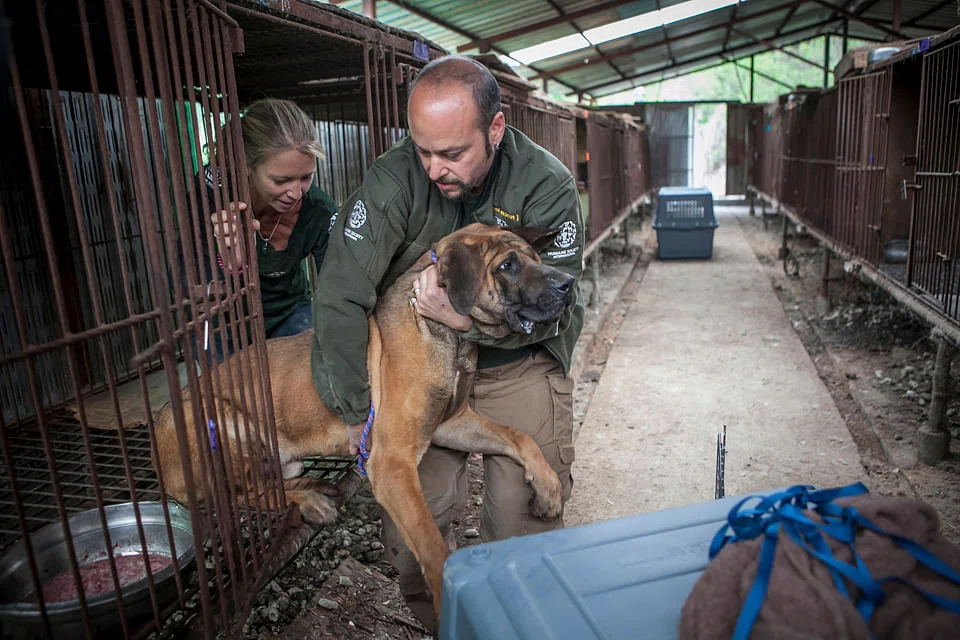
In Mr Gong's warehouse, visitors walk into a deafening cacophony. Huskies, Rottweilers, golden retrievers and other breeds bark and paw at the wires. Retired Tosa fighting dogs lie listlessly, some with their snouts badly mangled. Below the cages, feces pile up, creating an overpowering odour.
Dog traders visit these farms to buy animals when the summer's dog-eating season approaches. At current rates, an 80-pound dog goes for US$250. They transport the dogs in cages so crowded they can barely move or even suffocate before they arrive at slaughterhouses for electrocution.
From the slaughterhouse, wholesale meat dealers supply the carcasses to back-alley dog-meat restaurants, where customers, many of them older men, enjoy a hot bowl of vegetables, spicy condiments and shredded dog meat.
South Koreans call the dog dish bosintang or "soup good for your body". It became popular when the nation was destitute and meat was scarce.
South Koreans are fiercely proud of their culinary history. Even those who shun dog meat often bristle at foreigners who criticise the practice; to them, eating snails is unthinkable and force-feeding ducks to produce foie gras cruel.
But as South Korea has become wealthier, its tastes and attitudes towards animals has changed. Keeping pets has become more commonplace. Television programmes on raising companion animals or rescuing abused dogs are popular. In parliamentary elections in April, one small party championed animal rights.
Increasingly South Koreans, especially the younger generation, find the idea of eating dog meat appalling.
Mr Gong said that he had moved into this valley south-east of Seoul to breed special-purpose animals, such as guide dogs for the blind, after his music cafe in Seoul went bankrupt in the 1990s. Oversupply and plummeting prices for specialty dogs forced him to sell the animals for meat. Ten years ago, he began to raise dogs for meat full time. "I am not particularly proud of eating dog meat, but I don't think it's something we should be ashamed of either," he said. "No nation should be criticized for its food."
Andrew Plumbly, a Humane Society International campaigner, said: "Culture is never an excuse for cruelty." When the two sides met recently, they found common ground.
Mr Gong saw no long-term future for his trade. Surveys show that most South Koreans now eat chicken, beef or pork instead of dog meat on boknal, days when they traditionally eat food they believe helps beat the summer heat. None of the young people Mr Gong knew, including his son, would touch dog meat. He said the image of dog farms was "not good". On a recent day, Mr Gong saw off 17 of his dogs, the latest batch to be flown to the US under the deal with the animal protection group. He said he "felt better" when he saw pictures of the dogs living happily as family pets abroad. He said he might try growing mushrooms now. NYT
Share with us your feedback on BT's products and services
TRENDING NOW

Nvidia reinstates Jensen Huang as CEO; Trump says move poses no national security risk

Beyond the greenback, Vietnam’s big borrowers turn to Asian-currency bonds

Indonesia’s coal tycoon Low Tuck Kwong replaced as Bayan Resources president-director

Six workers file employment claims against Crystal Jade Food Manufacturing

