
From raw denim to natural wine
Jean Touitou, the creator of APC, knows how to make something perfectly minimal.
 Add BT as a preferred source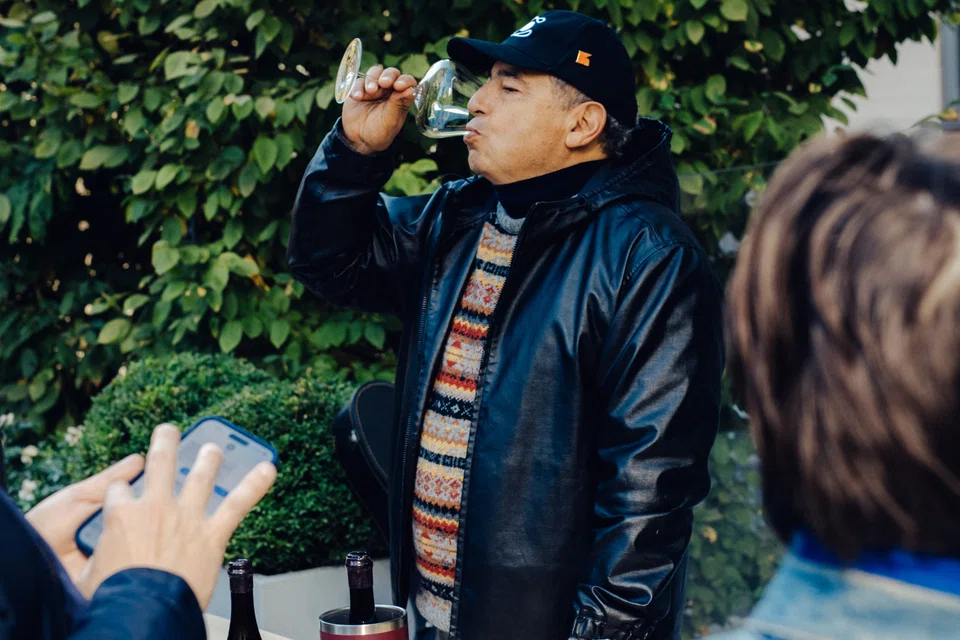
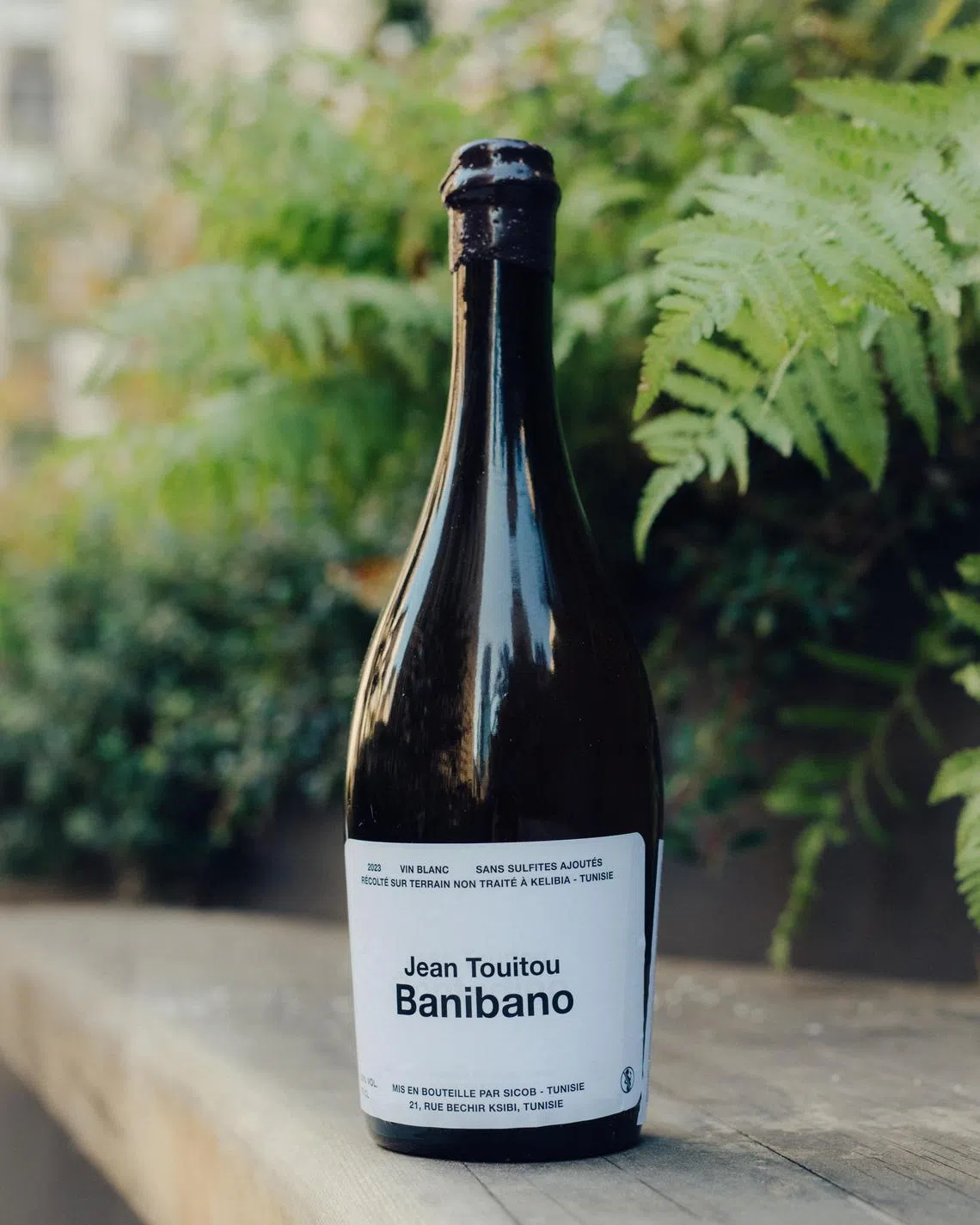
THE number of celebrities and fashion designers making wine in recent years has surged. So when those in New York’s natural wine world learnt that Jean Touitou, the French founder of minimalist clothing company APC, was bringing 60 bottles of Jean Touitou Banibano to Brooklyn’s Marlow & Sons on Halloween, eyebrows were raised.
But this is not Jon Bon Jovi’s Hamptons Water Rosé. Nor is it a label drawn by Donatella Versace’s team and slapped on a bottle. As with Touitou’s founding of Atélier de Production et de Création in Paris in 1986, this wine comes from a nose-thumbing renegade who has made it his lifelong personal mission to create what he thinks is missing in the world: simple, yet well-made, things.
Touitou, 72, does not consider himself a celebrity.
“I mean, when I go to a fashion show, no paparazzi knows who I am,” he said in a recent interview, in English, at the Mercer Hotel in lower Manhattan. “In that area, I succeeded.”
Nor does he consider himself a winemaker. He sees what he’s doing with Jean Touitou Banibano as different.
“There’s a few words of today’s cultural vocabulary I simply do not understand,” he said. “To me, a celebrity should be a very gifted cultural thinker.
Navigate Asia in
a new global order
Get the insights delivered to your inbox.
“But a celebrity doing nothing but being a celebrity?”
He laughed.
As for bankable names who put their monikers on a supplier’s bottle, he continued, “That’s not a journey. It’s a phone call between two great agents, and the agent knows a friend in the South of France.”
SEE ALSO


His goal?
“To make the natural wine for people who don’t like natural wine.”
Touitou’s journey began with his gardener and ended with a reappropriation of his spiritual home. His family moved from Tunisia to France when he was a child. After becoming a Trotskyist organiser, Touitou fell into fashion, beginning in the shipping department at Kenzo.
APC’s success was built upon the stiff Japanese selvage jeans that opened the door to the denim revolution in the 1990s, becoming synonymous with the classic-leaning cool of fashion stylists and French women. (Think Lost in Translation-era Sofia Coppola.) That empire led to a vacation home on the Sicilian island of Pantelleria, where, one day, the gardener suggested they take their table grapes to the communal wine press to see what happened.
What happened was good.
Natural wine had made its way onto the Touitou table through a side route. A drinker of fine wine, he viewed the natural wine world as snobby. But when his wife, Judith, the creative director of APC, became violently allergic to wine, his son Pierre, a chef who now owns the Paris restaurant 19 Saint-Roch, suggested they visit their Pantelleria neighbour, Gabrio Bini, a respected maker of natural wine. The switch worked.
It was another fateful family connection that led to Banibano, this time in Tunis, where Touitou was visiting his sister to help relocate their grandfather’s tomb. A chance encounter led him to one of Tunisia’s largest winemakers, Jean Boujnah, who, as it turned out, had been married to his mother’s cousin. He had a single parcel that had not been sprayed with pesticide, one of the tenets of natural winemaking, and the collaboration began.
Asked how involved he is as a winemaker, Touitou scoffed.
“Sometimes it just takes two sentences to go in the right way,” he said. “When I started to make jeans, I said to a guy, ‘I want jeans just like in my childhood.’”
Made with the ancient varietal muscat d’Alexandrie, Banibano is intensely floral, with the salinity of the surrounding Mediterranean. Just as you could have said of APC jeans in 1987, the wine is simple and well-made, and it goes against everything out there.
“The fact that it’s made from muscat, one of the world’s most unpopular grapes, that’s a nice move!” said natural wine writer Alice Feiring, the author of To Fall in Love, Drink This.
Touitou is not doing it for the money – the Touitous sold a majority stake in APC last year – though he senses it could become something bigger. The 2023 cuvée was 600 bottles, split between Paris and the chef behind the Louis Vuitton restaurant in Bangkok, with some of the 3,000 bottles of the 2024 cuvée arriving in New York in January.
The real payoff for Touitou has been psychological.
“It’s saved me more than 50 sessions with the shrink,” he said, citing a long-standing nightmare of returning to his grandfather’s house in Tunis to find it occupied by others – a dream that speaks to French colonialisation. “For me, the word is ‘dispossessed.’ And with this, I really feel like I’m back. There’s no way you can steal this from me again.”
The nightmare stopped last year.
The project has also freed him from fashion, from having to talk about his inspiration and the fear of being knocked off.
“Now that I’m 72, I can tell I’ve been very influential with my style for, like, two minutes,” he said. “It was great, but my style got diluted in the streets. But in the wine, try me: Go in Tunisia. Find a plot with no Monsanto in it. Find a reliable person from your family!”
Touitou could not legally call the wine Contadino – the Italian word for farmer – since it was taken, so he chose his nickname from his Tunisian childhood: Banibano. which means “good good.”
“It made sense for the reappropriation of my garden,” he said. “The kid is back.” NYTIMES
Decoding Asia newsletter: your guide to navigating Asia in a new global order. Sign up here to get Decoding Asia newsletter. Delivered to your inbox. Free.
Share with us your feedback on BT's products and services

