Redoing the tiny apartment
This apartment redesign is a case study for making the most of a small space
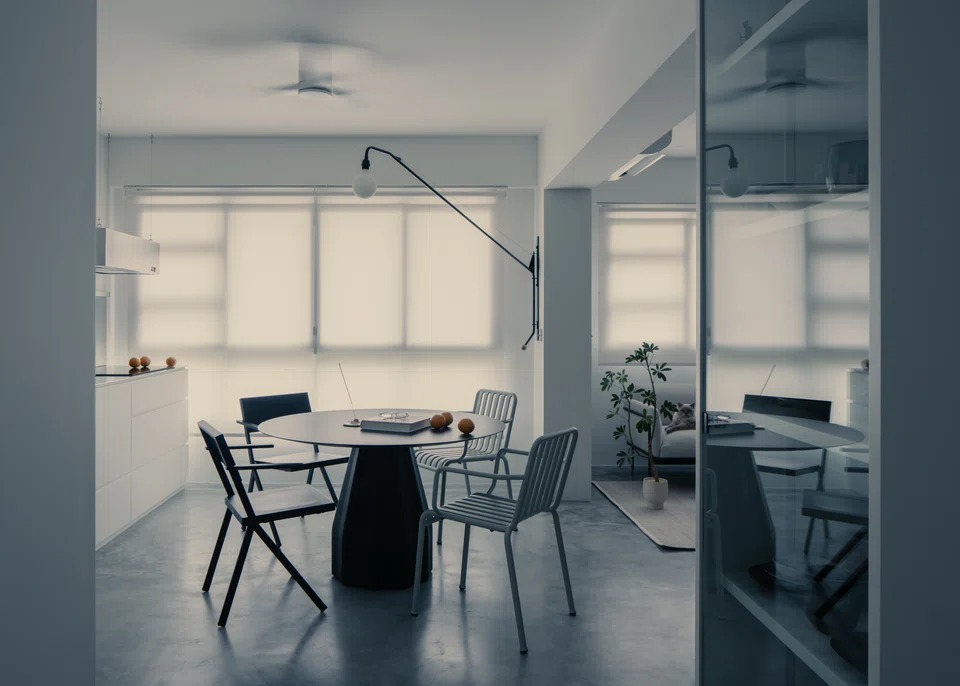
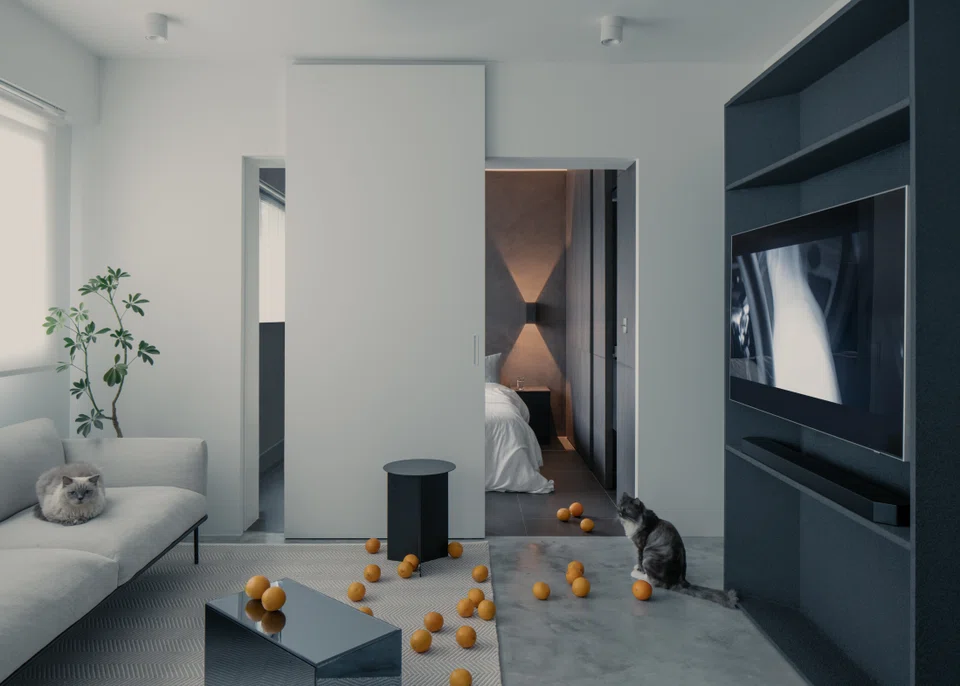
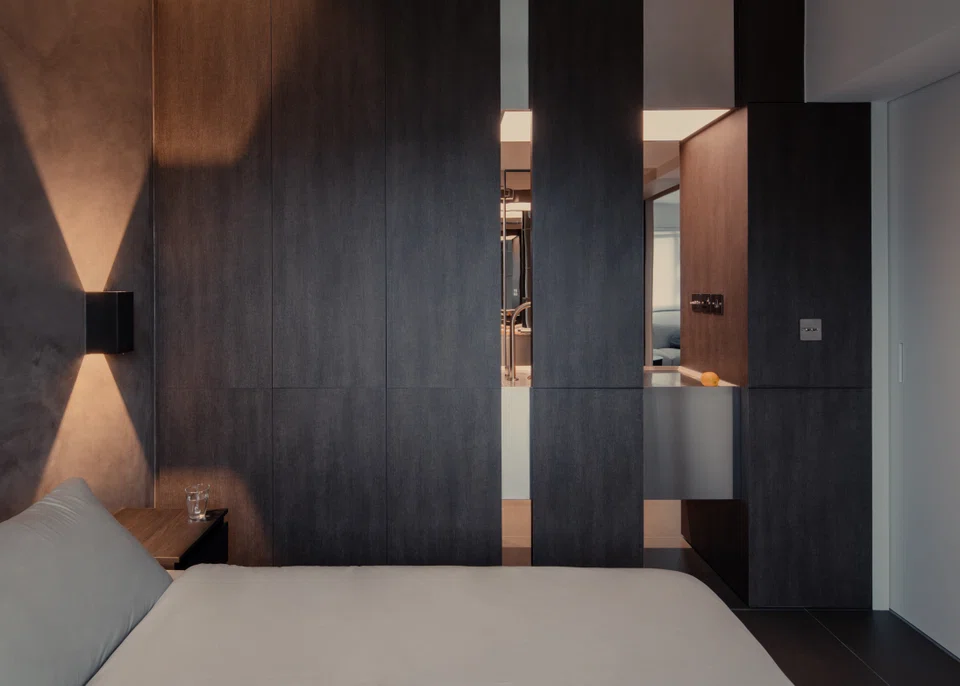
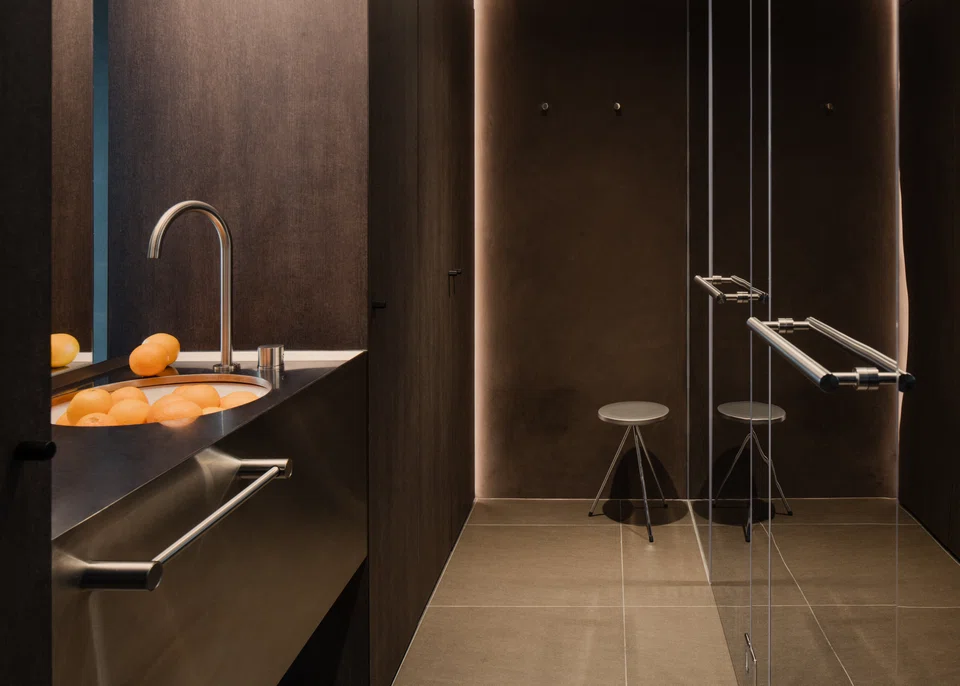
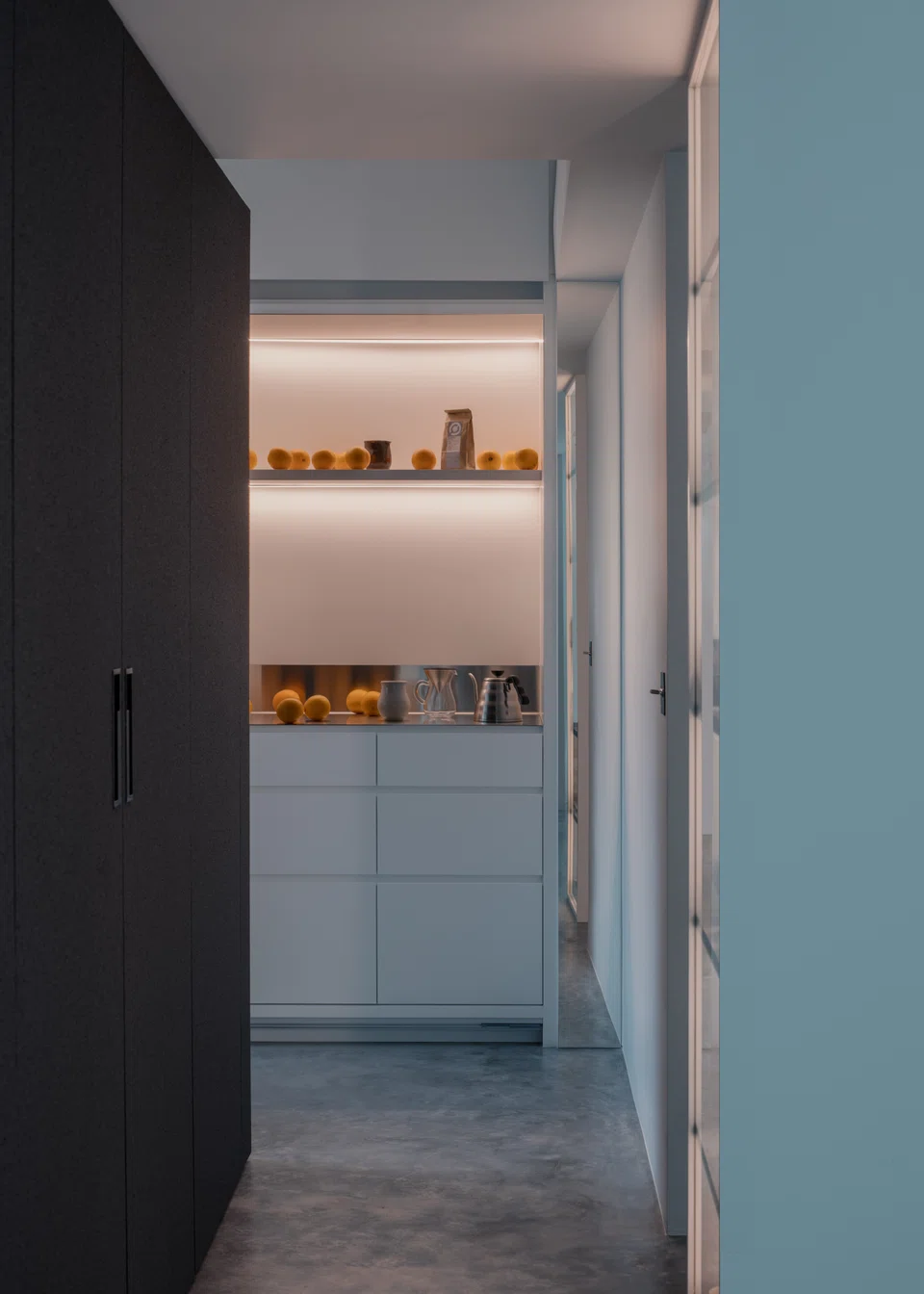
IN THE layout of a typical HDB flat, it is common for the living area to be joined to the bedrooms by a corridor. This “dead space” is the main thesis of a project by Open Studio, whose inventive home designs caught the eye of a young husband and wife.
“The couple that live with their two cats came across our work on social media and liked how we approach residential projects radically, where the interior layouts are customised around existing structures to suit any lifestyle,” says Jax Tan, who runs the firm with her husband Lam Jun Nan. Both graduated with a Master of Architecture from the National University of Singapore.
The owners, who work in tech, wanted to overhaul this resale flat that they purchased as their matrimonial home. At 65 square metres, the flat is not large. It did not help that the original layout felt claustrophobic, with a compartmentalised plan where the main door opens into a combined living-dining area. The original corridor leads to two bedrooms, a kitchen, yard and common bathroom. One bedroom also has a compact bathroom en suite.
“As it was a small apartment, every inch of space had to be reclaimed,” says Lam. “We ‘killed’ the access corridor to sub-divide the apartment according to the owners’ requirements, allocating predominant use for living, cooking and working-from-home as one zone, and the bedroom-and-bathroom as the other, more private zone.”
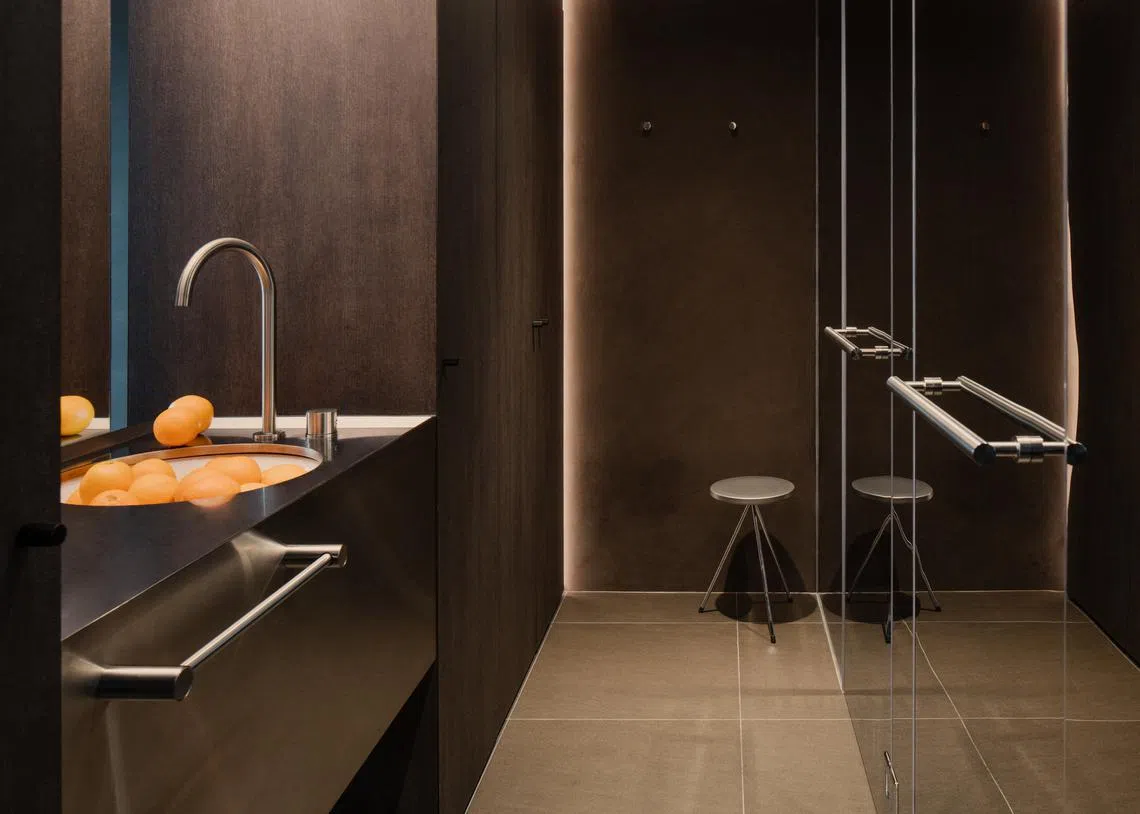
The walls of the kitchen, common bathroom and bedroom next to the living area were demolished to create a larger open common area. “The owners were open to the idea of a single bathroom but we split the functions of the WC and shower into two small rooms that can be accessed simultaneously,” explains Tan.
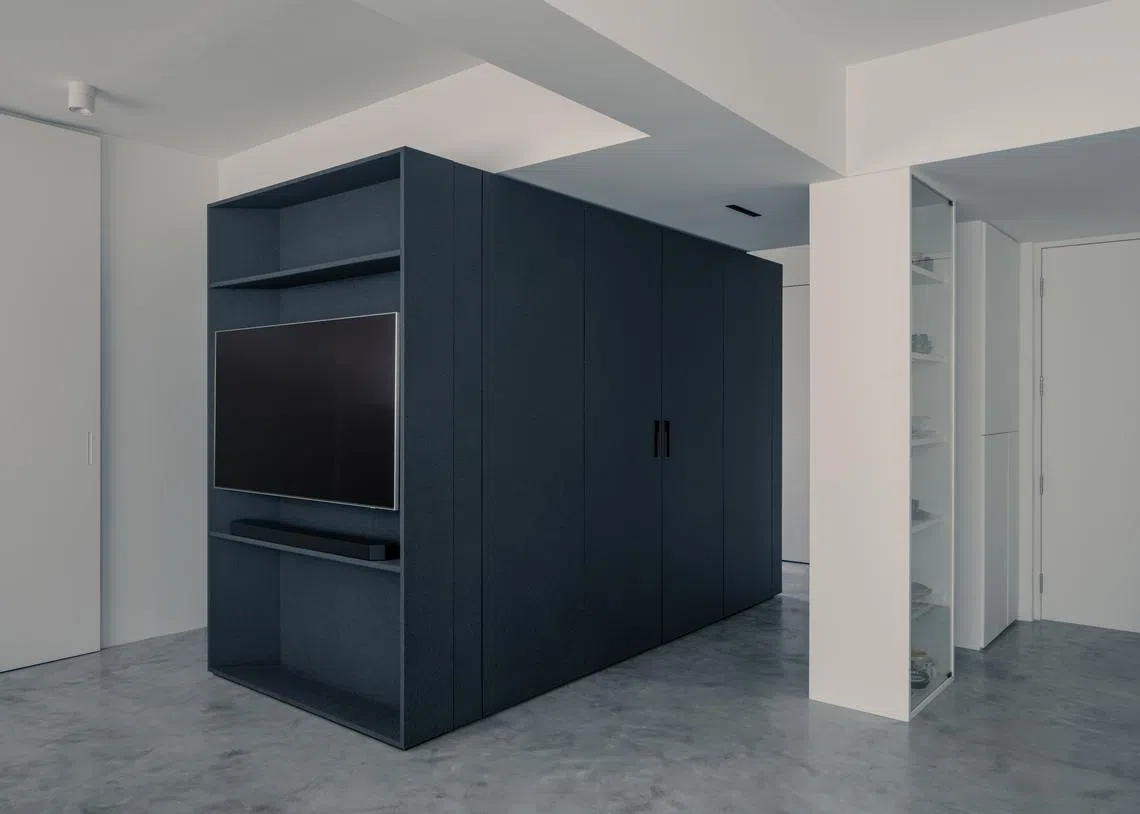
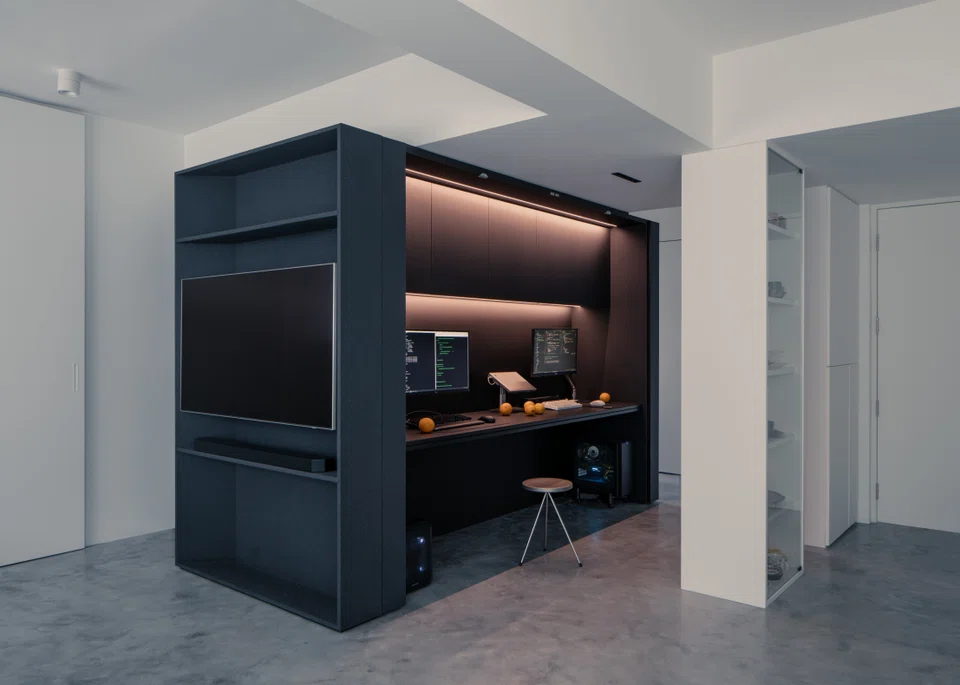
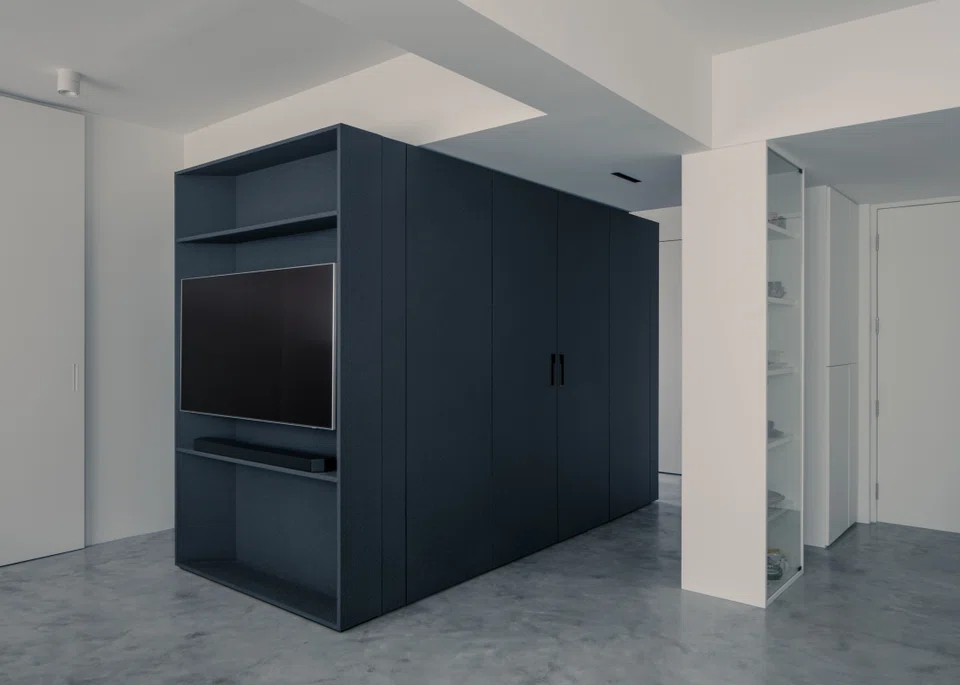
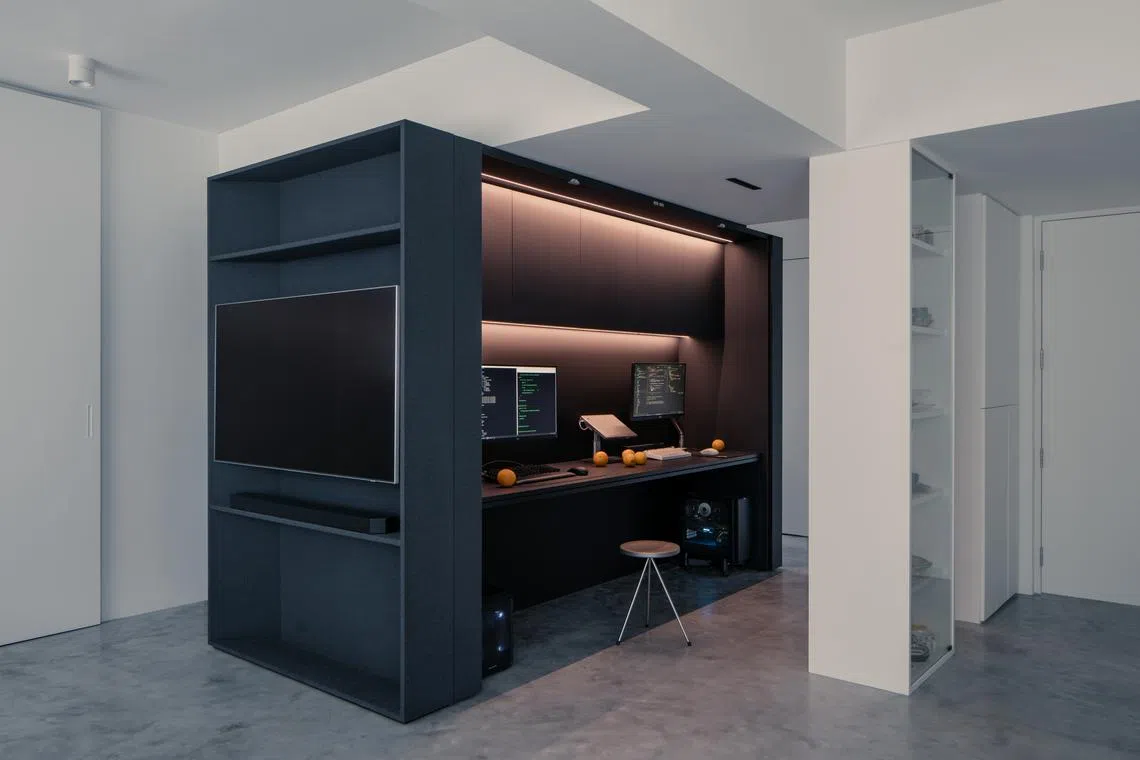
The original living area is now an open kitchen and dining space, and the original first bedroom is now the living area facing a “monolith pod”, behind which is the new pantry and existing yard. This pod hides a structural column and has sliding panels that contain the television, a study area and storage spaces. One can walk freely around this box, so the entire home feels larger. The private zone was also reorganised for a smaller master bedroom and a walk-in wardrobe-cum-sink area.

With the open kitchen counter up front and the new open plan, the home has a studio-like feel. “We understood from the owners that their use of the kitchen was not one for heavy cooking but for simple meal preparation via an induction cooker, so we proposed relocating the kitchen and making it an open concept,” says Lam. It was not an easy task, requiring careful coordination with a skilled contractor. Particular attention was needed to ensure the pipes for the kitchen sink were well executed “to avoid downstream issues”.
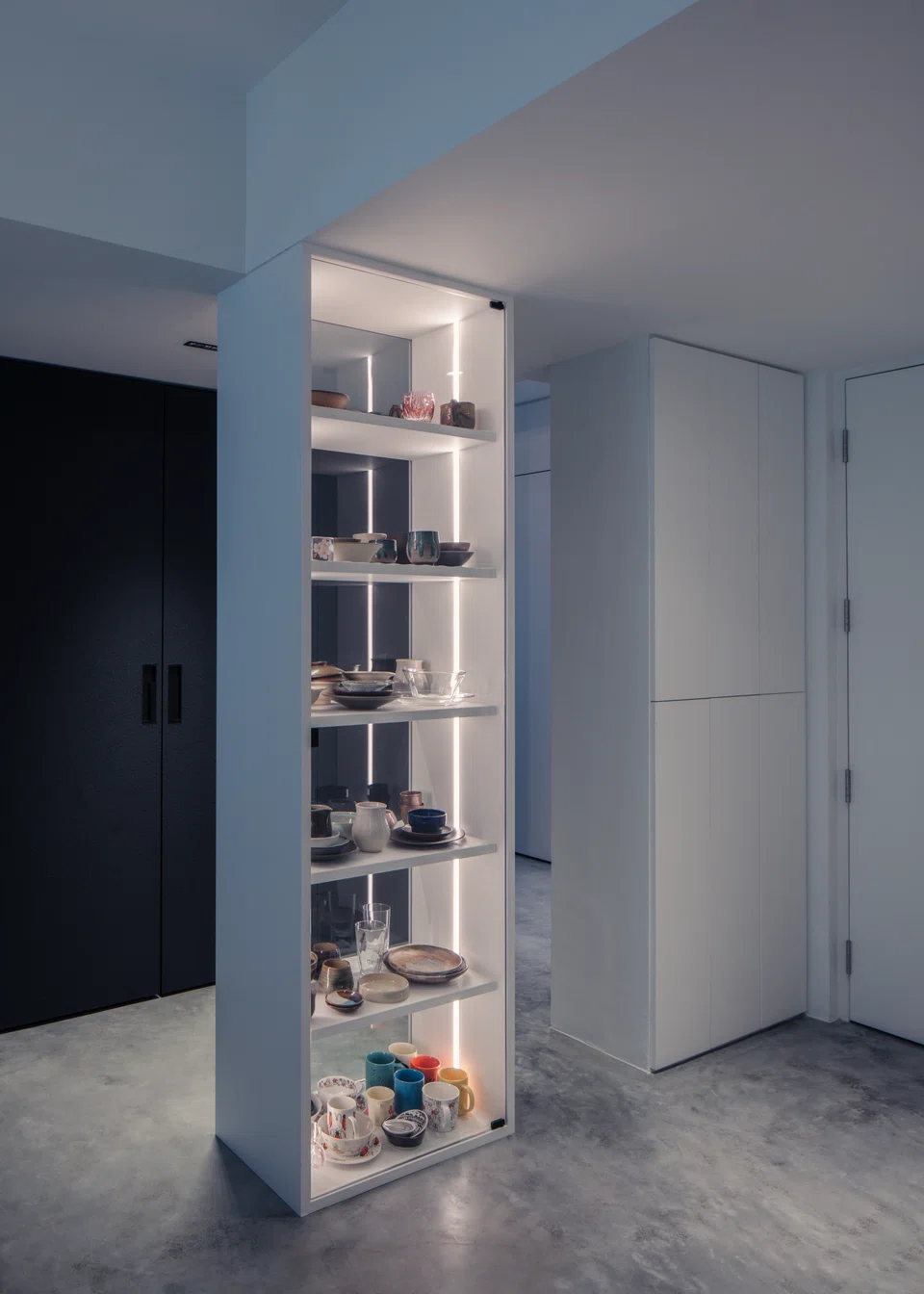
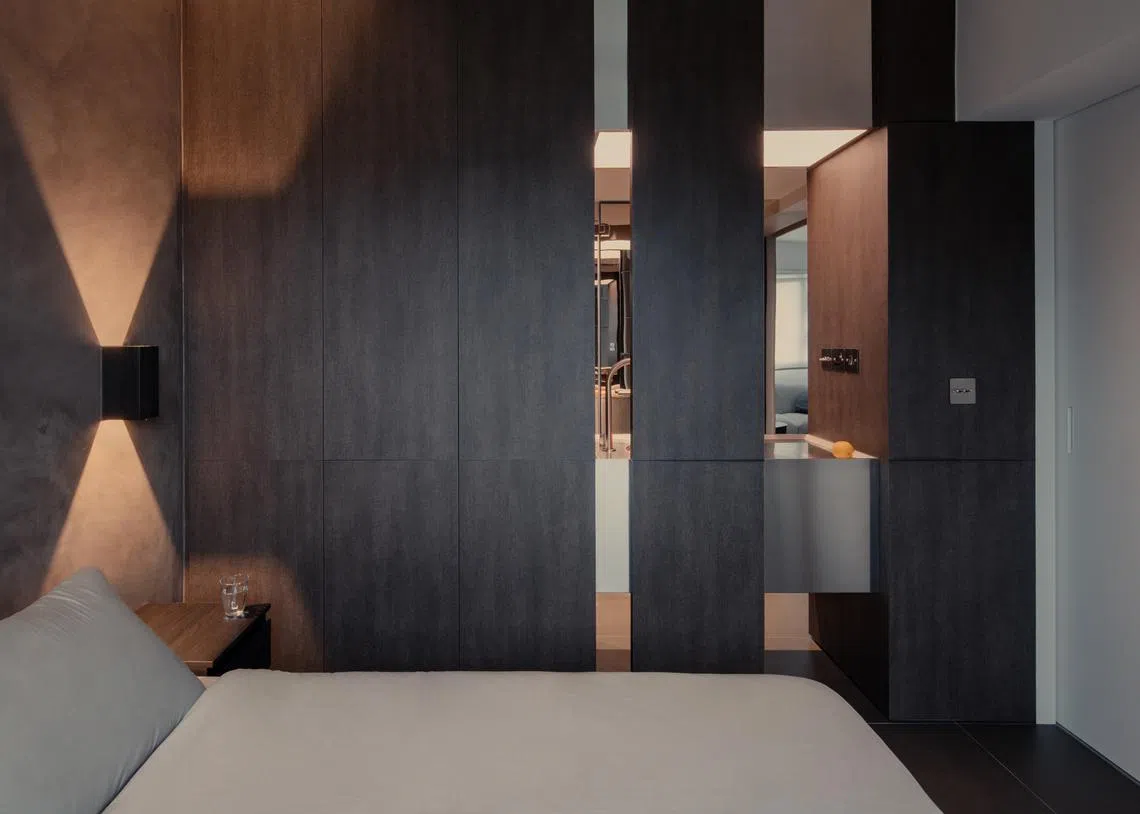
The pared-down palette includes screed flooring and white laminate joinery that brighten the home, and dark brown tiles and limewash paint in the bedroom and bathroom. This textural richness is matched with the pod’s dark, textured special-effect paint, stainless steel elements throughout the home, and clear mirrored panels that bounce light around.
The pod may look minimalist but was one of the most crafted elements, as it’s a major “volume” in the space, explains Tan. “It was customised with special hinges to facilitate the transformation from a closed to open pod.” The dark colour was chosen so that the volume stands out as an object in the space, strengthening the main concept.
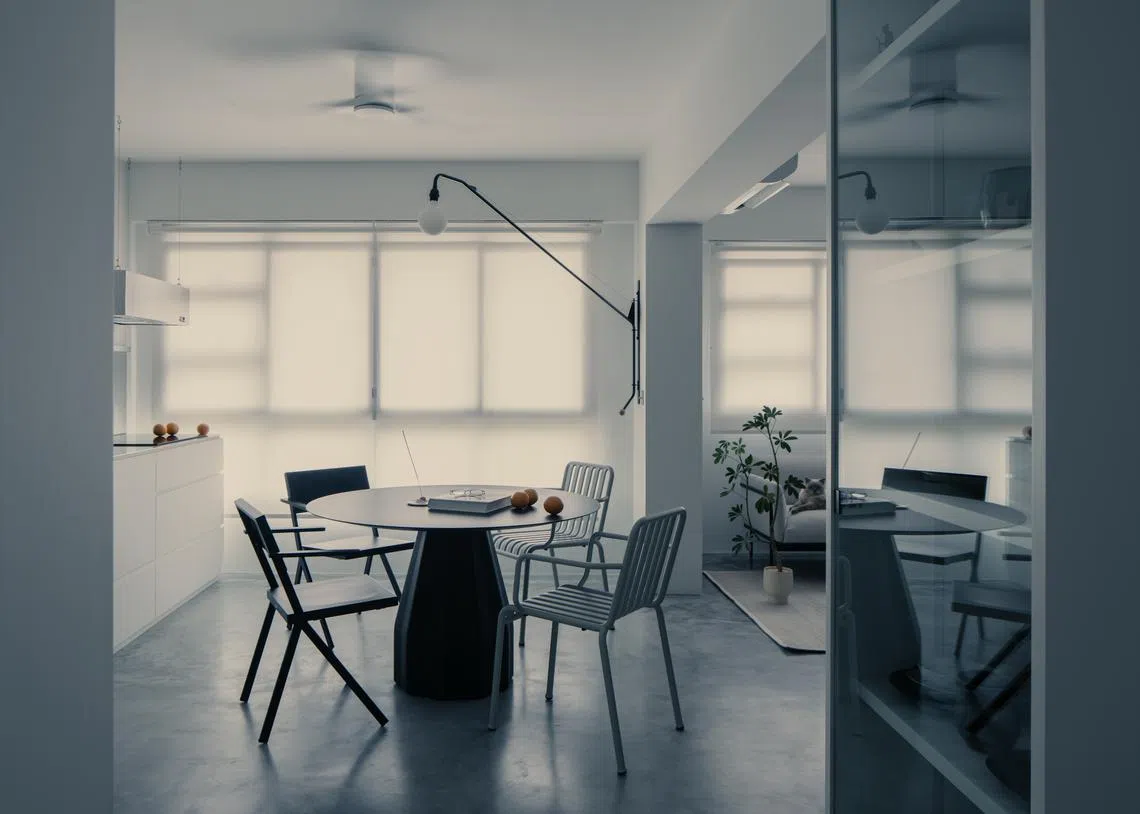
The sleek detailing extends to the stainless steel components in the kitchen, such as a “floating” kitchen hood held by thin tension wire, a bevel edge for the vanity sink and a seamless one from the countertop to the kitchen sink. “While visually minimal, these micro details serve to elevate key touch points around the flat,” says Lam.
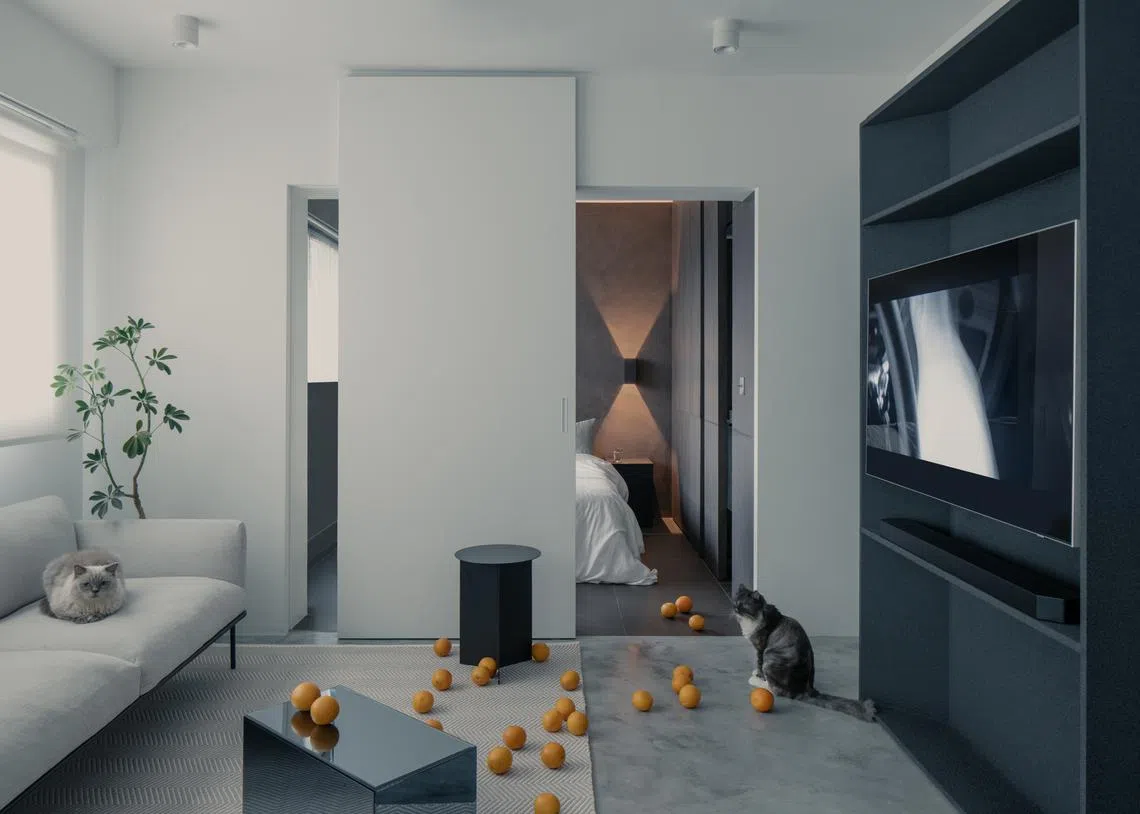
The apartment feels larger than it actually is due to the new layout’s spatial fluidity. “Open concepts are not unique to apartment layouts but what we offered the couple here was an opportunity to live out their contemporary lifestyle with a new spatial economy, with more living space for them and their cats to roam.”
“Likewise, apertures allowing visual connection through the rooms provide a sense of spatial depth critical to a small apartment. Correspondingly, just sufficient space was assigned to the bathroom and bedroom,” adds Tan.
As the home showcases, floor area does not equate directly to liveability. For example, the multi-purpose pod demonstrates that a dedicated room for work is not necessary. The contraption is made for the irony of modern living, where working from home enables one to enjoy being at home more but in a way that can distinguish mental separation of work and relaxation.
As the husband says: “We knew we wanted a way to visually close off from work since we work from home quite a bit. The smart redesign allows us to hide the work clutter completely.”
Decoding Asia newsletter: your guide to navigating Asia in a new global order. Sign up here to get Decoding Asia newsletter. Delivered to your inbox. Free.
Share with us your feedback on BT's products and services