From a Rio favela to Olympic gold
Organisers may boast of beaches, but the Games have also highlighted the city's slums
Rio de Janeiro
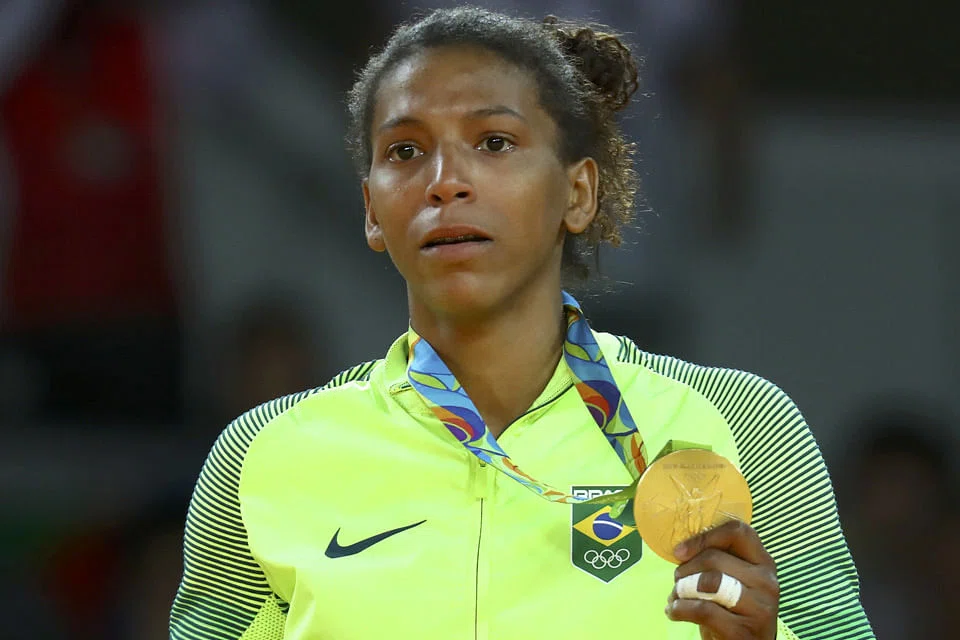
MOMENTS after winning Brazil's first gold medal of the Olympics, Rafaela Silva broke down, wiping away her tears with a bandaged hand, and told her celebrating nation that if it was not for judo, "I could still be playing in City of God."
Eight km away, in the "City of God" neighbourhood, a 44-year-old doorman named Claudio "Piri" Roberto joined a crowd watching the ceremony on a small television on the sidewalk. A national hero was a rare thing in the slum, made famous by a 2002 hit movie that depicted its drug traffickers, poverty and gun violence.
This favela of concrete homes and corrugated roofs, with a trash-filled canal running through the middle and gang graffiti tagging its walls, has not shed its reputation. But with the 24-year-old judo master's win, Mr Roberto said, "you forget about your own suffering a little bit".
"For this community, her victory means everything," said Tony Barros, a photographer and community organiser in City of God. "What other legacy will we get from the Olympics?"
Olympic organisers may boast of Rio's white-sand beaches and majestic peaks, but the Games have also put a spotlight on the city's favelas. The Opening Ceremonies depicted these poor neighbourhoods, so visible in their tight clusters on Rio's steep hillsides, as a font of music and dance, the home of samba and baile funk. But the drumbeat of news about stray bullets and armed robberies has also highlighted the everyday dangers of these ramshackle neighbourhoods.
When Ms Silva's smiling face appeared on the front pages of newspapers on Tuesday morning, the rubber bands of her braces in the green and yellow of the Brazilian flag, the country erupted in national pride. Brazilians were seeing a face from a segment of society often ignored or mistreated. "City of God and Gold," read one headline.
Almost one-quarter of Rio's inhabitants live in favelas, whose residents tend to be poor and black. After Brazil was awarded the Games in 2009, city officials promised projects that would provide a better life for residents of favelas as part of the legacy of the Olympics.
Some would stretch well beyond the Games. A programme called Morar Carioca was to bring running water, a sewage system, paved streets and public lighting to all favelas by 2020. But by mid-2014, that programme died. Meanwhile, some favela residents lost their neighbourhoods as construction transformed parts of the city for the Games. An estimated 60,000 people were displaced to build the stadiums and infrastructure projects for the Olympics.
The City of God got its start through a government programme. In the 60s and 70s, authorities built public housing projects along Rio's periphery, moving residents from precarious wooden shanties located near wealthier, beachfront neighbourhoods into sturdier concrete homes outside town.
Ms Silva's father, Luiz Carlos, arrived at City of God with his family in 1966, when he was three years old, after his parents' home collapsed in another sprawling favela, Rocinha. He and his wife, Zenilda Silva, put their two daughters, Rafaela and Raquel, into sports classes at a young age to keep them away from trouble. "We saw bandits fleeing from the police and raiding our house. We couldn't even play in the street like other children could," Ms Rafaela Silva told reporters on Wednesday.
As a child, she lived in a three-storey yellow concrete house on Jesse Street. She was tough and rambunctious: She chose judo at the local community centre over dance classes. After she learned a few moves, angry parents called her home. "The mothers were complaining because she was beating up their boys and they didn't like it," her father said. WP
Share with us your feedback on BT's products and services