

Roman Abramovich, former symbol of Russia's oligarchy, faces uncertain future
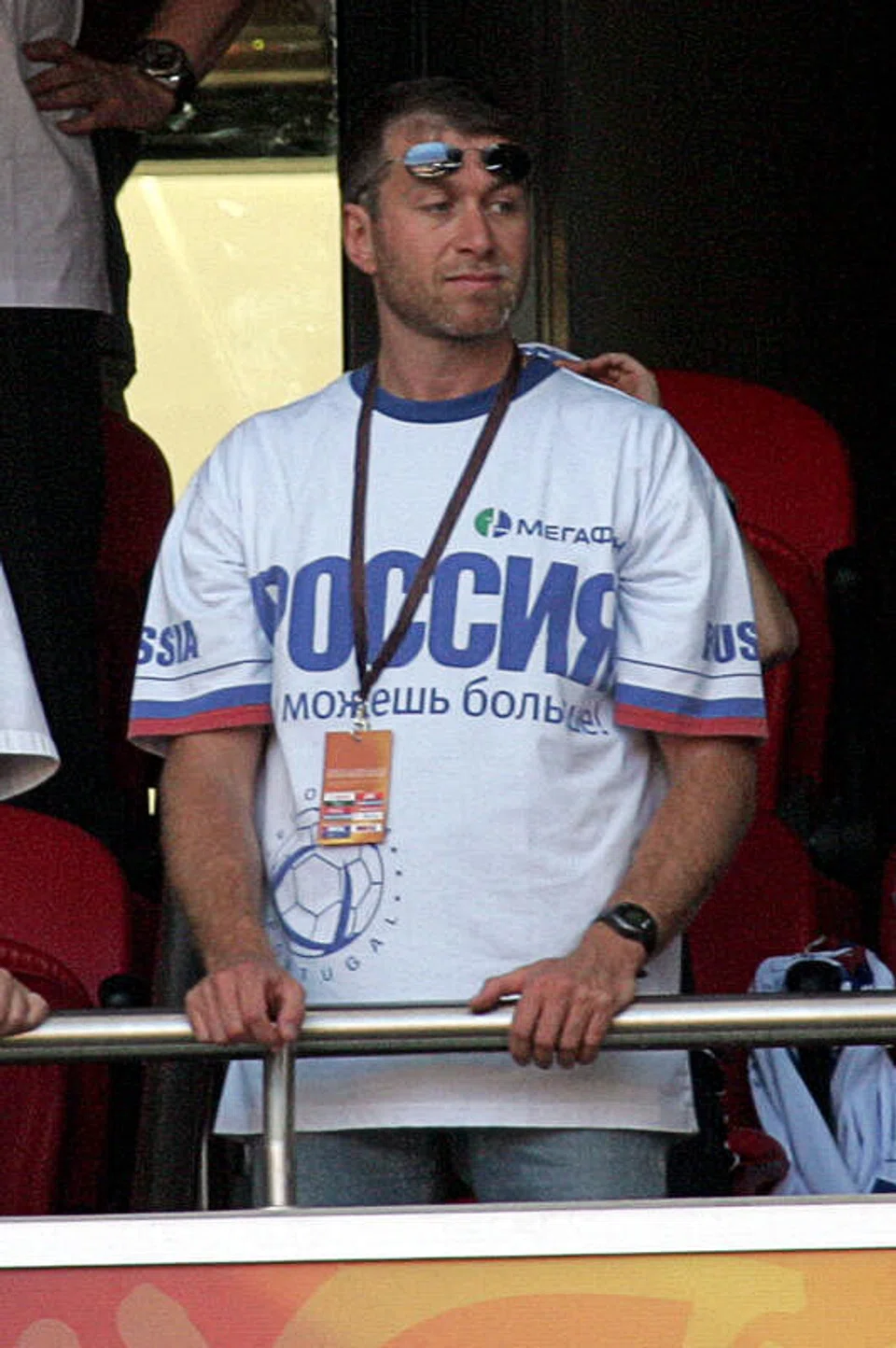
[LONDON] Roman Abramovich rose from a penniless background in Russia's frozen north to become a multi-billionaire and a celebrity football tycoon, but his empire is teetering over his alleged Kremlin links.
His decision to hand over control of Chelsea Football Club to trustees of its charitable foundation on Saturday (Feb 26) hinted that the 55-year-old oligarch fears his substantial assets in Britain are about to be frozen as the government imposes sanctions on a "hit list" of oligarchs following Russia's invasion of Ukraine.
Abramovich was one of the businessmen working in the shadows following Russia's collapse in the 1990s, seizing control of lucrative assets once held by the Soviet state, at bargain prices.
In Abramovich's case, a controlling investment in the oil company Sibneft provided the vehicle for his rise.
He had made money early on with a firm making rubber toys, after growing up an orphan from a Jewish family in the harsh far north.
He is today worth US$13.6 billion, according to the latest data from Forbes magazine, and as well as turning Chelsea into a European powerhouse has stakes in steel giant Evraz and Norilsk Nickel.
His property holdings include a 15-bedroom mansion in London's exclusive Kensington area, and he also owns one of the world's largest yachts, the 533 foot (162 m) Eclipse.
A newer vessel in Abramovich's luxury fleet, the Solaris, is a little smaller. Both yachts reportedly come equipped with their own anti-missile defences.
In September 2005, he received a gargantuan cash boost with the US$13 billion sale of Sibneft to state-owned gas behemoth Gazprom, enabling Russian President Vladimir Putin to regain control of strategic assets.
Unlike other oligarchs who tried to take on Putin's Kremlin, such as his old business partner Boris Berezovsky, Abramovich has kept a low political profile.
His loyalty to Putin was rewarded with the governorship of the vast, far-eastern Chukotka region, analysts say.
After Berezovsky fell out of favour with the Putin regime, Abramovich took over his stake in the country's largest television network in 2001.
Berezovsky died in unexplained circumstances near London in 2013.
Last year, Abramovich accepted an apology and rewrites after suing the British author and publisher of a book about the rise of Putin's inner circle.
The libel action against Catherine Belton and HarperCollins prompted rights groups including Reporters Without Borders to criticise the use of lawsuits in Britain to silence critical reporting.
The bestselling book Putin's People included claims by former Putin associate Sergei Pugachev that Abramovich had bought Chelsea in 2003 on the president's orders, in a bid to increase Russian influence.
Unswayed by the litigation, British Liberal Democrat MP Layla Moran used parliamentary privilege on Wednesday to name Abramovich as one of 35 "key enablers" to Putin who should be sanctioned personally by the UK.
His daughter Sofia on Saturday distanced herself from Russia's actions, writing on Instagram that "the biggest and most successful lie of Kremlin's propaganda is that most Russians stand with Putin".
She shared a meme containing the sentence "Russia wants a war with Ukraine", with "Russia" crossed out and replaced with "Putin".
Her father's British investor visa expired in 2018, in the fraught aftermath of a nerve-agent attack in the city of Salisbury that was blamed on Russian agents.
He obtained an Israeli passport, allowing him to travel freely to Britain, although his visits to watch Chelsea games in London have dwindled in recent years.
With the global community moving to punish those with links to Putin, Abramovich could soon find himself an international outcast.
In a rare media interview, with the Observer newspaper in December 2006, Abramovich disagreed that money could buy happiness, saying instead it could buy "some independence".
He mused: "There is a Russian proverb: you never say that you'll never be in jail or never be poor." AFP
Decoding Asia newsletter: your guide to navigating Asia in a new global order. Sign up here to get Decoding Asia newsletter. Delivered to your inbox. Free.
Share with us your feedback on BT's products and services
TRENDING NOW
Knight Frank’s Tan Tee Khoon leaves firm, Nicholas Keong takes over auction business
Keppel Energy, Sembcorp Utilities and Tuas Power to supply biomethane in pilot project
GovTech retrenches another 38 staff in second round of layoffs
Take-up of new private homes dives 45% in Q3 as prices accelerate with 1.4% rise

