
Romeo and Juliet meets the hot vax summer
 Add BT as a preferred source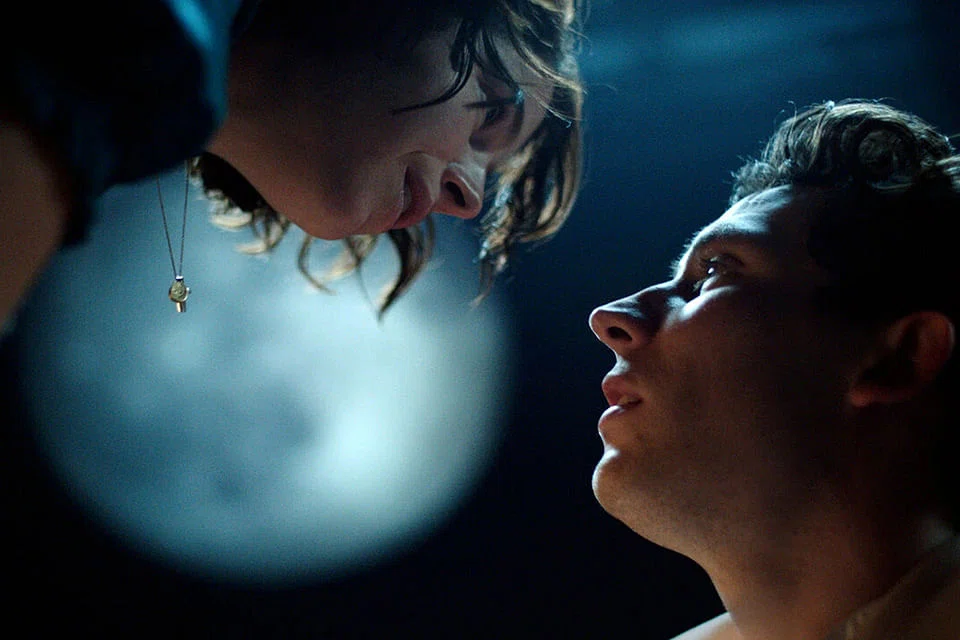
WHAT will be the idiom, in my modest estimation, to best define our relationship to sex during the Covid-19 pandemic? "Stay home if you sick, come over if you thicc" - so say the boys of Tinder.
It's not quite Shakespeare - or is it? I'm willing to bet that if they lived in 2021, Romeo and Juliet would quickly become fluent in our contemporary language of lust and seduction. After all, sex has always been an element of Shakespeare's play, although portrayals of it have changed in productions over the past 400 years, depending on trends and cultural attitudes.
So it would make sense, after the pandemic year we've had, that we're in for a spate of sexy Shakespeare - frilly ruff and all. And Romeo and Juliet - including the lusty new filmed production that premiered on PBS - looks like it'll be the play of this spicy summer to come.
I've already encountered other renditions in the past couple of weeks: The Public Theater's bilingual Romeo y Julieta, the Actors Theater of Louisville's Romeo & Juliet: Louisville 2020. An interactive production is forthcoming from England's Creation Theater.
Although a play about intimacy, yearning and death feels right for the moment, I have to admit my discomfort with all those honeyed kisses and sweet nothings: The pandemic has left me unprepared for lovers meeting at any distance closer than 6 feet.
The sexiness of Romeo and Juliet depends not just on a director but on the temperature of the times, whether the drafty climate of a chaste family dinner with Granny or the febrile blaze of a Friday night date that is set to a playlist of '90s R&B jams.
Navigate Asia in
a new global order
Get the insights delivered to your inbox.
Innocent love rather than lust
Although the Elizabethans of Shakespeare's time were down for lewd wordplay and suggestive winks in the text, stage depictions of physical intimacy were a step too far. The Victorians? Stuffier than a mouth breather during allergy season, they tended to shift the story toward innocent love rather than lust.
The story of Romeo and Juliet got a movie makeover in the 1960s, however, when director Franco Zeffirelli premiered his sensual adaptation, including a famous nude love scene, during the peak of the sexual revolution.
And if you had a pulse in the '90s, you caught Leonardo DiCaprio and Claire Danes in Baz Luhrmann's wistfully romantic Romeo and Juliet, which seemed charged by the melancholic sighs of disenchanted youth - appropriate for the decade of irony and grunge.
Which presents the question of where we are now. (The dull and curiously sexless 2013 Broadway production, starring Orlando Bloom and Condola Rashad, had little to add.) Have dating apps and the sex-positive and body-positive movements brought us to a new age of uninhibitedness?
Honestly, I'm not sure. Many of our austere cultural standards around sex, cuffed to religious conventions, economics and antiquated notions about gender, still haunt us behind closed doors - even as much of our media uses sex as consumer currency. But a pandemic that made isolation the rule surely has changed our relationship to physical intimacy.
That - not personal prudishness or naivete - is why too sexy of a Romeo and Juliet, like the new filmed edition starring Jessie Buckley and Josh O'Connor, leaves me scandalised, as if I didn't grow up in a household with HBO.
The fabric of the film feels cut from the central couple's marital bedsheets - the intimacy is that palpable. Scene after scene feels like it's taking place by candlelight. The hovering camerawork peeks over shoulders to catch a kiss or embrace.
Cutting many of the play's crass euphemisms (including the nurse's many opinions on matters of the heart and, well, other parts of the body), this Romeo and Juliet builds from the physical tension among the characters.
Not surprising nor risque
They tease one another, as Mercutio does Romeo and Benvolio in his Queen Mab's speech; then he draws in Benvolio (depicted here as his lover) for a single electric moment before promptly shoving him away.
Simon Godwin's direction is tactile, obsessed with hands and the ways that an open-palmed welcome, a single-finger caress or the taut-knuckled hardness of a fist can signify romance or violence - or both.
The confidential meeting of the lovers in the tussle of bodies at the Capulet shindig, the hesitant first touch of their fingers and, later, the urgent consummation - none of this is surprising. Neither is it risque.
And yet, to me, it felt alarming - pornographic even - given how we have spent the last year painfully aware of what threats proximity could breed.
Last spring, NYC Health + Hospitals released a much-mocked guide to safe sex during the pandemic, encouraging masturbation as the most Covid-friendly alternative to, in Shakespearean terms, sheathing one's dagger. No more sweaty tangling of limbs in a dark bar, no more postdate kiss on the sidewalk outside a restaurant. Or at least not without risk.
Even as more of us get vaccinated, intimacy will probably feel like a fresh adventure, for good and for bad. Some singles are emerging from their quarantine bubbles anticipating a "hot vax summer" of horny hookups and experimental exploits. Others are circumspect, our social skills atrophied and our inhibitions increased in response to a lethal disease.
For the next several months, as we recover from a kind of intimacy-deprived post-traumatic stress disorder, Shakespeare's sexiest play - a play that links lust to violence, even death - may read as extreme, even subtly subversive.
That's the magic of the Bard, isn't it? Racy enough for reprobates and rakes, or priggishly read by a congregation of stately stiff-backs, the work is spacious enough to accommodate any disposition. I might be too shy to subscribe to Romeo and Juliet's steamy OnlyFans, but, hey, there are plenty out there who aren't. NYTIMES
Decoding Asia newsletter: your guide to navigating Asia in a new global order. Sign up here to get Decoding Asia newsletter. Delivered to your inbox. Free.
Share with us your feedback on BT's products and services

