

Russia's war is creating corporate winners and losers
As well as enormous volatility. The shock to supply chains worldwide is becoming increasingly difficult for firms to manage
 Add BT as a preferred source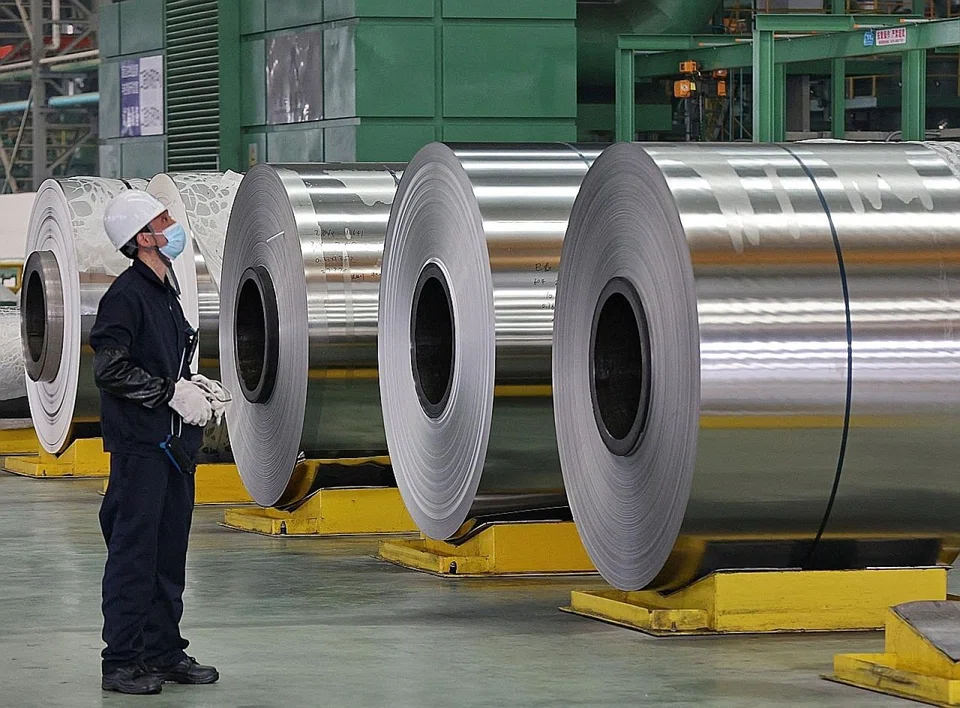
Most multinational companies can live without Russian customers. Living without Russian commodities would be much harder. On Mar 15, the European Commission announced new economic constraints on Russia, including a ban on exports of European luxury items and cars - the definition of an essential good is, after all, in the eye of the oligarch. But the announcement also included a ban on steel products from Russia. More such restrictions on Russian exports may come.
Companies are struggling to contain the fallout of Russia's brutal war in Ukraine. The first response of those with business in Russia was to rush for the exit. About 400 have announced their withdrawal from Russia, according to one tally, cowed by legal and reputational risks. Executives now face a different, bigger challenge. This concerns not their business within Russia, but supply chains that extend beyond it, and other knock-on effects. As the war continues, it is creating corporate winners and losers, as well as an awful lot of volatility.
There are 2 factors that make the shock to supply chains particularly difficult for firms to manage. The first is the breadth of commodities produced by Ukraine and Russia. The 2 countries together supply 26 per cent of the world's exports of wheat, 16 per cent of corn, 30 per cent of barley and about 80 per cent of sunflower oil and sunflower-seed meal.
Ukraine provides about half the world's neon, used to etch microchips. Russia is the world's third-largest oil producer, second-largest producer of gas and top exporter of nickel, used in car batteries, and palladium, used in car-exhaust systems, not to mention a large exporter of aluminium and iron. Even without formal sanctions on most of Russia's commodities, Western traders are increasingly trying to avoid them, wary of legal risks.
The second complicating factor is the market's extraordinary swings. The price of Brent crude surged to US$128 a barrel on Mar 8, then dipped below US$100 a week later as China announced new Covid-19 restrictions and investors anticipated the interest-rate increase by America's Federal Reserve on Mar 16. The London Metal Exchange halted trading of nickel on Mar 8 after its price shot past a record US$100,000 a tonne. When trading resumed on Mar 16, a technical issue prompted the exchange to suspend trading once more.
The overall American stockmarket is back roughly to where it was before the invasion. But a few industries benefit from the turmoil, from armsmakers to cable news and the lawyers who help firms comply with sanctions. The biggest winners are commodities firms, especially outside Russia.
A stockmarket index of American frackers, which benefit from high oil prices and European demand for liquefied natural gas, climbed by a fifth between Feb 23 and Mar 10. It remains 9 per cent above its pre-invasion level, despite the decline in oil prices. Mining firms are, as a group, likewise performing well, buoyed by higher metals prices, as are steelmakers (except Russian ones). The share prices of US Steel and Tata Steel, with headquarters in Pittsburgh and Mumbai, respectively, have climbed by 38 per cent and 11 per cent since the eve of the invasion. Bunge and ADM, two big listed traders that specialise in rerouting flows of grain, have outperformed the market, too.
The war does not affect all commodities firms equally. Rio Tinto, a big miner, announced on Mar 10 that it would abandon a joint venture with Rusal, a giant Russian aluminium producer. Rocketing electricity costs resulting from the soaring price of natural gas, 40 per cent of which Europe gets from Russia, have forced some Spanish steelmakers to cut output.
Pricey inputs are a more widespread problem for sectors further up the value chain. Just as they were preparing to lift off as pandemic travel restrictions are relaxed, airlines got slapped with rising fuel costs. Yara International, a Norwegian fertiliser-maker, said on Mar 9 that the cost of natural gas had prompted it to cut production at 2 European factories.
Carmakers, which have not yet recovered from the pandemic's disruptions to supply chains, face fresh problems. Volkswagen and BMW, two German giants, have cut production in Europe as they seek out new manufacturers of the harnesses that bundle miles of electrical wires in their cars to replace out-of-action Ukrainian suppliers. Morgan Stanley, a bank, reckons that the 67 per cent jump in nickel prices before trading stopped represented an increase of about US$1,000 to the input costs of the average American electric vehicle.
Gabriel Adler of Citigroup, another bank, notes that carmakers have so far been successful in passing their costs on to consumers. Tesla, America's electric-car superstar, this month raised prices; Elon Musk, its boss, complained in a tweet about "significant recent inflation pressure in raw materials & logistics". Such pricing power is enviable. But it has its limits. At some point people will not be willing to absorb any further increases.
In certain cases, consumers are beginning to balk. American food firms have been raising prices for months to offset higher costs of energy, transport and ingredients. However, they have been unable to raise them quickly enough to protect margins. The need to negotiate prices with grocers limits their ability to demand higher ones whenever they desire. And grocers, in turn, are under pressure from shoppers. Robert Moskow of Credit Suisse, one more bank, notes that consumers have in the past year been willing to stomach pricier food. But the war's impact on commodities prices comes at a moment when their patience is wearing thin, especially in America, where inflation has hit a 40-year high.
"Every food company must be getting a little nervous that they are pushing the consumer too far," says Mr Moskow. As the costs of inputs continue to climb, it looks increasingly likely that companies will be forced to choose between compressing profits and depressing demand. ©2022 The Economist Newspaper Limited. All rights reserved
Decoding Asia newsletter: your guide to navigating Asia in a new global order. Sign up here to get Decoding Asia newsletter. Delivered to your inbox. Free.
Share with us your feedback on BT's products and services
TRENDING NOW

Tiger Brokers, Moomoo, Longbridge Singapore units ‘financially independent’ amid China crackdown: MAS

DBS CEO Tan Su Shan ranks sixth globally on Fortune’s most powerful women list in 2026

China traders rush for exit after cross-border flow crackdown

DBS upgrades Singtel to ‘buy’ as Bharti Airtel gets valuation boost with upcoming industry tailwind

