

Sally Rooney’s ‘Intermezzo’: Love, loss and lingering regret
The world’s most celebrated young author returns with a layered novel on sibling rivalry

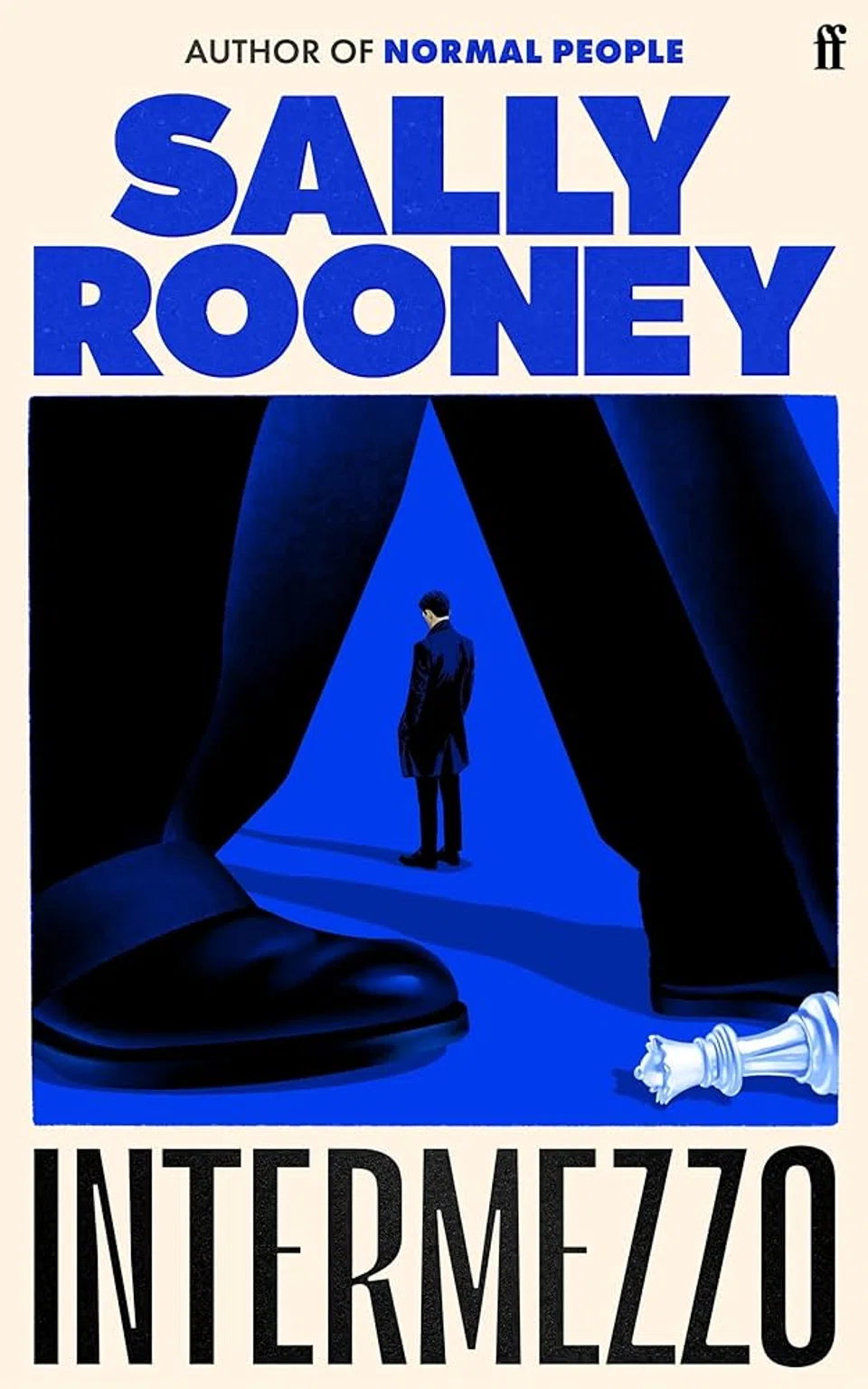
AT 33, Sally Rooney has the kind of literary career most young writers only dream of. Her first two novels Conversations with Friends (2017) and Normal People (2018) were critical and commercial successes, leading to TV adaptations that solidified her reputation as a voice of a generation.
Her latest novel, Intermezzo (2024), was recently released to a flurry of social media excitement, complete with exclusive merchandise and midnight release parties worldwide. The title debuted on best-seller lists around the world, including Kinokuniya Singapore’s fiction list, and has stayed there since.
For the first time in her career, Rooney tells a story primarily from male perspectives, focusing on two Dublin-based brothers: Peter, 32, a charming but troubled human rights lawyer, and Ivan, 22, a shy chess prodigy whose introverted nature complicates his relationships.
Their relationship is marked by years of unresolved tension – having been left by their mother to be raised by their Slovak father, the siblings now struggle to process their father’s recent death. The resulting grief brings buried conflicts to the surface, with each brother blaming the other for what’s gone wrong in their lives.
Peter turns to prescription drugs to numb his emotions, while Ivan dabbles in data analysis as his chess career fades. Despite their bond, Ivan puts it simply: “He’s my brother. That doesn’t mean we have to like each other.”
Spanning 400 pages, Intermezzo unfolds like a matryoshka doll of regret and grief, revealing layer after intricate layer of human fragility. Rooney employs her distinctive stripped-down writing style that omits quotation marks and minimises pronouns, drawing readers into her flawed characters’ inner worlds. The novel’s gradual pacing allows for a more intimate exploration of minor details, even though its slow, reflective quality may test some readers’ patience.
The novel shifts between the siblings’ perspectives, each distinct in tone to convey immediacy and rawness. Ivan’s chapters carry an anxious tone, while Peter’s exhibit abrupt sentences with blurred lines between thoughts, speech and actions. These jarring transitions require time to adjust to each character’s voice, further adding to unease.
Peter’s unsettled mental state, for instance, is vividly encapsulated in stream-of-consciousness prose: “Depressed in general probably. Thoughts rattling and noisy almost always and then when quiet frighteningly unhappy. Mentally not right maybe. Never maybe was.” This fragmented monologue reveals Peter’s turmoil, belying his outward charm.
Peter’s romantic relationships further complicates his character. On the one hand, there is Sylvia, an academic and his longtime sweetheart, who, following a serious car accident, ended their relationship as her chronic pain makes intimacy difficult. On the other, there is Naomi, 23, a university student who makes ends meet through sex work and drug dealing. His lingering attachment to Sylvia and detached treatment of Naomi leave readers questioning the authenticity of his connections with both women.
The novel’s more intriguing relationship involves Ivan and Margaret, a 36-year-old art director he encounters early on and whose point of view is revealed in select Ivan’s chapters. Ivan worries that his chess talent peaked too early in his life, and he is unable to build camaraderie. With Margaret, he finds a subdued, tentative intimacy that contrasts sharply with traditional May-December romances. Margaret finds their relationship “desperately embarrassing”, and fears the social judgment and her estranged alcoholic husband. But by keeping their relationship discreet, they’re able to create a quiet intimacy rooted in mutual understanding.
Much like an intermezzo in a symphony, Rooney’s novel encourages readers to pause and reflect rather than rush to a resolution. Margaret’s love for Ivan is transformative, enabling him to evolve beyond the socially awkward young man he once was. Meanwhile, Sylvia and Naomi are caught in a waiting game, forced to endure Peter’s resistance to embracing a functional three-way relationship – however possible that is.
This melancholic unfolding of emotional landscapes might not resonate with every reader. But for fans of Rooney’s emotionally incisive style, Intermezzo is an invitation to ponder the understated facets of human connection.
Intermezzo by Sally Rooney is available in all good bookstores
Decoding Asia newsletter: your guide to navigating Asia in a new global order. Sign up here to get Decoding Asia newsletter. Delivered to your inbox. Free.
Copyright SPH Media. All rights reserved.
TRENDING NOW

Could stablecoins be the future of money?

Philippine power giant First Gen rebuffs foreign offers, plans up to US$2.6 billion in expansion

GIC-backed Bank Jago sees wealth management as next growth engine as Indonesian investor base grows

The middle power moment arrives in South-east Asia – but not for Asean

