

Salman Rushdie attacks Dahl rewrites as 'absurd censorship'
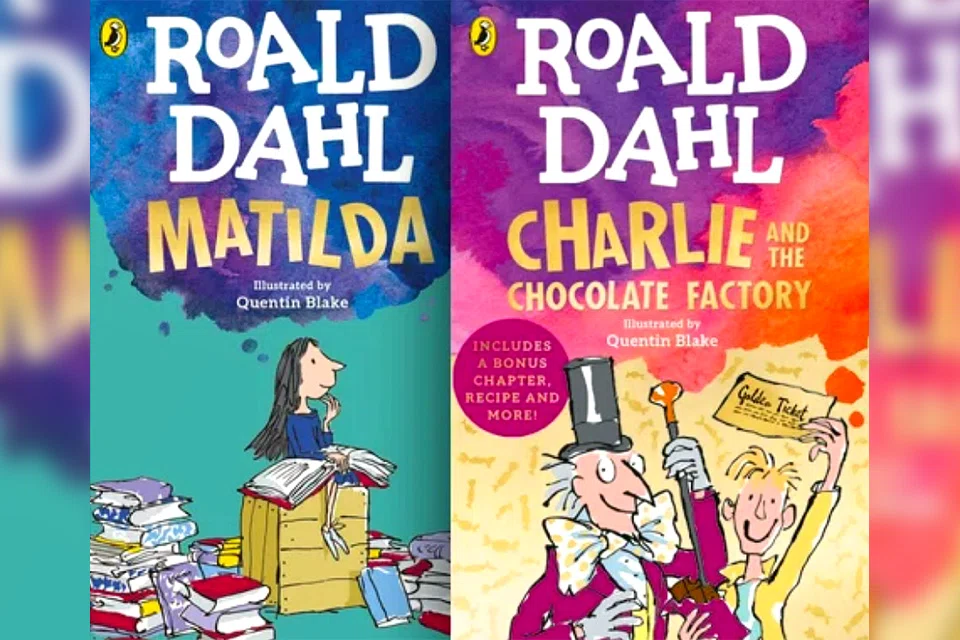
NOVELIST Salman Rushdie led condemnations on Monday (Feb 20) of Roald Dahl’s children’s books being re-edited for a modern audience, calling it “absurd censorship” by “bowdlerising sensitivity police”.
Publishers Puffin have made hundreds of reported changes to characters and language in Dahl’s stories including making the diminutive Oompa-Loompas in Charlie and the Chocolate Factory gender neutral and calling Augustus Gloop enormous rather than fat.
Mrs Twit in The Twits is also no longer ugly, but beastly instead, while the Cloud-Men in James and the Giant Peach are now “Cloud-People”.
The criticism comes amid a growing trend for publishers to employ so-called “sensitivity readers” who work alongside editors to identify references to gender, race, weight, violence or mental health that might offend readers.
A spokesperson for the Netflix-owned Roald Dahl Story Company, which controls the rights to the books, said it was not unusual for publishers “to review the language used” for new print runs and that its guiding principle had been to try to maintain the “irreverence and sharp-edged spirit of the original text”.
But the edits sparked a wave of criticism.
Rushdie, who lived in hiding for years due to a fatwa calling for his death over his 1988 book The Satanic Verses, said Dahl had been a “self-confessed anti-Semite, with pronounced racist leanings, and he joined in the attack on me back in 1989.
“Roald Dahl was no angel but this is absurd censorship. Puffin Books and the Dahl estate should be ashamed,” he wrote on Twitter.
Dahl’s books have sold over 250 million copies worldwide.

Some of his most popular stories have been turned into blockbuster films such as last year’s Matilda the Musical and The BFG (2016) which was directed by Steven Spielberg.
Suzanne Nossel, head of freedom of expression body PEN America, said she was “alarmed” by the edits.
“Amidst fierce battles against book bans and strictures on what can be taught and read, selective editing to make works of literature conform to particular sensibilities could represent a dangerous new weapon.
“Those who might cheer specific edits to Dahl’s work should consider how the power to rewrite books might be used in the hands of those who do not share their values and sensibilities.”
Nossel said one of the problems with re-editing works was that “by setting out to remove any reference that might cause offence you dilute the power of storytelling.”
His Dark Materials author Philip Pullman took aim at the influence of sensitivity readers on young authors.
He said less established writers found it “hard to resist the nudging towards saying this or not saying that.
“If Dahl offends us, let him go out of print,” he told BBC radio adding that millions of Dahl books with the original text would remain in circulation for many years whatever the changes to new editions.
Others highlighted how the “nasty” elements of Dahl’s stories were exactly what made them popular with children.
Laura Hackett, deputy literary editor of The Sunday Times newspaper, called the changes “botched surgery” and vowed on Twitter to hold on to her original copies, so her children could “enjoy them in their full, nasty, colourful glory”.
Even Prime Minister Rishi Sunak weighed in on the debate.
“The Prime Minister agrees with the BFG that you shouldn’t gobblefunk around with words,” his spokesperson told reporters.
The expression – meaning to play around – is a reference to a line spoken by the big friendly giant in the book. AFP
Decoding Asia newsletter: your guide to navigating Asia in a new global order. Sign up here to get Decoding Asia newsletter. Delivered to your inbox. Free.
Share with us your feedback on BT's products and services
TRENDING NOW

Can a first-time homebuyer couple earning S$18,000 a month afford a new EC unit?

He built the Vingroup empire. Now South-east Asia’s richest man is handing some key roles to his sons

Asia needs new energy security architecture

Chagee, Mixue and Luckin won the market. Sustaining their edge is the harder part

