

Salty, buttery, astonishingly lucrative: The US$100 million market of popcorn buckets
What were seen as mere snack holders are now ‘collectible concession vessels’ that are making lots of money for US theatre chains
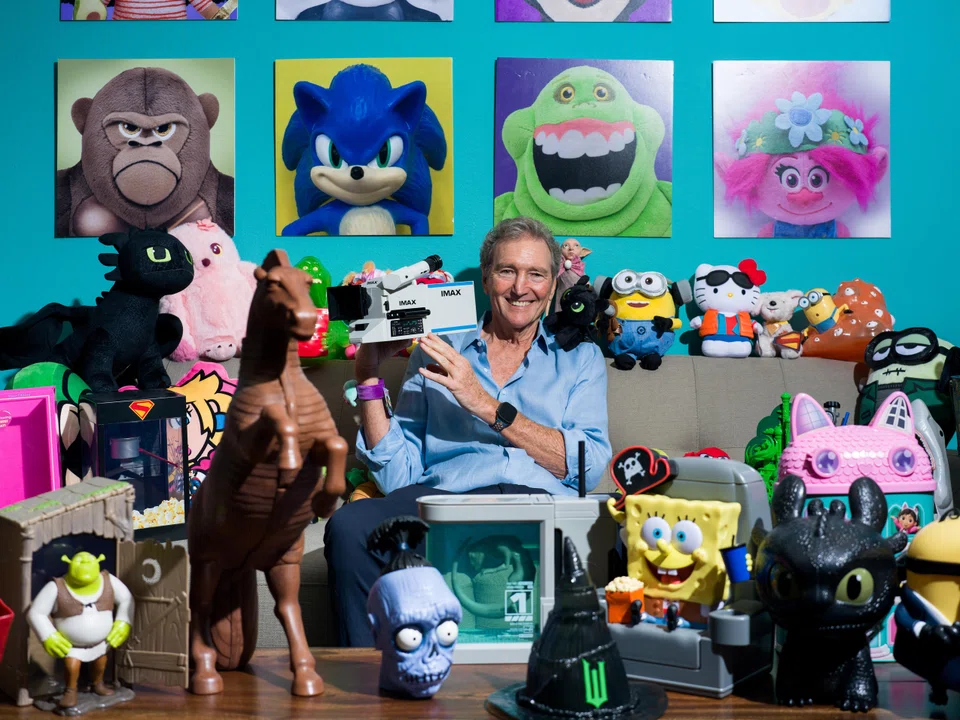
[NEW YORK] First, Bill Howard surrendered his cellphone. Then he signed the non-disclosure agreement. He sat for an hour and a half that day on the Universal Pictures studio lot with a single paper copy of a script for an upcoming movie.
He pored over it, alone, scribbling in the one notepad he was permitted, thinking about his craft. How would he bring his unique set of skills to bear on this particular project and help to make it a blockbuster?
Many a Hollywood elite has entered a sealed room to read a top-secret script. But Howard is not an A-list actor. He is not a cinematographer or a computer-generated imagery artist. What Howard makes is buckets.
Popcorn buckets – or, as they are more formally known, “collectible concession vessels”. These special-edition snack receptacles are designed for major movies and can sell for as much as US$70. All the studios and theatre chains want in on them, because for somewhat inexplicable reasons, they have become astonishingly lucrative.
AMC Theatres estimates that this year, buckets will generate US$100 million in revenue, nearly double the level of 2023. Cinemark Theatres, the third-largest chain in the US, says bucket sales helped its merchandise revenue increase 40 per cent from 2024 to 2025.
“Seven years ago, this business effectively didn’t exist for AMC,” said Nels Storm, the company’s vice-president of F&B product strategy. “I would never suggest that popcorn buckets are the reason people go to the movies or that movie-themed merch is saving the industry, but over the last few years they’ve become a big part of the conversation around major releases.”
Howard, 71, is the chief executive at Snap Creative, which is based in Camarillo, California, and employs 55 people. Snap is behind two of this summer’s hottest buckets. Both are tied to the release of Christopher Nolan’s The Odyssey: One is a replica of the director’s Imax camera, priced at US$50, and the other is a 55.9-cm rendering of the Trojan horse, which sells for US$70.
To make them, Howard and his team met early on with one of the film’s producers, Emma Thomas, to get a walk-through of the story beats. Then they approached Imax with their ideas.
Rich Gelfond, the theatre chain’s chief executive, was sceptical about the camera-concept bucket. “I know a lot about the movie business, and I didn’t really know much about the bucket business,” he said. “It was beyond me to really envision that there’d be a strong demand for US$50 popcorn buckets.”

He approved a first run of 2,500 units. They sold out almost immediately. Movie fans do not buy buckets just in theatres – often, they order them in advance and receive them in the mail, without any popcorn inside.
To get more buckets, Gelfond called up the chief executive of Imax China and begged him to ship over all his buckets, since the film would not open there until August. His counterpart agreed, and when Imax made the second run of 2,500 buckets available, they sold out in seven minutes. Between its website and purchases at theatres, Imax thinks it sold some 30,000 buckets.
Gelfond considers himself a convert. “This is a real business,” he said, describing Imax as “all in” on buckets.
Nearly all of Hollywood’s buckets are made by three companies. In addition to Snap, there are Golden Link, which is based in New York and is the bucket partner of Disney Studios; and Zinc, an Australian firm that has bucketed the Dune and Mission: Impossible franchises.
Snap, Golden Link and Zinc license the intellectual property of the films from studios and collaborate with them on the designs. Snap’s creative director was recently in Atlanta on the set of the next Superman instalment and spoke directly to the director, James Gunn, about bucket concepts.
“When you get it right with the filmmaker, you know you are on your way,” Howard said.
Movie theatres have long sold special popcorn containers, but the industry consensus is that the current craze has two specific inflection points. One came in 2019 when a bucket commissioned for Disney’s The Rise of Skywalker – a 43.2-cm replica of R2-D2 – sold surprisingly well.
The second accelerant involved, and there is really no other way to put this, the distressingly sexual features of a bucket for Dune: Part Two in 2024. Modelled on the gaping maw of an alien sandworm, the design inspired a sketch on Saturday Night Live about amorous teenagers and took the bucket market to previously unimaginable heights.
Ryan Reynolds, who starred in and produced the Deadpool movies, later tried to up the filth factor with a bucket based suggestively on his character’s rival, Wolverine.
Howard credits Generation Z with turning buckets into a phenomenon. “They are really into buckets,” he said. “They’re looking for experiences that are of the moment, are memeable and are exciting, limited-drop events.”
Ordering too few buckets creates a powerful sense of scarcity. But sometimes, buckets do not sell. The recent Supergirl was a dud and so was its bucket, which featured the heroine’s reluctant sidekick, Lobo, riding a Spacehog motorcycle. (Perhaps they should have made a bucket that featured the film’s main character.)
Outcomes in the bucket realm can be inscrutable. Masters of the Universe was a box-office disappointment last month, as was one of its buckets, a light-up throne belonging to supervillain Skeletor. Yet a second bucket, featuring Castle Grayskull, was a hit. (It featured both a detachable drink tumbler and a candy compartment.)
And popular films can have buckets that bomb, as in the case of Hoppers, from Disney’s Pixar, and a vessel shaped like a beaver dam.
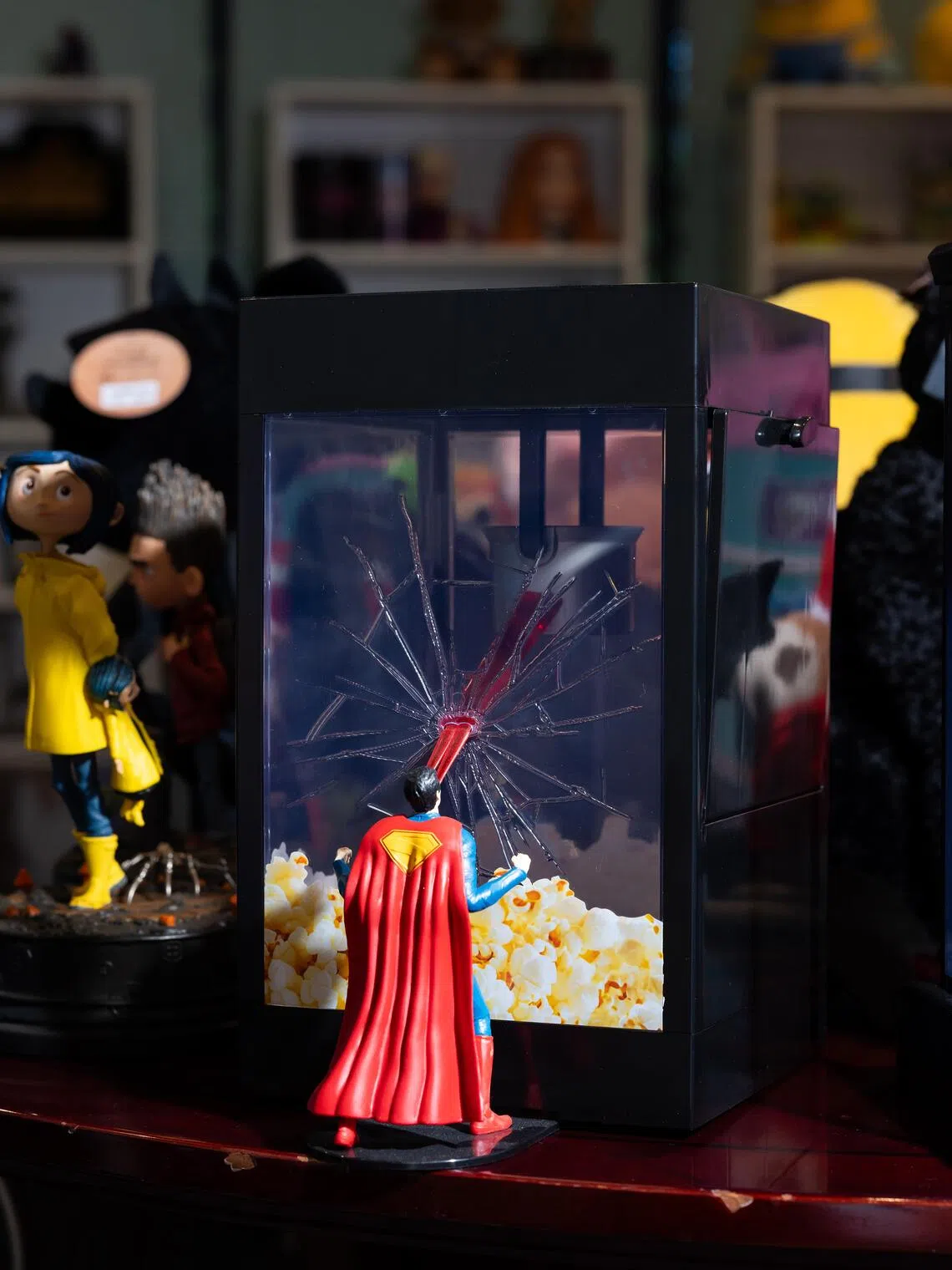
Bad buckets create headaches for exhibitors. “Then we have an inventory issue for local theatres,” said Vikki Neil, the head of marketing for Regal Global Entertainment, the second-largest theatre chain. “What do we do with that merchandise? Do we ship it back? Do we sell it at a discount? It starts to get complicated.”
But mostly the buckets overfloweth. Regal said that its merchandise sales would surpass US$40 million this year. And buckets themselves are only getting bigger. At the end of August, for the re-release of Harry Potter and the Sorcerer’s Stone, Howard’s company will unveil its largest bucket ever, a 1.2-m replica of Harry’s Nimbus 2000 broom. It will sell for US$50 and, somehow, store 3.8 kg of popcorn.
That is 270 per cent the capacity of the Odyssey horse, which holds 1.4 kg in its belly. (“Pretty average for a bucket,” Howard said.) It should be noted that a conventional paper bucket, size large, contains 4.8 kg of popcorn by volume, or a little more than 21 cups.
That is often immaterial to bucket enthusiasts, who sometimes have no interest in popcorn. Recently, on eBay, a batch of 20 buckets celebrating The Accountant 2 – about a skilled assassin who is also an autism-spectrum certified public accountant – sold for US$550. NYTIMES
Decoding Asia newsletter: your guide to navigating Asia in a new global order. Sign up here to get Decoding Asia newsletter. Delivered to your inbox. Free.
Share with us your feedback on BT's products and services
TRENDING NOW

DBS, OCBC, UOB rout lops billions off STI as inflation, rate concerns spook investors

Grab CEO’s wife Chloe Tong on life with Anthony Tan and finding her purpose

OCBC sheds S$8 billion in value as shares close nearly 6% down; analysts cautious on banks

Deal between tycoon friends sparks scrutiny of Philippine power sector

