Future presents from Christmas past
Planning acts of empathy and kindness can spread festive cheer without the harmful guilt-trip
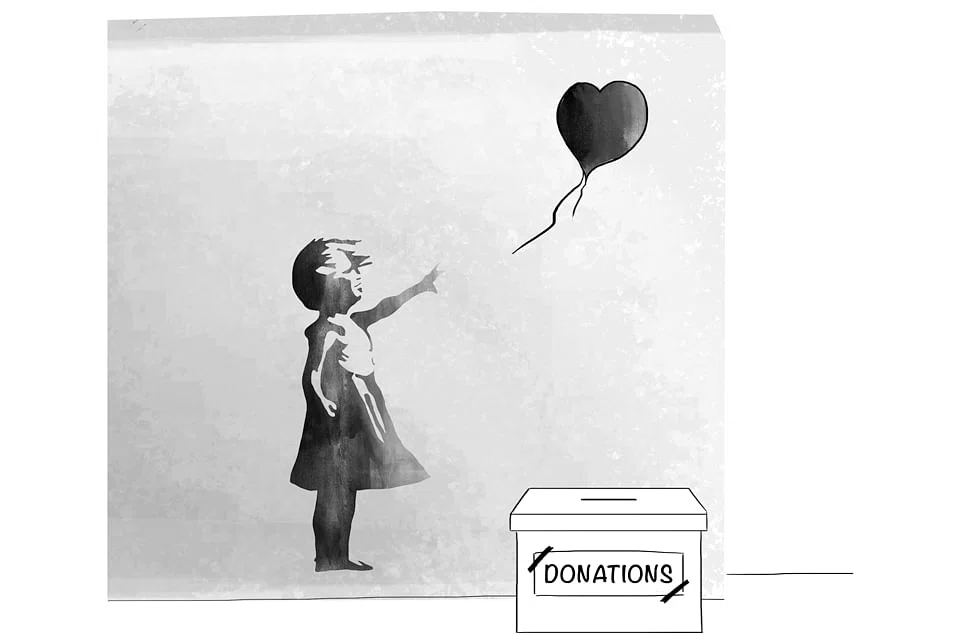
CHRISTMAS is not just associated with a glow of fairy lights and the flush of inebriation. It is also a time when charities hope that the message of peace and goodwill to all men will translate to a fuller collection for the less fortunate in our midst.
It is the annual call on empathy, which is interestingly a leadership theme in recent times. Books written by leaders from Hillary Clinton to Microsoft's Satya Nadella have asked readers to spur change by solving problems through feeling someone else's pain.
Yet critics, at the risk of sounding heartless, have sounded out in general the pitfalls of focusing on empathy alone as a force for good. Yale psychologist Paul Bloom suggested in a book this year that thoughtless empathy serves to keep us entrenched in caring only for those who are like us. In a world fractured by tribalism, an inward focus takes us paradoxically further from a kinder society.
Then, there are issues with donation drives. As charities jostle for attention in a world increasingly deficient in attention span, there is that temptation for them to fight for eyeballs and dollars with emotive images and narratives on social media. It is that photo of a child's body washed up on a quiet shore or the images of violent domestic abuse that presumably move people to action.
Except that doesn't always work.
A traditional poster that features an unnamed sick and poor child from an unknown part of the world can drive people to donate through guilt, but can also repulse donors enough to turn them away, a 2016 study by the University College London showed. A separate World Bank report last year also cited studies that reported people increasingly feeling depressed about global poverty. The helplessness creates a sense of compassion fatigue that can drive donors away.
To be clear, charities can hardly be faulted for making constant appeals for donations. Yet the bombardment can leave people feeling exhausted from an avalanche of appeals. Some choose to disengage instead.
To avoid fatigue, charities have to continue insisting on proper governance, and in crafting donation drives to channel hope - with studies showing that positive messages carry greater appeal.
But perhaps the conversation begins with each donor deciding on his or her personal priorities based on a finite budget, and committing to setting that money aside to do a little bit of good every year.
This is something I practise, donating twice a year - once on my birthday, and once on Christmas week - to organisations that help children with autism, women escaping from abusive relationships, and families trapped in poverty. There is nothing exceptional or glorifying about my giving in itself - plenty of people make far more generous donations, including that of their invaluable time. The sharing is only to say that a planned approach is one way to avoid inertia.
It can also avoid the potential of emotional blackmail that can numb action. From time to time, I'd listen to staff from charities make their appeals door to door, offer them a drink at the end of the pitch, but generally choose to decline donating based on such appeals, knowing that I have already set aside a budget for donations.
There are exceptions, but these are driven by emotional burdens that I can see, and accept. When my friend and freelance journalist Kim Wall was confirmed to have been killed on assignment - her body mutilated by her interviewee who has been charged for murder and sexual assault - I donated to a fund set up to honour her work, and that would help other freelance journalists who may be put in similarly dangerous situations.
Likewise, a deep conversation with a longtime friend about her work with disadvantaged families in Singapore prompted me to give more to support what she does. These are unexpected moments of emotional stirring, but the subsequent donations made were considered, clear, and in my control. They weren't manipulated from emotional appeals that were sprung by invisible algorithms.
There is one more important benefit of conscious charitable giving. It is that it forces us to think about civic responsibility. By taking pause, our musing can - and should - go beyond charitable giving. Yale's Bloom pointed out that morality is not driven by empathy in itself, noting that the decision to pay taxes stems from deciding what is for the good of society, as opposed to mirroring the pain of others. Extending that point, consider that the Swedes score their tax agency highly on "contributing positively to society". Tax is moral good there because Swedes feel that they are looking out for one another this way.
Having high taxes for that fuzzy feeling of collectiveness alone is naturally unwise; tax collection must first make fiscal sense. But it does speak to the tensions behind anti-globalisation sentiments. There is growing acceptance that even as a record amount of wealth has been created and has lifted millions out of poverty, the vast difference in the distribution of wealth suggests that certain groups are disillusioned because they have been sorely left behind even as the world draws closer together.
Having that perspective from conscious charitable giving means the next year for most of us doesn't start with being singularly focused on keeping up with the Joneses, but to realise that to another household out there, we are the Joneses.
That we can afford to consider opening our wallets suggests we have gotten by thus far by being on the right side of education, family support, and luck. We should think about - not just feel like - spreading a little cheer, especially once we have assured ourselves that we can do so comfortably on our own terms.
Share with us your feedback on BT's products and services