Merry Grinchmas, ethically speaking
Here's the festive buzzkill: it's hard to be a responsible consumer, especially with today's global marketplace
 Add BT as a preferred source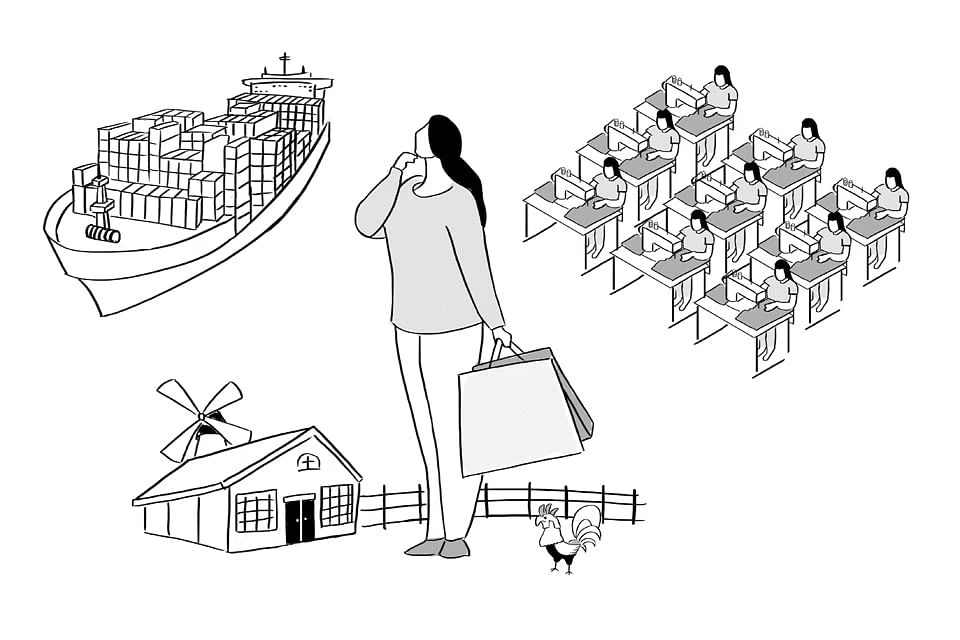
ONCE, there was a chicken named Colin. At least, there was one on an episode in Portlandia - an American sitcom that parodied the hipster life in Portland for absurdist theatrics.
The sketch centred on a couple at dinner, grilling the waiter about how the chicken had been treated on its farm. The meat dish better known as deceased Colin came with his curriculum vitae. There was a profile photo. Days before death, he seemed happy.
Still, unconvinced that the chicken - a heritage breed fed on a diet of sheep's milk, soy, and (local) hazelnuts - had four acres of free roaming ground prior to his scheduled slaughter, the couple drove 30 miles (48 km) south of Portland to inspect the farm where Colin was bred.
What they found ran afoul of their best do-good intentions: a farm owned by a cult leader who, like many such characters in real life, held no ideological objection to polygamy. Colin was, like in life, a feathery subplot thereafter.
This satire of the hipster lifestyle stretches to the extreme the ways in which consumers try to make ethical buying decisions. But in doing so, it also points out how hard it can be to track down just how responsible our purchases are, especially in the global marketplace.
Take consumers choosing free-range chicken - and their eggs - on the hopes that our carnivorous behaviour would be more ethically driven. Yet, a Guardian report in 2017 suggested that some free-range sheds are sized like a one-room flat for 14 adults.
The labelling itself - which as responsible consumers we now read judiciously - is misleading.
The Washington Post reported last year that there remain varying definitions of egg carton labels. The best free-range operations require farmers to design optimal perching designs as well, the report added. Cages, while cruel, prevent hens from pecking one another to death.
What, then, of the clothes off our backs? In 2017, a customer found in a purse she had bought from Walmart, a note handwritten in Chinese that alleged poor labour conditions. In a USA Today report, Walmart could not confirm if the note was accurate, but said it was a "significant challenge" to find suppliers that uphold its standards, "especially with respect to suppliers located and goods sourced outside the US".
Walmart buys goods from more than 100,000 suppliers around the world. It has said it is taking steps to review areas such as forced labour, but its supplier list is not made public "due to proprietary information and confidentiality restrictions".
This non-disclosure tack is taken by other multinational corporations as well, which makes it difficult for consumers to monitor supply chain risks related to forced labour until reports of human-rights abuses emerge.
Indeed, global businesses were forced to respond following a damning investigation on seafood sourcing in Thailand four years ago.
The Guardian reported then that slaves put on "ghost ships" had been forced to work for years to produce fishmeal fed to farmed prawns that were then sold to both corporations and consumers around the world. It reported that Thailand would ship out about 500,000 tonnes of prawns every year, with nearly 10 per cent of that farmed by CP Foods.
Against this backdrop, we should ask who should bear the costs of ethical behaviour. In the past five fiscal years, Walmart has had a gross profit margin of just under 25 per cent, its latest annual report showed. By comparison, the gross margin of Amazon stood at about 40 per cent.
Should the burden fall on shareholders to stomach lower margins? Or should it be on consumers, who would then have to pay more than the bargain prices at Walmart, or to forgo discounts on Amazon, which has in turn been accused of poor working conditions?
Even if consumers were to agree to pay more, or to boycott purchases tainted by human-rights abuses, there is no assurance that the added dollars would not end up fattening the margin, or if they would go towards influencing change in an increasingly corporatised world.
Following pressure from global investors, CP Foods said it has improved its audit system to track labour standards. Still, The Guardian reported this year that modern slavery in Thailand remains "routine", despite the global outcry and the commitment from businesses to improve practices down the line.
As the global marketplace offers us a host of choices as consumers, the complexity of global supply chains and the difficulties behind getting meaningful disclosures have made it harder for consumers to make fully responsible choices.
So sometimes, we may make easier choices, and it makes us feel better. By all means, stop using the plastic straw to slurp up bubble tea. But the big contributor to marine pollution and death of species is, in fact, fishing nets. The nets - sometimes used by modern slaves - to catch the seafood we eat.
This Merry Grinchmas, perhaps we should limit the consumerism to assuage the conscience. A simple and minimalist lifestyle all year round would take the resolve further. But let's be honest, we'd still be tempted by that new smartphone, that seafood feast, and that minimalist outfit - all likely made with a guilty touch of sweatshop labour.
So we'll buy the things, eat the meals, and hope to keep ourselves better informed of threats to a better world. What's also responsible, then, is to accept the absurdist theatre of this modern life, and laugh openly at the hypocrisy of us all.
Share with us your feedback on BT's products and services