
From Savoie, white wines that refresh like mountain air
 Add BT as a preferred source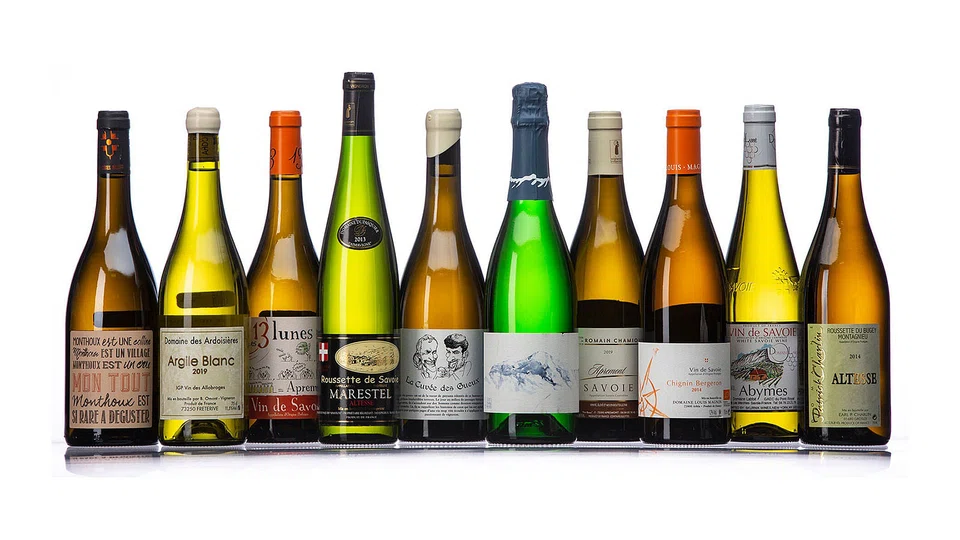
PLACES like Savoie exist all over historic wine areas - little-known cul-de-sacs that are suddenly embraced by the outside world, though the residents have been making wine there for centuries.
Then again, there is only one Savoie. This small, hilly protrusion in the Alpine foothills of eastern France juts into the mountainous region where Switzerland meets Italy. It produces some excellent red wines, but mostly whites that are as cool, crystalline and refreshing as a mountain stream.
I have consumed quite a few Savoie whites over the past few weeks, and the best of them - without fail - made me feel as if I were in breezy meadows among the foothills, under the distant glowering crags of the Alps themselves.
This transportive quality is a powerful feature of Savoie whites. The leading grapes, altesse and jacquere, are little known outside the region. Other important white grapes include mondeuse blanche, roussanne and chardonnay, along with a host of other indigenous grapes.
But no matter which grapes were used or how they were blended, the wines seem to have characteristics in common that outweigh their differences. Those that I liked best all spoke assertively of the place they were grown, displaying a bracing freshness that is a welcome tonic in the summer heat.
Shopping in New York retail shops, I came across 10 Savoie whites that I would highly recommend. In areas less well served by great wine shops, bottles of Savoie will be harder to come by. No doubt the selection I put together will be tough to duplicate anywhere.
Navigate Asia in
a new global order
Get the insights delivered to your inbox.
But finding only these 10 wines is not the point of this exercise. Instead, I hope you will seek out whichever Savoie whites you encounter. Maybe they will include producers mentioned here, but perhaps you will discover your own treasures.
I have listed them from least to most expensive. If some seem a bit pricey, it is important to remember that farming on steep slopes is labour-intensive hand work. Many of these producers work organically or biodynamically as well.
Some producers that I adore I was not able to include as I did not see their wines. But if you see bottles from Nicolas Gonin, Domaine Giachino or Lambert de Seyssel, snap them up.
A few of these wines are six or seven years old. It is not often that you can buy white wines already aged. Some producers hold back their wines a few years before releasing them, doing the work of ageing themselves. Each tasted young and fresh.
Though I have focused on Savoie whites, do try out the reds, which are likewise delicious and distinctive.
Romain Chamiot, Savoie Apremont 2019; US$17: Straightforward and uncomplicated - these words do not hold a lot of weight with many readers. Yet the world needs plenty of wines like this, intended simply for pleasure and refreshment when your mind is on other matters.
This bottle epitomises what the Apremont region is known for: light, fresh, floral wines made from the jacquere grape. Apremont wines can do a lot more than this bottle, but sometimes a wine like this is exactly what you want.
Domaine Labbe, Vin de Savoie Abymes 2019; US$17: Roger Labbe farms roughly 25 acres (10 ha) not far from the village of Chambery. This wine is made entirely of the jacquere grape, and drinking it feels almost like standing in an Alpine meadow. It is lively and floral, with lemon tones, and it is absolutely refreshing. The texture is oily and feels rich, yet the wine is just 11 per cent alcohol, making it a great bottle to open at lunch.
Anne & Sylvain Liotard, Domaine des 13 Lunes Vin de Savoie Apremont 2019; US$20: Here is another Apremont, yet it is quite a bit different than the Chamiot. It is richer, with a lip-smacking purity, depth and energy, along with fresh floral, herbal and citrus flavours. It has got another dimension, but maybe it requires a little more attention, too. The Liotards farm their vines biodynamically, which perhaps accounts for the vibrancy of the wine.
Domaine Adrien Berlioz, Vin de Savoie La Cuvee des Gueux 2019; US$28: Like the Liotards, Adrien Berlioz farms his roughly 12 acres biodynamically, often on perilously steep slopes near Chignon, a village between Chambery and Albertville.
This cuvee is a blend of jacquere and altesse. It is rich, yet light and fresh, with incisive acidity, aromas and flavours of flowers and herbs, and an underlying stony quality.
Domaine Dupasquier, Roussette de Savoie Marestel 2013; US$28: It is not often you see seven-plus-year-old white wines in retail shops. This may be a tough bottle to find, but it is an excellent example of how well these Savoie whites can age. Its aroma is not at all extravagant, yet it still smells like a bouquet of flowers or a cornucopia of fruits. It is pure, balanced and stony, with years to go. Serve with Alpine cheeses or fresh seafood.
Patrick Charlin, /strong strong Roussette du Bugey Montagnieu Altesse 2014; US$30: Patrick Charlin produces small amounts of wine in the Montagnieu area of the Bugey region. Bugey is not technically within the Savoie, but it is nearby and uses similar grapes, like the altesse in this bottle. Though it may be six-plus years old, it is just beginning to blossom. It is rich - richer than the Dupasquier - yet scintillating acidity makes it feels light and refreshing, with intriguing earthy melon and nutlike flavors.
Domaine des Ardoisieres, Vin des Allobroges Argile Blanc 2019; US$36: Domaine des Ardoisieres, practically in the shadow of Mont Blanc, comprises roughly 17 acres on steep, terraced vineyards, farmed organically. As the name suggests, Argile Blanc is grown on white clay and schist. It is a combination of jacquere, mondeuse blanche and a grape called chardonnay, which you might know about. Altogether, this wine is like a laser beam - bright, pure and penetrating - like stepping into a cold mountain stream.
Nicolas Ferrand, Domaine des Cotes Rousses Roussette de Savoie Mon Tout 2018; US$38: Nicolas Ferrand, the proprietor of Domaine des Cotes Rousses, calls himself a paysan vigneron, a peasant farmer and winemaker. One might imagine an old man, with years of experience etched into a weathered face and under the fingernails. But 2014 was his first vintage. For a relatively young producer, this wine, made entirely of altesse, tastes of the ages, fragrant with the aromas of flowers and herbs. It is bone dry, lovely and refreshing.
Domaine Louis Magnin, Vin de Savoie Chignin Bergeron 2014; US$38: Another white with a few years of age, and again, this wine tastes as if it has many years ahead of it. This one is made of roussanne, a Rhone grape that is known in the Savoie as bergeron. The wine is rich, ripe and round, with herbal, floral and citrus aromas, not unlike other Savoie whites. The difference is felt in the body, texture and opacity of this wine, which is so intriguing you keep sipping in an effort to reach the heart of it, even if you never quite get there.
Domaine Belluard, Savoie Les Perles du Mont Blanc Brut NV; US$40: In mid-June, Dominique Belluard, the proprietor of this superb domaine, died by suicide. He and his wines were beloved by many around the world. He was determined to introduce people to the beauty of the wines from his part of the Savoie, centered on the village of Ayze.
Almost single-handedly, he resurrected gringet (pronounced grahn-ZHAY), a nearly extinct local white grape, and demonstrated its potential when in the right hands. This is his sparkling gringet, made using the Champagne method. It is graceful and gentle, lightly herbal, stony and sweetly grassy. It us a gorgeous expression and a sad reminder of a great loss. NYTIMES
Decoding Asia newsletter: your guide to navigating Asia in a new global order. Sign up here to get Decoding Asia newsletter. Delivered to your inbox. Free.
Share with us your feedback on BT's products and services

