

Saying goodbye to an architectural masterwork
Before it’s put up for sale, the William Lim-designed house at Holland Park is getting one last hurrah

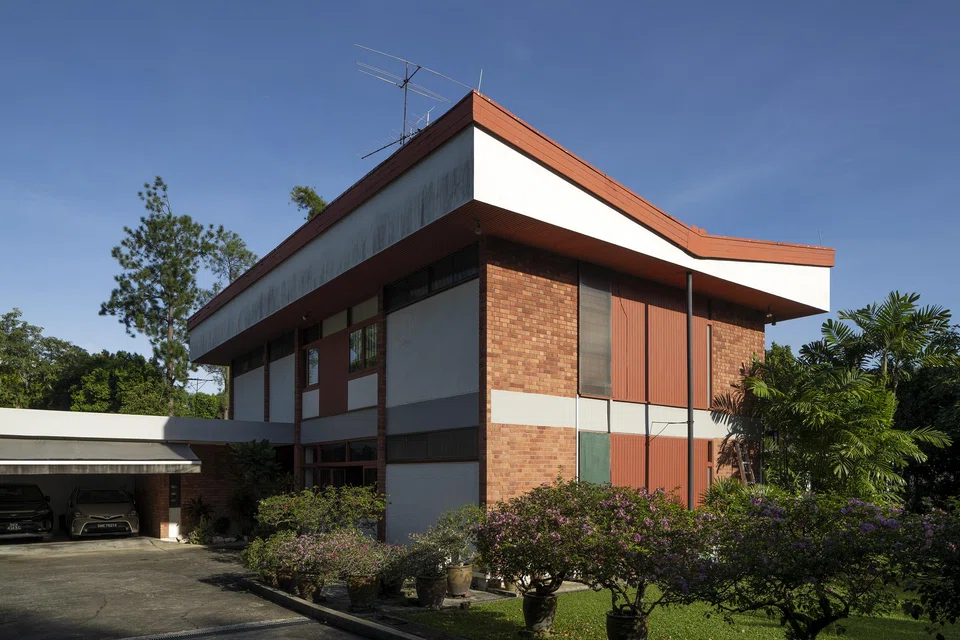
THE iconic house at C-1 Holland Park was one of the first personal projects of the late architect William SW Lim. Built in 1963 partly as a favour to a friend, the elegant two-floor residence has a built-up area of 432 square metres and sits on a land size of 2,028 sq m.
It boasts all the hallmarks of a modernist private residence – clean lines, cantilevered structures and a seamless blending of indoor and outdoor spaces. It has beautiful timber-framed fenestration and a V-shaped butterfly roof that distinguishes it as a building from that era.
The original owners of the house – the forensic pathologist Dr Tan Kheng Khoo and his wife Gunn Chit Siew – have both died. Their three children – two of whom now live in the UK – have made a difficult decision to sell the house.
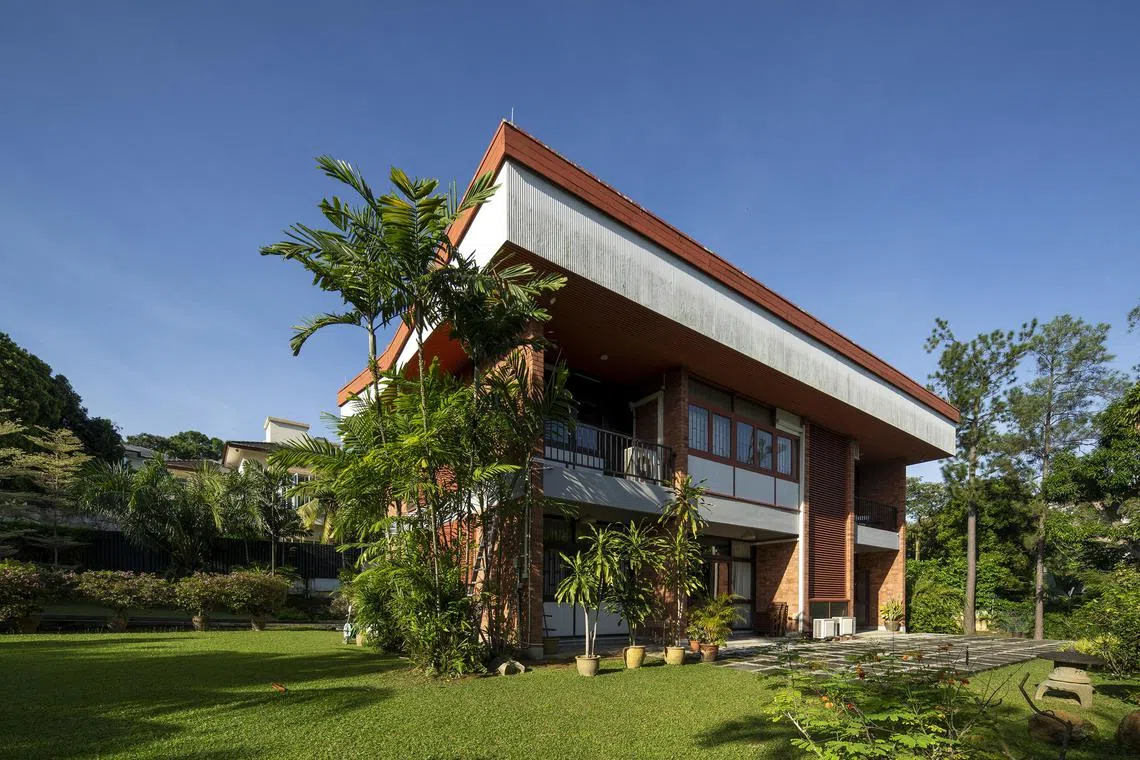
The youngest child, who is still in Singapore, is artist-photographer Tan Ngiap Heng. He is working with artist-curator Michael Lee to commission a group of artists to create artworks as a farewell gesture to his family home. The artworks will be unveiled during Singapore Art Week in January 2024, along with an architectural tour by Docomomo Singapore and a private dining event featuring heirloom recipes of the family. After that, the house will be put up for sale.
Tan, who is in his 50s, says: “The house has been a constant companion since I was born. As I prepare to part with it, I want to capture its essence through the eyes of fellow artists. Each one brings a fresh perspective of my home that I myself may not have thought of. Together, we’re creating this symphony of images, sound, smell, touch and taste that echo the spirit of this house.”
Overlooked gem
Docomomo Singapore, a non-profit organisation dedicated to the documentation and conservation of buildings, describes C-1 Holland Park as an “unsung masterwork of Malayan modernism”. The organisation’s founding chair Ho Weng Hin says the house is the “earliest solely attributable work” of Lim, who was then part of the Malayan Architects Co-Partnership (MAC), a collective that left a significant mark on Singapore’s landscape.
MAC existed for only seven years from 1960 to 1967, but its successor firms Architects Team 3 (led by Lim Chong Keat) and Design Partnership (led by Lim and Tay Kheng Soon) went on to design Singapore’s most famous post-independence landmarks, such as Jurong Town Hall, Golden Mile Complex and People’s Park Complex. All three are gazetted for conservation.
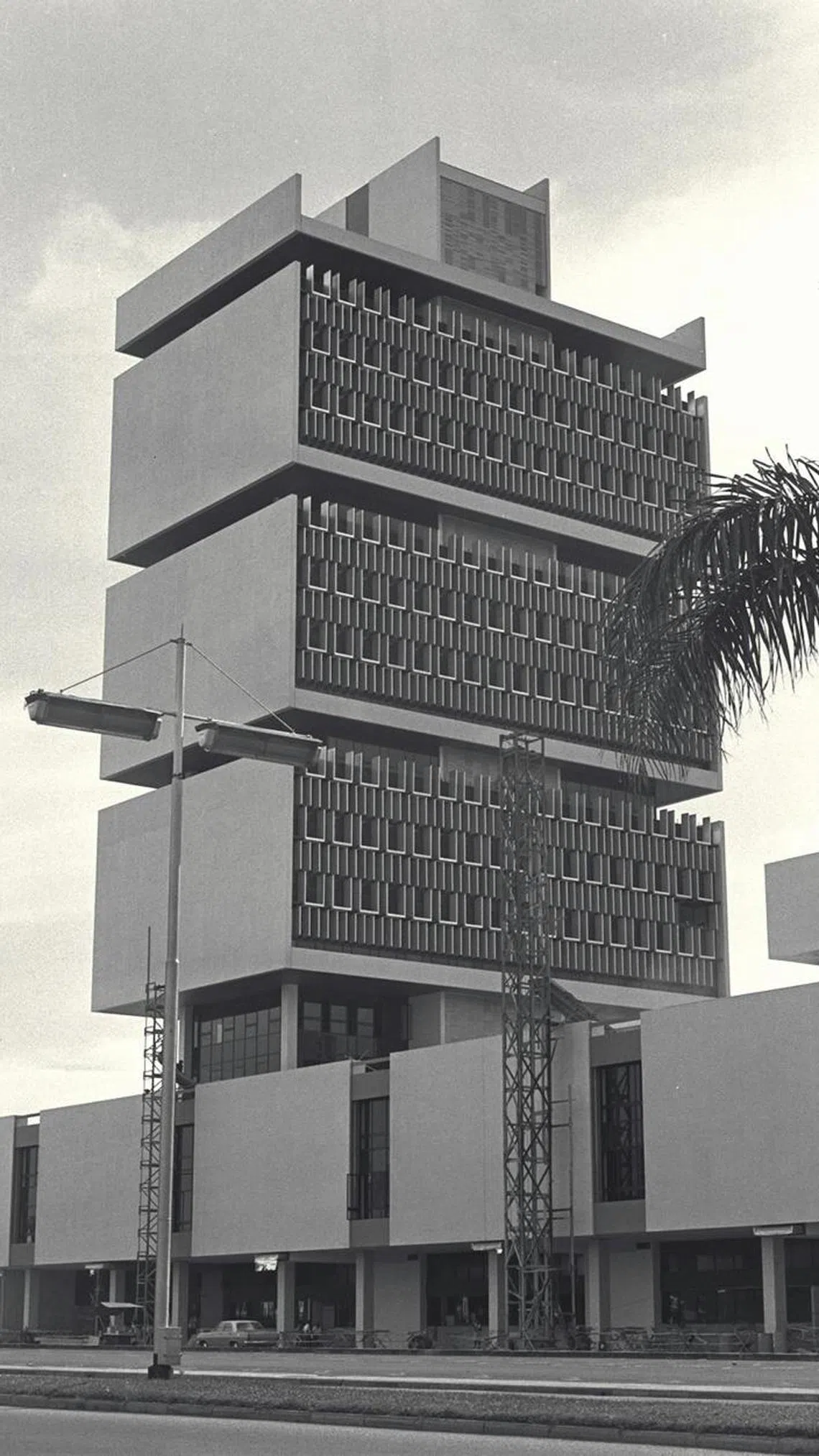
MAC also designed other significant landmarks in Singapore and Malaysia, such as the Singapore Conference Hall (1965), the Malaysia-Singapore Airlines Building (1968), the State Mosque of Negeri Sembilan (1967) and the Penang branch of Bank Negara Malaysia (1965).
Ho says: “Architectural masterworks such as C-1 Holland Park (and the numerous other private residences designed by MAC in this period) are arguably the most creatively ‘pure’ visions in independence-era Malayan architects’ oeuvres.” Unfortunately, almost all have been left largely “unprotected” in Singapore’s built heritage conservation policies, he adds.
“To date, no post-war private modernist residences have received conservation status in Singapore (which stands in stark contrast to the large number of conserved colonial-era houses). This highly significant historical and cultural patrimony is steadily being lost… Many of the most significant modernist houses of this era are likely to have already disappeared.”
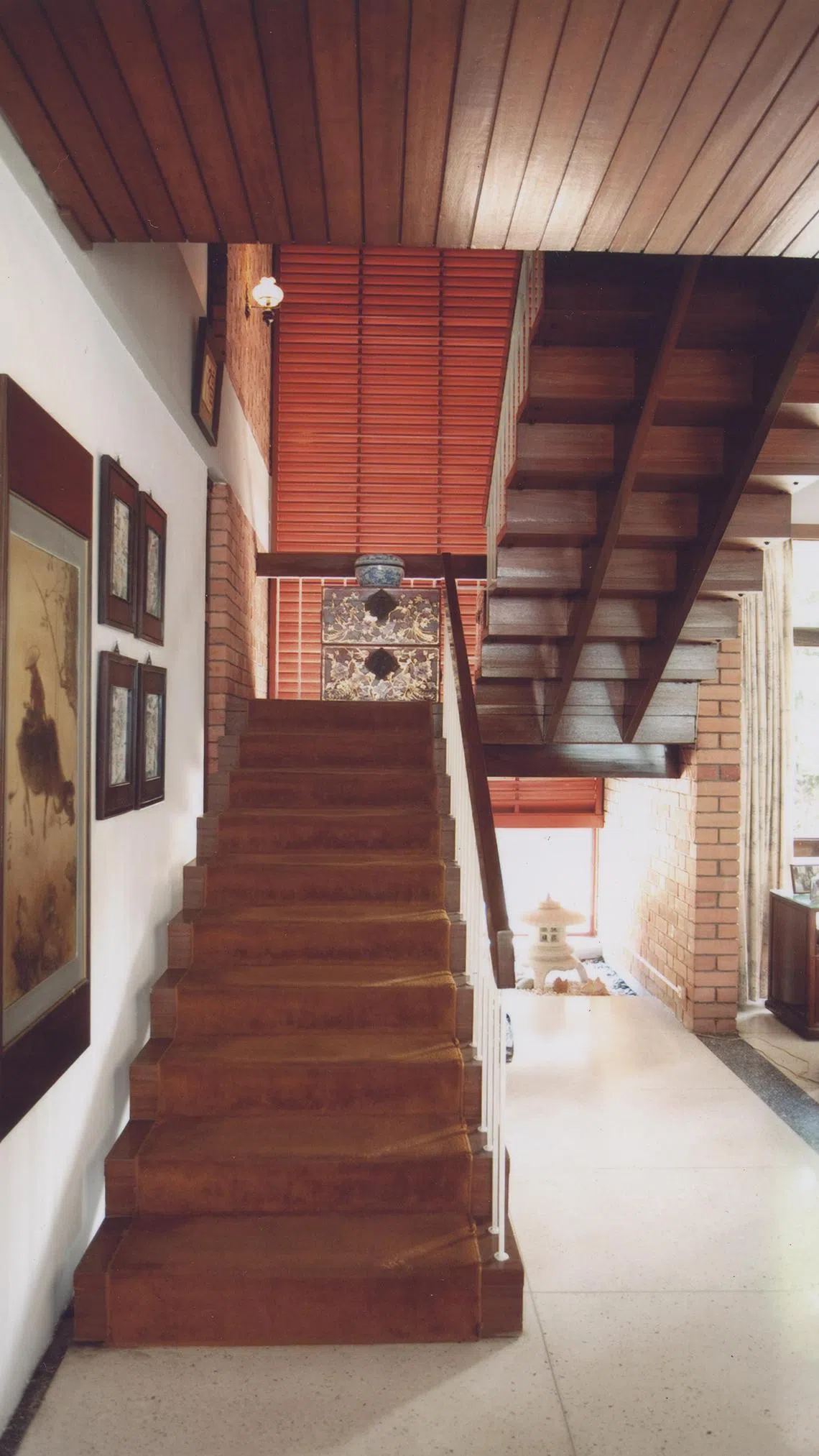
For Tan’s part, he says the house is too big for him and his wife and young daughter, and they prefer a smaller place. Meanwhile, his siblings are too far away to look after the house, so it makes sense for them to sell it. They decline to reveal its valuation.
Harmonious East-West blend
C-1 Holland Park was one of the first built works by architect Lim soon after he returned to Singapore from his studies at the Architectural Association in London. In a 1990 essay, he wrote: “During my years at the Architectural Association, I was very much influenced by Le Corbusier as well as the ideas of my tutors… Graduate study at Harvard gave me first-hand exposure to the group working philosophy of Walter Gropius. In 1957, I returned to Singapore – very idealistic and nationalistic – eagerly ready to serve and to put theories into practice.”
According to Docomomo’s founding member Ronald Lim, C-1 Holland Park – along with other private residences designed by MAC, such as Dr Tan Peng Nam’s house at 66 Binjal Park and Dr Chia Chin Tiong’s house on Rochalie Drive – were “experimental test beds for the MAC’s architectural agenda of inventive architectonic form with innovative details and modest local materials, creating a progressive architecture suited to tropical Malaya”.
The architects frequently blended influences of modern Western masters such as Mies van der Rohe and Paul Rudolph with a clear understanding of the tropical climate and local materials.
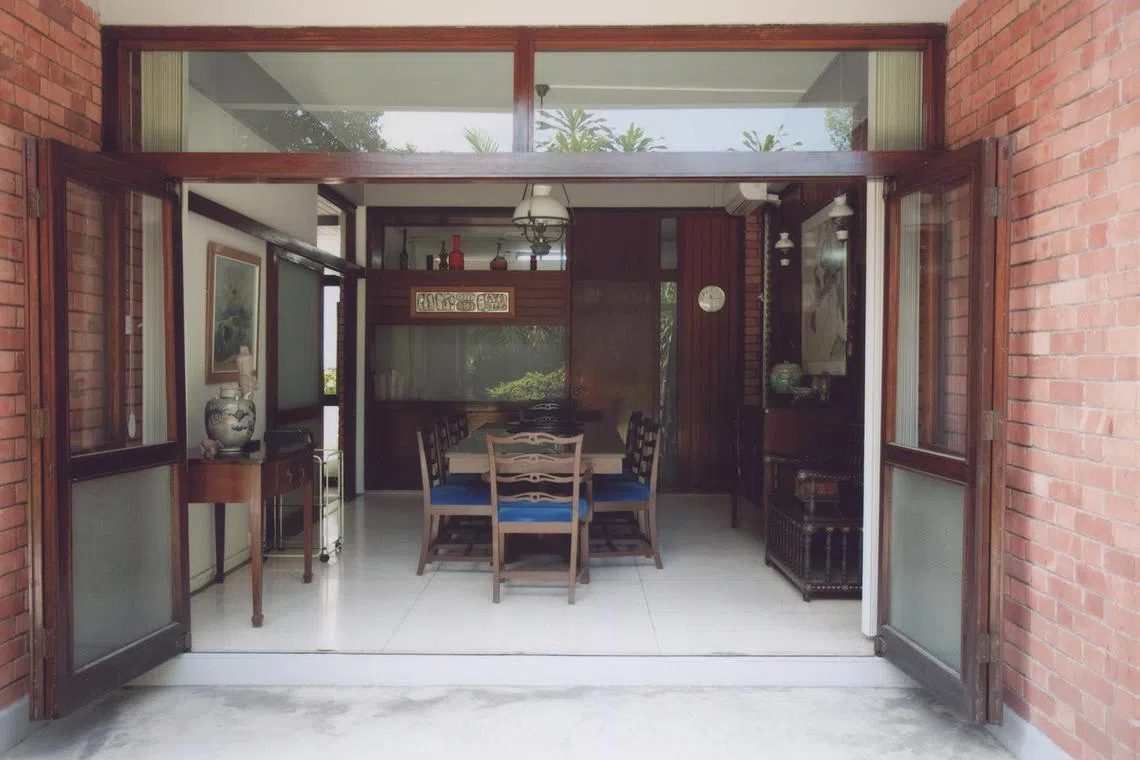
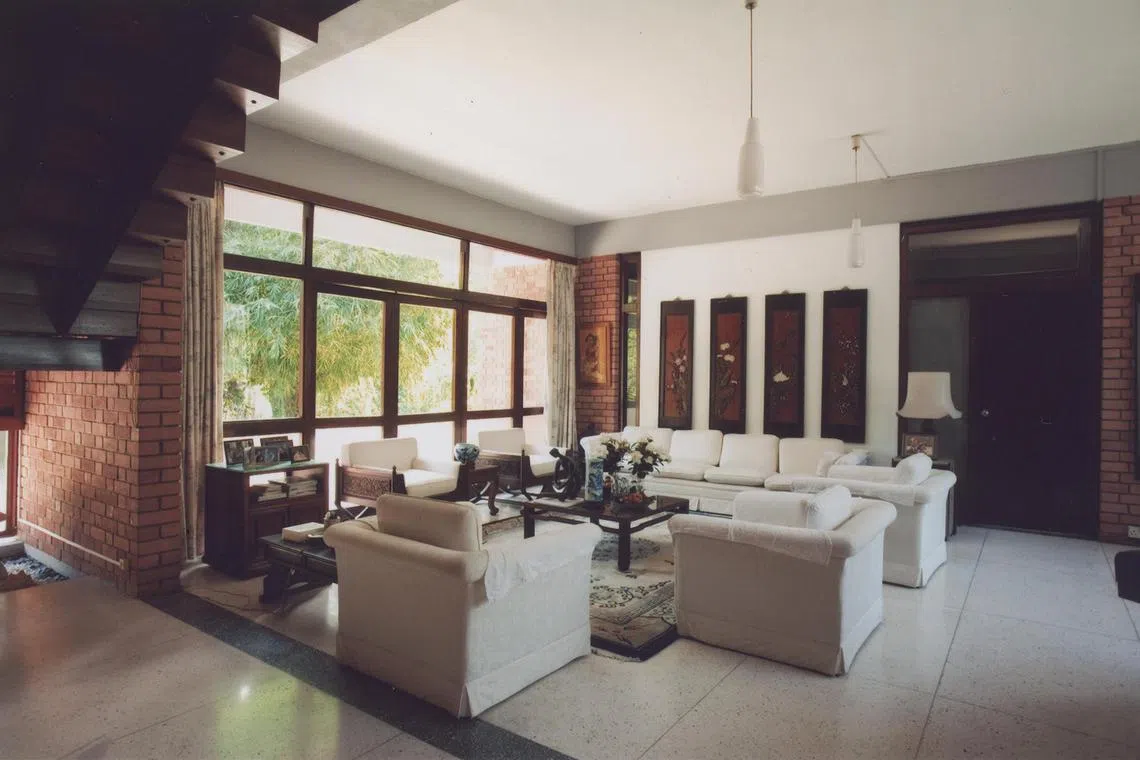
The ground floor of C-1 Holland Park, for instance, has a living room marked by fair faced brick walls, timber-framed infill bays of windows and bi-fold doors facing the garden. These allow the space to be partially opened to the exterior, providing for natural cross-ventilation in the tropical weather and a symbiotic dance between the interior and exterior.
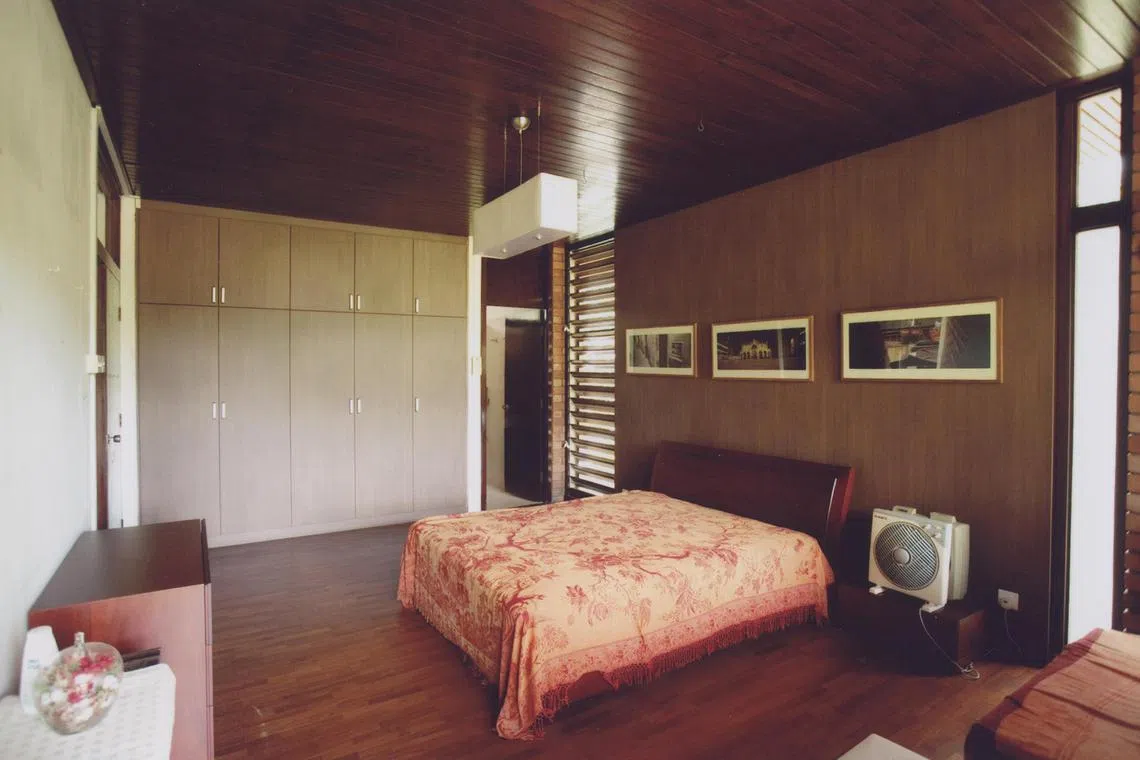
There are four bedrooms, one on the ground floor and three on the upper floor. The two master bedrooms on the upper floor are strategically positioned at the opposite ends of the house. They mirror each other, boasting parquet floors that whisper underfoot, timber strip walls and ceilings that echo the warmth of nature, and balconies nestled within the fair faced brick structural bay.
The ingenuity of the design extends to the fixed-furniture elements. Within the master bathrooms and the dressing room, these elements seamlessly transition into partitions, cabinetry and internal fenestration.
Artists’ interpretations
In the past few months, Tan and curator Lee began inviting artists to C-1 Holland Park to acquaint themselves with the house. The artists are Catherine Hu, Cynthia Delaney Suwito, Khoo Guo Jie, Lei Yuan Bin, Mike HJ Chang and Susanna Tan.
The results have been nothing less than surprising.
Lei, a film-maker, decided to create a dance film featuring Tan Ngiap Heng, who trained as a dancer before going into photography. The film titled A Dance For A House has him moving gracefully and mournfully across various nooks and crannies of the house. At one point, he darts playfully across the garden as if reliving his happy childhood; other times, he communes solemnly with the rooms in remembrance of his parents.
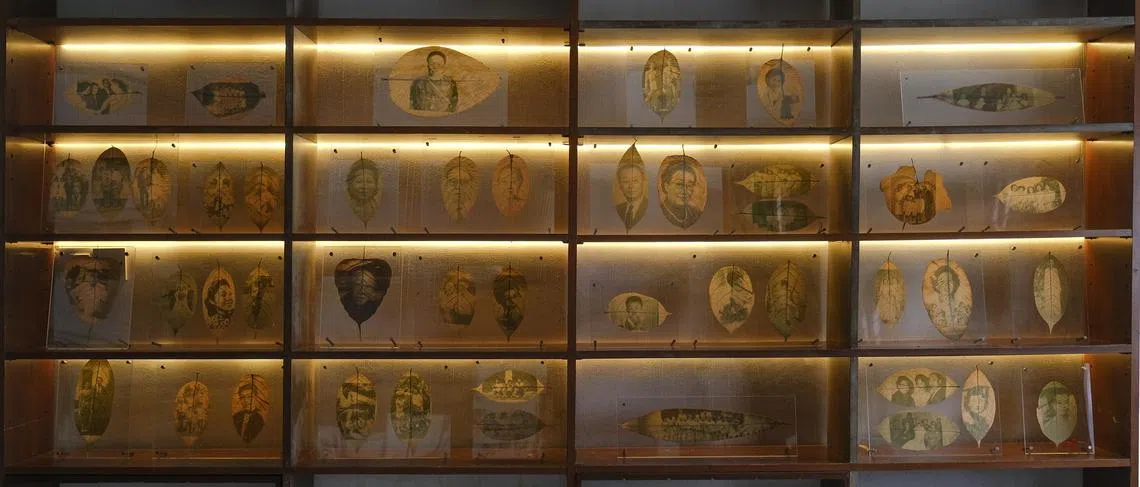
Tan himself is displaying several artworks inspired by his family home. Among them is an evocative installation titled Family Leaves, in which dozens of family images are chlorophyll-printed onto dried leaves, creating a poignant tapestry that contemplates the fleeting nature of human existence.
Meanwhile, his wife Quek Choo San is hosting two private five-course dinners on Jan 27 and Jan 28, which feature Peranakan heirloom recipes passed down from Tan’s mother and her maternal family.
Tan says: “We wanted to celebrate the house one last time before saying goodbye to it. So we thought of all the ways that we could breathe life back into this house… before we close this chapter of our lives.”
The exhibition, titled Eat Play Love, runs at C-1 Holland Park from Jan 17-31, from 11 am to 7 pm daily, as part of Singapore Art Week. Admission is free. There will be an architectural tour by Docomomo Singapore on Jan 20 from 2.30 to 3.30 pm (paid registration required) and a private dining event featuring Tan family recipes on Jan 27-28 at 7 pm (paid registration required). Visit eatplaylove.site or e-mail eatplaylove2024@gmail.com
Decoding Asia newsletter: your guide to navigating Asia in a new global order. Sign up here to get Decoding Asia newsletter. Delivered to your inbox. Free.
Copyright SPH Media. All rights reserved.
TRENDING NOW

Singapore identifies 7 firms responsible for haze fires, notices issued urging action: Grace Fu

DBS remains analysts’ pick ahead of Q3 earnings after Singapore banks’ share slump

High Court rules against Julius Baer’s Singapore trust arm in US$50 million family trust dispute

Could stablecoins be the future of money?

