

Scientists seek clues to longevity from three Brazilian sisters over 100
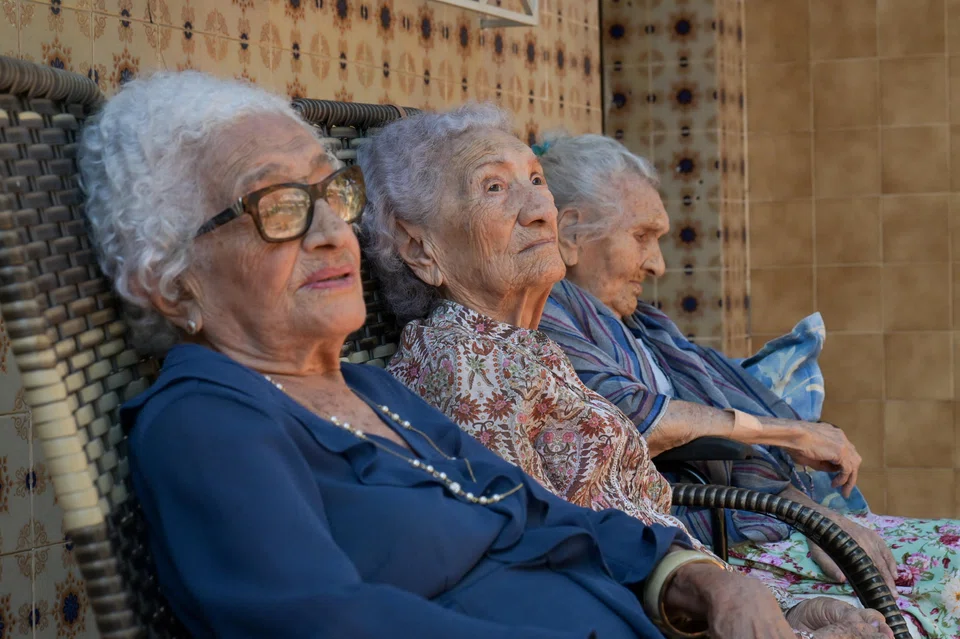
[RIO DE JANEIRO] What is the secret to a long life? Three Brazilian sisters with a combined age of 316, who were named by the Guinness World Records this month as the oldest living trio of siblings in the world, may help researchers find out.
The DNA Longevo Project, a study led by scientist Professor Mayana Zatz from the University of Sao Paulo, aims to investigate the biological factors behind ageing.
Findings from the three sisters’ case could help scientists better understand why some people remain physically and cognitively resilient at exceptionally advanced ages.
Researchers will compare nonagenarians and centenarians with people who have developed frailty, cognitive decline or chronic diseases, seeking traits linked to longevity.
“Through DNA testing, we look for protective genes, and we know there are several of them,” said Prof Zatz, who coordinates the university’s Human Genome Research Center.
“The more people we have who live past 100, especially families with multiple centenarians, the more accurate our research will be in identifying them.”
Scientists believe inherited factors may play a larger role than environmental influences in preserving health and function later in life.
The sisters – Zulina de Deus Nunes, 103; Zoraide de Deus Mota, 104; and Levita de Deus Nunes, 109 – who live in Rio de Janeiro, were identified through LongeviQuest, a global organisation that verifies longevity records and partners with the Guinness World Records.
“When sisters reach that age, there is clearly a strong genetic component,” said Ben Meyers, CEO of LongeviQuest. “But because they live near each other, they also have a support network, with family able to help when needed. There is definitely a community aspect as well.”
The three sisters credit their longevity to a healthy diet and an active lifestyle.
Zulina recalled a childhood spent swimming and fishing in rivers. “Everything was fresh. We didn’t have a refrigerator,” she said.
“Breastfeeding is incredibly important,” Zoraide added.
The sisters otherwise lead fairly ordinary lives. Levita worked as a craftswoman and later at a television network. Zoraide worked as a nurse and raised five children, while Zulina, a stay-at-home mom, raised six.
Levita looks back on her life without regrets. “I had a good childhood and adolescence. I can’t complain.”
Researchers hope to understand how genetic factors, rather than lifestyle, help protect the heart, muscles and cognitive function from the ravages of ageing.
The study’s goal, said researcher Dr Joao Paulo Guilherme, who works with Prof Zatz, “is to reach 500 centenarians so we can draw more definitive conclusions about longevity”. REUTERS
Decoding Asia newsletter: your guide to navigating Asia in a new global order. Sign up here to get Decoding Asia newsletter. Delivered to your inbox. Free.
Share with us your feedback on BT's products and services
TRENDING NOW

Government to bring forward raising of retirement age, give employers more financial support to create flexi-load jobs

If Europe goes to war, the fallout will be felt in East Asia

Indonesia stocks suffer worst plunge in nearly 30 years as MSCI proposes standalone status

Vietnam’s northern provinces, not Hanoi or Ho Chi Minh City, are powering near 10% GDP growth

