Sculptures both macabre and moving
Patricia Piccinini’s hyper-realist sculptures imagine human beings bonding with cyborgs and genetically modified creatures

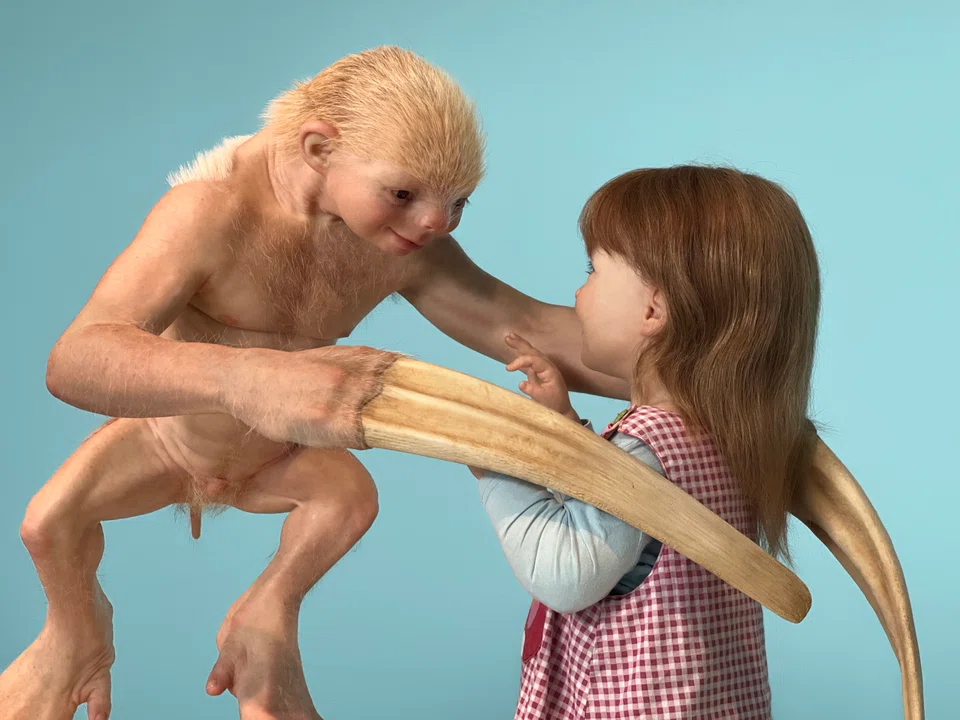
IN a world of GMO crops, cell-based meat and designer babies, Patricia Piccinini’s sculptural art shouldn’t seem all that strange to us. But they do look surreal. An orangutan mother nursing a human child. A girl surrounded by mushroom-headed bats. A child playing with a creature with long claws. A human mother cradling a chimerical baby.
At first, they appear like scenes from a cult horror or sci-fi movie, in which terrifying creatures from outer space invade earth and take over human bodies, turning us into waddling mutants. But one quickly realises Piccinini’s vision isn’t as nightmarish as these.
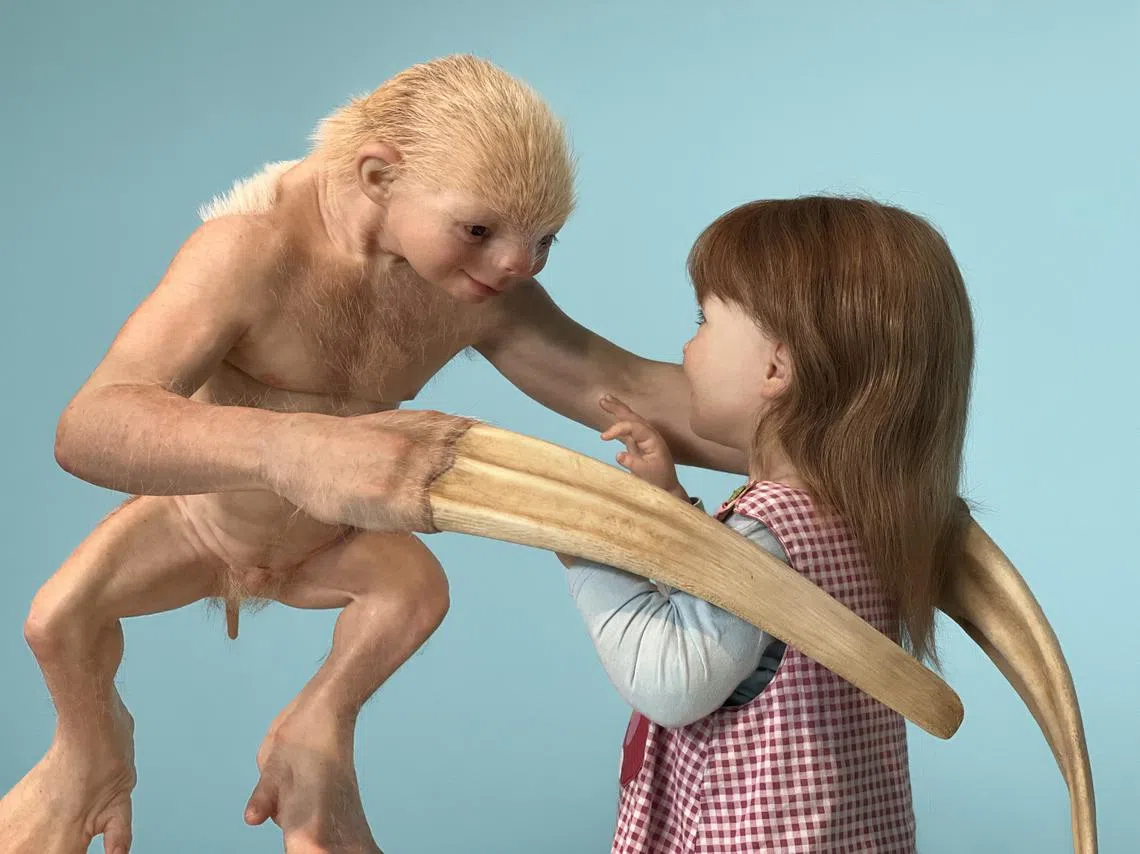
Instead, she is imagining a world where humans live side by side peacefully with clones, cyborgs, human-animal hybrids and genetically-modified creatures. Her dioramas of home life are sweet, gentle and touching. She’s appealing to us to open our hearts instead of giving in to our fears.
Appearing at the ArtScience Museum where her sculptures are being shown, Piccinini says that the people of the Malay archipelago got it right when they called the apes in their jungles “orangutan” (which means “person of the forest”): “They’re not beasts – they’re people of the forest. Thinking of them as ‘animals’ makes us care less about them, when in fact orangutan mothers are incredibly nurturing and caring towards their children – just as we are towards our children.
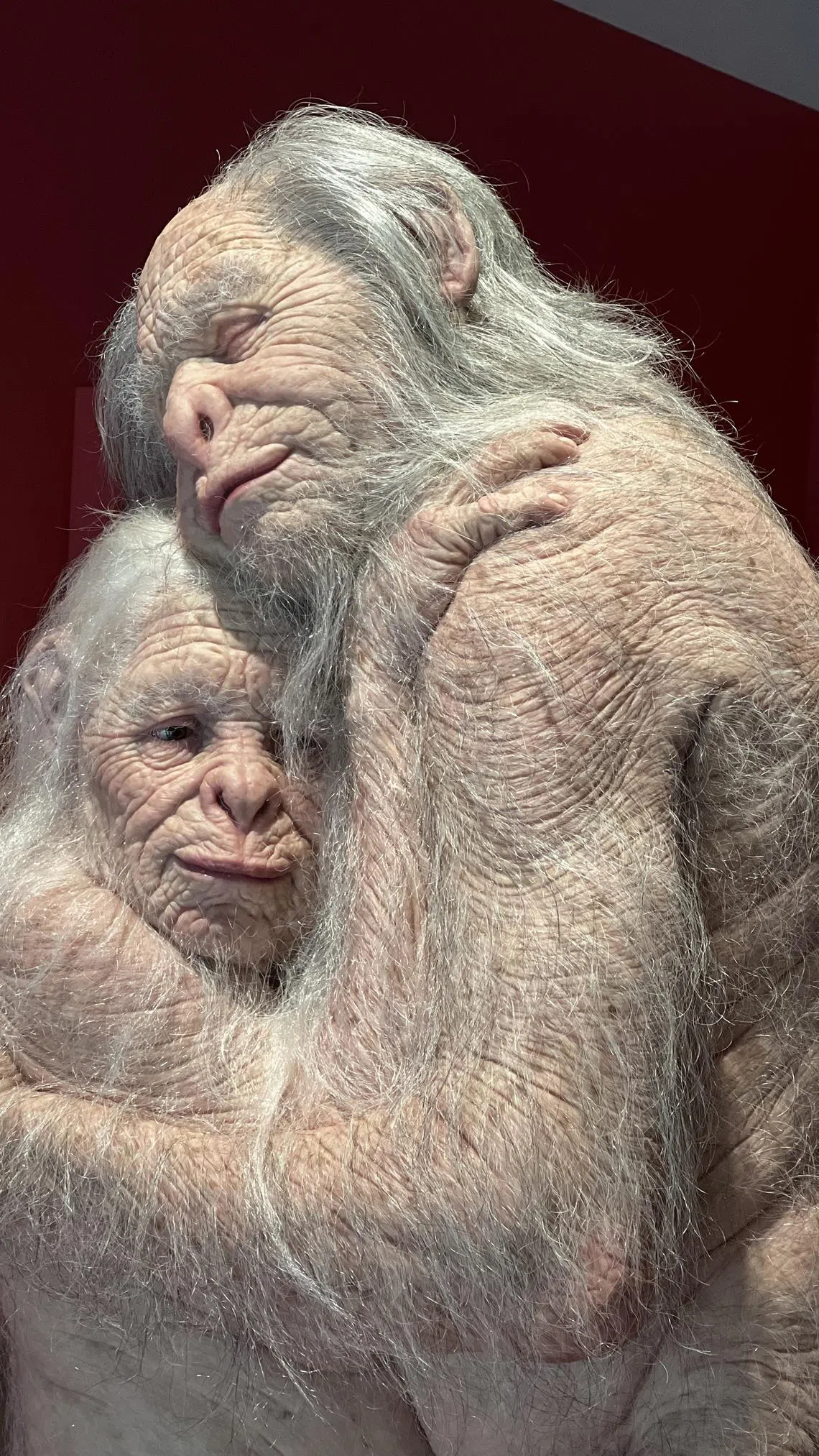
“We need a new way of looking at our relationship with the natural world, as well as the world of technology and artificial intelligence… a new idea of nature and technology that is positive and inclusive. As humans, we are hardwired to be suspicious of differences… (when) all life on earth is remarkably similar.”
The show, titled We Are Connected, features 40 sculptural works and collages created from the 2000s to the present. The life-like creatures are created from an array of materials including silicone, fibreglass, resin, automotive paint and human hair. As an early proponent of these hyperrealist sculptures, Piccinini represented Australia at the 2003 Venice Biennale and received strong reviews.
Some of her hybrid creatures can initially be frightening, even for adult viewers: Men with skin pouches (like kangaroos) carrying eggs or seeds. Motorcycle parts entwined with human limbs. Half-pig half-human babies suckling their mother. Bat-like creatures with long teeth staring at us with beady eyes.
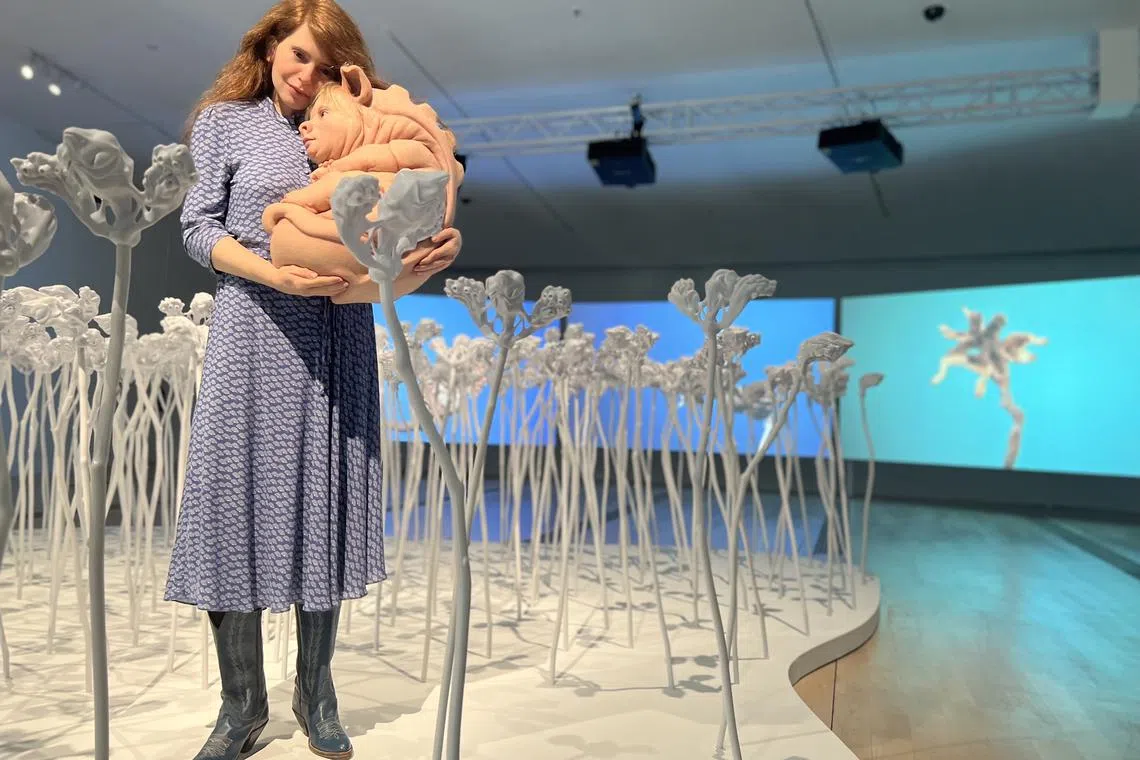
“Unfortunately, we humans are hardwired to be suspicious of differences… but I hope that visitors of this exhibition will be able to make that journey from aversion to empathy, acceptance and love.”
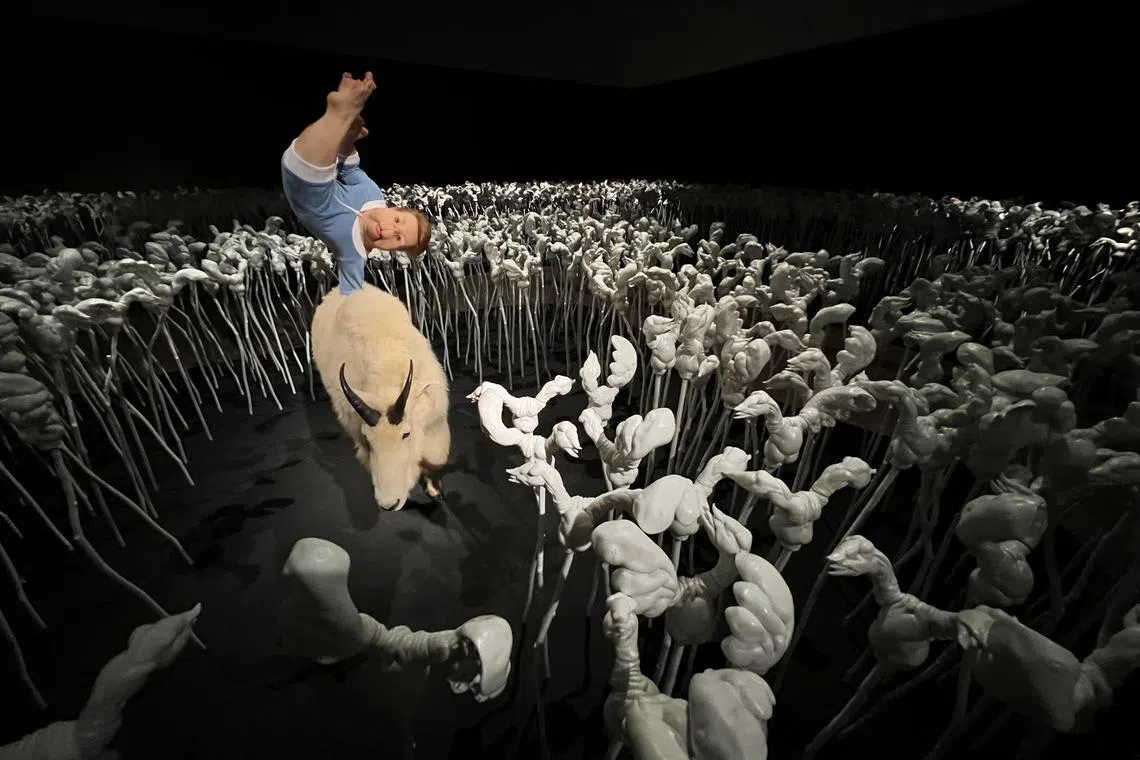
The show’s piece de resistance is a large-scale diorama of a hybrid child happily playing with a hybrid sheep, in a sea of flowers deliberately shaped to look like women’s ovaries. “Flowers, after all, are the sex organs of plants,” says Piccinini. The flowers, over a thousand of them, seem to sway and nod in agreement.
Patricia Piccinini: We Are Connected runs at the ArtScience Museum in Marina Bay Sands from Aug 5 to Jan 29, 2023.
Decoding Asia newsletter: your guide to navigating Asia in a new global order. Sign up here to get Decoding Asia newsletter. Delivered to your inbox. Free.
Copyright SPH Media. All rights reserved.