Shedding Light On China-US Trade War
Two documentaries examine the micro and macro factors behind the biggest trade war in economic history

Helmi Yusof
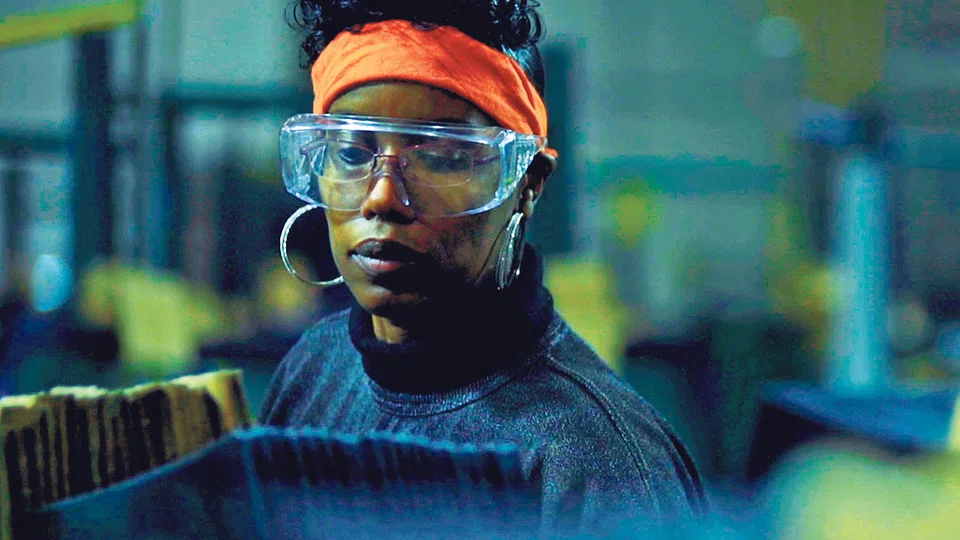
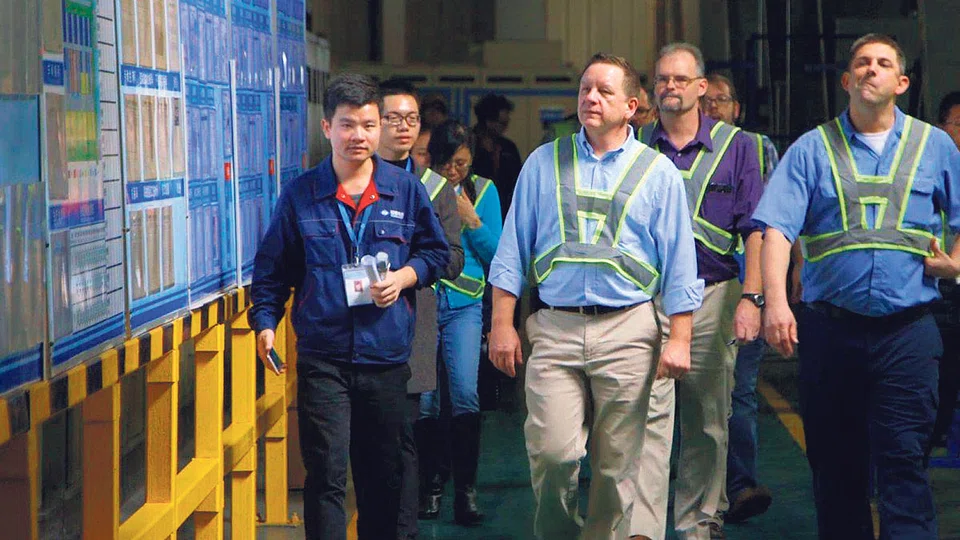
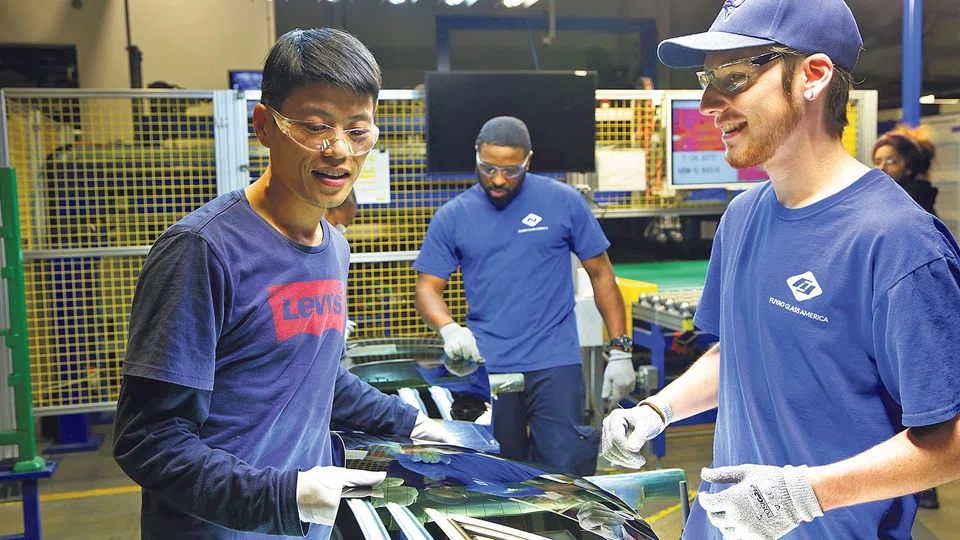
WHAT'S THE DIFFERENCE between American and Chinese factory workers? A provocative new American documentary titled American Factory lets you count the ways: The American factory worker is fatter and works more slowly; the Chinese factory worker is thinner and more energetic and productive. The American worker is willing to work only eight hours a day, five days a week, and expects benefits and vacations; the Chinese worker works 12 hour days six days a week, all through the year, without complaining.
The Americans' idea of work-life balance includes spending quality time with their kids; the Chinese send their kids to live with their grandparents and only see them a few times a year. (''It can't be helped,'' says one young Chinese mother.) The Americans demand that their companies conform to workplace safety regulations; the Chinese say nothing when their companies flout safety standards and cut corners.
Who is happier? No one can say. The Americans and Chinese are equally convinced their way of life is the superior one, and can't believe the other would stoop to live that way. The Americans think the Chinese are servile Communist worker-robots with little appreciation of the good life. The Chinese think the American are lazy, clumsy and ''have fat fingers''. At the end of the day, neither side is willing to concede - and the result is a permanent culture clash that shows the limits of globalisation.
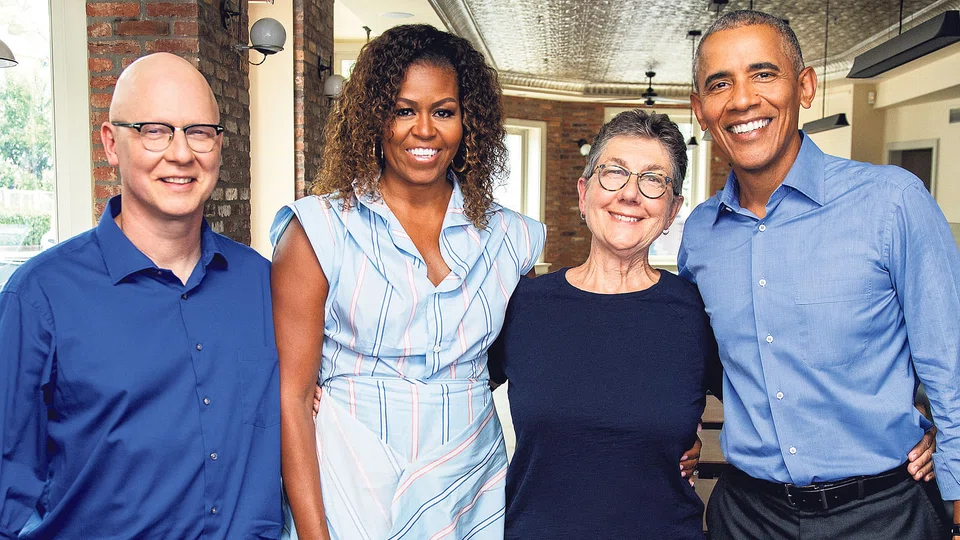
American Factory is produced by Barack and Michelle Obama's production firm Higher Ground and directed by Julia Reichert and Steven Bognar. Now streaming on Netflix, it begins in 2015 in Ohio where General Motors had long shuttered its factories, leaving thousands of American workers desperately unemployed for a few years.
In swoops self-made Chinese manufacturing millionaire Cao Dewang who accepts US tax rebates to reopen the abandoned spaces as a glass-producing plant. He hires 1,000 Americans and flies in 200 Chinese as supervisors - but they quickly start to get on each other's nerves.
CULTURE CLASH

Firstly, Cao pays the workers much lower wages than they used to get - one American worker says she makes only US$12.84 an hour compared to the US$28 she earned at GM. The Chinese workers, however, quietly accept their salaries. Secondly, Cao refuses to let the Americans unionise, even though Ohio senator Sherrod Brown himself supports the workers' demands to unionise.
These issues become a lightning rod in the factory, generating deep suspicions between the Americans and Chinese. In an effort to bridge the divide, Cao sends some of the Americans to China where they witness - mouths agape - how much more obedient and efficient Chinese factory workers are. In a moment of complete honesty, an American worker admits his own fellow countrymen cannot match Chinese standards.
Directors Reichert and Bognar have spent years documenting the lives of blue-collar Americans and have three Oscar nominations between them. To their credit, the two never take sides in the culture clash, merely capturing some 1,200 hours of footage over a few years and whittling them down to a 2-hour documentary so that various perspectives get aired.
Debuting at a time when the China-US trade tensions are escalating, American Factory serves as an allegory of the deepening rifts between the two countries, and also a microcosm of the complex workings of the globalised economy.
By the end of the documentary, big boss Cao is shown talking to his engineers to see how they can automate various operations to replace the humans. It now becomes not an issue of Americans versus Chinese, but humans versus automation.
THE BACKSTORY
Meanwhile, a slightly older documentary produced in May 2019 by American public broadcaster PBS has been made available on its YouTube channel. Titled Trump's Trade War, the 60-minute Frontline documentary directed by Rick Young also begins its journey in Ohio, the state hardest hit by automation over the years.
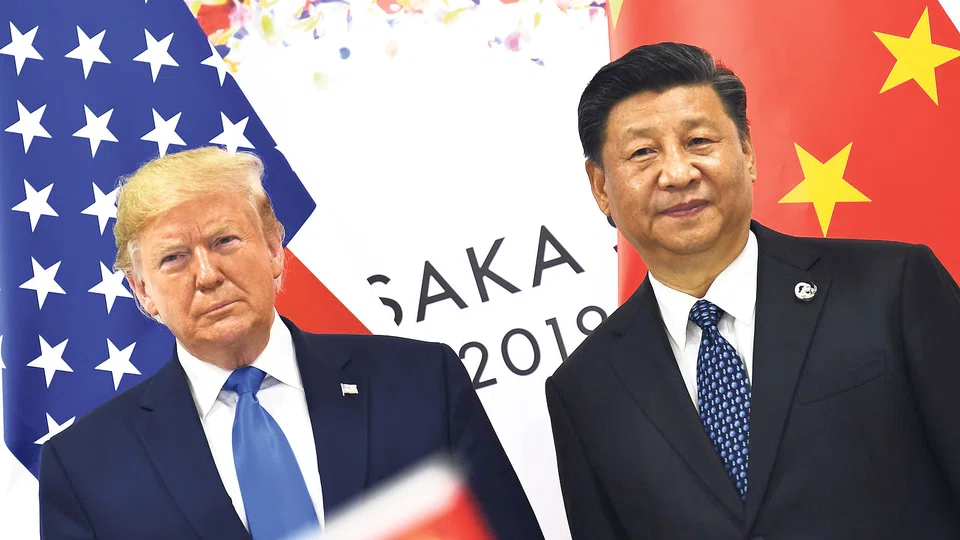
There we find American business owners severely affected by the trade war. In March 2018, when US President Donald Trump imposed 25 percent tariffs on steel, it drastically raised costs for American companies buying raw steel from China, costs which are then passed on to American consumers.
Trump, unfortunately, sees the world in binaries (US vs China, Americans vs foreigners, winner vs loser) and fails to acknowledge how interconnected global trade is. Where previous US administrations sought win-win solutions in dealings with China, Trump sees them as zero-sum games: Any victory for China is inversely a defeat for the US and - perhaps more importantly - a personal affront to him.
In a shocking moment in the documentary, former White House chief strategist Steve Bannon gleefully brags about how the US followed up China's Nov 2017 goodwill gesture of purchasing billions of dollars' worth of US goods by slapping China with tariffs instead: ''We had a couple of tricks up our sleeves. We dusted off a secret weapon called the National Security Emergency (which extends the president's powers and authority)... It was time to get it on.''
But China hasn't played fair either. For years, US companies doing business in China have been forced to share their technology in exchange for market access. These ''predatory and protectionist'' policies, as one American government official describes it, help China learn a lot from US companies and rapidly bolster its own economic prowess. Such practices clearly violate the rules of international trade.
To date, the US has delivered tariffs on more than US$360 billion of Chinese goods, while China has hit back with tariffs on more than US$110 billion of US products. The US plans to launch another round of tariffs in December, so that practically every kind of Chinese imports to the US, from steel to shoes, will be subject to tariffs. China is set to retaliate with tariffs on 3,000 American products by year end.
The two documentaries, American Factory and Trump's Trade War, give a micro and macro view respectively of the biggest trade war in economic history. And as the latter suggests, almost everyone in the world will be caught in its crossfire.
American Factory is streaming on Netflix. Trump's Trade War is available on YouTube.
Copyright SPH Media. All rights reserved.