Sifa 2024: Opening shows tackle big themes
From human-AI collaborations to the primal roots of dance, Singapore International Festival of Arts explores the evolution of creativity

WHO are we? What drives our movements and behaviours? Why do we create? These profound questions were at the heart of the curtain-raising weekend of the Singapore International Festival of Arts (Sifa) 2024, where three productions attempted to explore them, with varying degrees of success.
Headed by festival director Natalie Hennedige for the third year running, Sifa continues to showcase her preference for mixed-genre works that defy easy categorisation. We review the opening shows.
The Romeo
By Trajal Harrell (USA)
It is not enough for a work to be admired on the basis of its high ambition or good intentions; it must hit you at the gut level. Trajal Harrell’s dance piece, The Romeo, does exactly that. On paper, it reads like another conceptual but contrived creation – a “dance that people of all origins, genders and generations… dance when they face tragedies,” goes the blurb.
But then the 10 dancers appear, each drawing instinctively from their own movement vocabularies to create an individualised style of dancing that felt entirely personal to each one of them. It is at once recognisable and foreign, intimate and over-the-top, authentic and exaggerated.
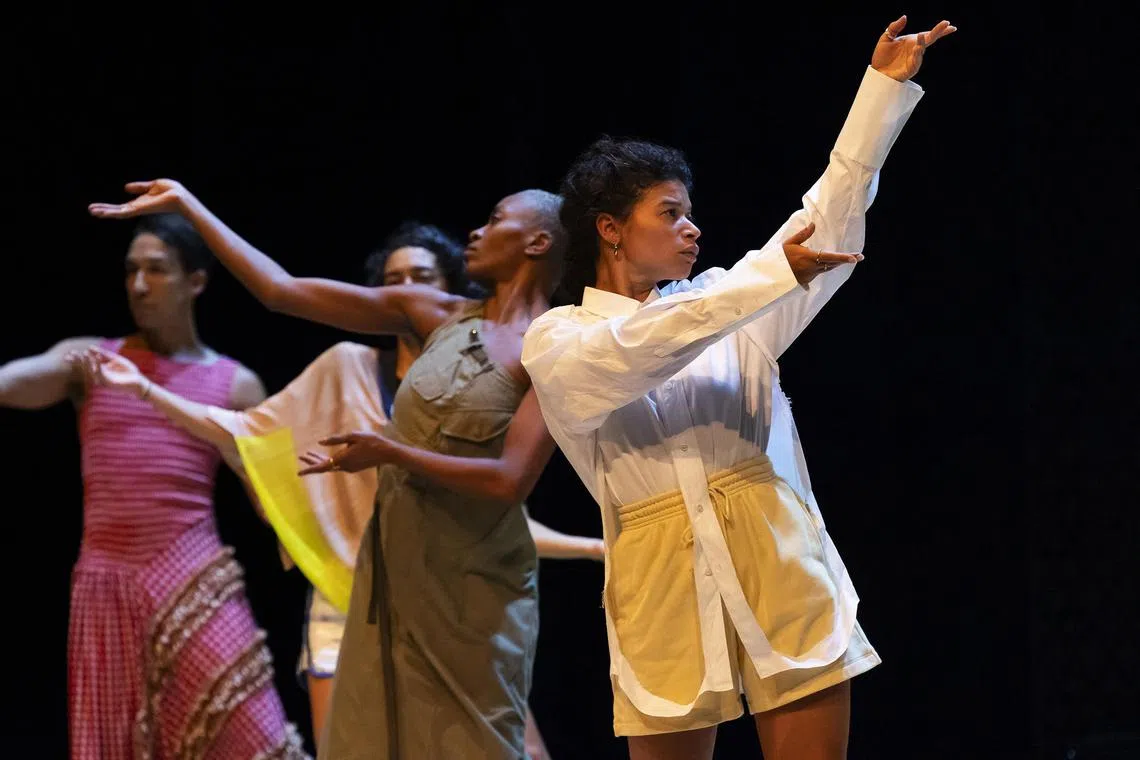
Men and women gyrate as if it was the only way one should move when one hears music. They throw themselves into each pose as if it constitutes their entire being. Every twist or flutter is a radiant expression of unfiltered identities. This isn’t a pretentious attempt at profundity. This is genuine, raw and captivating.
In the post-show dialogue, Harrell explained that he wanted to devise a choreography that drew from humans’ most primal instinct to dance and pose: “Take the snake dance (a sinewy dance mimicking the movement of snakes). Where did that come from? It’s common across many cultures. But where did it originate?”
His theory was that there are movements that are instinctive to all of us, and the intent of The Romeo – a title that essentialises a famously romantic and tragic figure – was to extract the primal impulse behind the desire to express ourselves through movement. We are all Romeos, so to speak. The result is a postmodern, participatory work that celebrated the power of authenticity and the transformative potential of dance.
Moby Dick
By Plexus Polaire (France/Norway)

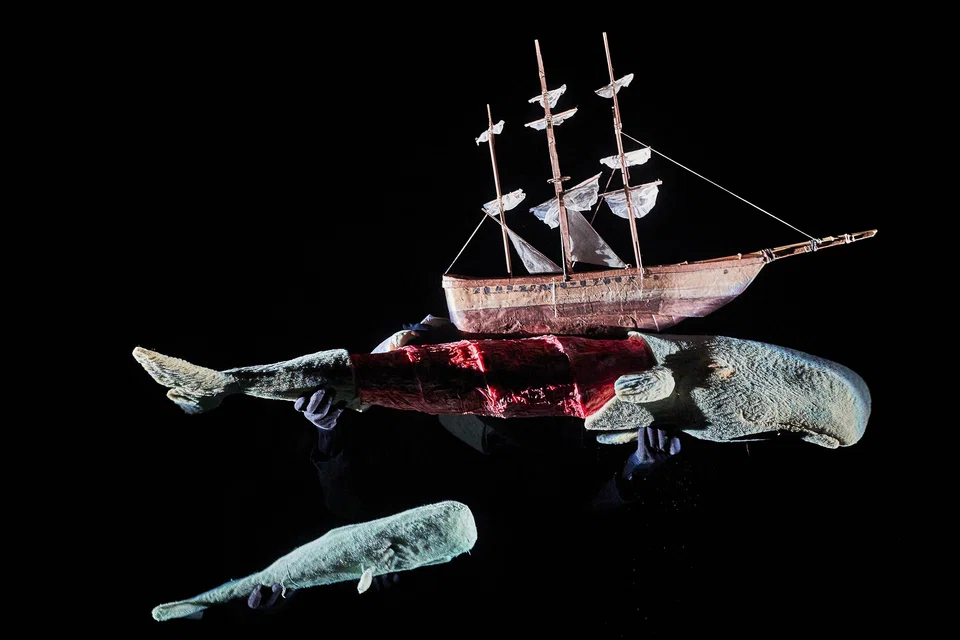
How does one condense the over 600 pages of Moby Dick into a 90-minute play? Is it even possible? Despite the fine combination of puppetry, video projection and live action, Plexus Polaire’s stage adaptation of the classic novel feels fragmented and doesn’t get to the heart of its themes.
The play begins faithfully enough, with the restless young narrator Ishmael reflecting on his general ennui and desire for adventure. Soon after, he is spirited aboard Captain Ahab’s whaling ship as it goes in search of the whale Moby Dick, which Ahab is determined to kill after it bit his leg off 12 years ago. The story moves episodically from one main plot point to the next, concluding in the final showdown between Ahab and Moby Dick on the high seas.
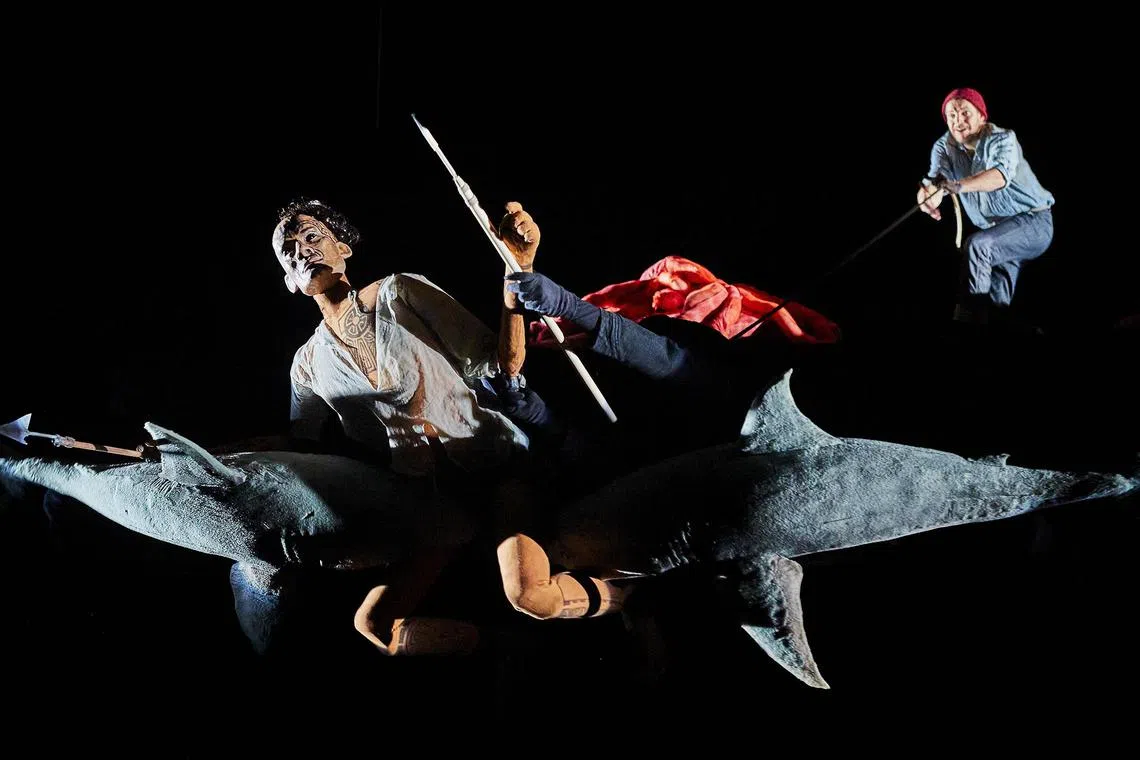
Directed by Yngvild Aspeli, Plexus Polaire’s puppetry is spectacular. It is able to depict vast, unknowable oceans, life-size whales, Ahab’s obsessive dreams of killing Moby Dick, and exciting sea battles between man and nature – all using video projections and puppetry. Even Ahab is played by a larger-than-life puppet, as if the enormity of the captain’s persona cannot be captured by a human actor.
But the impressive puppetry cannot compensate for the oversimplification of the story. The richness of the novel gets lost in the adaptation, and its philosophical reflections on the destructive quality of human obsessions are only superficially explored. One leaves the theatre dazzled by the puppetry but disappointed by the lack of depth.
Una Isla
By Agrupacion Senor Serrano (Spain)
Human imagination meets computational prowess in this piece, simultaneously created by humans and Artificial Intelligence (AI). Over the course of a year, directors Alex Serrano Tarrago and Pau Palacios Pozuelo inputted a stream of prompts into popular AI tools such GPT-3 and Dall E. They then used the results to create this show.
The setting is an island where a solitary woman (Carlota Grau Bages) oscillates between human and machine interactions. Her minute-to-minute decisions are seemingly dictated by a silent “conversation” projected on to the backdrop, that Tarrago and Pozuelo are conducting with their numerous AI software programs.
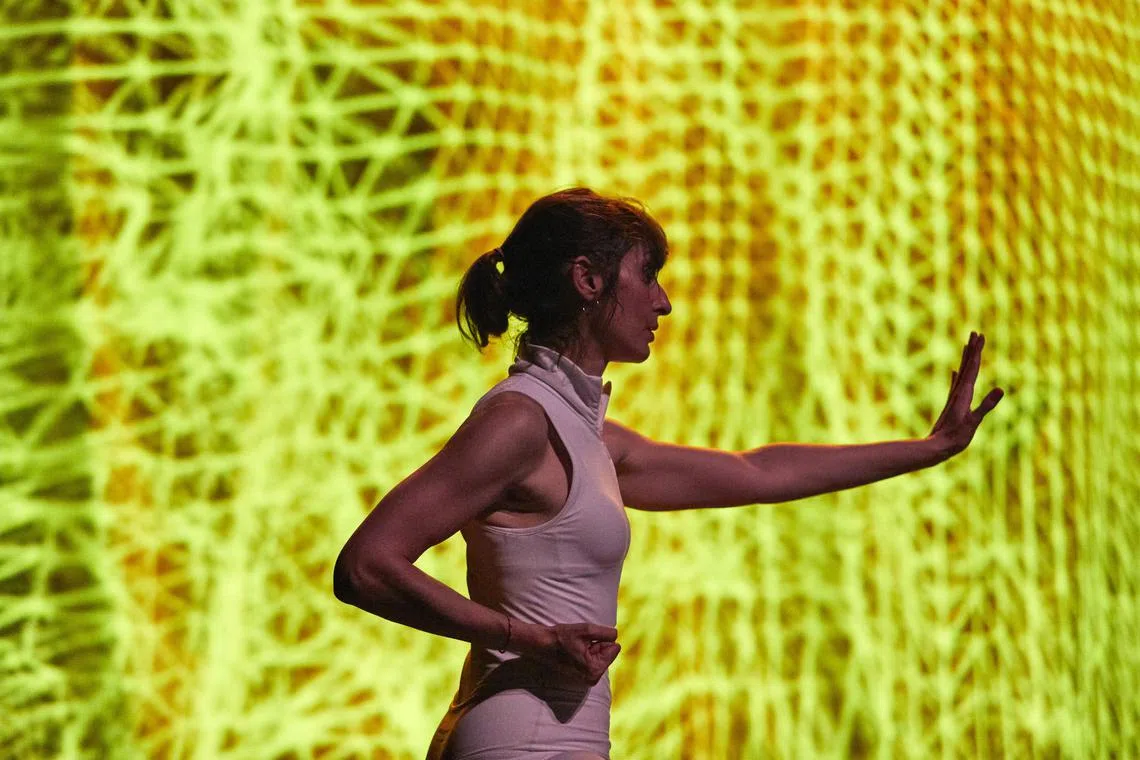
At one point, the conversation veers into the bizarre, and the performers literally begin depicting the wacky scenarios concocted by AI: leotard-clad dancers trapped in a plastic bubble, rugby fans converging in a scrum, a girl with the head of a yellow owl.
None of it makes sense, as the work challenges the popular notion that AI can help artists make great art. As suggested by this experiment, AI is capable of hallucinating fantastical images using the large datasets it’s trained on. But can it create compelling, coherent stories that speak to our deepest emotions and experiences? Unlikely.
Una Isla’s bold experiment shows the limits of technology in capturing the truths of human life. Of course, if the creators were to repeat the experiment a decade from now, when the technology has vastly evolved, the results might be strikingly different.
Sifa 2024 continues for two more weekends, with over a dozen other titles. Visit sifa.sg
Decoding Asia newsletter: your guide to navigating Asia in a new global order. Sign up here to get Decoding Asia newsletter. Delivered to your inbox. Free.
Copyright SPH Media. All rights reserved.