Sifa 2024: Post-human projections
Avatars, holograms and post-apocalyptic survivors populate the Singapore International Festival of Arts

BY NOW, it’s clear that the Singapore International Festival of Arts (Sifa) under Natalie Hennedige is playing by no one’s rules except its own. The festival has been so far filled with head trips, head scratchers and many puppet heads.
Puppet shows such as Leonardo!, Moby Dick and The Dancer’s Fair charmed kids with their whimsical magic. But if the kids had a good time, the grown-up didn’t do so always. The majority of the works have been very challenging and conceptual, dealing with themes such as post-human futures, digital identities and algorithmic relationships. Some ambitious shows sorely missed their mark. We review three more shows at the festival:
Angela (a strange loop)
By Susanne Kennedy and Markus Selg (Germany)
In the wildest head trip of the festival, German theatre iconoclasts Kennedy and Selg conjure a post-human world where it is impossible to tease out what is real and what is virtual. Sure, there are characters on stage exhibiting what largely appears to be human behaviour. They walk, they talk, they interact with their surroundings. But they’re not actually saying the words – they’re merely lip-syncing to dialogue that has been pre-recorded.
Their waxy faces betray little emotion. They move rigidly, as if following a predetermined pattern. At one point, a character picks up an apple from a fruit bowl and bites into it, only to put it back because it’s “plastic”. Several moments later, he picks the apple up again and bites into its juicy, crunchy goodness. What gives?
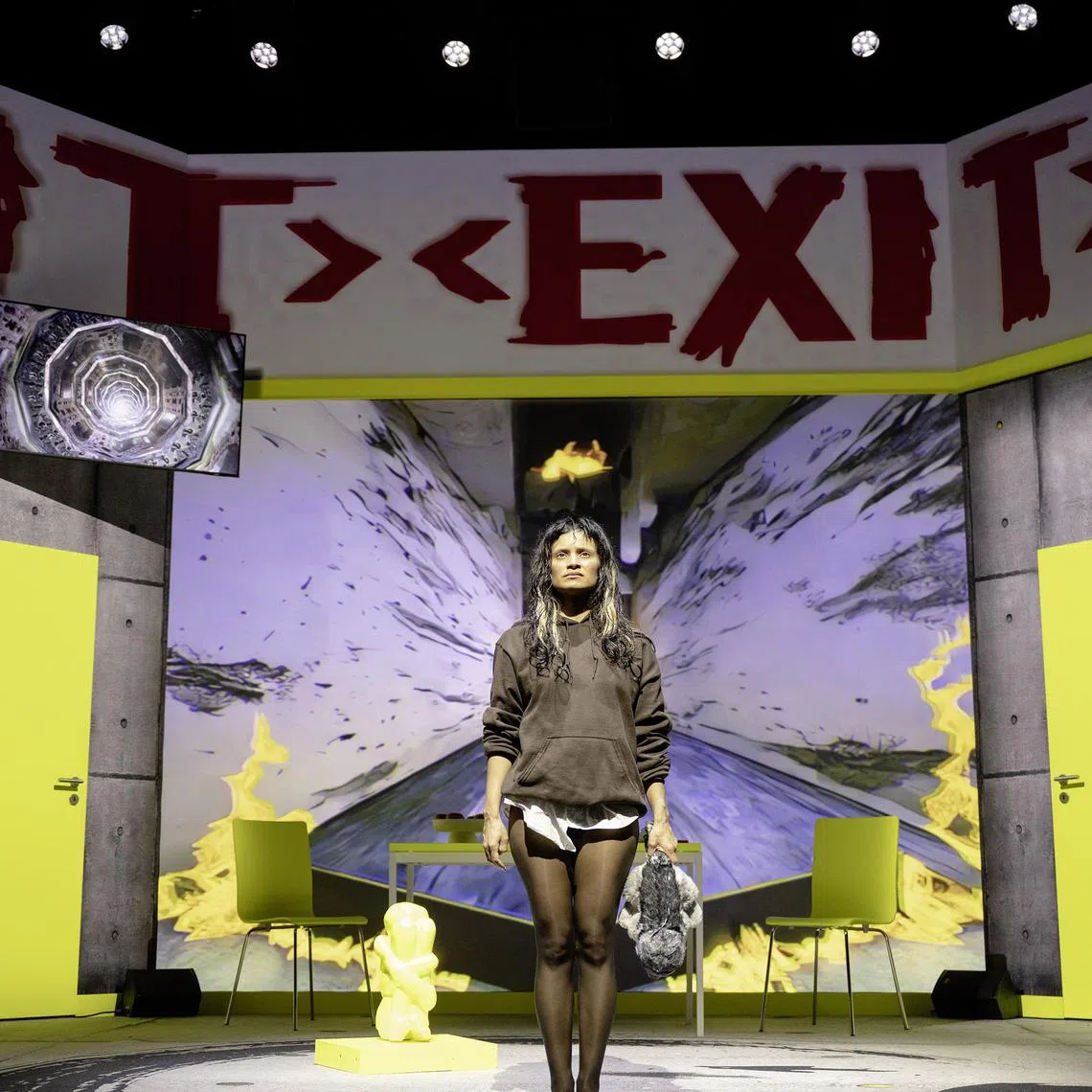
The key to unlocking these enigmas is through the central character Angela (Ixchel Mendoza Hernandez), a social-media influencer who posts all her trials and tribulations on social media. Even when she’s struck by a strange illness, she obsessively updates her fans on her day. But, like all influencers, what she projects online is partly genuine and partly performative, giving rise to a “strange loop” where you can’t tell where the real ends, and the virtual begins.
She and the other characters are seemingly engaged in the rituals of life: birth, death, love, friendship, struggle, religious worship, among others. But as the play progresses, these become increasingly bizarre simulacra: Angela gives birth to a baby by having a placenta pulled out her mouth. Characters pray around a totem built out of stacked furniture. A cute talking bear gets philosophical on the projected backdrop.
Have our lives become so seamlessly woven with avatars, filters, apps, emojis, memes and curated personas that we can no longer recognise the unadulterated essence of life? Angela (a strange loop) ingeniously suggests the boundaries have become more blurred than we’re willing to admit.
Suara / Oro Rua
By Safuan Johari (Singapore) and Eddie Elliott (New Zealand)

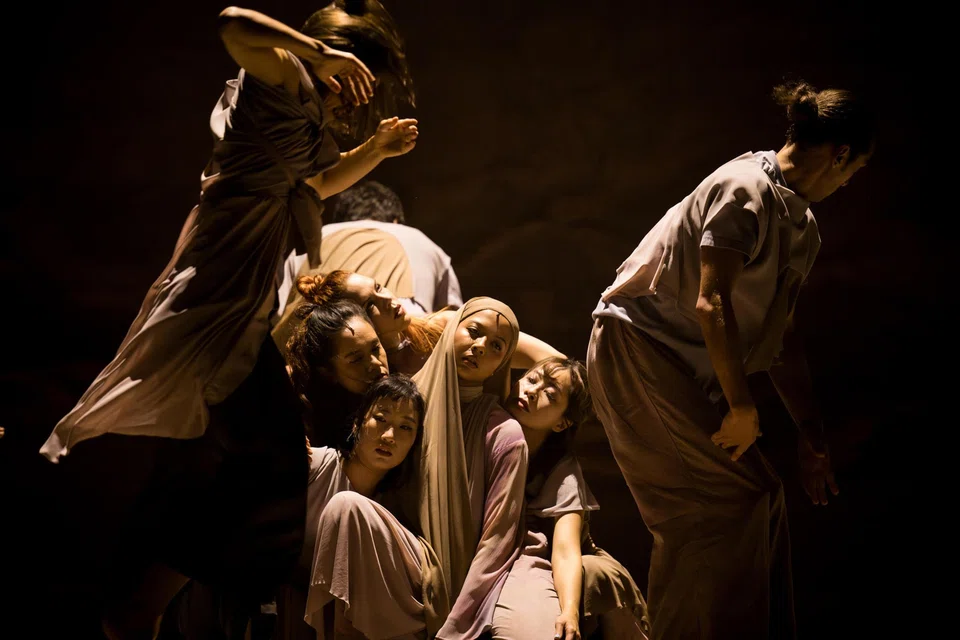
This music-and-dance piece is also set in a post-human world. But instead of a digital dystopia where the real and virtual collide, we have here a primitive cave-like sanctuary, where a tribe of post-apocalyptic survivors is rediscovering how to make sound and movement again after years of slumber and silence.
Dressed in earth-coloured, prehistoric-looking clothes – despite this being set in a speculative future – a group of dancers and singers slowly rise from their fetal positions to converge in a human pyramid. They then break up into a group of four singers and another of six dancers, the former taking turns to sing songs, the latter frequently moving in unison.
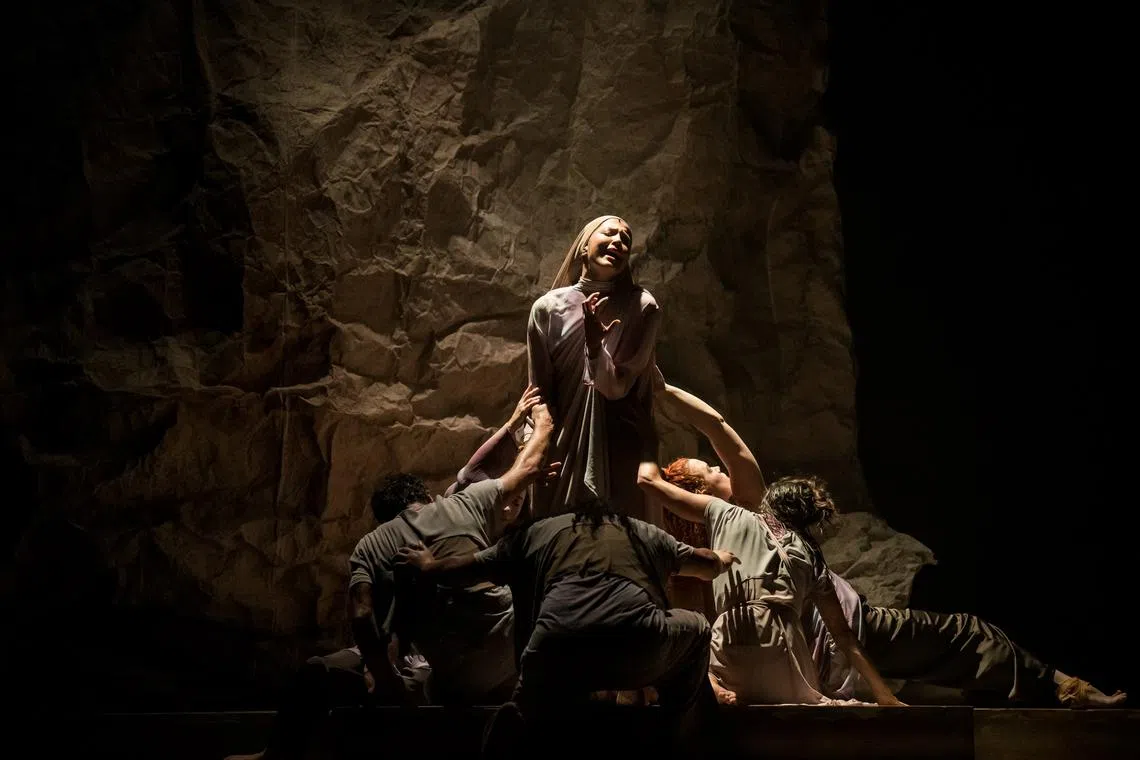
The singers are terrific, effortlessly transitioning between delicate, ethereal sighs to powerful notes. Their voices span multiple octaves, and segue from yodelling to vocal trills to create rich textures. The dancers are expressive, conveying emotions ranging from fear and vulnerability to strength and defiance.
But does it all come together as one distinctive piece? Regrettably, no. Co-created by Singaporean musician Safuan Johari and New Zealander choreographer Eddie Elliott, the work feels like a collage of classical, contemporary and traditional/indigenous influences. There is no clear conceptual through-line and coherent narrative to anchor and unify the disparate elements.
The dancers, in particular, appear to have different movement and emotive vocabularies, making the dance feel eclectic and fragmented. As a result, the thematic elements barely come through, leaving audiences confused and uncertain about the intended message of the work.
Leonardo! A Wonderful Show About A Terrible Monster
By Manual Cinema (United States)
One of the genuine delights for kids and adults alike is this puppetry “film” based on the books of Mo Willems. Leonardo! tells the story of a furry monster who is terrible at its job of scaring kids. Its threatening cries such as “Blaggle blaggle… boo!” are too cute to work. One day, he realises he is better off being a friend instead of a bully to kids, and this epiphany changes the course of his life.
Manual Cinema presents a screen for you to watch a film, but the images are being manually produced in real time, using paper puppets, three-dimensional puppets and live acting and singing. As the spry performers run around to hit their marks, one quickly appreciates the nifty craftsmanship and complex choreography involved in creating a sweet, charming and surprising work.
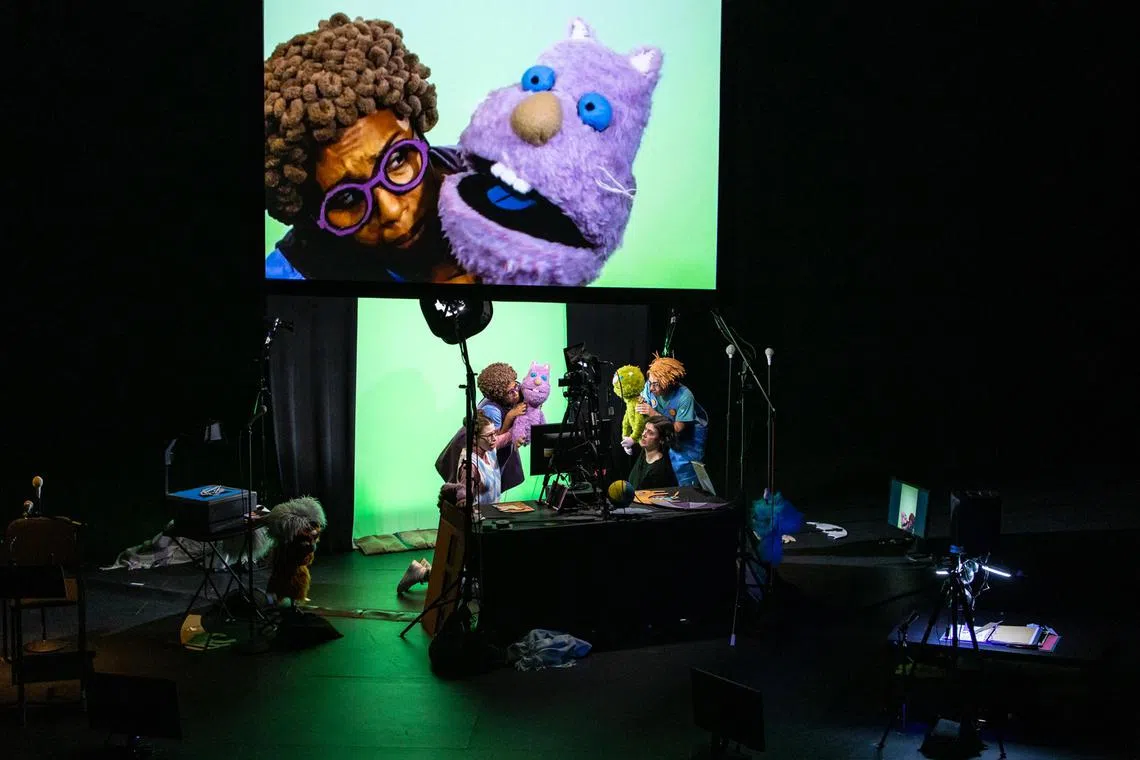
The twist is that older viewers – anyone who has lived longer than 11 years – will enjoy the wisdom and tenderness of the show too. Leonardo! is ultimately a story of redemption, and a defence of going against what you’re raised to believe in (in this case, to be a certain type of monster) and listening instead to your better angels. That’s a reminder that all of us could use.
The festival is in its last weekend. Visit sifa.sg for programme listings.
Decoding Asia newsletter: your guide to navigating Asia in a new global order. Sign up here to get Decoding Asia newsletter. Delivered to your inbox. Free.
Copyright SPH Media. All rights reserved.