

Singapore art shows inspired by Covid-19 lockdowns
Three solo shows feature artists who used the pandemic to push the boundaries of their practice

Genevieve Chua grrrraaanularrrrrrr At STPI till Feb 26
IT’S only February, but it’s safe to say that Genevieve Chua has mounted one of the best art shows of 2023.
Largely conceived during the pandemic, her solo showcase at STPI is curated by Reuben Keehan and offers fresh challenges to the medium of drawing, painting and sculpture. These beautifully nuanced works might elude appreciation at first glance, but quickly earn your admiration once you learn about her processes.
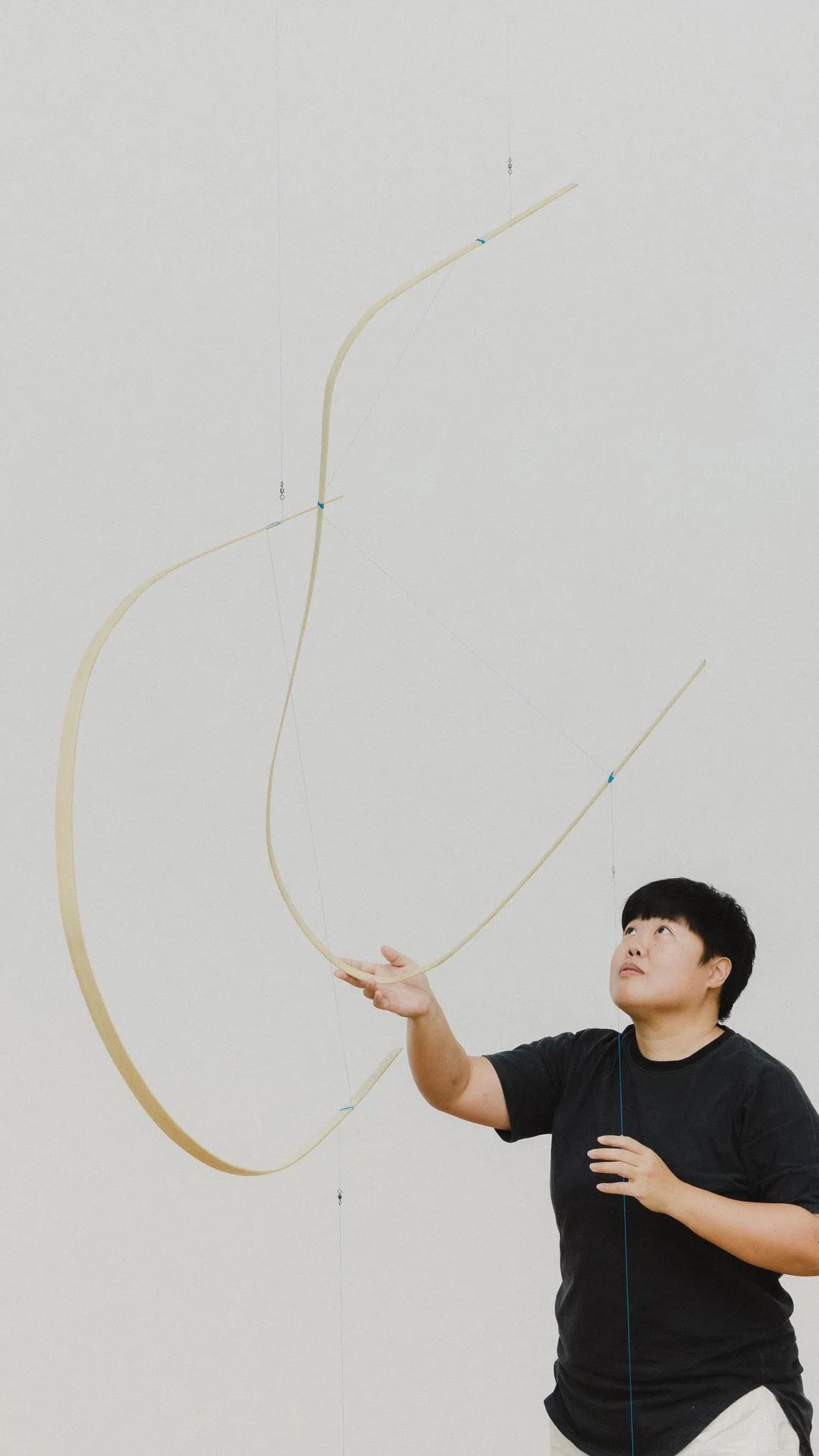
The best works to start with may be her cement screenprints. In this art form, she works with paper coated with cement screed, onto which she screenprints geometric shapes, and then re-coats it with ultraviolet gloss. The resultant product looks simultaneously light and heavy, rough and sleek, three-dimensional and flat – a kind of balanced paradox.
She takes the experiment further with her cement reliefs, turning the same flat material into three-dimensional wall sculptures that feel like Brutalist buildings on an intimate scale.
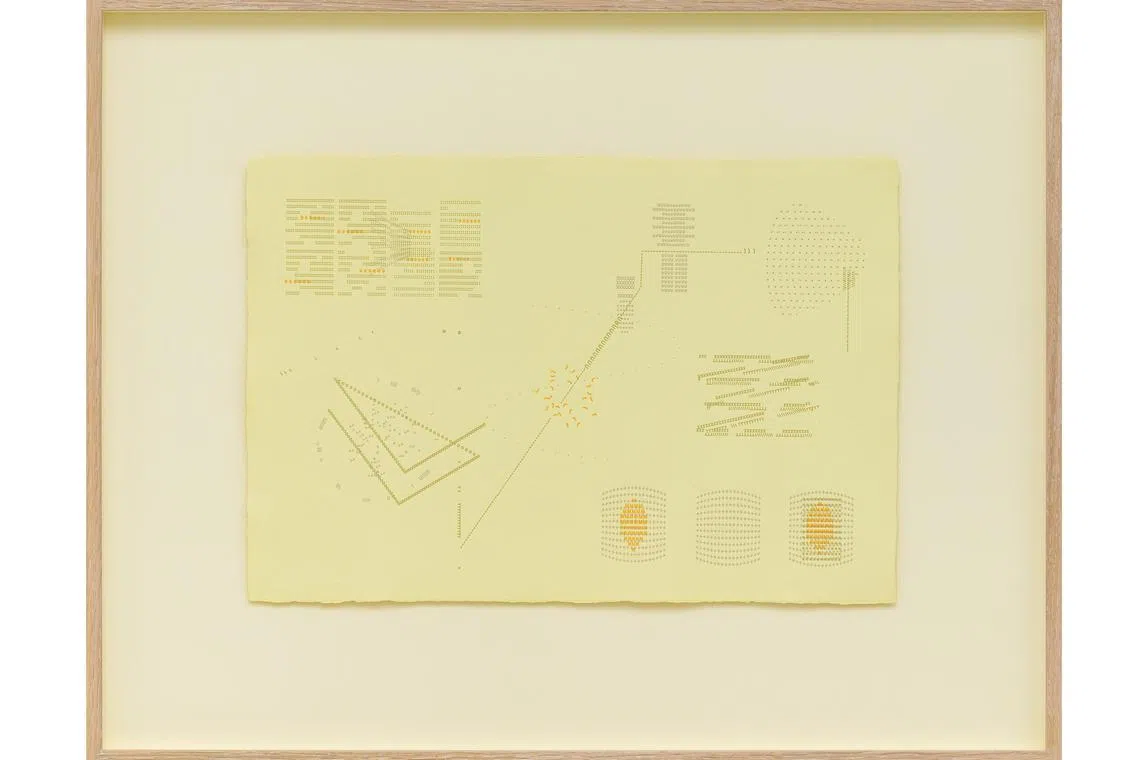
Similarly, her “typestract” relief prints appear like frustrating strings of gibberish at first – but once you stop trying to “read” it, you start to enjoy the wild fusion of letters, numerals and symbols that induce visual percepts on the tiniest scale.
These typestracts make up the largest body of available works. One marvels at their many playful variations, methodically mad and wilfully chaotic.

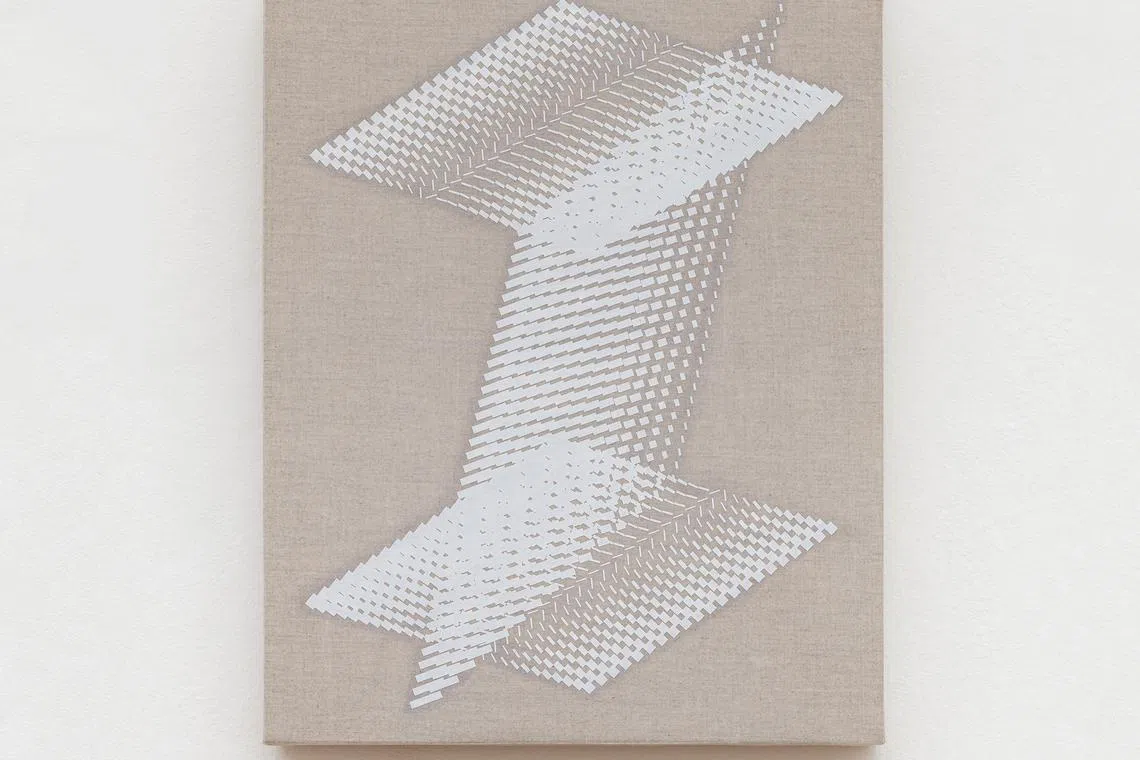
Elsewhere, she turns to the “breeze block” or “cinder block” – a common patterned block used in building constructions to allow air through – and reimagines it as linen paintings with soft-hued patterns that almost appear to track that movement and variation of breeze through these blocks.
Her larger sculptural pieces, such Swivel #1 and Oscillating Object At Rest, similarly riff off concepts common in architecture and engineering.
It’s not surprising to learn that Chua has a particularly loyal following among art collectors who are architects, urbanists and designers. Her clear-eyed experiments with structures, processes, materials, textures, effects and patterns yield the kind of works that are catnip for that crowd.
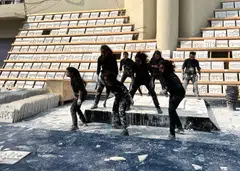

In some ways, Chua is the rarest kind of artist – one who’s genuinely trying to challenge, subvert and expand the visual language.
Johann Fauzi #09-1464 Richard Koh Fine Art, Gillman Barracks Till Mar 3
Johann Fauzi used the pandemic lockdowns to stay home and create a fascinating body of work that straddles painting, sculpture and space-making.
Now he’s put almost all of those creations in his first solo show with Richard Koh Fine Art, with curation by Louis Ho.
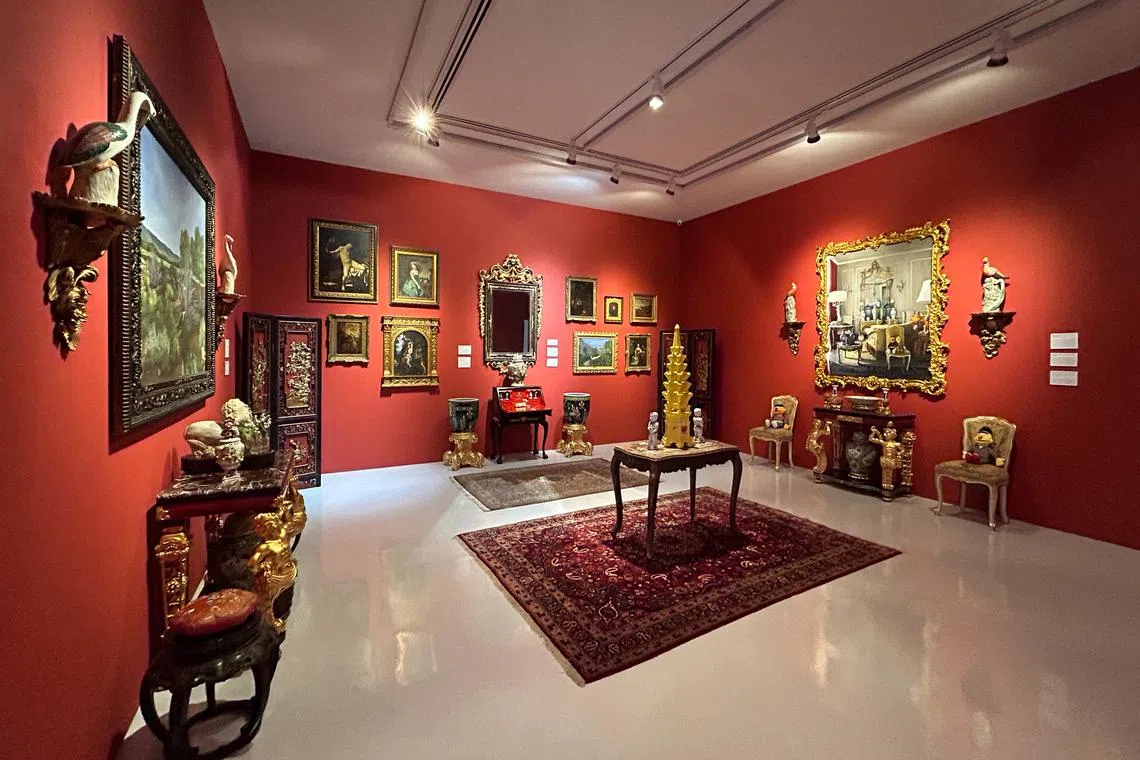
The show is titled #09-1464, which is the number of his apartment in Bedok.
It is a most appropriate title, considering that he’s transferred a lot of things from his classically-styled home to recreate it in the gallery space.
But just so you wouldn’t get confused when you enter the gallery, his apartment actually looks like a Baroque and Rococo museum. Johann is a self-professed Anglophile who collects thousands of objet d’art from those eras and beyond.
His tastes in antiquities have also spilled into his art practice, which blends European visual culture with Malay-Muslim iconography.
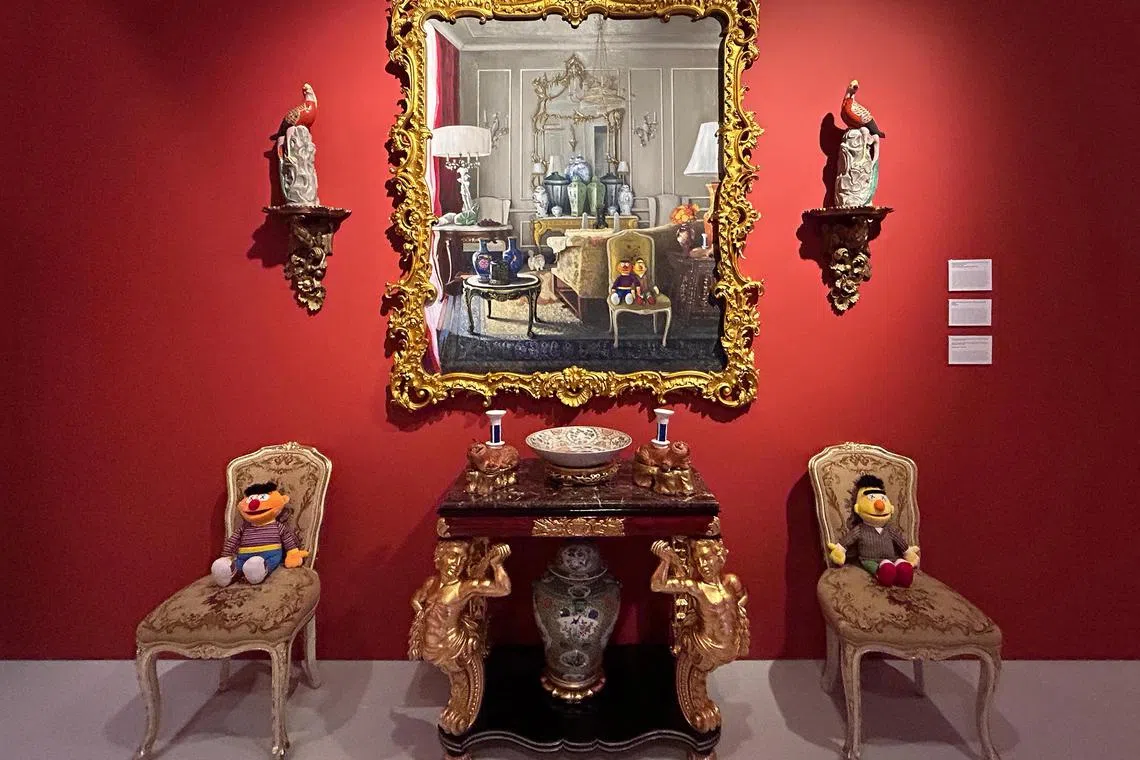
A typical European still-life painting would contain apples and pears, but Johann has created his own version with tropical fruits and flowers such as mangosteens, guavas and ylang ylang.
Another painting portrays European figures in stiff collars and dome-shaped skirts frolicking in a garden of a Neo-Palladian building, but closer inspection reveals that building to be the present Singapore’s National Museum building on Stamford Road.
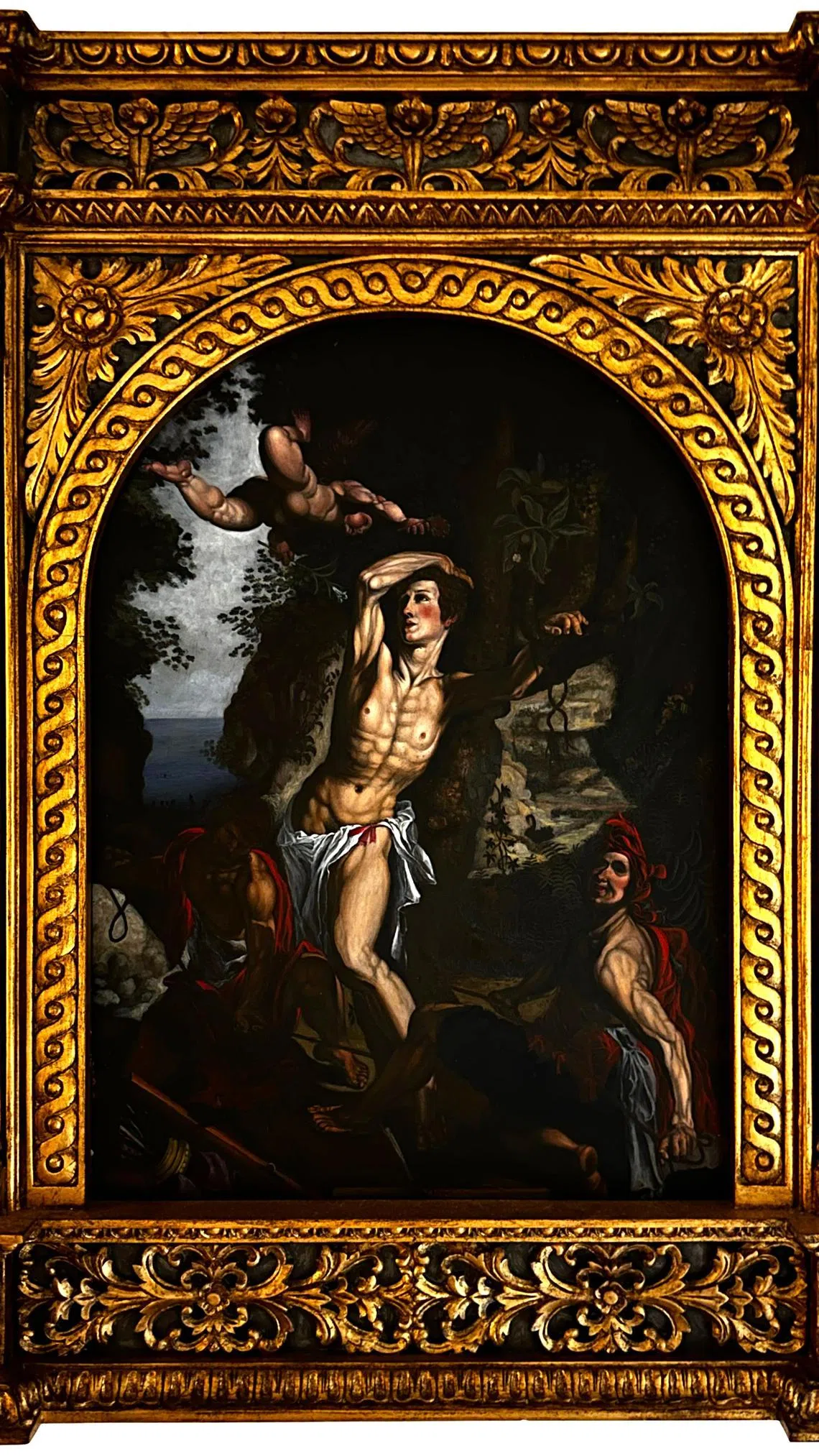
One particularly strong painting is Kebebasan (The Emancipation) which is inspired by Joachim Wtewael’s The Martyrdom Of San Sebastian.
The painting resembles the original in some ways, but it has been reimagined with South-east Asian characters and motifs: San Sebastian is tied to a mangosteen tree, tormented by men wearing traditional Malay headdresses, and looked upon by a cherub holding a tropical hibiscus flower. In the background, traditional Malay folktales unfold, such as the story of Hang Nadim and the swordfish, as well as the tale of Sang Kancil, the clever mouse deer who outsmarts all the other animals.
The paintings come in beautifully elaborate frames. But beyond these, the exhibition is also selling the intricate furniture pieces and sculptures surrounding them, which Johann had either remodelled from existing antiques or created in collaboration with Kinatama, a furniture house in Java.
Come for the art, stay for the European parlour experience.
Sarah Choo Jing Dancing Without Touching Yeo Workshop, Gillman Barracks Till Feb 26
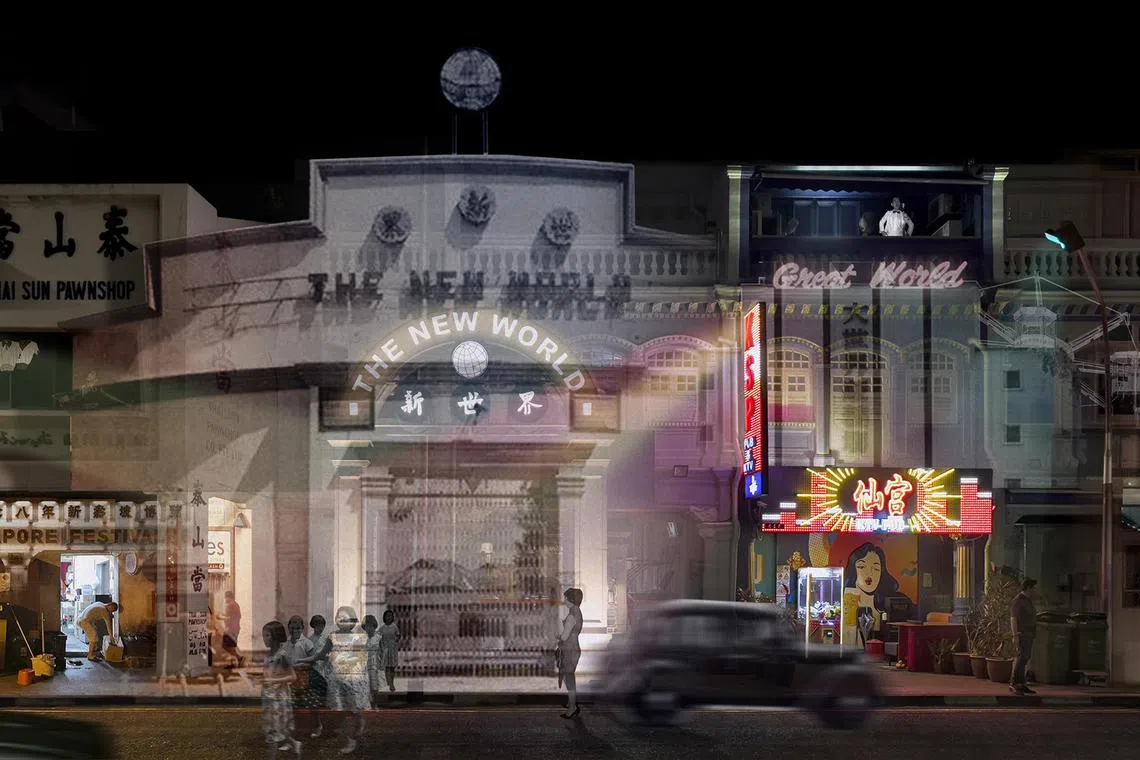
Sarah Choo Jing’s new video series explores the theme of alienation and isolation experienced by many during the lockdowns.
But instead of doing so through characters from the present, she’s plucked five archetypes of the once-popular amusement parks of Singapore and dropped them into the contemporary spaces of today.
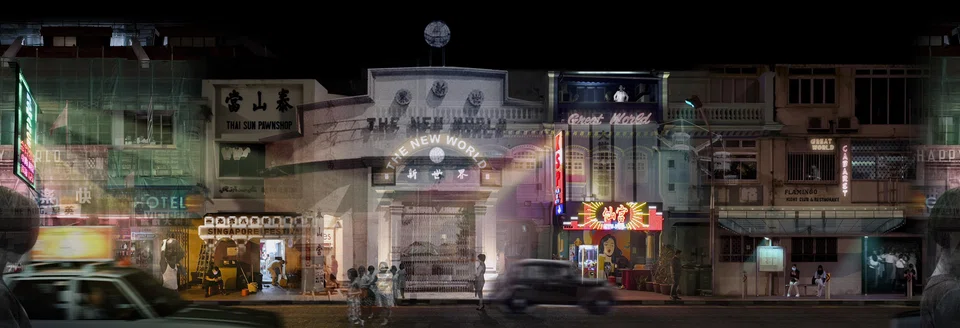
Singapore’s artists have long been fascinated with the period of time from the 1920s to the 1970s, when amusement parks (namely New World, Great World and Happy World) drew tens of thousands of visitors nightly.
Filmmaker Kelvin Tong evoked the era in the movie It’s A Great, Great World (2011), while art collective OH! Open House uses it as the backdrop for its long-running Jalan Besar walking tour-cum-theatre experience titled New World’s End.
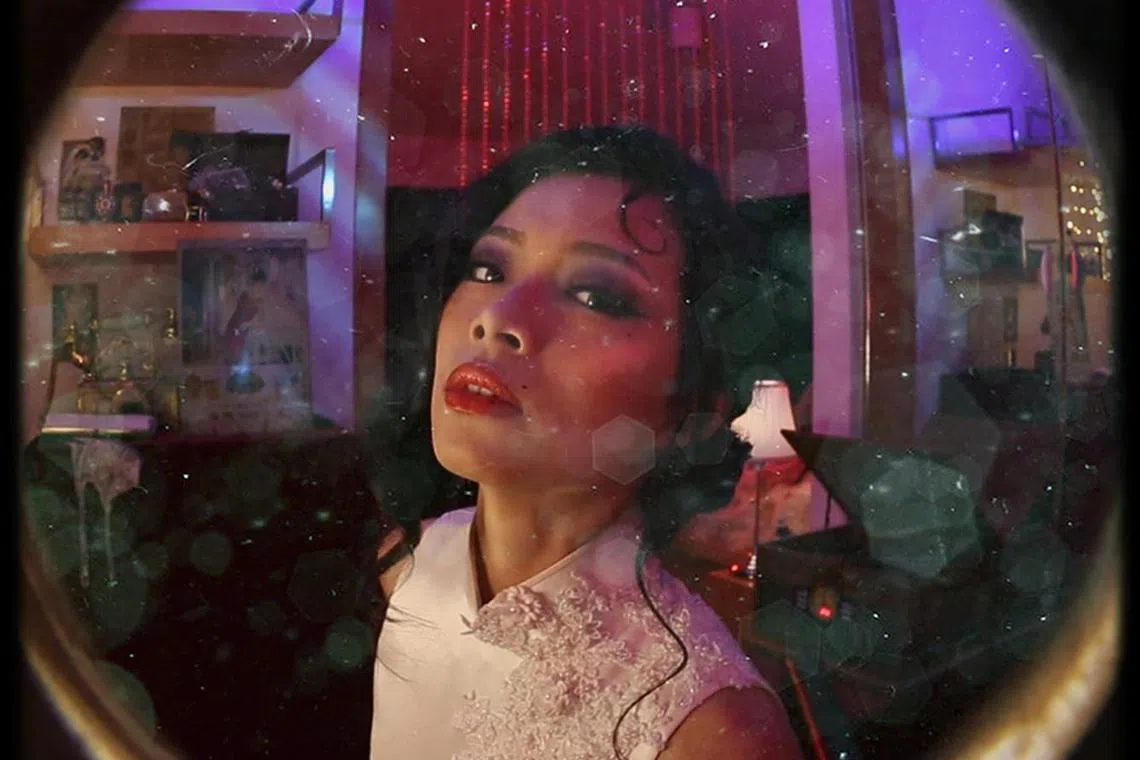
In Choo’s Dancing Without Touching, her five characters – a cabaret girl, singer, mime, pugilist and Chinese opera performer – are all dressed in the costumes of the era, but anachronistically trapped in the physical realities of today.
How each of them responds to the rooms they find themselves in becomes the essence of these strange, haunting and resonant video works, each with a runtime of seven minutes.
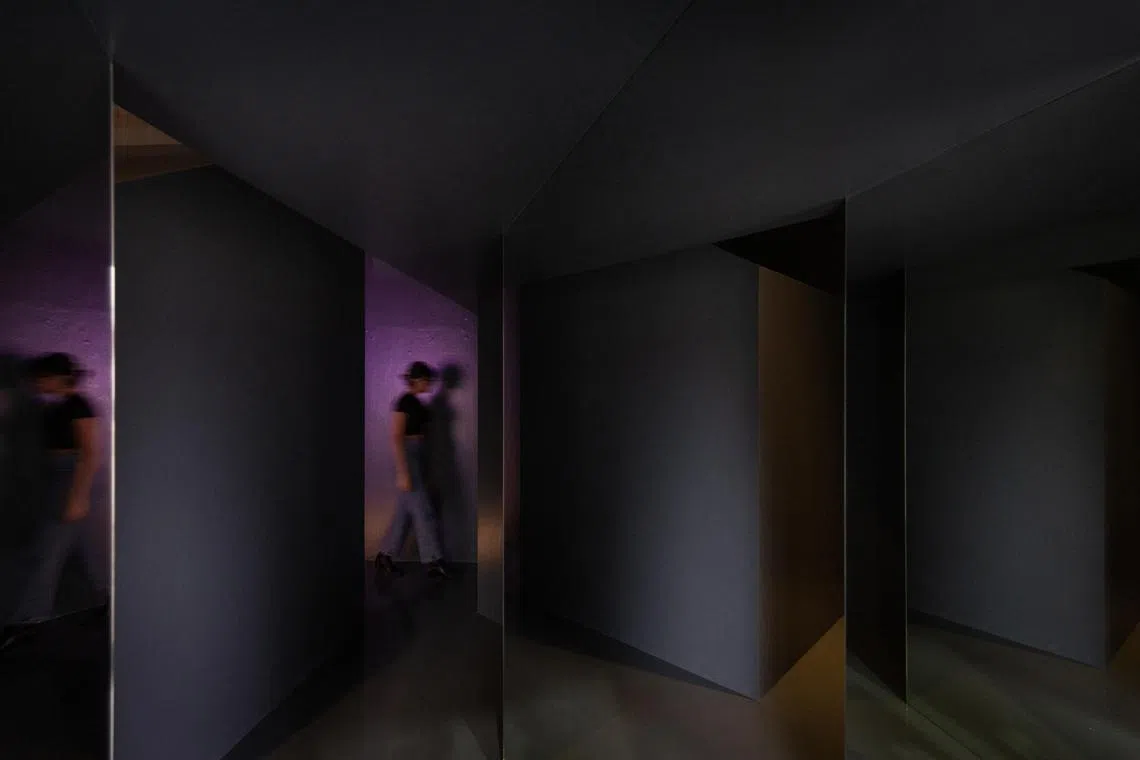
Choo’s video art, however, isn’t the only draw here. Yeo Workshop has transformed its entire gallery space into a darkened, mirrored funhouse, where you have to walk around different corners and cavities to find the artworks.
Move slowly on your first visit to avoid walking into a wall.
Decoding Asia newsletter: your guide to navigating Asia in a new global order. Sign up here to get Decoding Asia newsletter. Delivered to your inbox. Free.
Copyright SPH Media. All rights reserved.






