

Singapore Poly projects leverage partnerships, VR, tech for social impact
Around 60 student-run businesses are on show at the poly’s 2026 open house
[SINGAPORE] Revamp, a project by a group of Singapore Polytechnic students, is turning worn-out denim – a major contributor to fabric waste – into make-up pouches with the help of individuals with special needs.
This initiative is a partnership between Revamp and Mustard Tree, a social enterprise that trains artisans with special needs in skills development and job placement.
Manivannan Harini, pursuing a diploma in banking and finance, and Lavanya Jai Prakash, who is studying human resource management and psychology, said they initially wanted to transform the upcycled denim into bags, but the market was already saturated.
So they made the pivot towards make-up pouches, which are more niche and functional.
“Denim stood out to us because of its versatility and durability. We also recognised that denim is one of the most wasted fabrics, which presented an opportunity to create a ‘built-to-last’ pouch while reducing textile waste,” they said in a joint e-mail response to questions.
This is especially important as “unethical consumption” and fast fashion have become normalised, they said, leading to “severe environmental consequences”.
Revamp’s partnership with Mustard Tree began five months ago, when Harini and Prakash realised they needed a supplier to support the labour-intensive aspect of production, particularly in sewing.
“When we came across Mustard Tree, the collaboration felt like a natural fit… The partnership allows us to meet our production needs in an ethical and socially responsible manner, while creating positive social impact through supporting Mustard Tree’s mission of inclusive employment.”
Revamp currently works with three beneficiaries from the social enterprise, who produce around 10 make-up pouches a week. They are paid based on output.
“We provide clear design specifications, quality standards and feedback, while Mustard Tree manages day-to-day operations and production workflows,” they said.
They plan to scale impact by creating more sustainable products and job opportunities for individuals with special needs.
Tackling social and environmental impact
Revamp is one of 60 student-run businesses – under Singapore Poly’s Business Essentials Through Action (Beta) programme – on display at Singapore Poly’s 2026 open house from Thursday (Jan 8) to Saturday.
For the first time, the entire Year 1 cohort from Singapore Poly’s School of Business took part in the Beta programme, which provides students with hands-on experience in venture creation, industry mentorship and social impact.
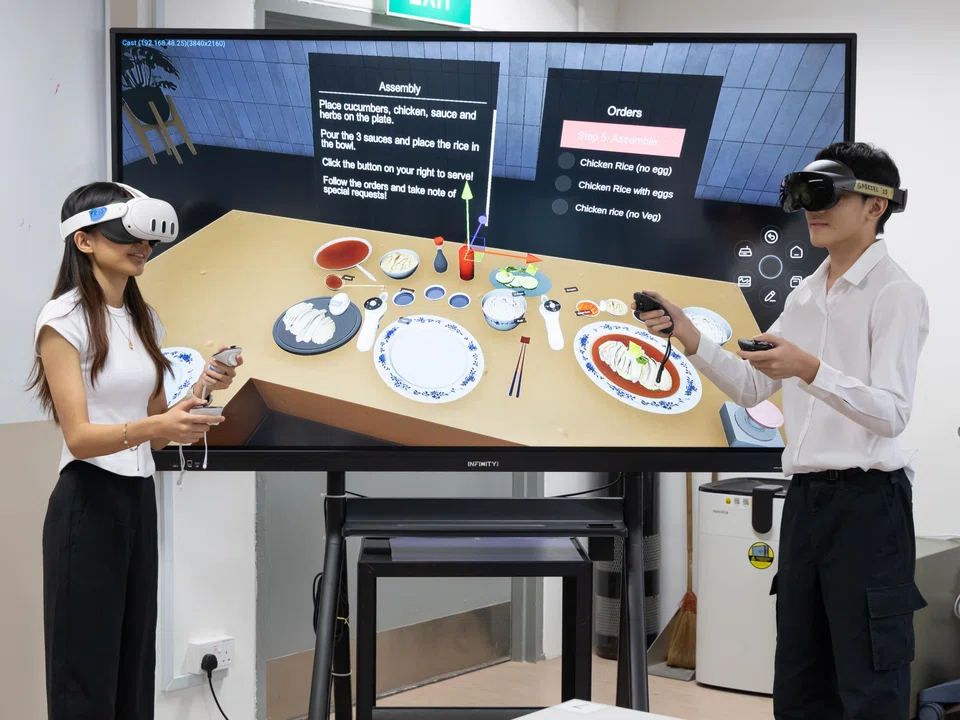
Another project, under the SP Industry & Innovation Showcase (SPI&I), which features groundbreaking projects by final-year students, uses virtual reality (VR) to transform traditional therapy into engaging and interactive experiences for stroke rehabilitation patients.
Priscilla Loi, pursuing a diploma in computer engineering, said the idea emerged after she observed traditional rehab activities and realised seniors lacked motivation and social interaction. After conducting background research at elderly care centres, her team came up with VR therapy games.
“Each game in the VR rehab system solves therapy goals such as balance, coordination, reaction time, and can also improve strength and cognitive abilities,” Loi said, adding that the system also includes scores and progress tracking.
For example, one multiplayer game allows participants to work together to create a local dish, with tasks such as gathering ingredients and chopping vegetables. Such games improve problem-solving, teamwork and cognitive function.
The team is currently working with Lion Befrienders to roll out the games in its active ageing centres.
Meanwhile, another SPI&I project is a smart solar ecosystem combining multiple functions to generate and use energy more efficiently.
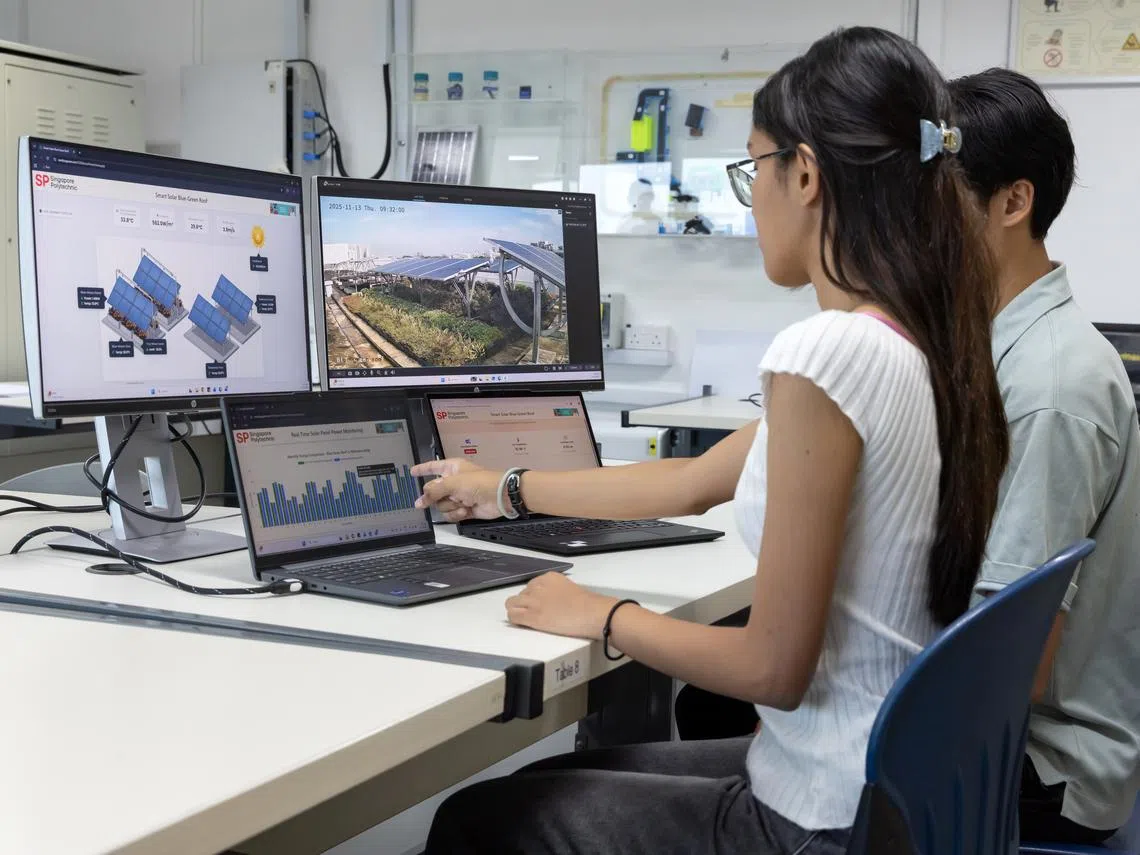
Ashokanand Pranaamika, pursuing a diploma in computer engineering, noted that solar panels usually work in isolation and are not very adaptive to Singapore’s tropical environment, which reduces efficiency.
Her team designed a smart solar ecosystem in which solar panels are combined with rooftop greenery and farming setups, while automatic water sprays and self-cleaning systems help to keep panels operating. These functions reduce heat, increase resilience to extreme weather, and reduce the need for manual labour.
Pranaamika’s team is currently testing and fine-tuning the system on rooftops and floating solar farms, and aims to scale its implementation.
Decoding Asia newsletter: your guide to navigating Asia in a new global order. Sign up here to get Decoding Asia newsletter. Delivered to your inbox. Free.
Copyright SPH Media. All rights reserved.
TRENDING NOW

LTA proposes combining car COE categories, adding rebate-surcharge system
StarHub to acquire MyRepublic’s mobile business amid ongoing telco consolidation

DBS, OCBC, UOB rout lops billions off STI as inflation, rate concerns spook investors

Grab CEO’s wife Chloe Tong on life with Anthony Tan and finding her purpose

