

Singapore reinforces philanthropy hub status in 2025; deeper cross-sector partnerships expected next year
The outlook for the city-state’s giving landscape for next year is mostly positive

[SINGAPORE] In September 2023, then deputy prime minister Lawrence Wong said Singapore had the potential to be “Asia’s centre for philanthropy”. This year, the country has reinforced its status as a philanthropic hub in the region with many developments in the social impact space, especially as it celebrated SG60.
Data has emerged as an important factor for players in the social impact space to consider, but experts say impact measurement should be used as a learning tool. They should also be cautiously optimistic about the usage of tech in the sector.
SG60 as a milestone year
Tan Li San, chief executive of the National Council of Social Service (NCSS), said: “(SG60) has inspired a renewed focus on unity and collective responsibility, with Prime Minister Lawrence Wong emphasising the importance of building a ‘We First’ society.”
There were several government initiatives that boosted activity in Singapore’s giving landscape, such as the President’s Challenge and Great Singapore Give campaign.
NCSS introduced SGShare to make giving more accessible and sustainable. The government supplemented this with the SG Gives Matching Grant, a S$250 million initiative to match donations on a dollar-for-dollar basis.
“The collective impact of these efforts has been substantial. From January to September, we have seen a 16 per cent increase in donations compared to the same period last year, with over 270,000 monthly contributions made,” Tan added.
While individuals may have been more willing to give because of SG60, experts noted that corporates continued to give generously.
Patsian Low, deputy CEO and chief of markets at AVPN, said: “In a tough macroeconomic environment, what we’ve seen is not so much that (corporates are) cutting back, but they’re being a lot more thoughtful and intentional about how they can execute corporate social responsibility (CSR) strategies.
“They’re much more ready now to partner with other organisations. This is not just in funding – partnering to drive more innovative designs of CSR programmes and strategic initiatives.”

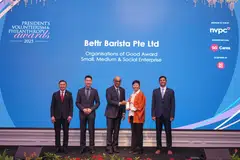
Tony Soh, CEO of the National Volunteer and Philanthropy Centre, added that companies are moving beyond ad-hoc donations to long-term partnerships.
Several key events took place in Singapore this year, helping the Republic cement its status as a philanthropic hub. These include Philanthropy Asia Summit, Impact Week and the 9th Business and Philanthropy Forum.
Furthermore, Gates Foundation is planning to open an office in Singapore as it expands in South-east Asia.
Gwendolyn Lim, partner and head of Bridgespan’s South-east Asia office, said philanthropists can “use Singapore as a base, because Singapore has such great governance structures”.
She added: “We hope to see a lot more global North foundations seeing Singapore as their jumping-off point for the rest of the region.”
Impact measurement as a “learning journey”
Edmund Twohill, executive director and co-founder of ImpactSG, said people are “increasingly” asking for data – whether they are funders or from charities.
Besides helping charities be more transparent and accountable, data is important in helping funders keep track of where their resources are going, especially “given the complexity of social issues and the increasing number of actors contributing to philanthropy”, noted AVPN’s Low.
“(Funders can’t deploy their resources) well if they don’t have data about what is happening in the landscape, who is funding what, and what kinds of interventions are being supported,” she said.
Data collection is also commonly used to measure impact. Experts noted that impact measurement frameworks should be customised and tailored to each organisation.
Martin Tan, CEO of The Majurity Trust, said: “Impact measurement can and should be used as a tool for learning. What’s important is to ask, how do funders and charities themselves actually learn from it? So it’s more principle and evidence-driven instead of having to fit inside a framework.”
AVPN’s Low added: “Impact measurement is an ongoing learning journey for everybody in the social impact space, and it should rightly be so because of the ongoing evolution and complexity of social issues.”
Bridgespan’s Lim noted that dialogue between funders and charities is also vital, as “open and honest conversations” allow them to learn from each other.
Nevertheless, there are frameworks in place to help organisations – especially new ones – measure the outcomes of their programmes, such as the Sector Evaluation Framework and Sustainable Philanthropy Framework.
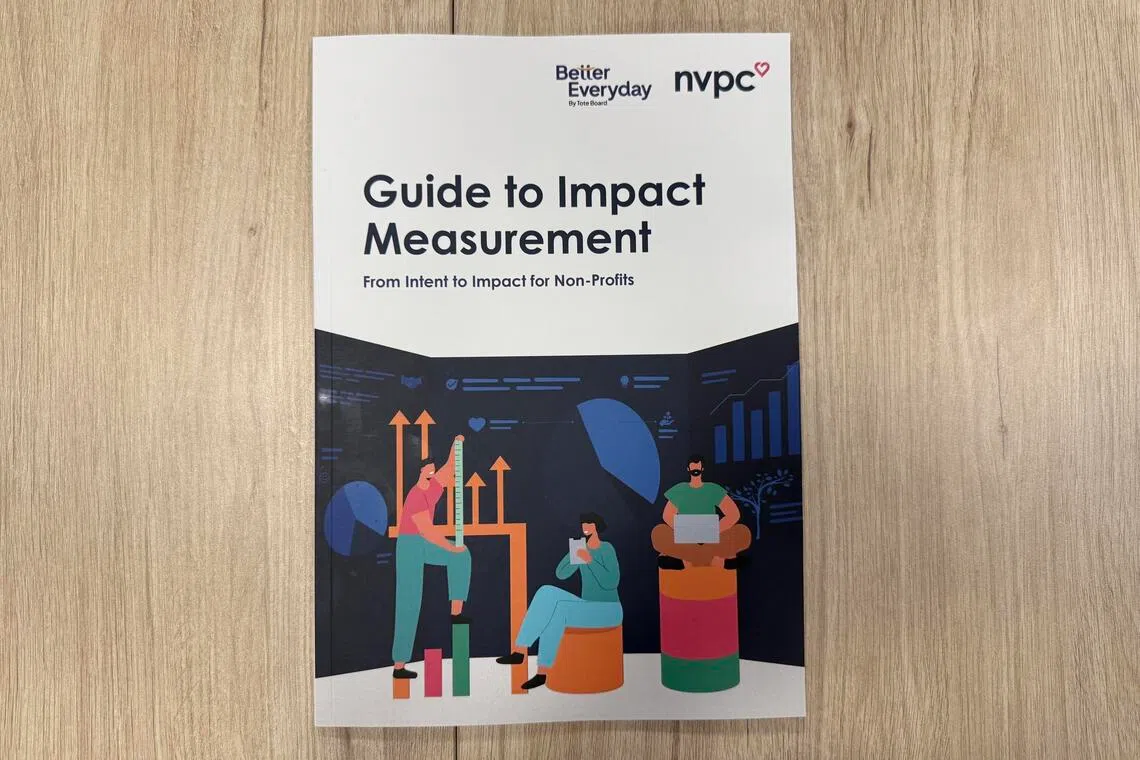
In August, NVPC and Tote Board launched the Guide to Impact Measurement to provide a blueprint for non-profits to plan, measure and report their resources and activities. ImpactSG’s Twohill said this launch was timely as many non-profits have limited resources and may be unsure on what framework to adopt.
The role of tech and AI
From a donor’s perspective, technology has undoubtedly made the process of giving easier, as well as finding information.
Online platforms such as giving.sg provide a “trusted” way for people to find registered charities, donate securely and sign up for volunteering opportunities, noted NVPC’s Soh.
“Technology is now integral to how Singaporeans give. Digital platforms have made giving more accessible and convenient… This trust in digital channels is important as online giving becomes the norm,” he said.
Furthermore, AVPN created Social Investment in Action - Asia, a dashboard using artificial intelligence (AI) and natural language systems to provide interactive data about the mobilisation of capital towards impact in Asia among its members.
Low said: “We bring all the information together so that it reduces search time and effort that members have to take. It connects and organises data in a way that is meaningful… This kind of data allows us to make strategic and effective decisions about our philanthropy.”
From a non-profit’s perspective, tech has helped streamline operations and enhance efficiency.
Soh said: “Many have digitalised their foundational systems such as customer relationship management, case management and volunteer management platforms to reduce manual work and improve data security.”
Majurity’s Tan noted that the charity sector will move slower than other sectors when it comes to tech adoption, because most charities do not have the resources to experiment with tech.
“AI has tremendous potential… The goal is to create different prototypes along the way that charities can use to make the lives of the users better,” he said, adding that the social sector can be used as a playground for innovation.
However, Bridgespan’s Lim said charities should approach tech with cautious optimism, particularly when tech is being used to serve beneficiaries. For example, if AI is being used to improve beneficiaries’ health in rural communities, there will be serious consequences if the AI hallucinates.
Outlook for 2026
The outlook for Singapore’s giving landscape for next year is mostly positive, although Majurity’s Tan said: “On a dimmer economic backdrop, I worry for the smaller charities who rely on donations, because those are very sentiment-driven.”
Nevertheless, NVPC’s Soh and NCSS’ Tan both expect 2025’s momentum of growth to continue in 2026, as more companies recognise the importance of giving back.
“We believe that 2026 will be a year of deeper cross-sector partnerships, where businesses, social service agencies and the community work more closely to co-create solutions,” said NCSS’ Tan.
AVPN’s Low added that she sees more foundations and family offices continuing their philanthropic efforts and impact investing in Singapore.
“The government is interested in working with the rest of the sector to build platforms and solutions that are going to help unlock and mobilise more philanthropy,” she added.
Decoding Asia newsletter: your guide to navigating Asia in a new global order. Sign up here to get Decoding Asia newsletter. Delivered to your inbox. Free.
Copyright SPH Media. All rights reserved.
TRENDING NOW

Once staunchly pro-China, Malaysian Chinese businesses are now distancing themselves from Beijing

Looking beyond looming CEO succession, should UOB potentially pursue a transformative merger?

Could stablecoins be the future of money?

Grab CEO’s wife Chloe Tong on life with Anthony Tan and finding her purpose

