

Singapore’s ‘butterfly man’ on his passion for these gentle creatures
The prominent architect spends many weekends outdoors to catch a glimpse of the city-state’s diverse butterflies

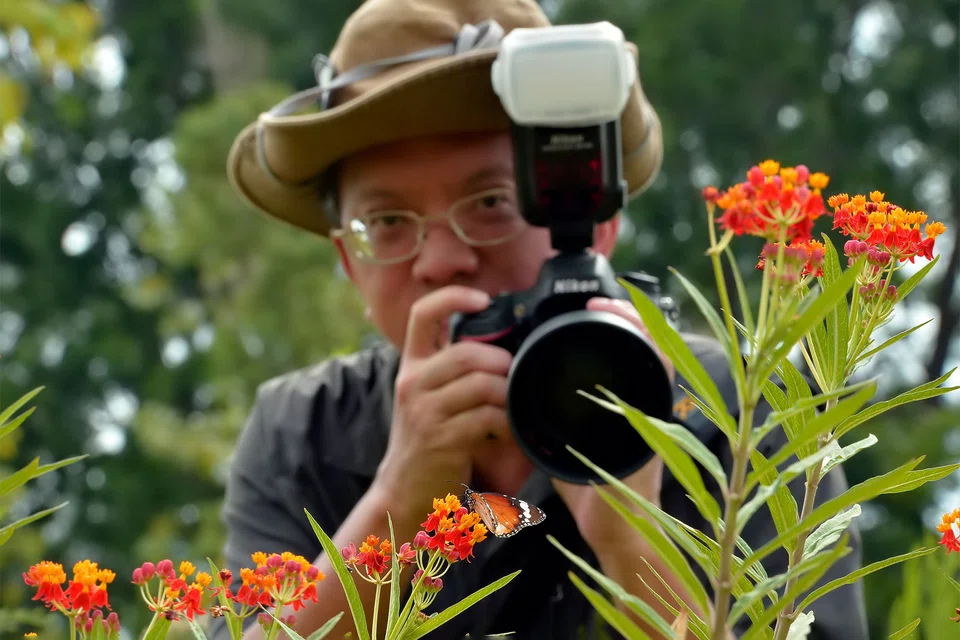
KHEW Sin Khoon sometimes buys several cakes of belacan, a pungent, fermented paste of dried shrimps and salt. It’s for an unlikely purpose: to attract butterflies of certain species that he wishes to observe.
“I actually go to my provision shop and (they ask), why are you buying six cakes of belacan? I’m not cooking,” he says with a smile.
“We dilute (the belacan) in water and then spray it on the ground… The butterflies love it. They go for the salts; it’s a combination of the salts and the smell,” he says.
Using belacan to attract butterflies is just one of the many fun facts Khew peppers into our hour-long conversation at his office in Jurong East, as we speak about the intricate art and science of butterfly-watching.
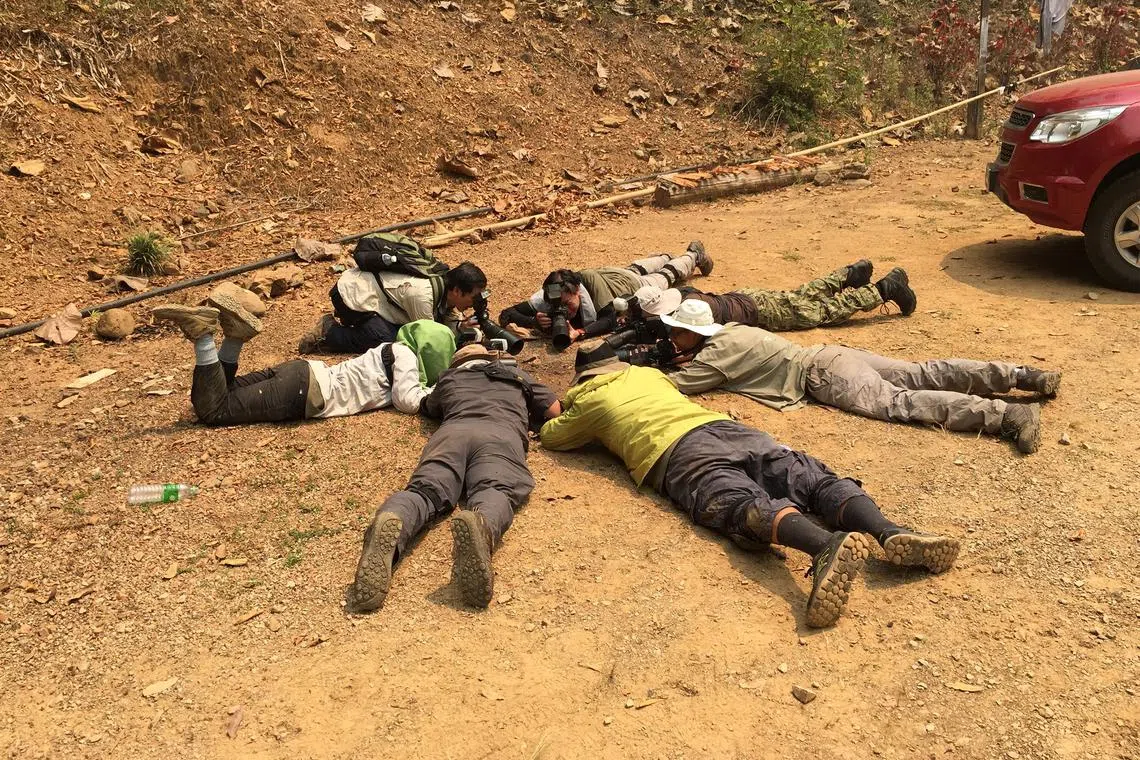
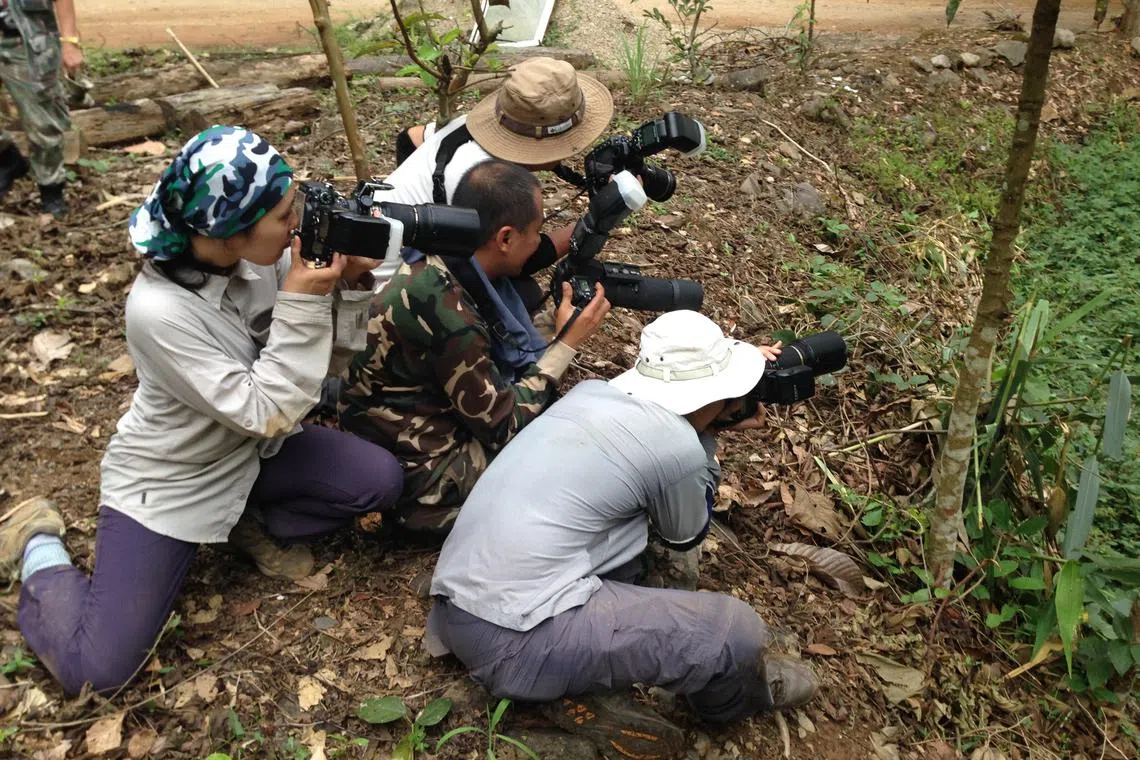
As a reader of The Business Times, you may know Khew as a prominent architect and the former chief executive of CPG Corporation, where he led iconic projects such as Gardens by the Bay and the new Supreme Court building.
The 66-year-old carries another identity: as Singapore’s “Butterfly Man”, with a lifelong passion for studying and photographing these winged creatures.
Since 2007, Khew has maintained a blog called ButterflyCircle, with striking photographs of butterflies taken by him and fellow enthusiasts, as well as detailed explanations. He has also authored a 375-page field guide on Singapore’s butterflies and runs a Facebook group of butterfly fans.
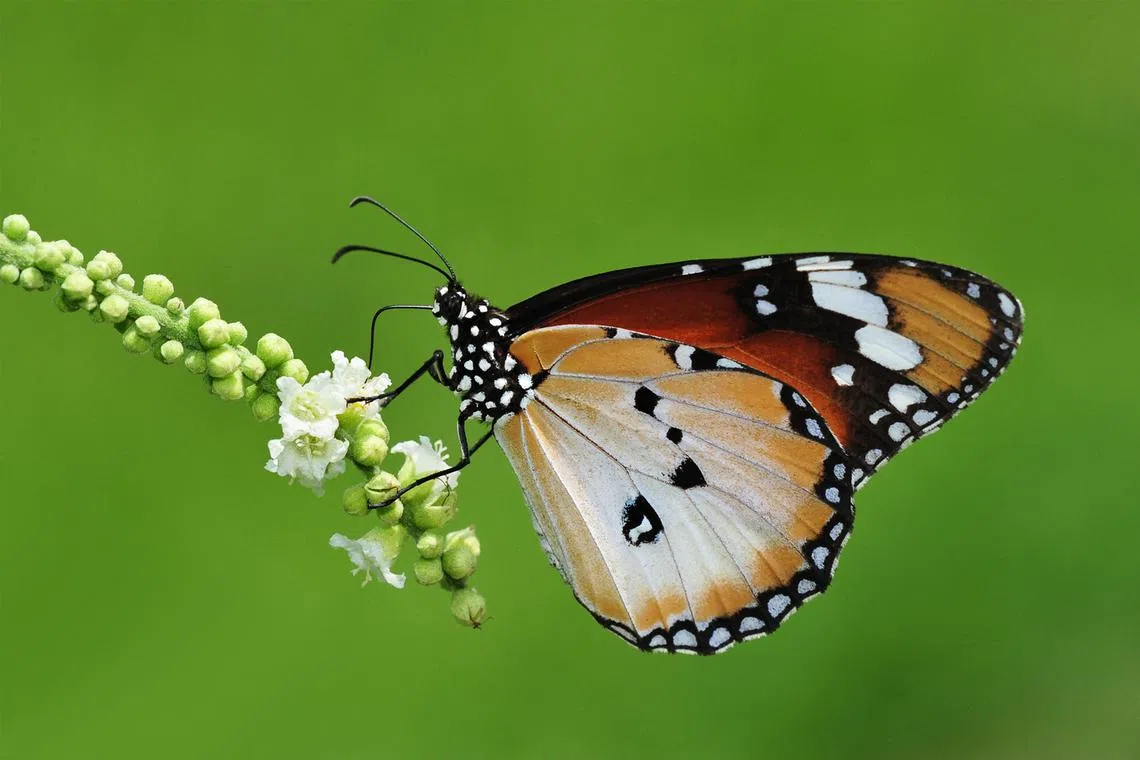
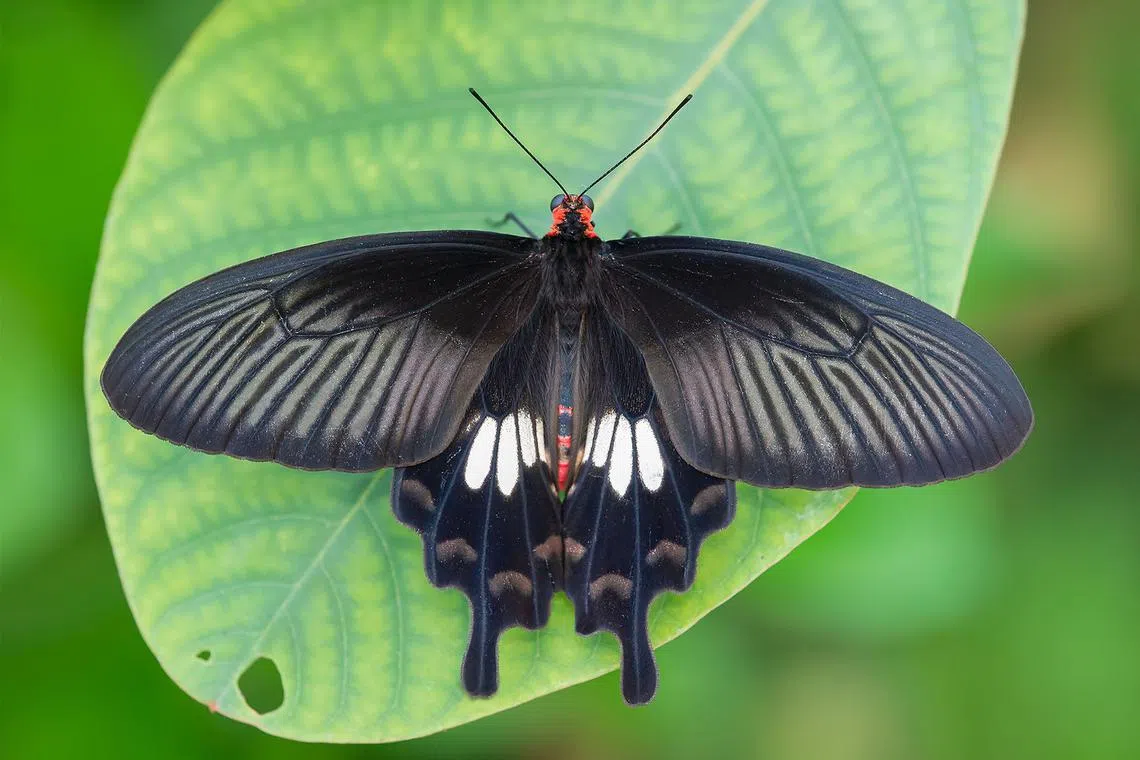
Singapore boasts a diverse array of butterflies, with over 360 species. They range from the bright red and black Common Rose, which was dubbed the “national butterfly” in 2015, to the striking Plain Tiger, with rich orange wings. Khew goes out to watch butterflies on most weekends, in areas such as the MacRitchie Reservoir and Lornie.
His fascination with butterflies began while growing up in Penang, Malaysia. “As part of my entertainment, we went down into nature; catch fish, catch spiders, catch anything that moves. There was this curiosity about the environment and the world around us,” recounted Khew.
SEE ALSO












He has since travelled extensively to watch butterflies, in locations such as the Crocker Range in Sabah, Malaysia and Chiang Mai in Thailand. Ecuador and Colombia are on his bucket list.
“Butterflies are naturally easy to endear yourself to: pretty, colourful, harmless. And being a nocturnal person myself, I cannot wake up in the morning to watch birds,” he quips.
Mysteries of the butterfly world
While bird-watching took off during the Covid-19 pandemic, butterfly-watching remains a niche pursuit, given the difficulty in observing these smaller, harder-to-spot creatures. There are also still many mysteries surrounding them.
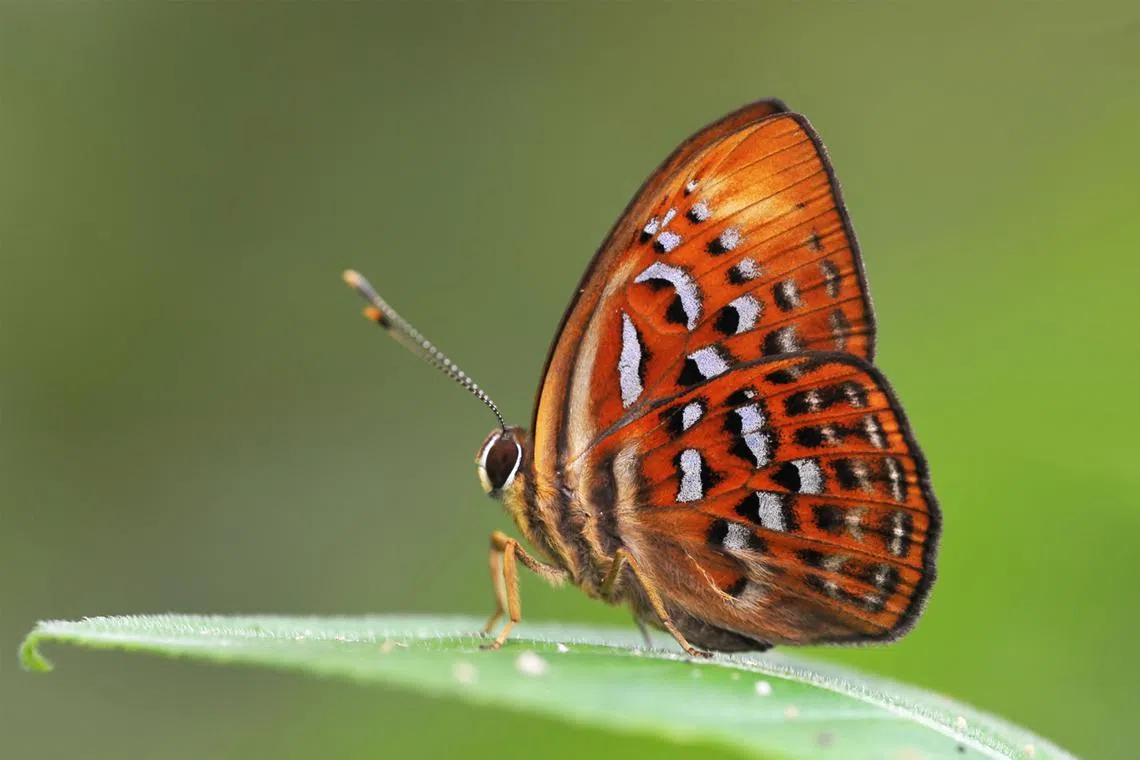
Khew cites the Harlequin as an example. According to his blog, the reddish-brown butterfly was not seen on Singapore’s mainland for almost 20 years, before it was spotted again in 2006.
That year, members of the ButterflyCircle community found a colony of Harlequin butterflies along Nanyang Avenue, but realised that the site was going to be cleared for a cleantech park. Wanting to save the Harlequin, they translocated its caterpillars to about eight locations around Singapore.
However, the butterflies did not manage to reproduce in these locations for the next 10 years, and there was no clear explanation why, Khew noted.
The effort, dubbed “Project Harlequin”, only succeeded in the past two to three years at Sungei Buloh Wetland Reserve, where there have been regular sightings of the butterfly.
While efforts to understand and conserve butterflies are challenging, that’s “also the more interesting part, because in the search for knowledge, there’s nothing boring,” says Khew.
That said, “there have been some sad stories” he says, citing one of his favourite species, the Common Tree Nymph.
“It used to be common, largely in the Upper Seletar, Bukit Timah area. But we haven’t seen it in the last 15 years, and no one really knows why; is it some disease that wiped them out?…Did their host plants disappear?” he questions.
Butterfly extinction is a real concern. A 2019 study estimated that almost half of Singapore’s butterfly species had disappeared over 160 years. Climate change poses new challenges to the survival of the remaining species.
Khew highlights three key threats: urban pollution, habitat loss and the disappearance of the host plant that the caterpillar feeds on.
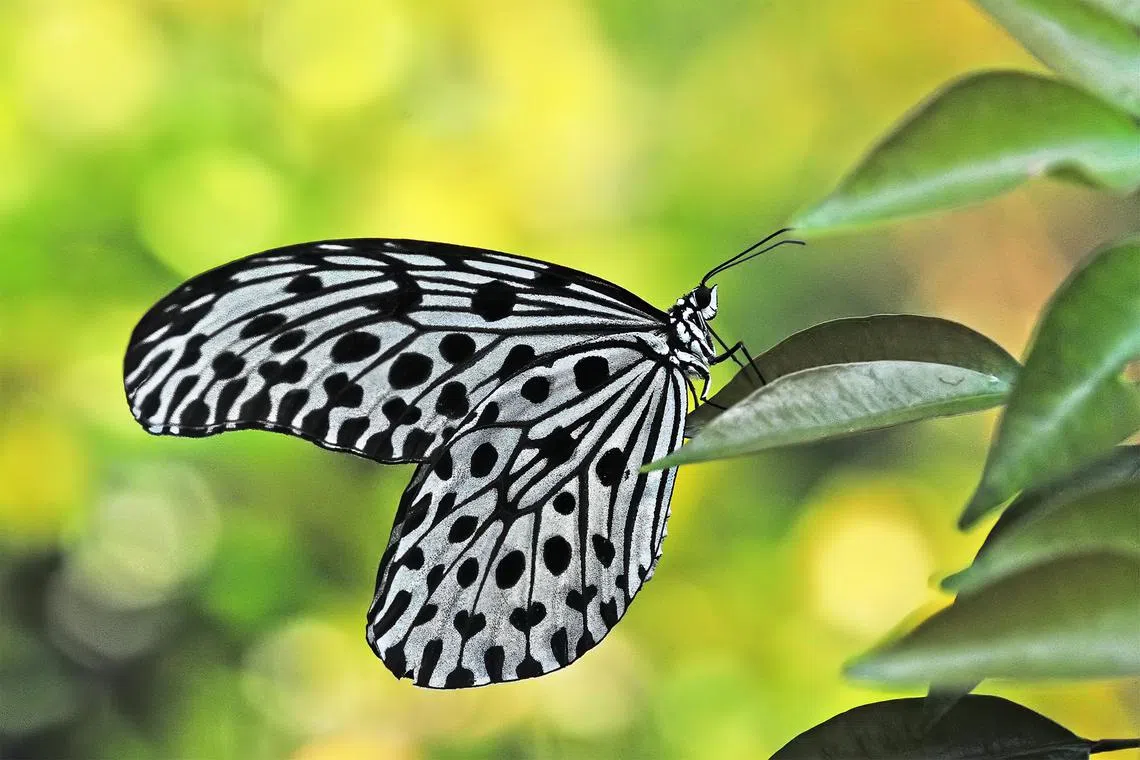
“Caterpillars are very finicky eaters; they target specific plants. You remove that plant, that’s it, it goes extinct,” he explains.
Don’t shun the cockroaches
Therefore, it is vital for architects and developers to incorporate plenty of nature, including butterfly host plants, when designing an urban space.
Singapore has seen efforts on this front. For instance, the resort island Sentosa last year unveiled a green corridor with more than 3,000 plant species to attract and nourish butterflies.
“(You’re) really creating hawker centres for butterflies. If there’s more food, it means the population will just increase,” says Khew.
He sees the effort to conserve butterflies fitting in with the broader need for cities like Singapore to coexist with all of nature. This includes not just the pretty creatures like butterflies, but the less appealing ones too, “whether it’s wild boars or the odd wasp’s nest”.
“Do you really understand what embracing nature means? It means you have a couple of cockroaches coming into your house. You can’t exclude the things that you don’t like and just target the things that you like. It comes in a whole package,” he says.
Decoding Asia newsletter: your guide to navigating Asia in a new global order. Sign up here to get Decoding Asia newsletter. Delivered to your inbox. Free.
Copyright SPH Media. All rights reserved.
TRENDING NOW

Once staunchly pro-China, Malaysian Chinese businesses are now distancing themselves from Beijing

Looking beyond looming CEO succession, should UOB potentially pursue a transformative merger?

Could stablecoins be the future of money?

Grab CEO’s wife Chloe Tong on life with Anthony Tan and finding her purpose

