Singapore’s F&B industry back to pre-Covid levels but cautious outlook remains

Jaime Ee
Published Thu, Mar 16, 2023 · 05:50 AM
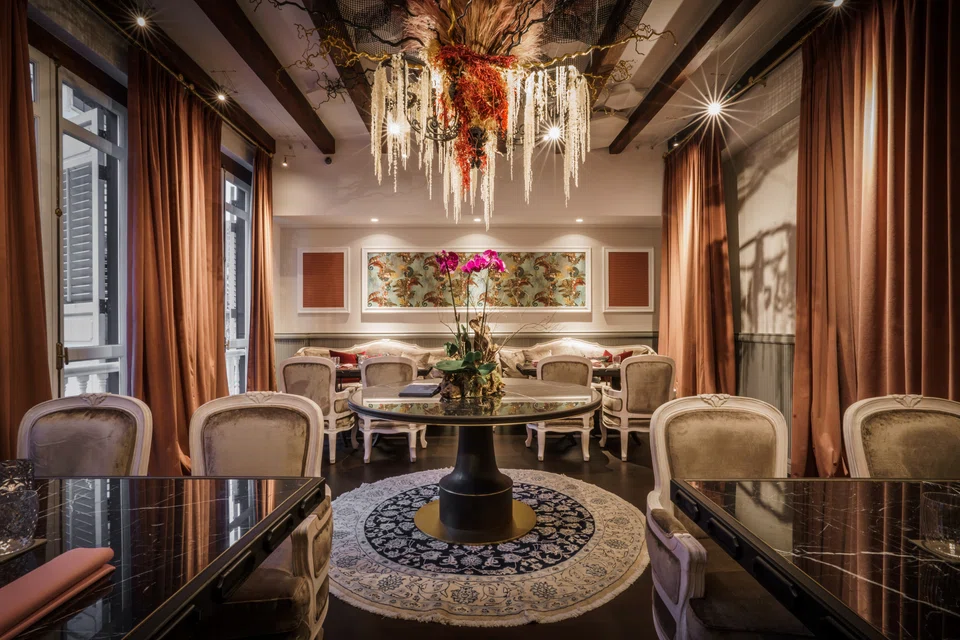
    • Getting a second Michelin star helped to boost business at Cloudstreet.
    • Getting a second Michelin star helped to boost business at Cloudstreet. PHOTO: CLOUDSTREET

    AN UNCERTAIN economic outlook has not dampened Singaporeans’ appetite for good food, with business for most mid- to high-end restaurants reaching or exceeding pre-Covid levels. This comes even as higher operating costs and manpower woes eat into companies’ profit margins.

    While big spenders are leading the way as they splurge at upscale eateries, F&B operators and hotels said they are seeing gains across all market segments. Corporate functions and big events are also coming back strongly, benefiting larger eateries that lost all their entertainment-related business during the pandemic.

    Yet, not all is rosy on the dining front. New entrants to the high-end scene mean more competition for established players; inbound tourism has yet to make up for Singaporeans who are travelling rather than dining locally; and manpower still remains a major headache.

    Martin Bem is among those singing a more positive tune. His microbrewery-restaurant LeVeL33, located in the central business district, was among the hardest hit when offices closed, work from home (WFH) was the norm and corporate entertainment dried up. 

    “Sales are luckily at pre-Covid levels or slightly higher,” said Bem. This is despite not raising prices in response to higher food costs and wages.

    The restaurant’s private dining room and premium multiple course menus are “solidly booked”, he added.

    Asean Intelligence

    Get insights into businesses across South-east Asia

    Get the free report

    He expects momentum to continue. Tourism has brought wealthy visitors to the restaurant, he said, while new expatriates are “filling the gaps” created by those who left Singapore over the past few years.

    Concurring is Vadim Korob, managing director of Italian restaurant Altro Zafferano. “Revenue is generally higher than pre-Covid, largely due to two reasons: price adjustments with the increase in ingredients costs, and higher spending by diners. More guests are willing to pay for a better dining experience.”

    Still, there are ups and downs. Korob said business slowed down from the second half of December through January. “But this is like pre-Covid. It shows that the situation is stable, and we do not have to constantly brace ourselves for last minute changes.”

    Wes Guild, operations director of Red Door Group, which owns Bistecca Tuscan Steakhouse, estimates that costs and revenues have risen by about 5 to 10 per cent and is hoping to see a year-on-year topline increase in that range this year.

    At Michelin-starred restaurants, the likes of one-starred Labyrinth to the three-starred Les Amis are also seeing higher numbers than pre-Covid. The former’s chef-owner Han Li Guang reports a full house every day; and a good mix of guests have held up Les Amis’ business, said director of culinary operations Sebastien Lepinoy.

    Besides the return of corporate business, “we have new regulars in the 30- to 40-year age group who started dining with us during the border closures,” said Lepinoy. “And now that travel has opened up, we are seeing more tourists who are attracted to our Michelin-star status.” Even with Singaporeans travelling more, the rise in inbound tourists has picked up the slack. “About 30 per cent of our patrons are tourists.”

    Hotel F&B back on a roll

    Hotel F&B outlets, meanwhile, are benefiting from bigger dining groups as well as the return of tourists, and corporate and wedding events.

    Said Jeane Lim, general manager of Grand Park City Hall, which houses Tablescape restaurant: “People are still willing to splurge despite the economic uncertainty. There is a lot more demand for our private dining rooms, as well as the total buy out of the restaurant as a venue for their event.”

    Jacqueline Ho, general manager of The Orchard Hotel Singapore, is seeing a “performance level comparable to 2019, with Hua Ting restaurant and Orchard Cafe back to pre-Covid levels. We expect a full recovery this year, albeit with the usual challenges affecting the F&B industry.”

    At Parkroyal Collection Marina Bay Singapore, both its fine dining Peach Blossoms and all-day-dining Peppermint restaurants have seen a full recovery to pre-pandemic levels. General manager Melvin Lim said revenge travel by Singaporeans hasn’t made a dent on business either, even if inbound tourists have not hit pre-Covid numbers yet. “Plus, we’re seeing a lot more younger diners than before.”

    Competition and costs

    Singapore’s surfeit of sushi and kappo restaurants has suffered a dent since Japan reopened its borders last October. “There was a negative impact on business at our Japanese concepts, although it was mitigated by festive demand,” said Tycen Bundgaard, chief executive of the Les Amis Group.

    Joni Ong, managing director of Shinji by Kanesaka, said “revenge dining” helped her restaurants bounce back to pre-Covid levels very quickly once dining restrictions were lifted. But “revenge travel” in general, and not just Japan’s reopening, has “affected reservations from regulars who used to dine more frequently with us”.

    Another factor that has affected business is location. “Outlets in residential areas which did well during the pandemic have seen a slowdown since the reopening, while those in commercial areas are doing the best,” said Les Amis’ Bundgaard.

    The biggest challenges, however, are competition and rising costs. “Established restaurants are doing well, but I also know of some who are really struggling,” said Rishi Naleendra, chef-owner of restaurants including the two-starred Cloudstreet, as well as Fool and Kotuwa.

    “New restaurants are opening left, right and centre, and costs are a killer,” added Naleendra, who recently added Japanese restaurant Bincho into his fold.

    Ong of Shinji said her restaurants – two Shinji outlets and the smaller Oshino – are established enough and “continue to attract new customers and retain regular ones”. The real problem isn’t about getting business, but dealing with high operating costs and a lack of manpower.

    “Poaching is so rampant with the countless new openings of high-end Japanese sushi and omakase restaurants that customers dining at our counters are openly asking chefs or service staff if they want to join (the customer’s) new restaurant at an insane salary increase! But we’re grateful that most of our staff understand loyalty and the value of relationships built up over the years.”

    Karen Cheng, co-founder of Japanese eateries such as Sushi Kimura, The Gyu Bar and Ichigo Ichie, said that while business has bounced back to pre-Covid levels, “we cannot say that our revenue has increased due to the adjustment of inflation and higher operating costs”.

    While cautiously optimistic, she expects challenges this year given the economic outlook and the saturated Japanese dining market. “We’re feeling an impact from Japan’s reopening, as consumers are focusing more on travel experiences than dining. The market has been slowing down in the last quarter for fine dining, and we’re also seeing more openings in the mid-level segment. I’ve also seen an increase in private dining (home chefs), which may also affect the fine dining segment.”

    Andrew Tjioe, CEO of the Tung Lok group, said it is the “fittest restaurants that are enjoying business recovery”.

    The brand’s mid-end and fine-dining restaurants such as TungLok Signatures, Tong Le Private Dining and TungLok Heen are performing the best.

    Tjioe said he is expecting “strong business from the Chinese tourist market, as it constitutes a large part of our target audience”.

    Still, fine dining is far from recession-proof. Lewis Barker of the one Michelin-starred Sommer, which opened during Covid-19, said business is now at a “satisfactory” level. But while he believes there will always be a market for fine dining, he noted also that “it may become a more exclusive market with the shifts in cost and inflation, which reduces the percentage of diners who can consistently afford it”.

    Decoding Asia newsletter: your guide to navigating Asia in a new global order. Sign up here to get Decoding Asia newsletter. Delivered to your inbox. Free.

    Copyright SPH Media. All rights reserved.