

South-east Asia emerges as ‘engine of growth’ for K-pop resale merch: Bunjang report
The South Korean online marketplace – which operates similarly to Carousell – has 3.6 million active users globally a month
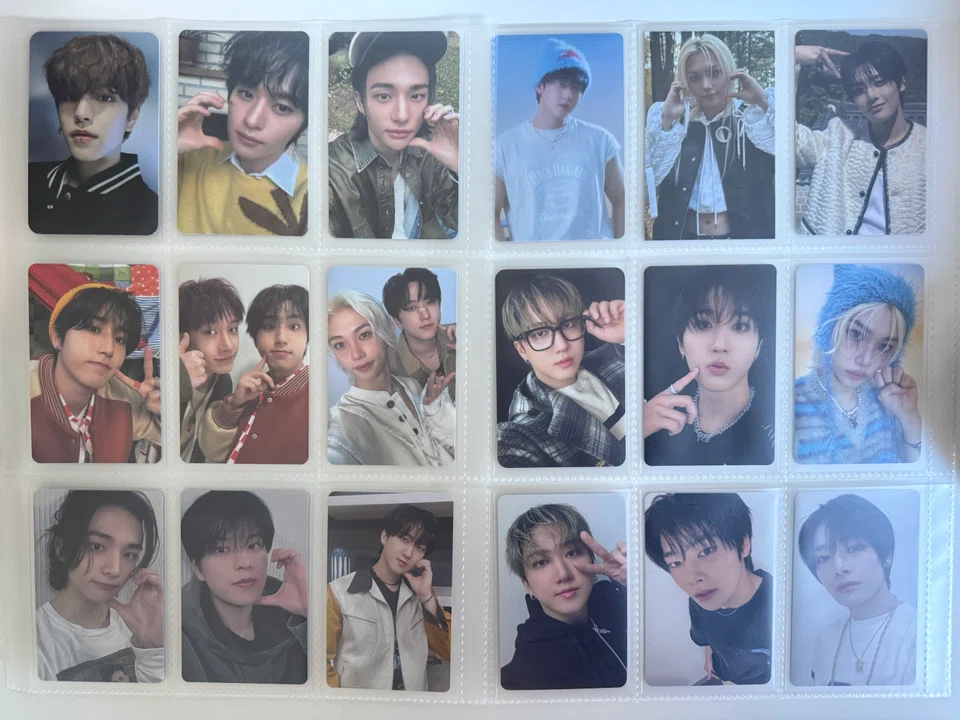
[SINGAPORE] Indonesia had the highest number of new sign-ups (more than 30 per cent) in 2025 on South Korean global online marketplace Bunjang.
The platform sells second-hand goods – more than three-quarters of which is K-pop merchandise.
India came in second place, followed by Malaysia. Vietnam and the Philippines rounded out the top five for the category, based on the platform’s 2025 global K-pop merch trend report.
“The broader South-east Asian region is the engine of growth,” said Choi Jaewha, chief executive of Bunjang. “The data is clear: South-east Asia is not just a growing market – it is the heartbeat of our future expansion.”
In a separate section, Singapore had the fifth-highest share of total sales volume on Bunjang in 2025, at more than 3 per cent. The US had the highest share at more than 50 per cent.
Choi noted: “Singapore stands as our strategic crown jewel in South-east Asia. It is our top revenue market in the region, with user growth skyrocketing by over 450 per cent in just six months.”
Bunjang – which operates similarly to Carousell – has more than 3.6 million active users globally a month, as at late 2025. While the majority of goods listed are K-pop merch, it also sells merch from other fandoms, such as e-sports and webtoons.
“Through Bunjang Global, users can access real-time listings from sellers in South Korea. That gives fans access to rare, discontinued and event-exclusive items that are often difficult or impossible to find outside Korea,” she said.
An “alternative asset class”
Many forms of K-pop merch – such as photocards and signed albums – can only be purchased within a specific timeframe, making them harder for fans to buy. The scarcity of such goods pushes their prices up, too.

Choi said: “The marketplace reflects a significant willingness to invest in ‘holy grail’ items. The scarcity of high-value collectibles has driven price points to remarkable heights, transforming merchandise into a form of cultural currency.”
The highest-transacted item was a signed album of Daesung’s Look at Me, Gwisun, selling for 3.3 million won (S$2,855) – nearly two decades after its release. Other high-value items sold included a signed photocard of Juun from rookie girl group Hearts2Hearts (around US$900) and a Day6 member photocard (around US$625).
“We are witnessing the evolution of K-pop merchandise into a legitimate alternative asset class. These items aren’t just souvenirs; they are stores of value,” Choi said.
Merch can be sold out as soon as they are listed, too. For example, based on the report, the fastest-sold item was a broadcast photocard of San from Ateez for the group’s Crazy Form performance, which sold in one minute and 22 seconds.
“Great Reunion Era”
Generally, when a group announces a concert or new release, searches spike, listings increase and transactions follow, said Choi.
In end-2025, many third-generation K-pop groups such as BTS and Blackpink announced they would be releasing new music at the start of 2026.
The reunion of BTS after the members have completed their mandatory South Korean military service has been highly anticipated. The group is set to return to the scene on Mar 20 with their fifth full-length album Arirang.
Choi said: “Ahead of BTS’ comeback, related listings rose 35 per cent month on month, and the number of users registering those items jumped 61.5 per cent. After the release date for Arirang was announced, related keyword searches surged 1,928 per cent.”
In 2025, BTS was the most-viewed artiste and ranked first in terms of the number of items sold.
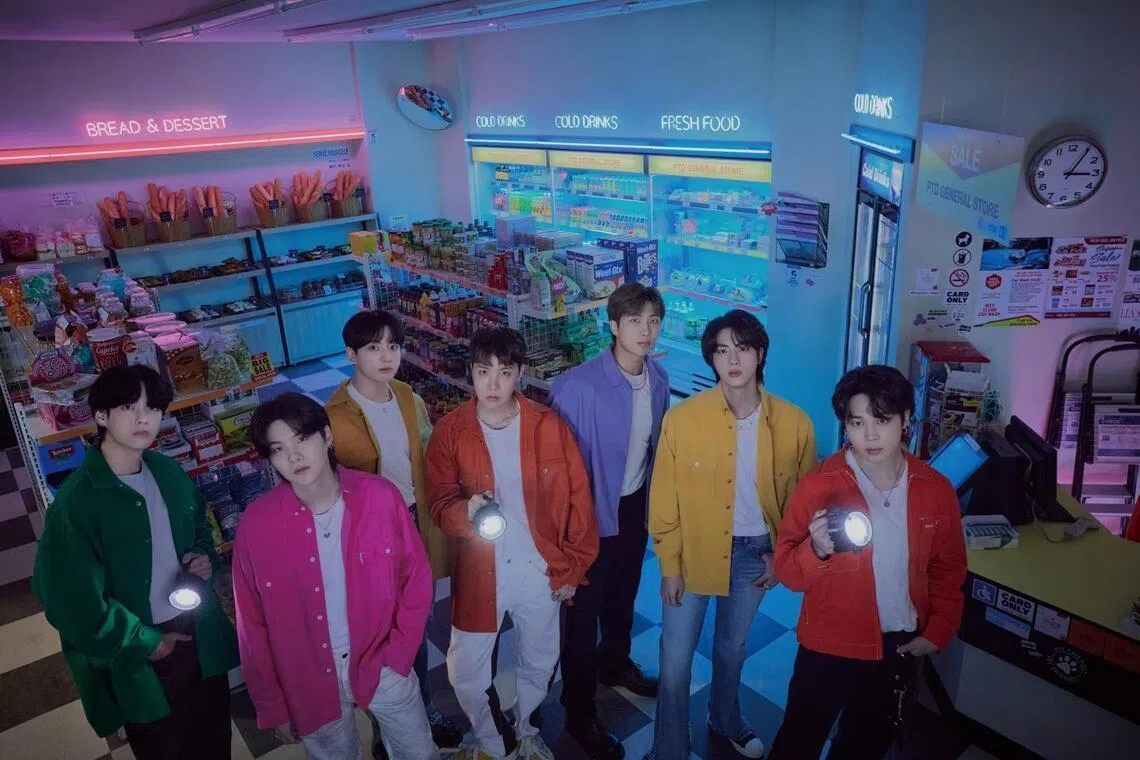
G-Dragon, the leader of BigBang – a second-generation K-pop group – also teased the return of the trio this year after being on a hiatus for more than three years.
Choi said: “We are currently entering what I call the ‘Great Reunion Era’. With the simultaneous full-group returns of global titans like BTS, Blackpink, BigBang and Exo, the demand for merchandise isn’t just picking up – it is reaching a fever pitch.
“These comebacks are triggering a massive resurgence in demand for ‘legacy’ items. Rare, early-debut merchandise from these group is no longer just a hobbyist collectible; it is being traded as a high-value cultural asset.”
Although it is not early-debut merch, the second-highest transacted item on Bunjang in 2025 was a signed album of BigBang’s Flower Road, which was originally released in March 2018. It sold for three million won.
Meanwhile, the top-selling artiste for photocards in 2025 was fourth-generation group Stray Kids, followed by Ateez, Plave, Day6 and NCT.
Choi noted that fifth-generation groups such as Cortis – which hails from the same company as BTS – are rising in popularity. In September, the “Cortis” keyword trended the highest, coinciding with the group’s debut.

Decoding Asia newsletter: your guide to navigating Asia in a new global order. Sign up here to get Decoding Asia newsletter. Delivered to your inbox. Free.
Copyright SPH Media. All rights reserved.
TRENDING NOW

ComfortDelGro appoints two new independent directors

Once staunchly pro-China, Malaysian Chinese businesses are now distancing themselves from Beijing

NoonTalk needs continued financial support from CEO Dasmond Koh, auditors warn

DP Architects sets the benchmark for sustainability disclosure and design

