

South-east Asia in thousands of pictures
An ambitious museum survey looks at South-east Asian photography across 150 years
Helmi Yusof
AS an art form, painting is over 42,000 years old while sculpture is a little younger at around 34,000 years of age. Photography is a few years shy of its 200th year mark, making it a baby by comparison.
But looking at the vast proliferation of photographic images on the Internet and social media today, it feels as if there have been more photographs produced in this world than there have ever been paintings and sculptures. All it takes now to produce a photo – or several in quick succession – is to tap a button on a screen.
What then makes one photograph matter over the rest? How does one assess the quality of a photograph when tastes and aesthetics rapidly shift? How can a photograph produced today secure a lasting position of importance when pitted against billions produced daily?
National Gallery Singapore tackles these questions with its latest multi-gallery exhibition titled Living Pictures: Photography In Southeast Asia, a large showcase of photographic art across the region over 150 years. Officially, it has over 300 photographic “works” taken by various shutterbugs (some nameless), but in reality, there are several thousand prints here to look at.
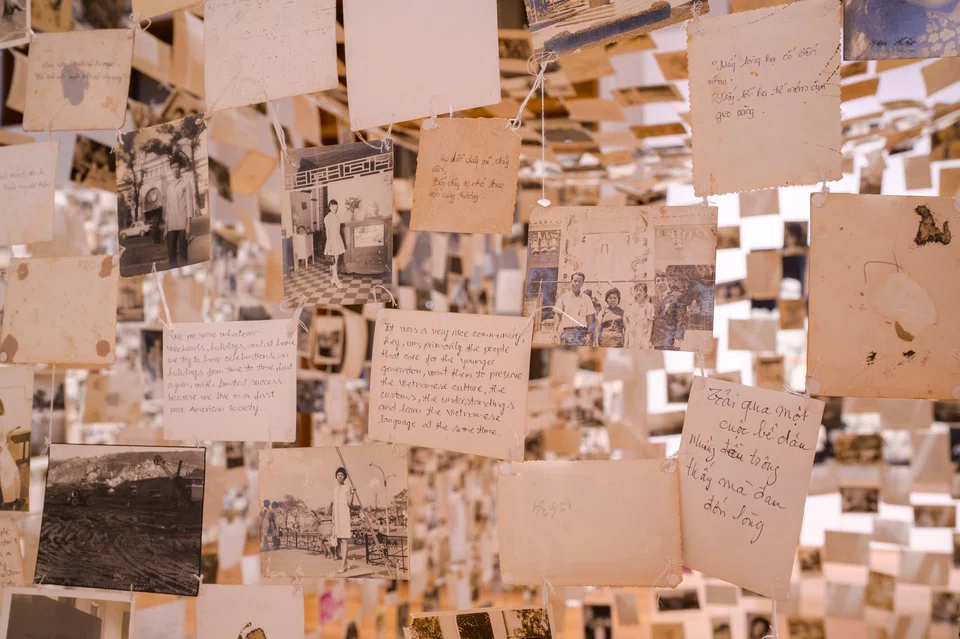
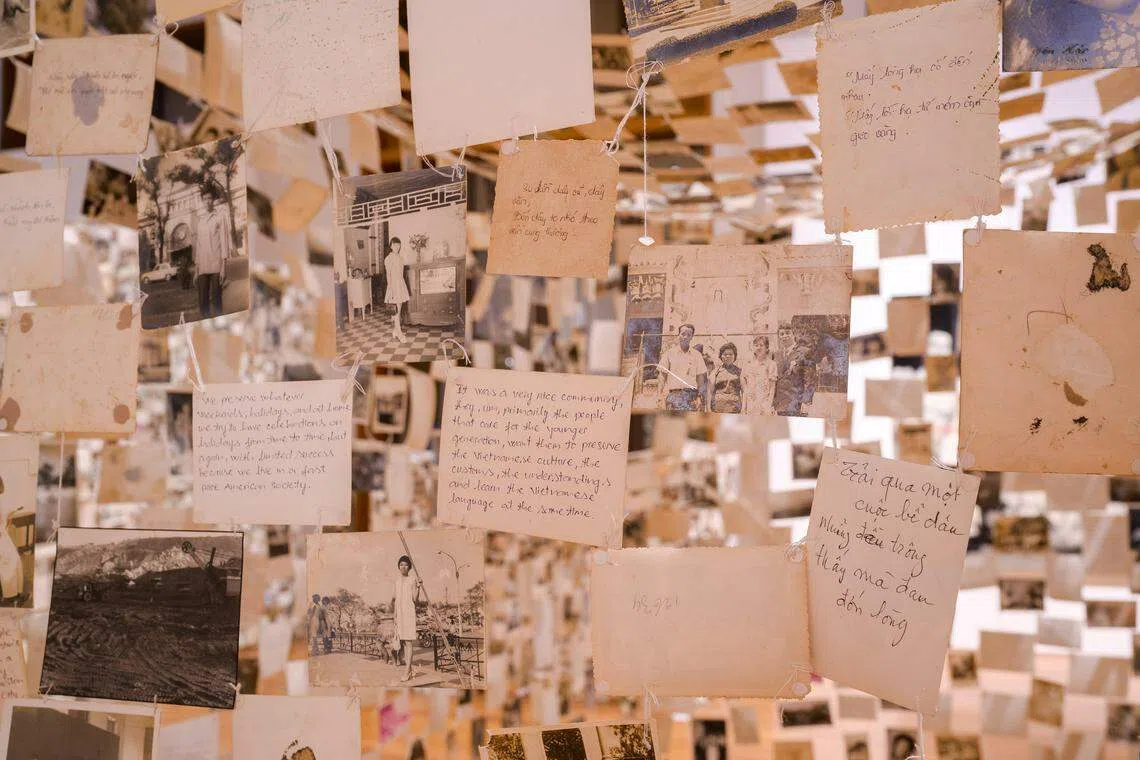
Singapore artists Heman Chong and Chua Chye Teck, for instance, are showcasing one work each – but each work consists of at least 500 printed images. Even more ambitious is Vietnamese-American artist Dinh Q Le’s installation of more than 5,000 found photos of ordinary Vietnamese snapped between 1940 and 1980. You’ll need hours to take in the full breadth of these works.
Living Pictures is curated by Charmaine Toh, Roger Nelson, Goh Sze Ying, Kenneth Tay and Roy Ng. It has many impressive achievements – even if the whole doesn’t feel greater than the sum of its parts.
Black-and-white beauties
The show begins with the black-and-white photos of the island of Singapore and its people during the colonial era. Captured by European shutterbugs largely for European audiences, these photos from the 1800s and early 1900s had the implicit aim of promoting tourism and investment on the island. They show serene parks, tranquil seas, picturesque temples and ordinary people looking relaxed and happy.
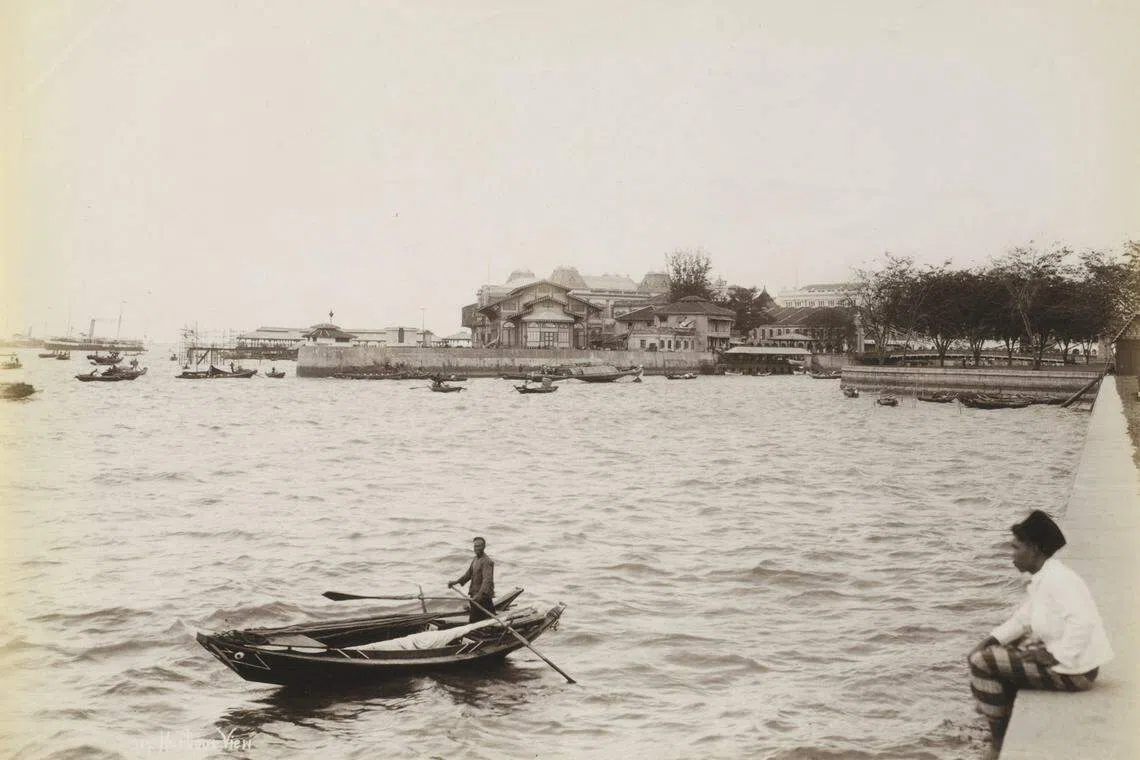
But as curator Toh points out, they are not accurate reflections of life on the island. The people in the photos, for one, had little say over how they were presented by the Europeans.
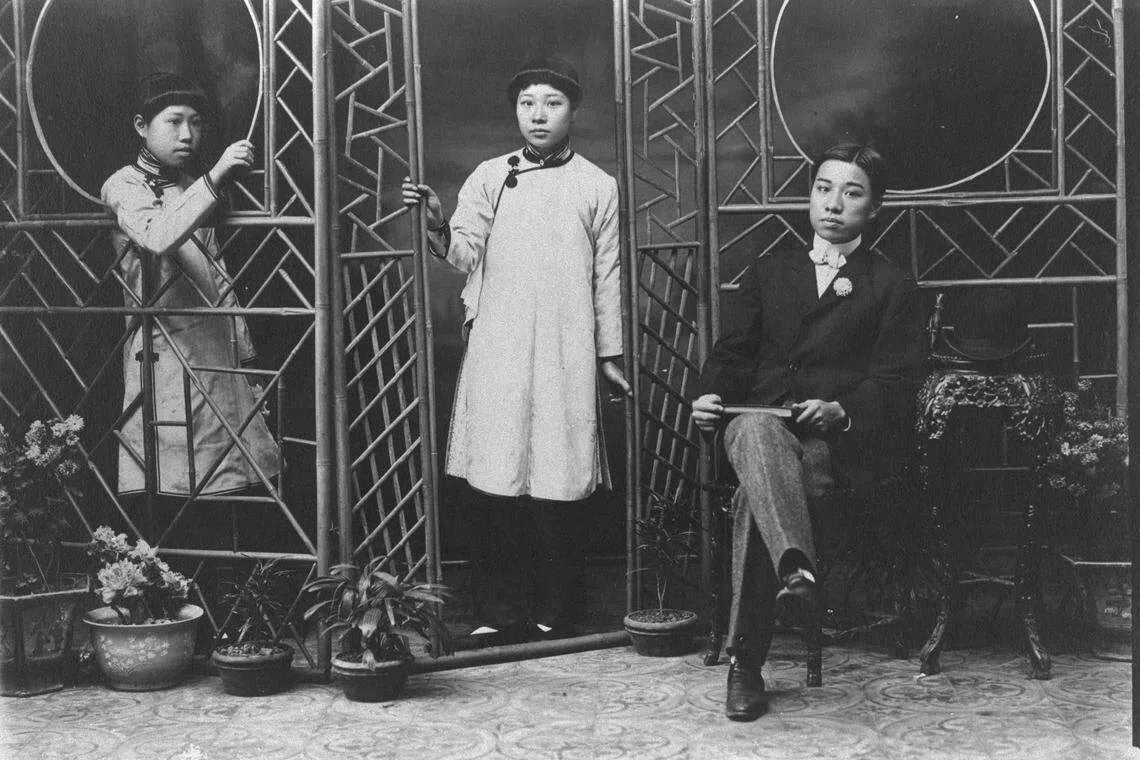
A significant shift came about at the turn of the century when emerging Asian entrepreneurs opened their own photography studios in Singapore. The largely local and regional clientele could dictate how they looked in the photos and who gets to see them. Thus began a flowering of studio photography typically featuring wealthy local or regional families proudly posing in their best fineries. The popularity of these Asian-owned studios eventually put the European studios out of business.
One section of particular historical interest showcases the pictures of Thai kings Mongkut (1804 – 1868) and Chulalongkorn (1853 – 1910), who used the medium of photography to circulate images of themselves as benign and sophisticated rulers. They were media mavens long before the term was invented.
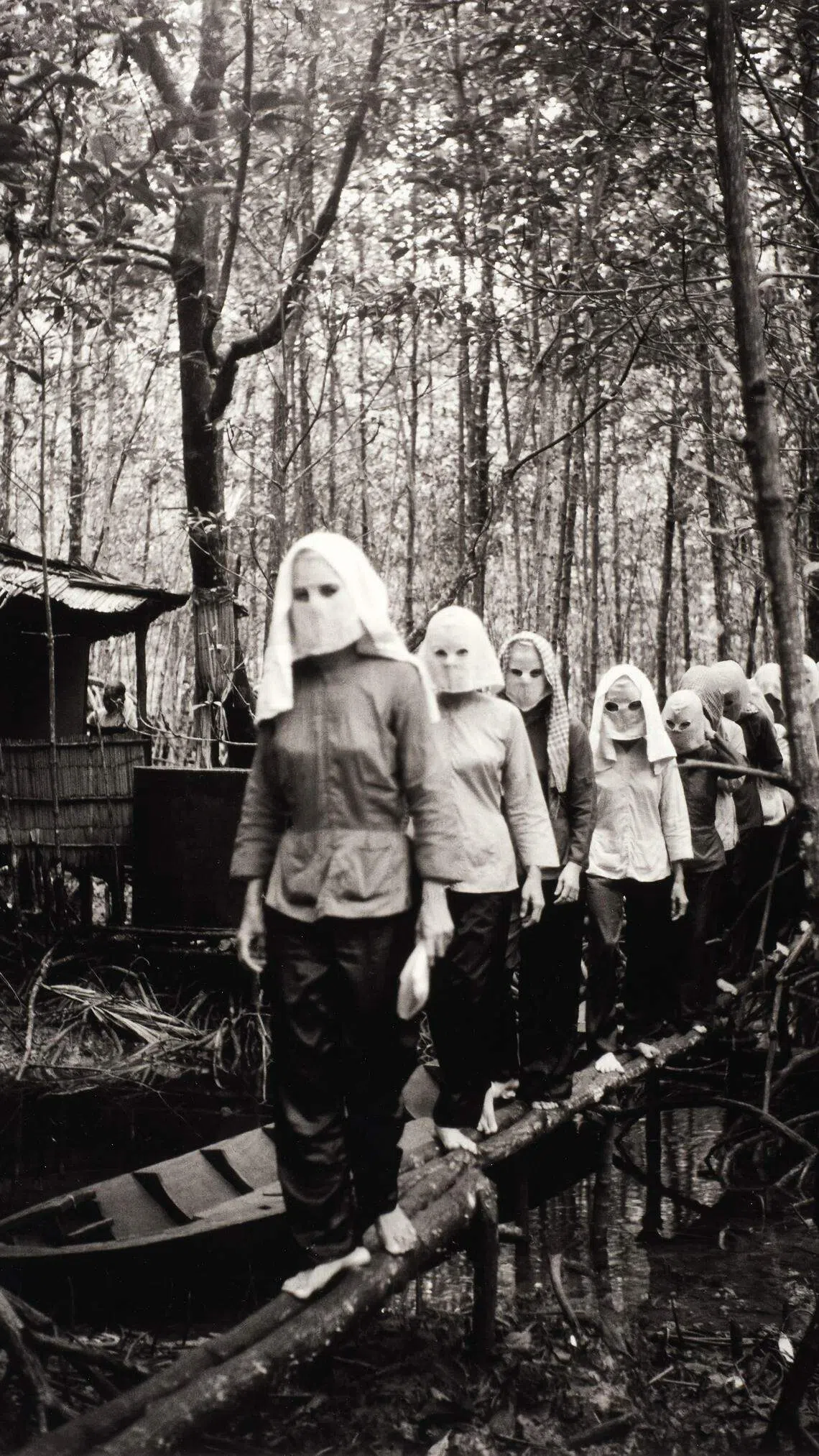
Another notable section comprises several photos of the Vietnam War taken by American and Vietnamese professional photographers. These images are especially striking for the glaring differences between how American photographers presented the war to their magazine and newspaper readers back home, and how Vietnamese photographers captured their own people’s war efforts in order to boost morale.
The American photos – which include Nick Ut’s famous so-called Napalm Girl and Eddie Adam’s snapshot of a VietCong being shot at point-blank range – often depict the endless unforgiving brutalities of war. On the other hand, the Vietnamese photos are more explicitly propagandistic, showing female spies in training and doctors tending to wounded soldiers.
Contemporary contenders
The show’s biggest section is its contemporary photography section. Here are several works from the National Collection that represent some of the best art photography in Singapore and the region. They include works by Thailand’s Miti Ruangkritya, Indonesia’s FX Harsono, Malaysia’s Yee I-Lann and the Philippines’ Poklong Anading and Wawi Navarozza.
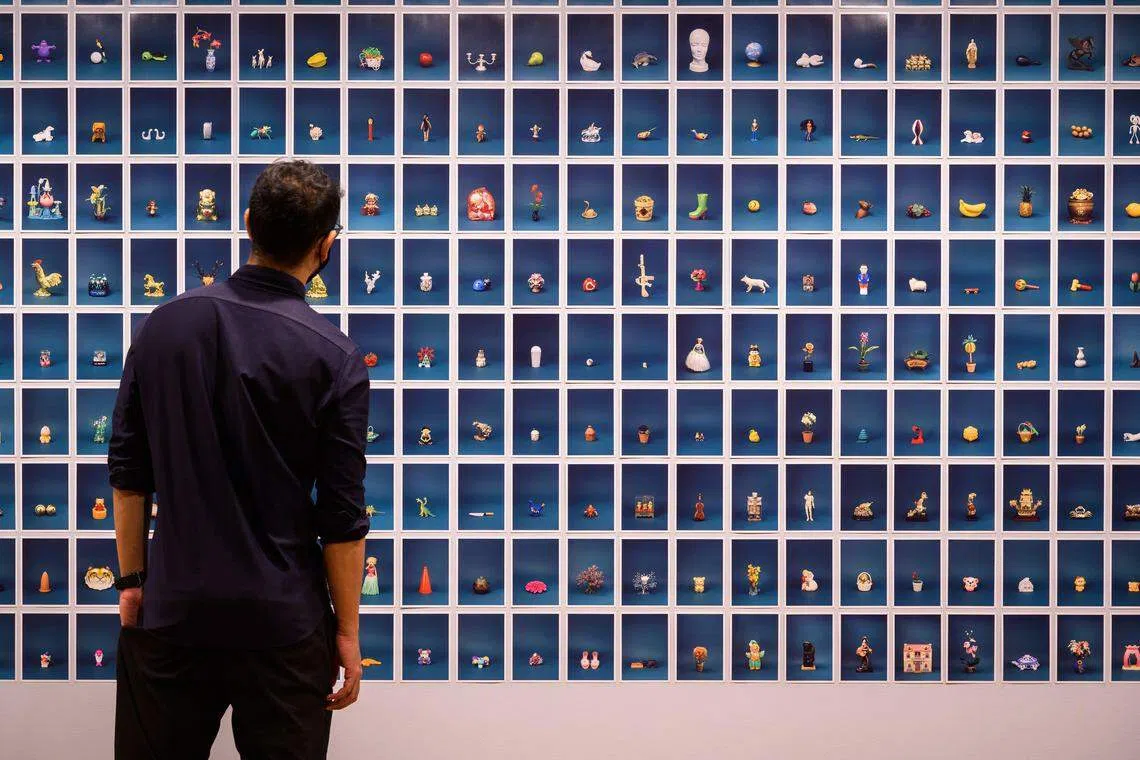
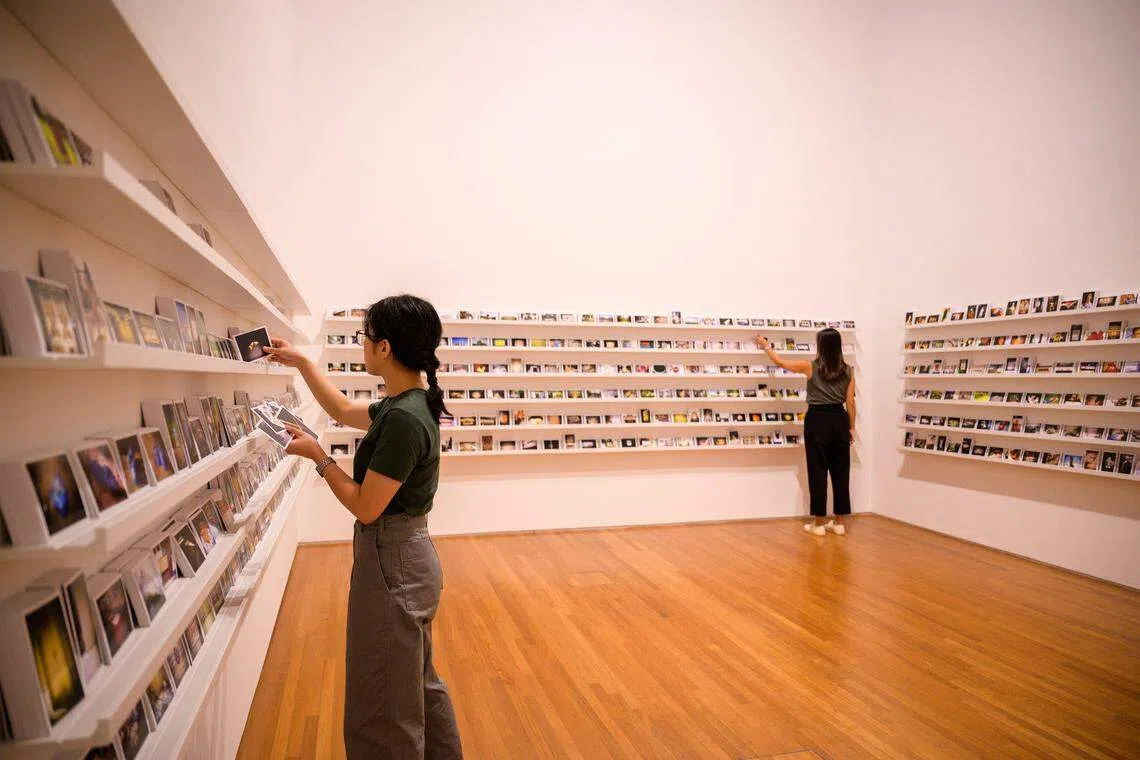
The Singapore artists include Chua Chye Teck, who bought or borrowed hundreds of discarded bric-a-brac from second-hand shops and transformed junk into art by photographing each one against an elegant turquoise backdrop. Robert Zhao Renhui assembled dozens of curios and photographs from Singapore’s past and present to explore our fraught relationship with nature. Heman Chong chose 550 images from his daily life and turned them into postcards for sale.
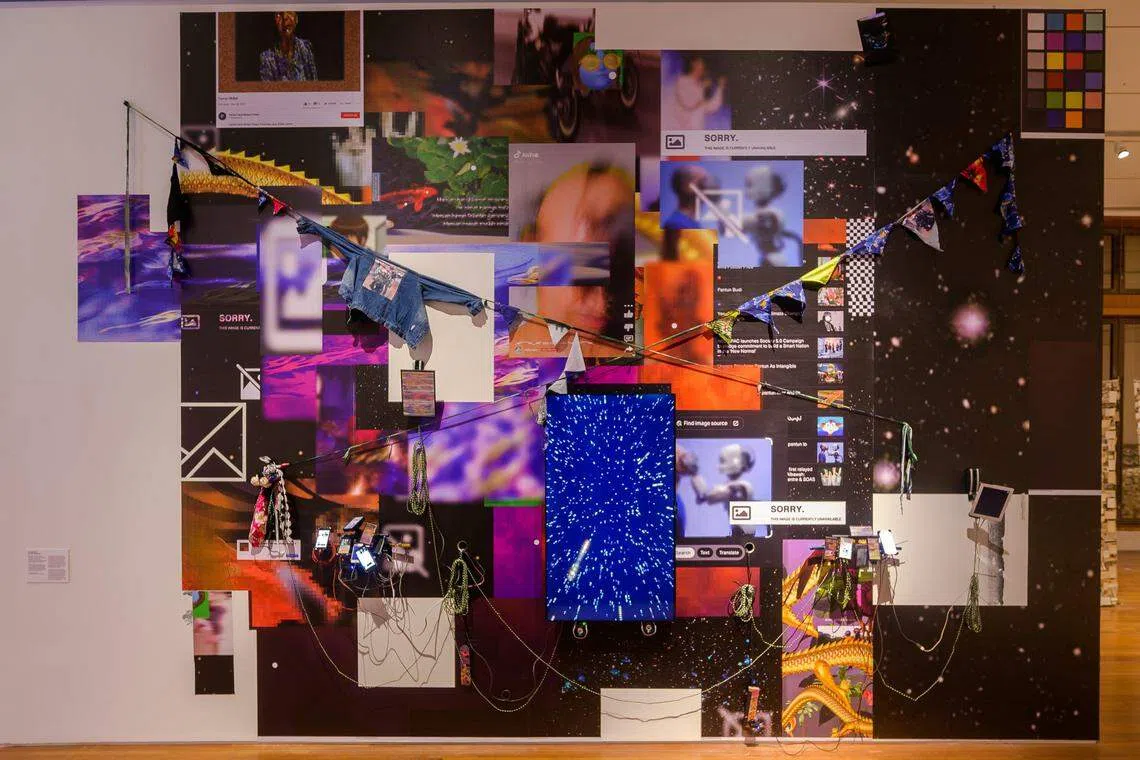
The newest work here is Fyerool Darma’s single-channel video narrating the history of the Malay pantun (rhyming poem) through a bombardment of images appropriated from online sources, from museum sites to social media. The oldest works here are four striking photographs by Tan Lip Seng, an 80-year-old photographer who in his heyday won over 1,000 awards for his experimental techniques. Fyerool and Tan are 45 years apart in terms of age, but their works appear like kindred spirits with their lurid colours depicting the poetics of the everyday.
For the lay Singaporean, the works that might resonate the most are Darren’s two photographs of political rallies taken during Singapore’s general election of 2011. Each shows swarms of people surrounding speakers of either the ruling or opposition party, and each is striking for its scale and ambition.
If there is a weakness in the exhibition, it is that, despite its tagline “Photography In Southeast Asia”, much of the exhibition is centred on photography in Singapore. The attention paid to other South-east Asian nations feels somewhat sporadic and inconsistent – especially when compared to previous National Gallery shows such as the magnificent and wide-ranging 2019 show Awakenings: Art In Society In Asia, 1960s – 1990s. Even smaller Singapore-centred shows such as Something New Must Turn Up: Six Singaporean Artists After 1965 were models of depth and diversity.
In Living Pictures, the Vietnam War takes up an entire wall, but other major political and social upheavals get scant attention. Mongkut and Chulalongkorn get a section to themselves, but what about other South-east Asian rulers who shrewdly manipulated their images throughout their careers to impress their populace?
What’s already in the show is glorious – but the show’s gaps make it feel smaller than the sum of its parts.
Living Pictures: Photography In Southeast Asia runs from now till 20 Aug 2023. Admission is free for Singaporeans and PRs.
Decoding Asia newsletter: your guide to navigating Asia in a new global order. Sign up here to get Decoding Asia newsletter. Delivered to your inbox. Free.
Copyright SPH Media. All rights reserved.
TRENDING NOW
Easy to rent out, hard to sell: Are buyers losing interest in Singapore’s one-bedroom condos?

GovTech retrenches another 38 staff in second round of layoffs
Stocks to watch: Seatrium, CapitaLand Investment, Keppel DC Reit, Suntec Reit, CLCT, TSH Resources

World’s largest offshore wind platform by Seatrium consortium on track to be completed by 2028

