

S'pore art dreaming: culture, authenticity and national identity
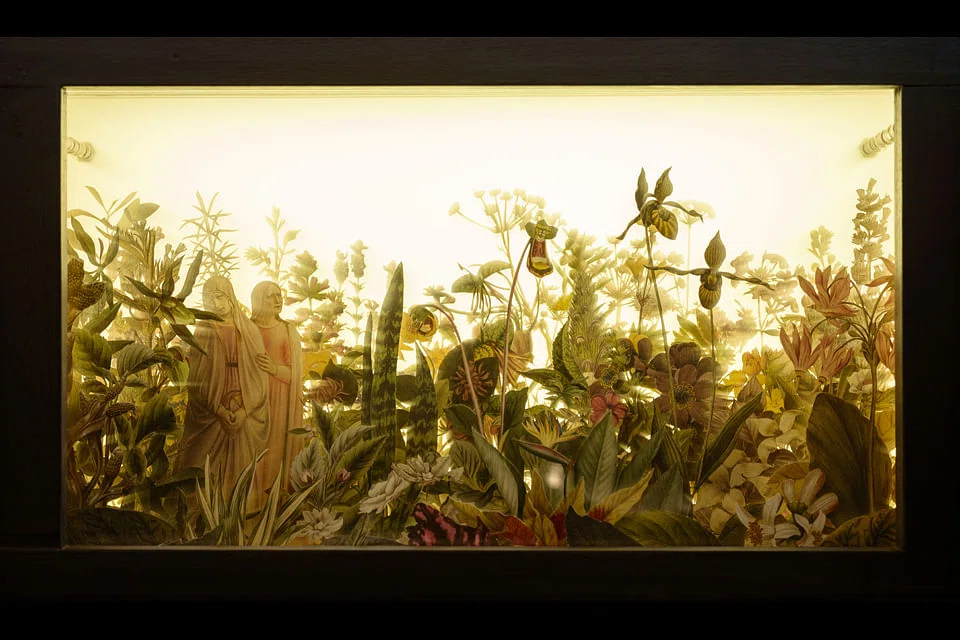
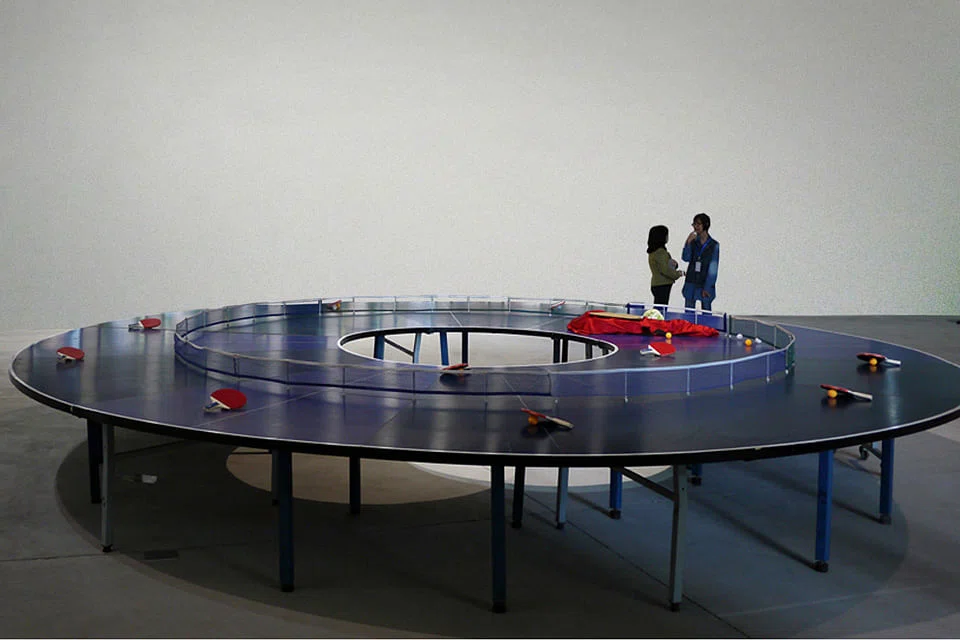
AN urban landscape. A horseshoe- shaped ping-pong table. Madonnas in a fantastical garden wonderland.
These are just three of the 24 artworks making their debut as a Singapore collective in London next week to celebrate Singapore's golden jubilee of independence.
Cultural Medallion recipient Lee Wen, together with Donna Ong, Chen Sai Hua Kuan, Gerald Leow, Jeremy Sharma, Chia Ming Chien, Charles Lim, Sean Lee, Justin Loke and Jane Lee will provide viewers with a glimpse into Singapore's burgeoning contemporary art scene through mediums such as painting, installation and photography.
Prudential Eye Zone is a touring art exhibition providing artists in the region with opportunities to showcase their work internationally. This year's programme focuses on Singapore and offers a curated selection from Prudential Singapore Eye, one of the largest surveys of Singapore's contemporary art, held at ArtScience Museum earlier this year.
Contemporary art is representative of the times we live in - and Singapore art is no exception. "Singapore is going through an explosion of creativity, and the arts scene in Singapore is incredibly dynamic," says Honor Harger, executive director of ArtScience Museum and one of three curatorial directors taking this exhibition to London. "There's a strong interest in experimental art, playfulness and an exciting approach to interdisciplinary work."
Chia Ming Chien, an artist photo- grapher in this show, agrees. He speaks of interesting art being produced by committed artists focused on their craft, not driven by fame, fortune or social approval.
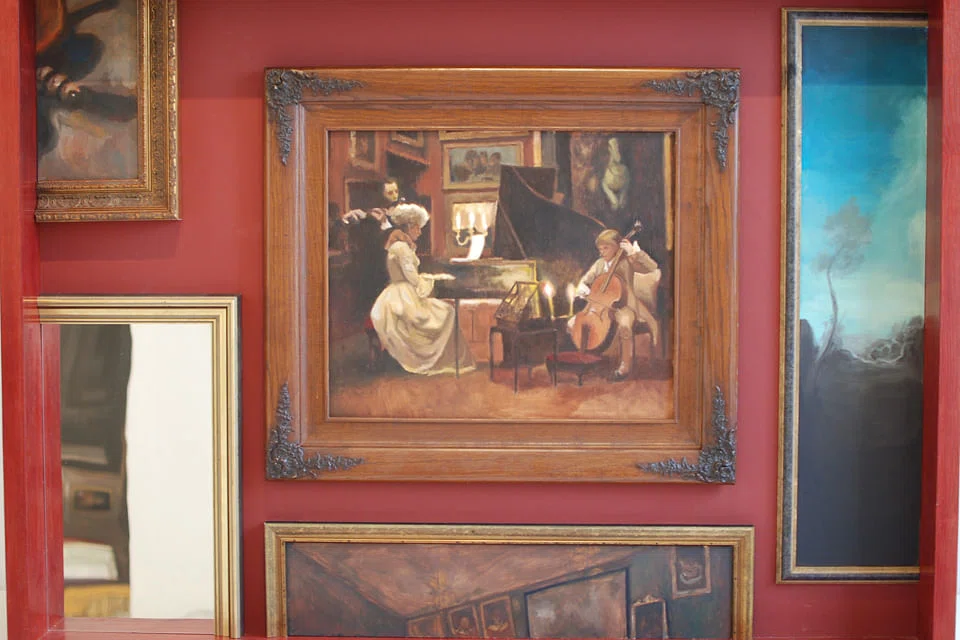
From Lee Wen's iconic Ping-Pong Go Round III to Justin Loke's paintings from the installation The Seven Scenes of Barry Lyndon (2013) inspired by the period film Barry Lyndon by Stanley Kubrick, these works showcase the richness and depth of Singapore's contemporary art practice today.
Arts veteran Lee Wen shares how artists struggled in the past to make a living. "In my time, being an artist professionally was unheard of. It's a true calling. Today, times have changed."
Donna Ong, an installation artist for 10 years, is grateful for the professional arts scene today, compared to the local arts scene which was largely artist-run in the past.
"Everything was quite DIY. Friends would write text, artists would run festivals and we would support one another. The scene was completely different," she says with a laugh.
But this eclectic nature of contemporary art in Singapore cuts both ways. "While it lacks the depth of an artistic and cultural sensibility that goes back hundreds of years, artists here are afforded the opportunity of the beginner's mind, and to see as never before," Chia muses.
Being a relatively young player on the global art stage also brings challenges. "A lot of the time, what local artists are doing isn't taken as global standards, and we are lacking in our own self-confidence," Lee Wen observes.
He urges the audience to see talent in our own backyard, rather than a small city-state punching above its weight.
With government funding, artist passion and a sound infrastructure, Singapore is poised to establish itself as a global arts capital.
Perhaps this is what Singapore art is today: a convergence of styles, cultures and themes - expressed not through sweeping political narratives or grand statements but intricate, personal and imaginative storytelling.
"When Singapore has reached a level of maturity, we will have this level of identity," Loke explains.
Share with us your feedback on BT's products and services
TRENDING NOW
KKR founders among investors buying 42% of Peter Lim’s Valencia; club valued at US$1.4 billion

Singapore’s central gas buyer affirms Indonesia’s role as ‘important partner’ amid export review warning

Why the biggest business decision about AI isn’t which model to choose
NEA issues notices to 10 Singapore-based companies, including Wilmar and APP, over haze

