Stay sustainable: Hotels raise their green game
Sustainability initiatives in hotels haven’t evolved significantly in years, but things are changing, thanks to technology and regulations
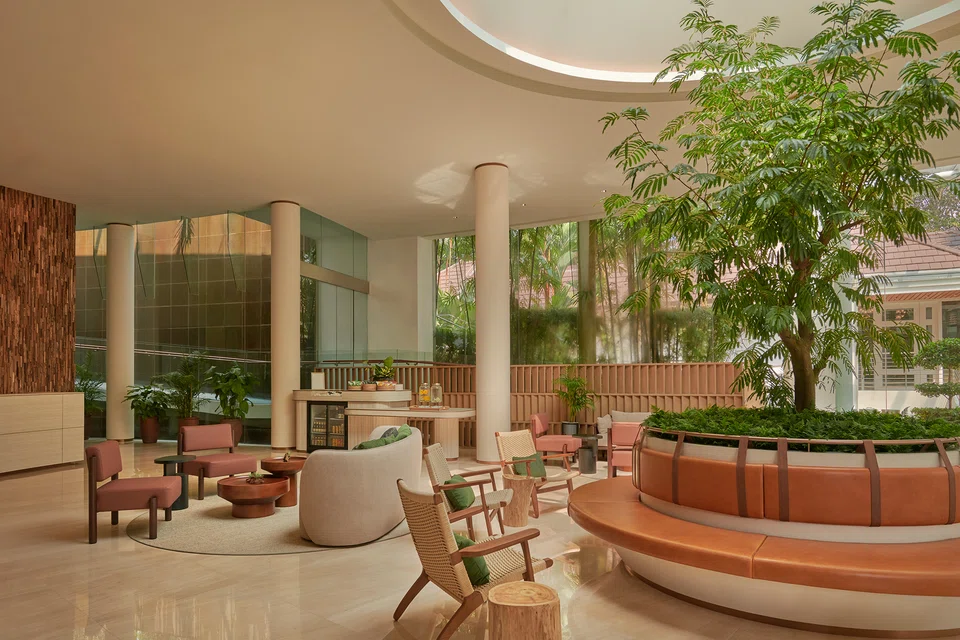
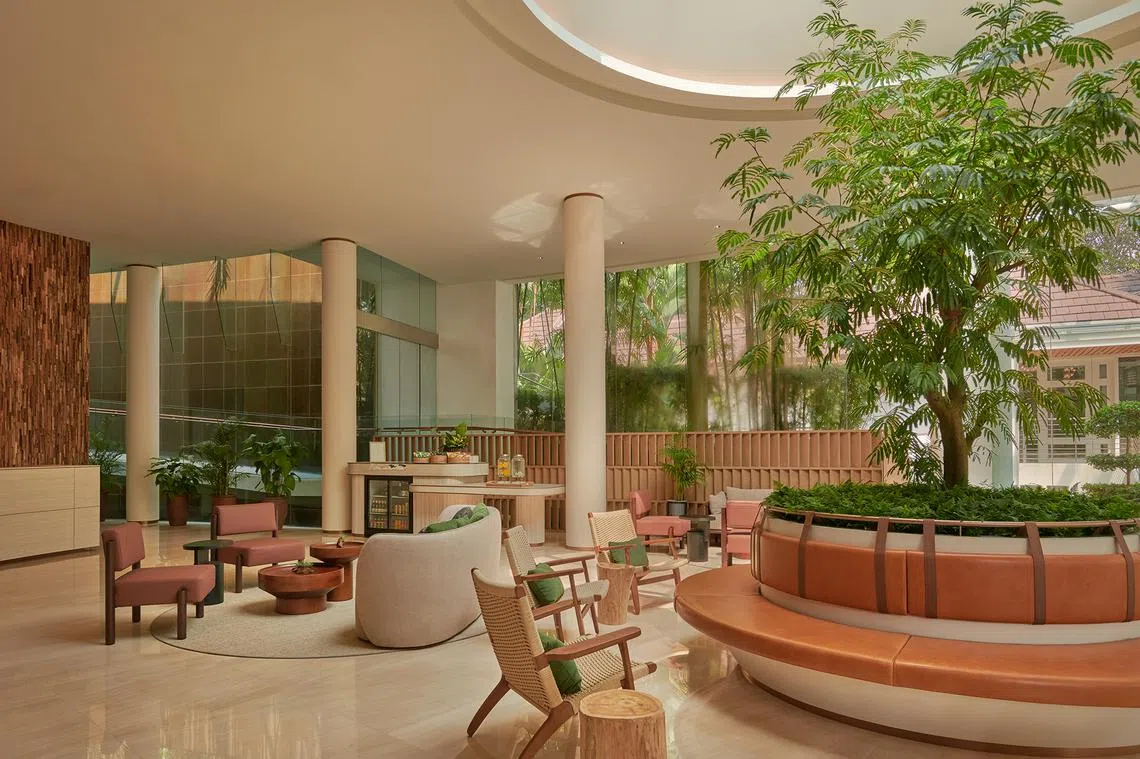
IT IS dusk on Sentosa, and the island’s latest show is about to begin. In the lobby of the newly refreshed Amara Sanctuary resort, guests are gathered round the evening’s star: a four-metre-tall pithecellobium confertum tree that sits under a skylight. As night falls, its feathery foliage begins to fold, like a dancer closing a Japanese fan, signalling the onlookers to whip out their mobile phones to record this curiosity of nature.
The tree is not just putting on a show for rapt guests: it shuts its leaves every night to conserve water and helps purify the air in the area.
It is also symbolic of a shift in how Singapore hotels are thinking about sustainability. Not too long ago, sustainability initiatives were largely limited to superficial measures, like opt-in linen change programmes and the swapping of plastic water bottles for glass ones. But over the past few years, properties have pushed towards integrating more rooted, innovative measures in their infrastructure.
Transformation through technology
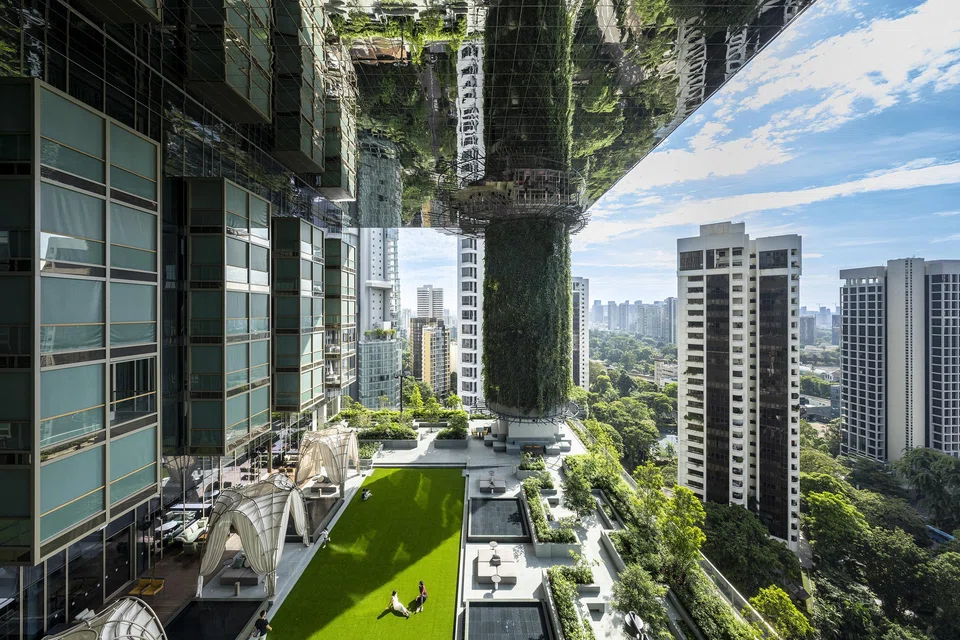
Nowhere is this more obvious than at Pan Pacific Orchard, a year-old architectural landmark purpose-built to global-sustainability specifications.
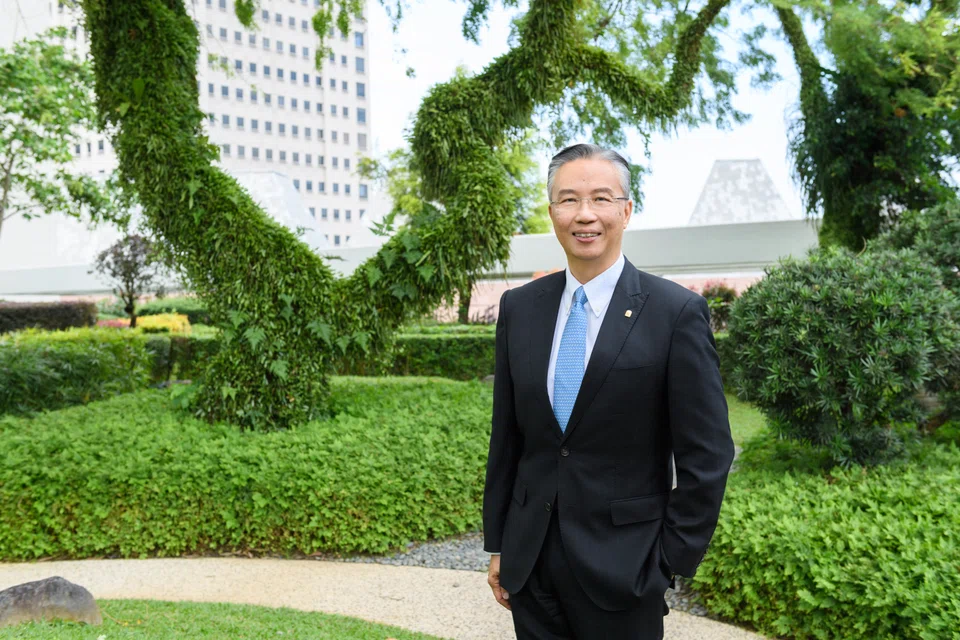
Choe Peng Sum, chief executive officer of Pan Pacific Hotels Group (PPHG), calls the hotel an “opportunity for PPHG to reinforce, visually, its commitment to contributing to more sustainable hospitality in Singapore”.
It is, unarguably, a striking sight.
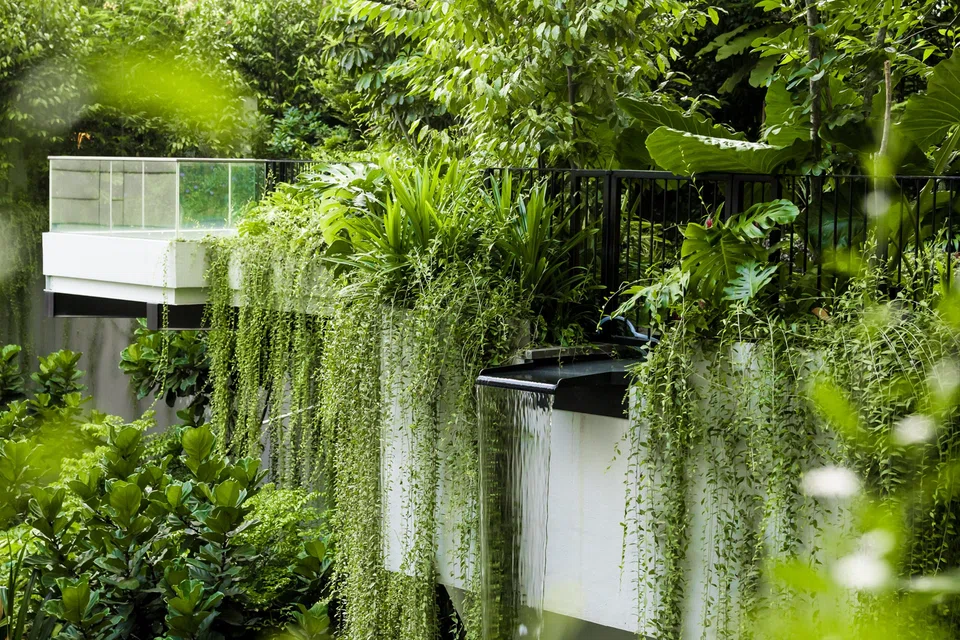
The futuristic 23-storey tower boasts a lushly forested core irrigated by rainwater, which runs from the ground floor to the rooftop and combats heat in the hotel’s premises.
Alongside, a host of sustainable technologies help to considerably reduce the use of energy and water: reflective ceilings that bounce off daylight, sensors that turn off irrigation for the hotel’s 12,000 square metres of greenery when it rains, and a system that draws return air from the hotel’s ballroom to cool corridors.
Nearby, at the newly relaunched Grand Hyatt Singapore, an extensive two-year renovation has incorporated cutting-edge solutions into the 54-year-old grand dame’s bones. These include a trigeneration plant that produces electricity while diverting leftover heat to create energy for laundry and air-conditioning needs, and a bespoke automated water bottling plant that not only eliminates the use of plastic, but caps filled bottles without the need for human intervention – a more hygienic solution.
Then there is the hotel’s waste-removal system, which is so successful it has been adopted by other Hyatt hotels. Developed by director of engineering Clyric Ng and his team, the system uses a powerful vacuum to suck food waste from different parts of the building, saving staff from transporting this manually, a previous pain point. “We were inspired by airplane toilets,” says the former aerospace engineer. The waste is then converted into a nutrient-rich, odourless material that is repurposed as aquaculture and pet feed.
A focus on food waste
As it happens, food wastage is one of the biggest areas of concern for hotels – studies show that hospitality-sector food waste contributes to as much as 12 per cent of the world’s total. This is why many properties are doubling down in this area. Some hotels, including Hilton Singapore Orchard and Westin Singapore, are harnessing artificial intelligence in tools that track and measure the types and quantities of food being discarded in their restaurants, so that menus can be calibrated to accommodate guests’ tastes and to reduce leftovers.
Other properties such as JW Marriott Singapore South Beach are using high-tech food digesters to quickly convert food waste into liquid, which dramatically cuts down the volume of waste sent to landfill. This is especially crucial in Singapore, where Semakau – the country’s only landfill – is projected to run out of space 10 years ahead of schedule at the current rate waste is being generated.
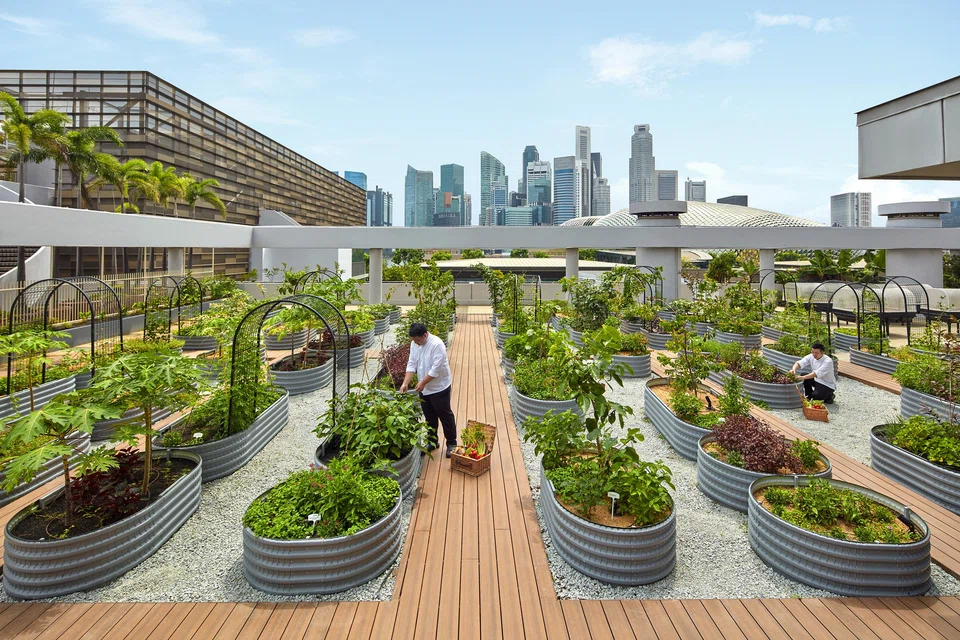
Disposal processes aside, hotels are acquiring food in more environmentally friendly ways. At PARKROYAL COLLECTION Marina Bay, Fairmont Singapore and Swissotel the Stamford, in-house farms are sustainably supplying produce to the hotels’ eateries – a change that gets around the need to transport these ingredients, thereby potentially reducing carbon emissions and facilitating more water recycling.
Motivations for change
Why has it taken time to go all in? The thing about eco implementations and certifications is that they can be eye-wateringly costly, even with the support of government grants that allow for prototyping and experimentation. The process is especially challenging for hotels located in older buildings, given that a “green” transformation would take an inside-out overhaul.
PPHG’s Choe says: “These initiatives don’t come cheap, but these days, it is the cost of doing business, especially in our industry.” The tipping point has been the regulatory frameworks implemented in recent years, such as the 2016 Paris Agreement, and collective targets such as the Hotel Sustainability Road Map, launched in 2022 by the Singapore Hotel Association (SHA).
The SHA has 167 member hotels in Singapore, which work towards advancing sustainable growth and hospitality excellence. Its president Kenneth Li says the industry is on track to achieve its two main road map goals. One is to encourage 60 per cent of Singapore hotels to attain internationally recognised sustainability certification by next year, and the other, to have all of them reduce emissions by 2030.
Li says: “As of August 2023, at least 35 hotels – representing about a quarter of our hotel room inventory – had either obtained or embarked on efforts to obtain certification.” SHA will give an update on the numbers later this year.
Evolving demands by leisure and business travellers are also playing a part in motivating hotels to become more sustainable. A YouGov survey from April this year found that more than half of travellers in the Asia-Pacific – more than in any other region – are willing to pay more to stay at an environmentally sustainable hotel versus a regular one.
Amara Sanctuary Sentosa’s general manager, Paul Sanpawichu, says: “Sustainability has been a key topic for the hospitality industry in the past years. Travellers today are consciously opting to stay in hotels that prioritise eco-friendly and socially responsible practices.”
A July 2024 report by Marriott International’s The Luxury Group on the preferences of affluent Asia-Pacific travellers noted that more travellers are now concerned about how hotels approach sustainability. Of those surveyed, 43 per cent said they want hotel restaurants to offer locally sourced food; 35 per cent expect effective management of food waste.
Looking ahead
Yet, even with hotels’ increasing commitment to become more environmentally friendly, the introduction of mandates and the growing demand for sustainable stays, much remains to be done.
For one thing, the industry lacks a single, credible way to gauge the effectiveness of its efforts. And greenwashing is still an issue, which breeds scepticism among consumers about endeavours by hotels that are genuinely dedicated to the cause, says Choe.
The cost of innovation continues to be prohibitive for some, too. Even if properties do have the funds to try out new solutions, without the right resources in place, they often find it difficult to decide which to implement, notes Grand Hyatt Singapore’s Ng.
“The hospitality industry struggles with identifying suitable solutions for operational challenges because many vendors offer off-the-shelf products that may not fit every hotel’s unique needs,” he says. “(And) many hotels only have a small group of decision-makers involved in finding solutions, whereas a comprehensive team is needed for research, prototyping and testing.”
But there is hope on the horizon. Now more than ever, hotels have a shot at overcoming these hurdles, thanks to one mighty ground-up shift.
Ng says: “In the past, if you asked people to carry out sustainability initiatives, they would think they’re being ‘arrowed’. Now, it’s different. People have witnessed the tangible benefits of past initiatives, and there’s a real passion.”
Decoding Asia newsletter: your guide to navigating Asia in a new global order. Sign up here to get Decoding Asia newsletter. Delivered to your inbox. Free.
Share with us your feedback on BT's products and services
TRENDING NOW
Temasek’s Wan Chee Foong to helm PIL, Lars Kastrup to be board adviser
Chagee, Mixue and Luckin won the market. Sustaining their edge is the harder part
He built the Vingroup empire. Now South-east Asia’s richest man is handing some key roles to his sons
One-third of Singapore-listed firms at risk in severe AI downturn: MAS