STPI: From pulp dreams to prominence
In a new show, the creative workshop and art gallery charts its journey from a print institution to an internationally renowned creative workshop

Helmi Yusof
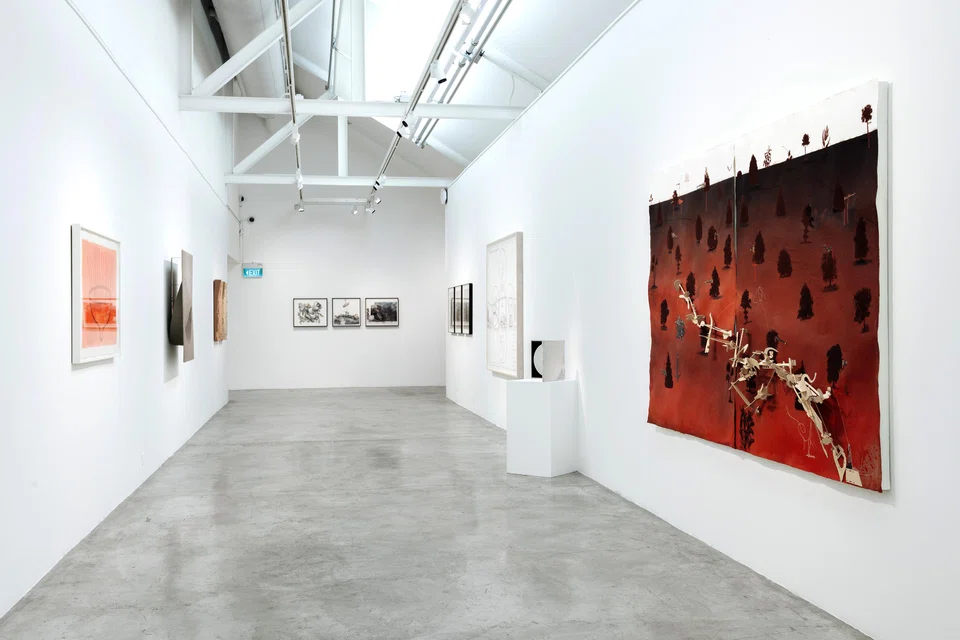
IT IS hard to believe that STPI is 21 years old – that temporal marker which, for humans, marks full-fledged adulthood.
When the creative workshop and art gallery was launched in 2002, it was almost immediately beset by problems: Its full-time director, legendary American printmaker Kenneth Tyler – who had lent his name to what was then called the Singapore Tyler Print Institute – stepped down after only four months at the helm, citing “operational disagreements”.
The Singapore Art Museum’s acquisition of over 1,500 works from Tyler’s personal collection of prints, rumoured to have cost around S$10 million, drew outrage from the local arts community. Its members felt that the collection, comprising mostly Western works, prioritised foreign works over local ones, and that the money should have instead been used to help local artists.
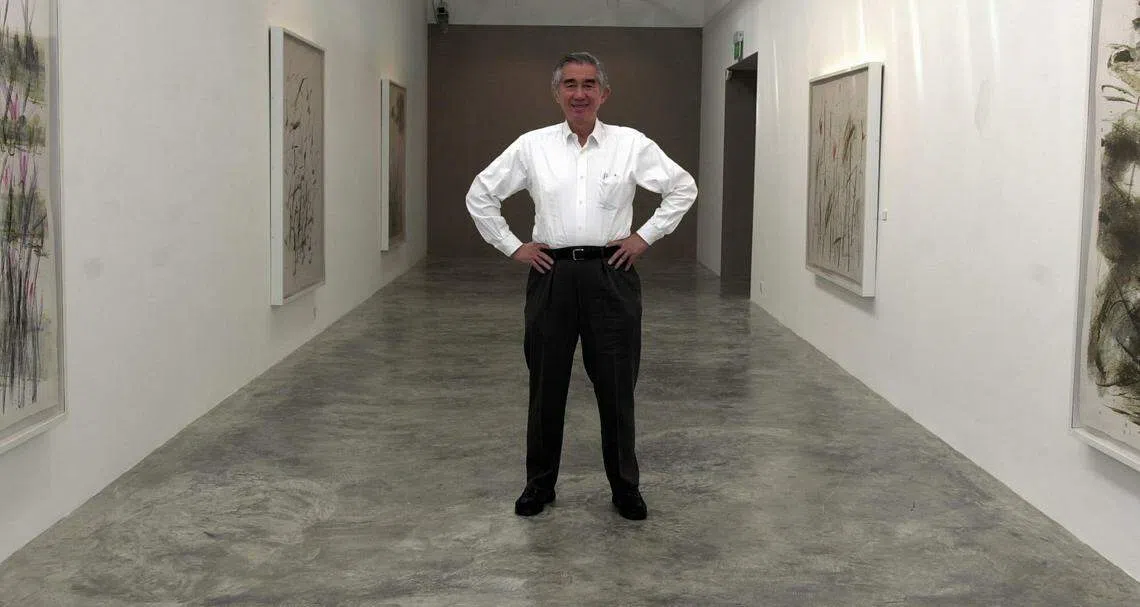
National Arts Council’s then-chairman Liu Thai Ker found himself having to navigate the barrage of criticism. He was STPI’s founding chairman, and the man who persuaded Tyler to set up shop here, and the Singapore government and institutions to fund its S$16 million set-up. But Liu genuinely believed that STPI could become a world-class institution that would put Singapore on the global art map.
Going big
Today, STPI has emerged as Singapore’s pre-eminent international art institution, marked by its distinguished collaboration with top museums and participation in renowned art fairs, including Frieze London and Art Basel in Basel, Miami Beach and Hong Kong. It stands as the sole Singaporean gallery to meet the exacting standards for inclusion in all these prestigious fairs.
Its roster of artists features the world’s best, such as Rirkrit Tiravanija, Do Ho Suh, Dinh Q Le, Geraldine Javier, Eko Nugroho, Ashley Bickerton and Richard Deacon; local luminaries include Chua Ek Kay, Goh Beng Kwan, Jane Lee, Suzann Victor, Charles Lim and Heman Chong.
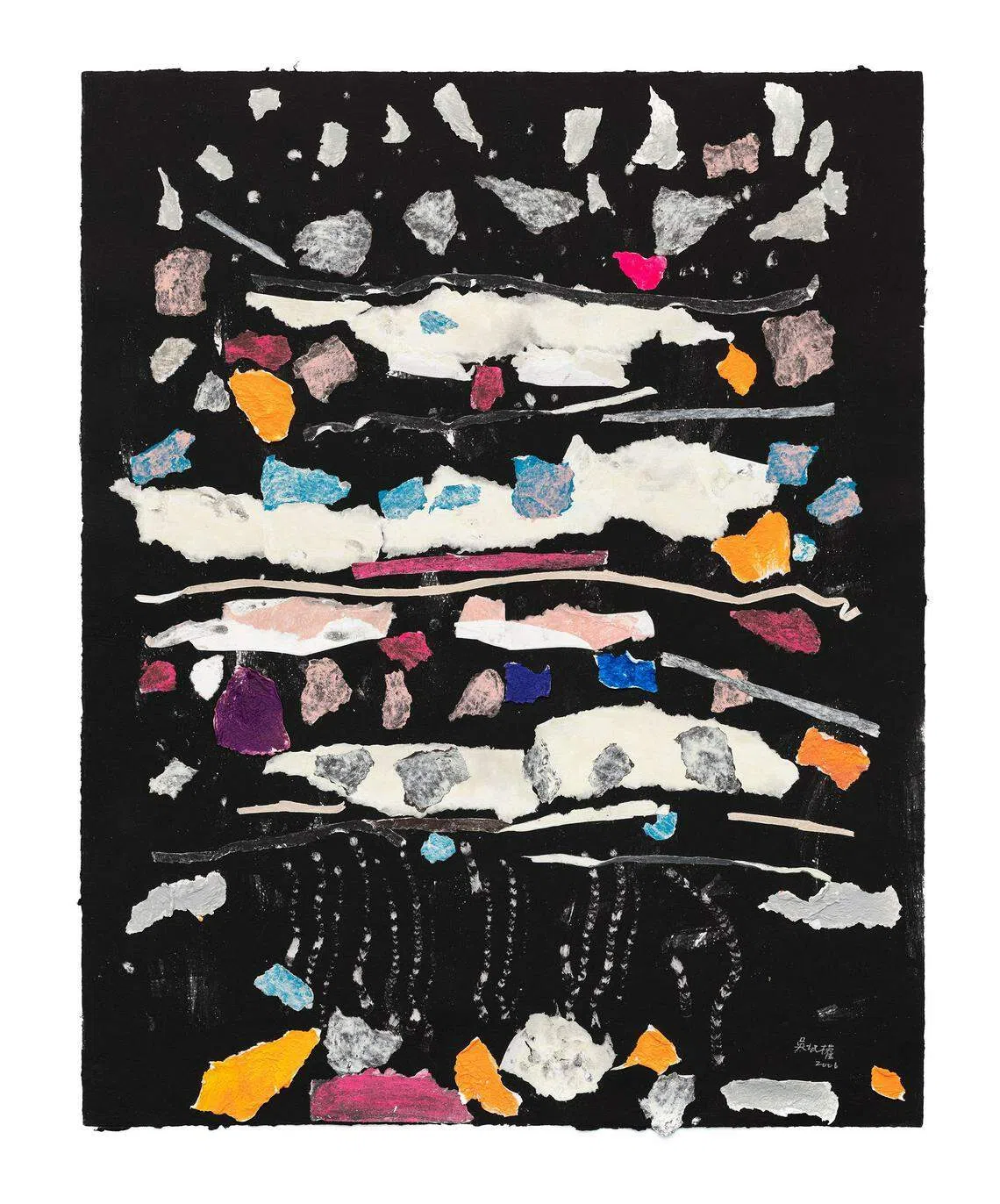
Adroit manoeuvring, industrial-strength foresight and a dose of luck have enabled STPI to dodge several bullets over the years, says STPI’s executive director Emi Eu. “Having an international outlook, despite being a fully Singaporean gallery, has ultimately helped retain this space and organisation for 21 years.”
It is no small feat in the cut-throat gallery business.
Artists who have accepted the offer of residency at STPI’s premises have only sung the institution’s praises. They say its skilled production team has always done its best to bring their maverick ideas into fruition, from adapting complex technology to craft uniquely-shaped artworks, to assisting with the research into the artists’ areas of interest.
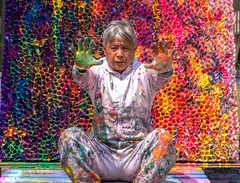
Tiravanija completed not two, but three, residencies at STPI. Qiu Zhijie called the studio team “top-notch”. In a new anniversary book on STPI titled Unlimited, Pinaree Sanpitak says: “Apart from the world-class facility, the mindset of the STPI team (is)… they never say no.”
A fond look back
STPI’s current exhibition, titled 21 Years: A Story In Multiple Parts, is a fond look back on some of the best works the workshop and gallery has produced over two decades. They begin with Donald Sultan’s Five Blue Flowers With Flocked Centers (2002), a resplendent composition of blue blossoms created from a mosaic of techniques such as stencil, woodcut and flocking, and end with Han Sai Por’s Waiting For… 1 (2022), an intricate laser-cut paper relief adorning a screen-printed parchment, depicting a grove of bare trees.
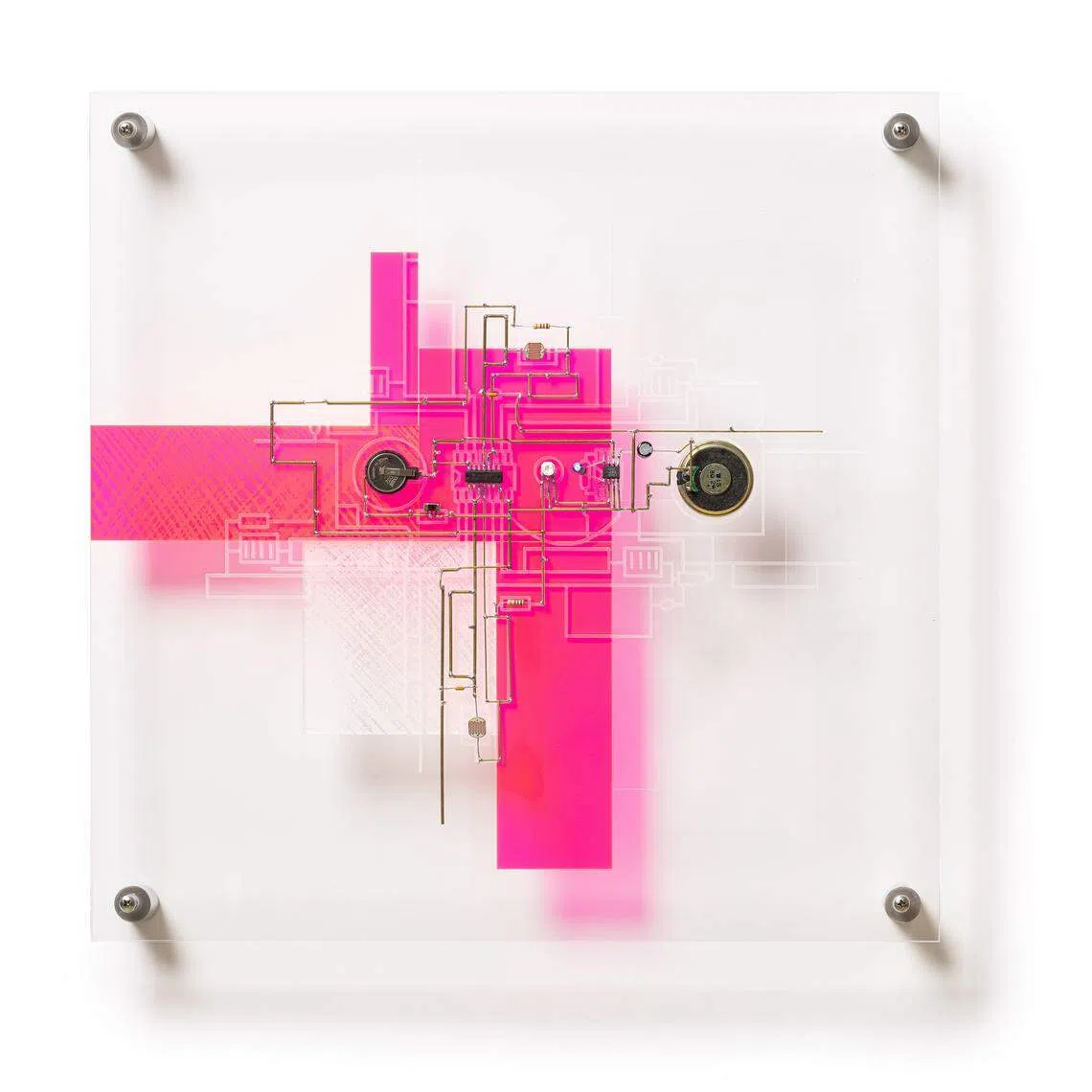
In between these two are dozens of works boasting a tapestry of materials and mediums, underscoring a departure from STPI’s initial focus on paper and print. Haegue Yang’s “spice prints” are an inventive fusion of paper and aromatic spices such as pepper, chilli, cinnamon and turmeric. Genevieve Chua’s wall sculptures, crafted from the unlikely marriage of cement and paper, defy traditional expectations. Zul Mahmod’s functioning sound installations are sleek curios that can be displayed flat on your wall.
While not every work is attractive at first glance, each heaves with a spirit of innovation and daring – a testament to STPI’s willingness to work with any medium and material the artist requires. Looking back, Eu says: “Except for the Covid years, these past 21 years have gone by really quickly. Despite all the challenges we’ve weathered… we’re ready for the next 21.”
21 Years: A Story In Multiple Parts runs at STPI from now till Oct 15.
Decoding Asia newsletter: your guide to navigating Asia in a new global order. Sign up here to get Decoding Asia newsletter. Delivered to your inbox. Free.
Copyright SPH Media. All rights reserved.