Dries Van Noten’s next act is bigger than fashion
No longer designing collections, he’s now curating a world of craft at the Fondazione Dries Van Noten

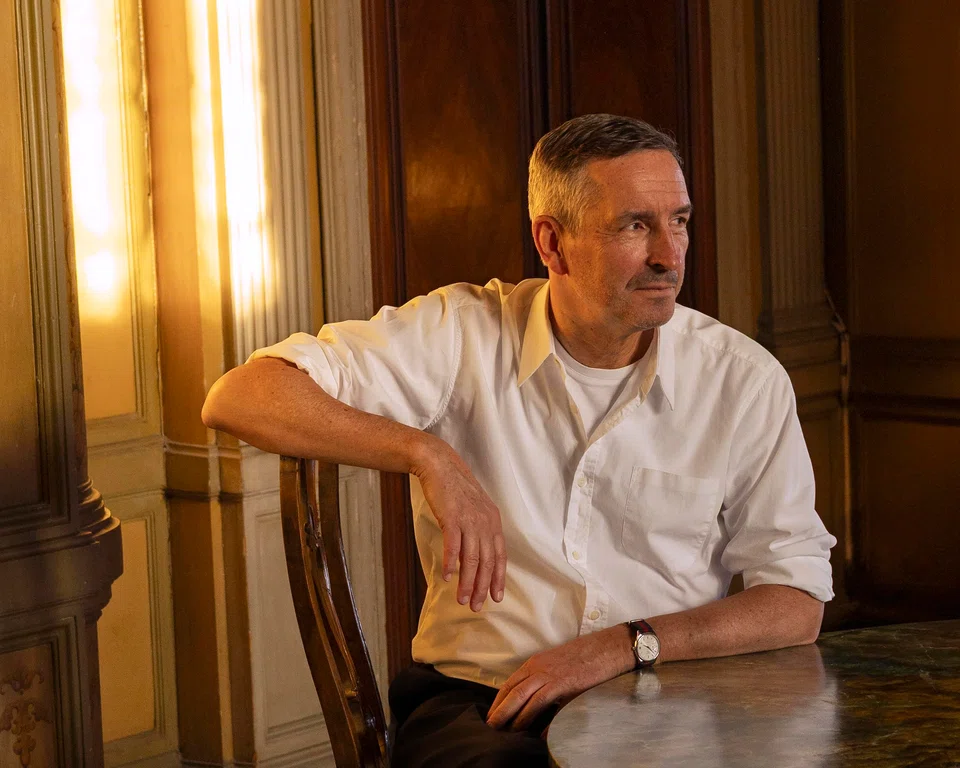
[VENICE] For a foundation that carries his own name, Dries Van Noten is surprisingly determined not to make it about himself.
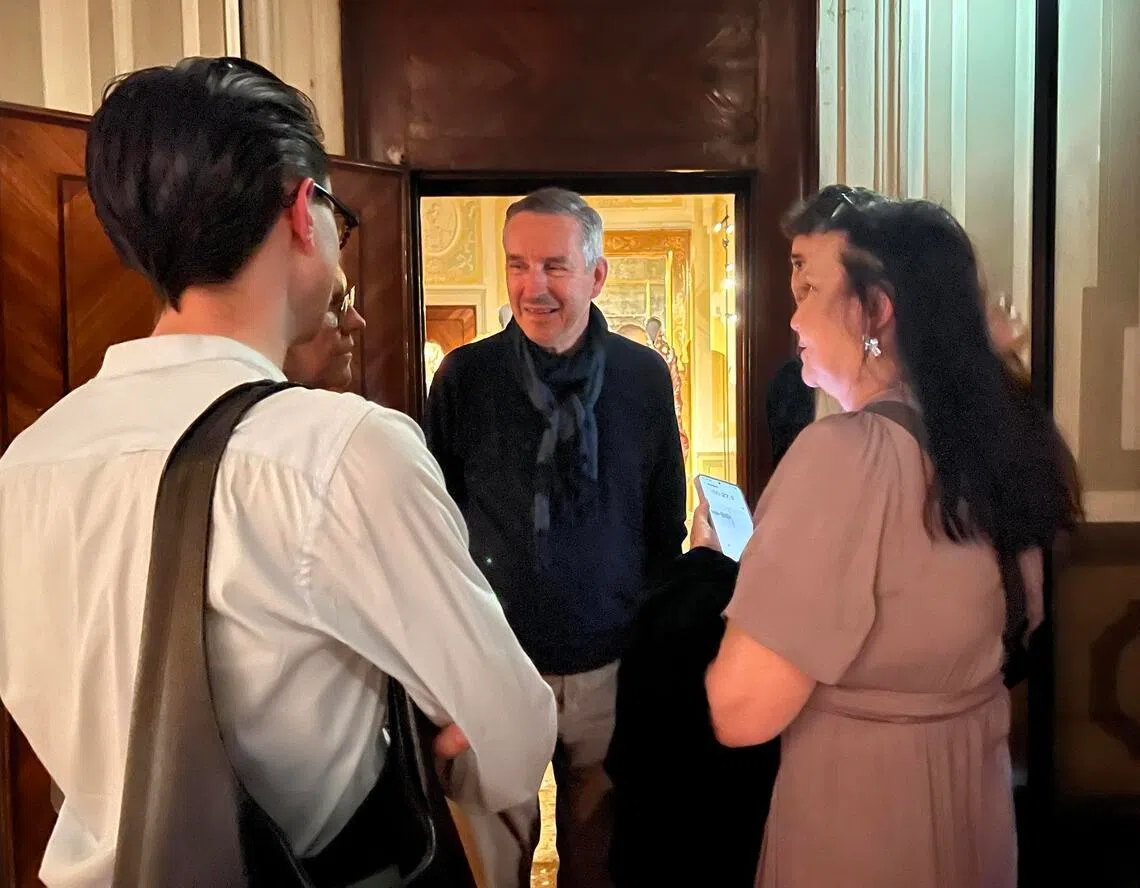
Asked whether any of his own pieces are on display at the newly opened Fondazione Dries Van Noten, the celebrated Belgian designer answers with polite firmness: “No, my work these days is not about promoting the fashion brand.
“I’m more interested in building a foundation that showcases pieces that sit between art and craft... For me, know-how and passion are what give an object its life.”
Van Noten stepped down as creative director of his fashion house in 2024, after 38 years spent building one of fashion’s most quietly influential labels.
At 68, he could easily have turned the new foundation into a monument to himself, filling a 15th-century Italian palace with the colours, patterns and textiles that reference his long career.
Instead, Palazzo Pisani Moretta – which he purchased in 2025 for an estimated 36 million euros (S$53.5 million) – has been turned into a showcase for craft, collecting and creative obsession.
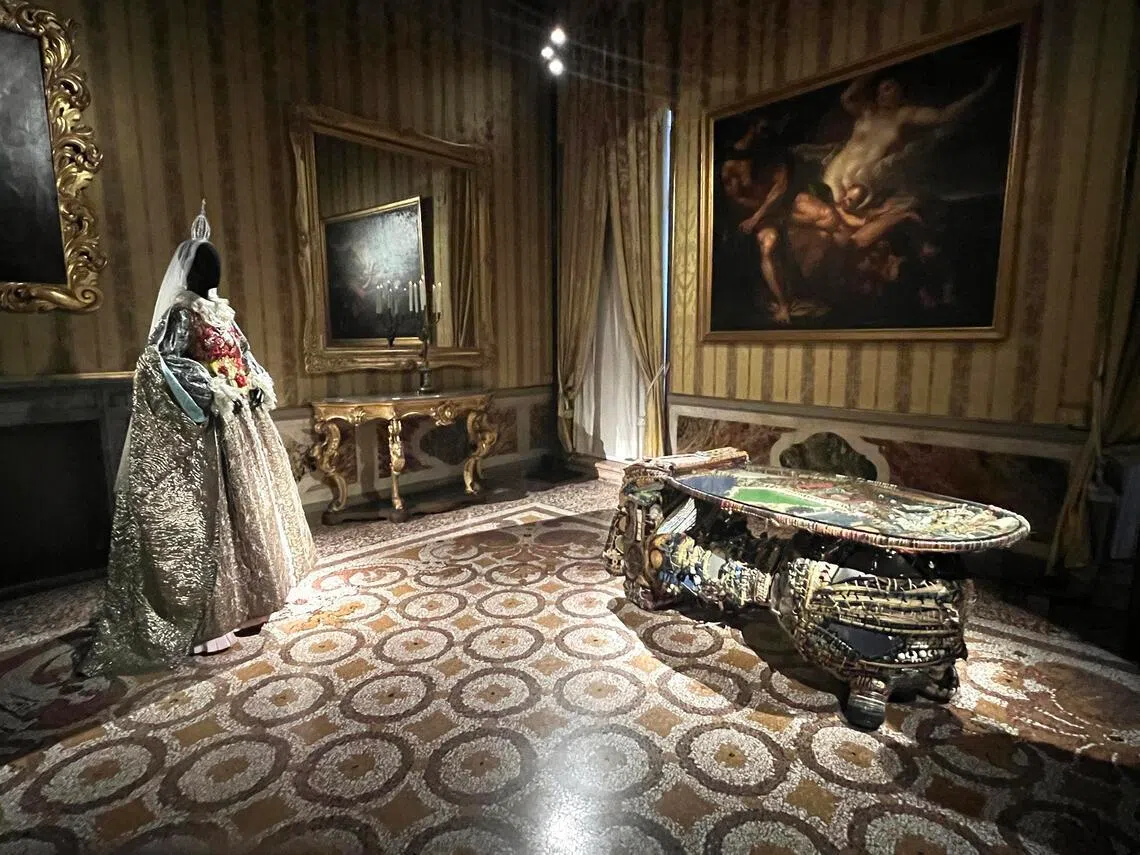
Its opening exhibition brings together figures from fashion, including Christian Lacroix and Rei Kawakubo of Comme des Garcons, with artists and makers such as furniture designer Joris Laarman, photographer Steven Shearer and sculptor Peter Buggenhout.
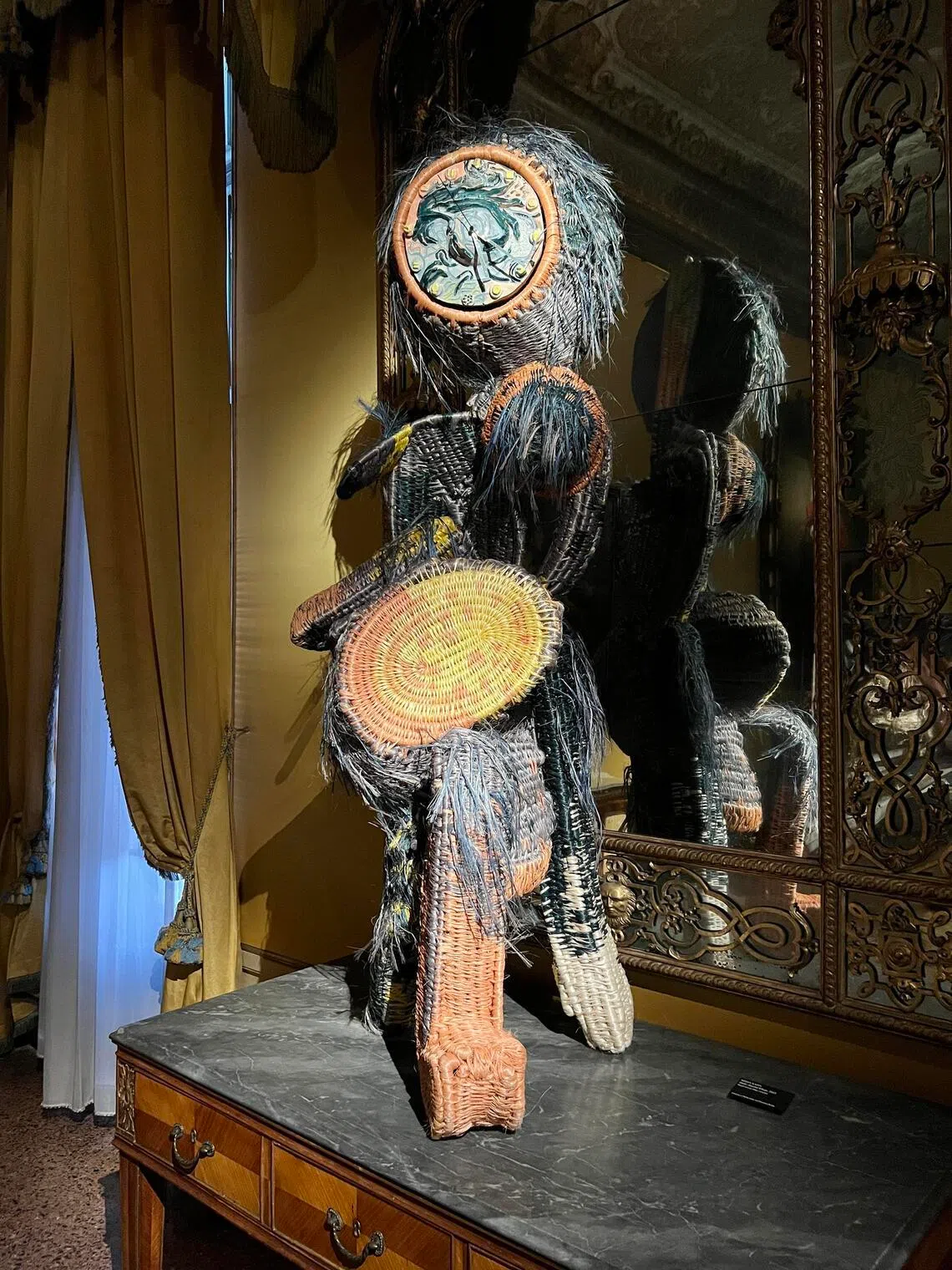
Misha Kahn is here too – the American designer whose flamboyant sculptures viewers may remember from The Devil Wears Prada 2, where they appear in an over-the-top Milan hotel room occupied by Meryl Streep’s character.
“I wanted to create a world separate from what we know,” Van Noten says.


Luxury’s expansion
To be clear, the Fondazione Dries Van Noten is not formally an extension of the fashion brand, which is owned by fashion conglomerate Puig and now run by creative director Julian Krausner.
But in today’s luxury world, such separations are never that simple. A foundation carrying Van Noten’s name inevitably keeps his sensibility visible and, by association, keeps the world around the brand alive.
It also arrives at a moment when luxury has been expanding far beyond the wardrobe.
Fashion’s biggest names no longer want to live only in boutiques or on bodies. They want to occupy museums, hotels, restaurants, spas, private residences, art fairs and cultural districts.
Prada has Fondazione Prada in Venice and Milan. Louis Vuitton has Fondation Louis Vuitton in Paris and Espace Louis Vuitton in top cities. Dior has spas. Bulgari, Versace, Armani, Ferragamo and Fendi all have hotels.
Across the industry, luxury brands are increasingly building not just products but entire cultural environments. Luxury is no longer just selling things; it is building worlds.
Seen in that context, Van Noten’s foundation belongs to a much larger movement. But it also takes a more personal route.
Where some brands use hospitality and culture to amplify spectacle – see Versace’s Dubai and Macau’s hotels for maximalist brand immersion – Van Noten uses the foundation to slow things down.
He is creating a place where fashion, furniture, jewellery, photography, glass, ceramics, architecture and art can be appreciated through the shared language of material and gesture.
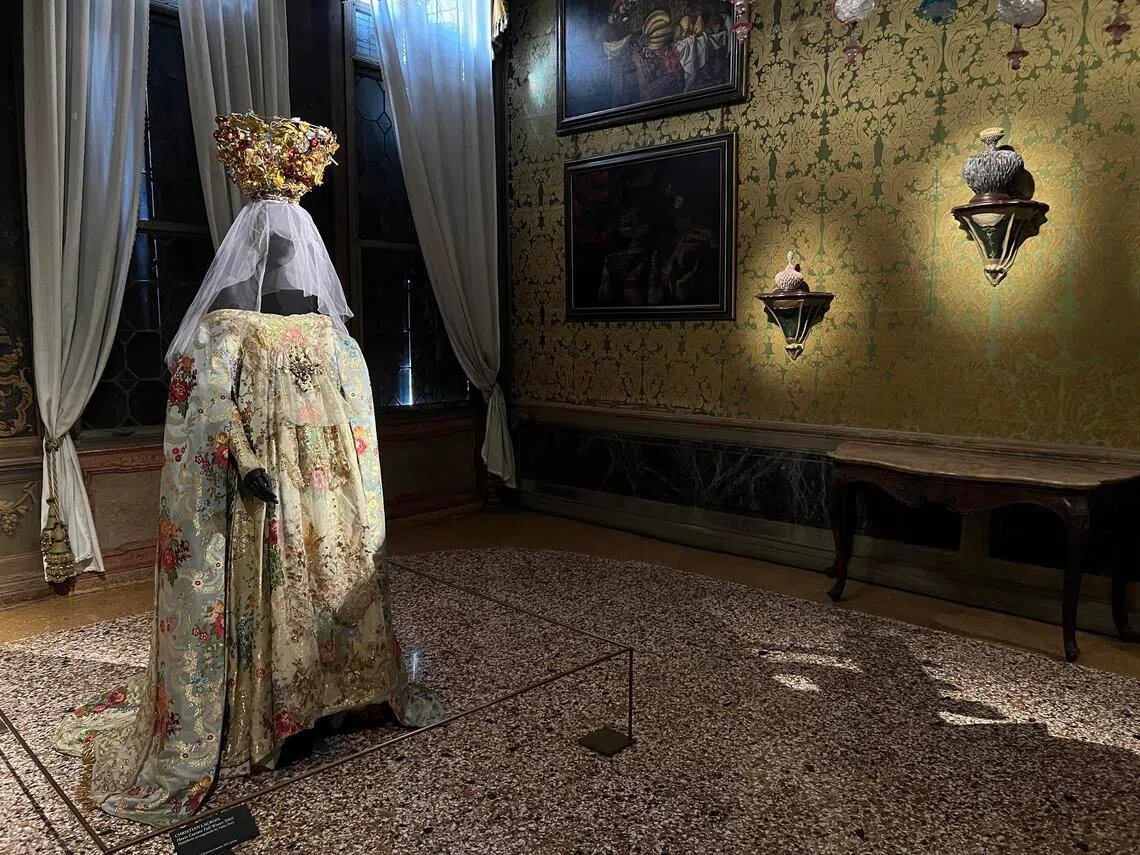
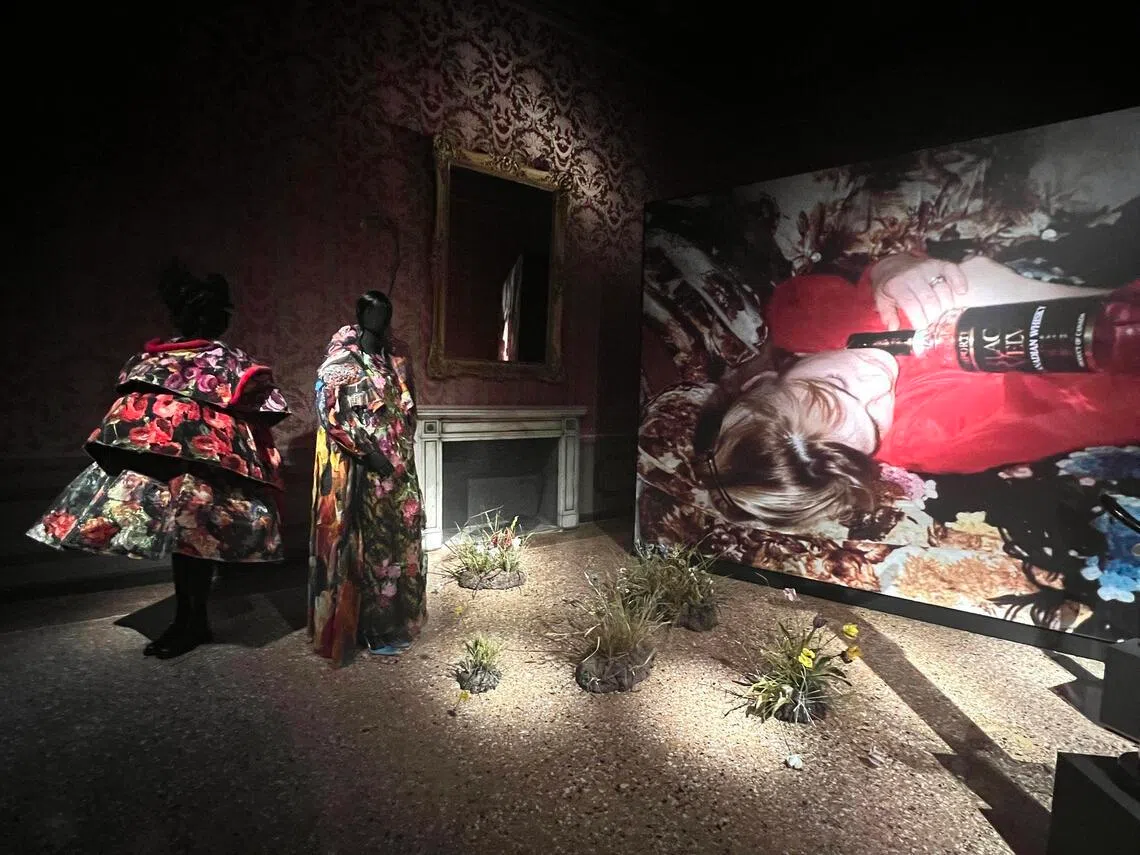
His love for Lacroix, for instance, is evident from the dozens of ornate dresses by the French designer on display.
“The Christian Lacroix name was bought last year by the Spanish fashion group Sociedad Textil Lonia. And they are in the process of restoring the Christian Lacroix archives, which were in poor condition,” he says.
“There are 2,000 pieces – 2,000 important pieces – which are being restored piece by piece. We had the opportunity to choose 14 dream pieces that have been arranged across the palazzo to be in dialogue with other works.”
Beyond the Biennale glow
Venice is an apt setting for Van Noten ambition. The city is already one of the world’s great art stages, most visibly through the Biennale which currently hosts artworks from over 100 countries, including Amanda Heng’s massive installation at the Singapore Pavilion.
Venice is also increasingly crowded with private foundations and cultural spaces, such as Fondazione Prada, Pinault Collection’s Palazzo Grassi and Punta della Dogana, the Anish Kapoor Foundation, Berggruen Arts & Culture and other private initiatives – all turning Venice into a dense map of art patrons, foundations and cultural power.
So why add another foundation here?
The answer, for Van Noten and his partner Patrick Vangheluwe, lies in the nature of Venice itself. In an earlier statement, they described Venice as “a city shaped by water and imagination”, where histories overlap and craftsmanship has the power to turn “the ephemeral into the eternal”.
They believe that Venice should not be seen as a static museum, but as “a living, evolving hub where ideas circulate as freely as the tides”.
That phrase gives the project its purpose. In a city often criticised for being overrun by tourism and trapped by its own beauty, the foundation is arguing for Venice as a place where artisanship still matters, from glass and textiles to architecture and decorative arts.
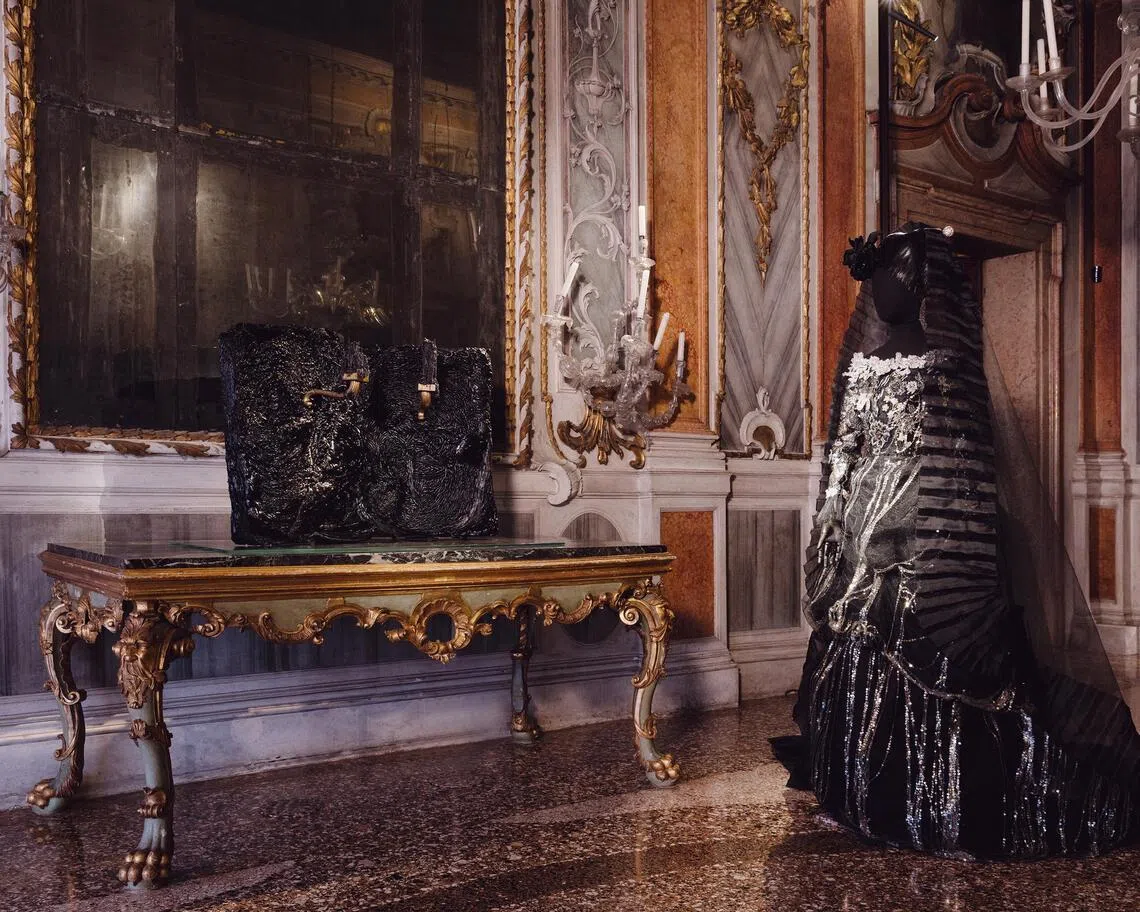
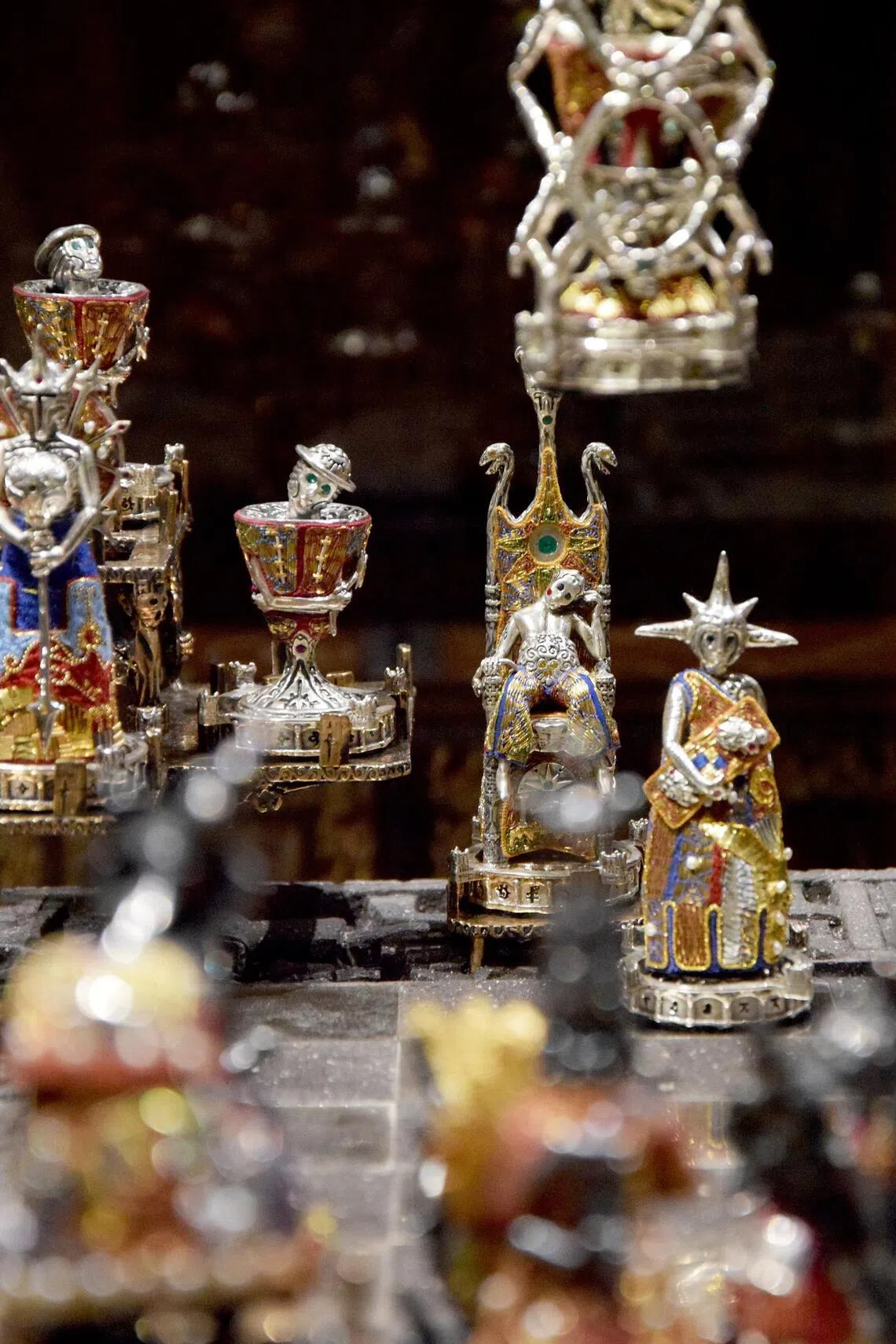
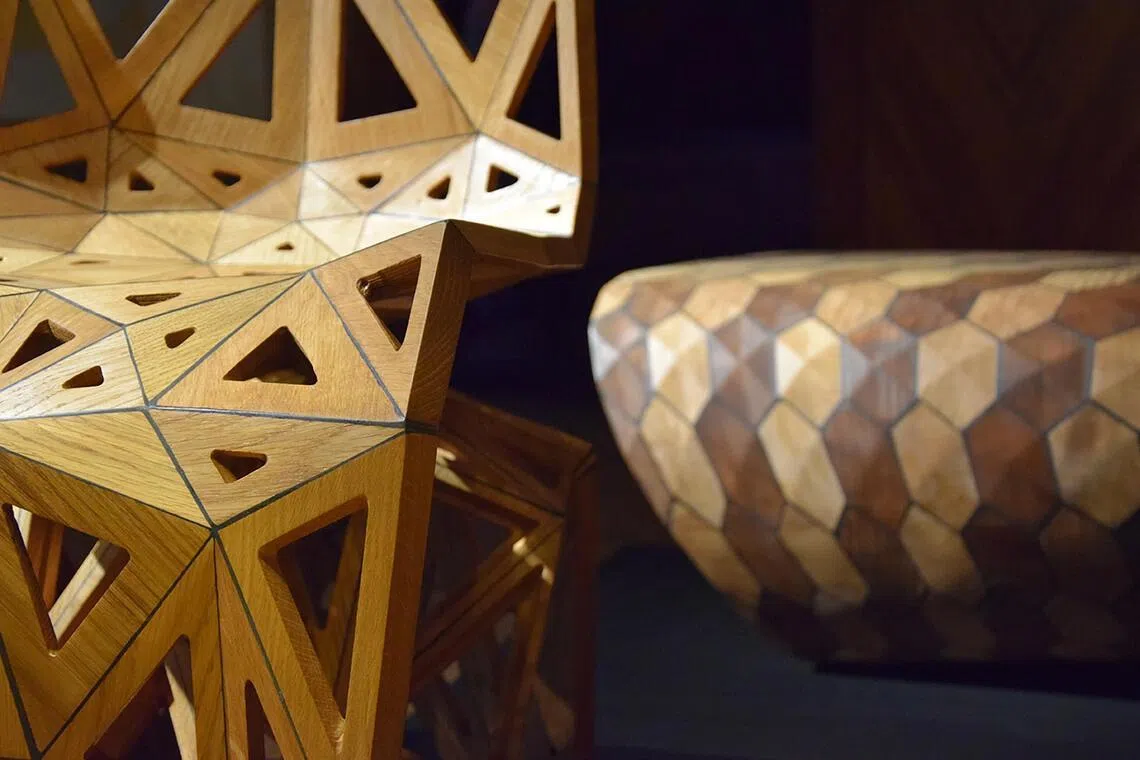
Hence, an exhibition of more than 200 works across 20 rooms, ranging from Lilla Tabasso’s delicate glass flowers and Seongil Choi’s hardened mesh chair to the ornate fashion creations of Ayham Hassan, a Palestinian designer creating ornate dresses in Gaza while under Israeli occupation.
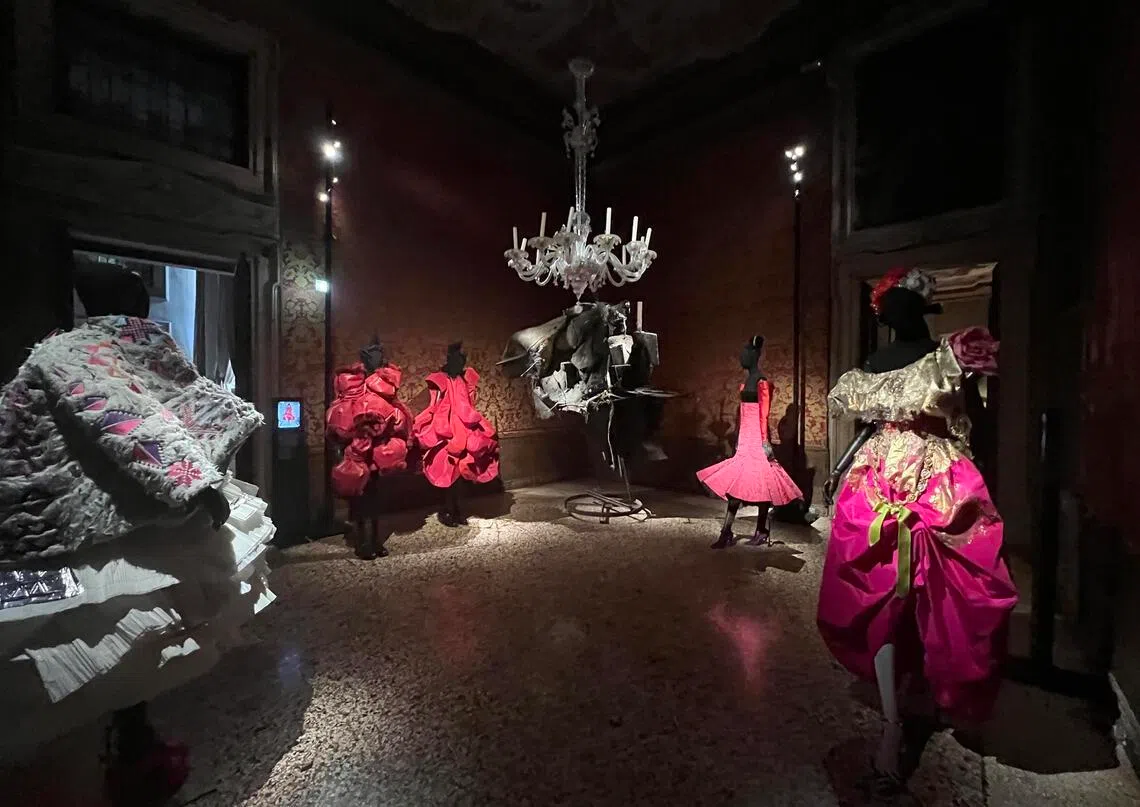
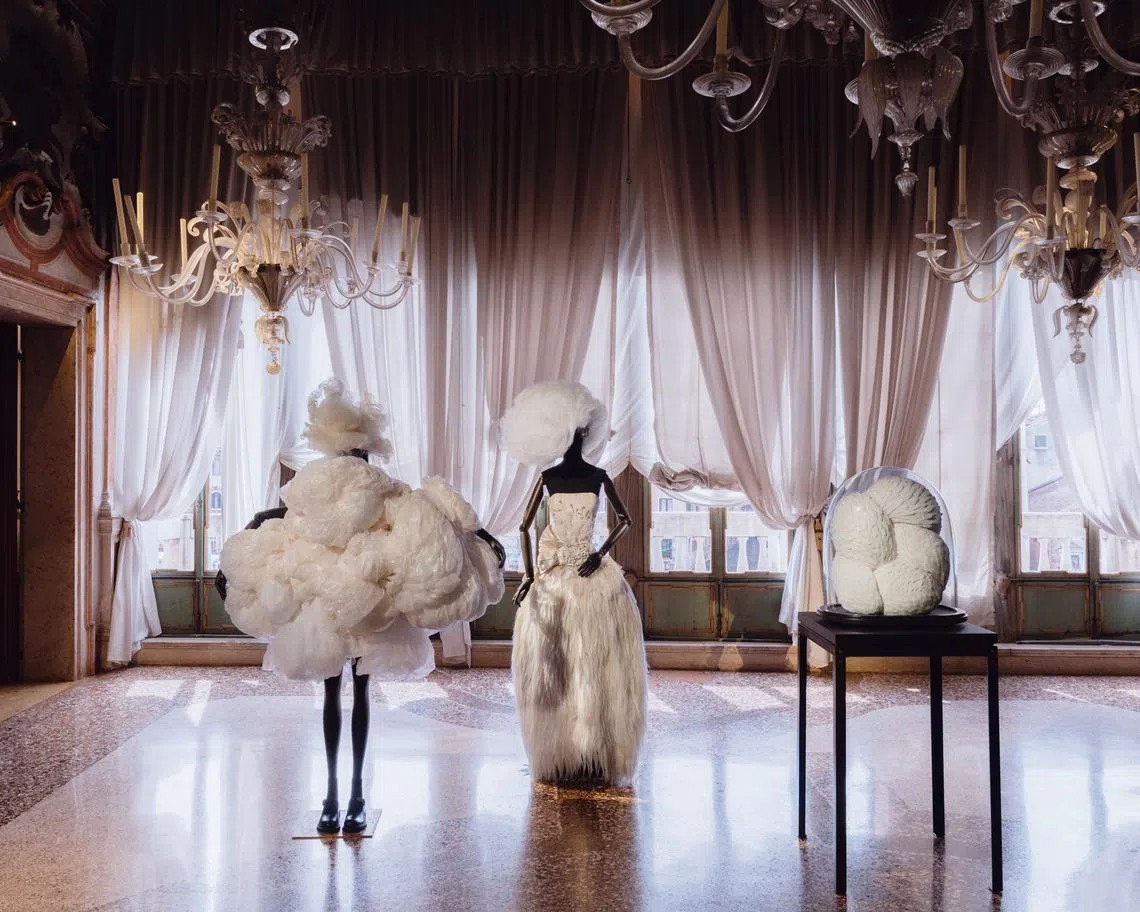
In Van Noten’s imagination, a couture dress sits in conversation with a chair. A photograph may answer a fresco. A piece of jewellery adds fresh notes to a room already full of Venetian architectural beauty.
Palazzo power
The palace itself is part of the experience. Palazzo Pisani Moretta is lavish and theatrical, with frescoes, chandeliers and ornaments.
“Because it was a palace – and not a museum – we really had to create all the technical and climate-control conditions,” Van Noten says. “That is also what makes it such a world apart.”
Inside this “world apart”, fashion has a central role, though it does not dominate.
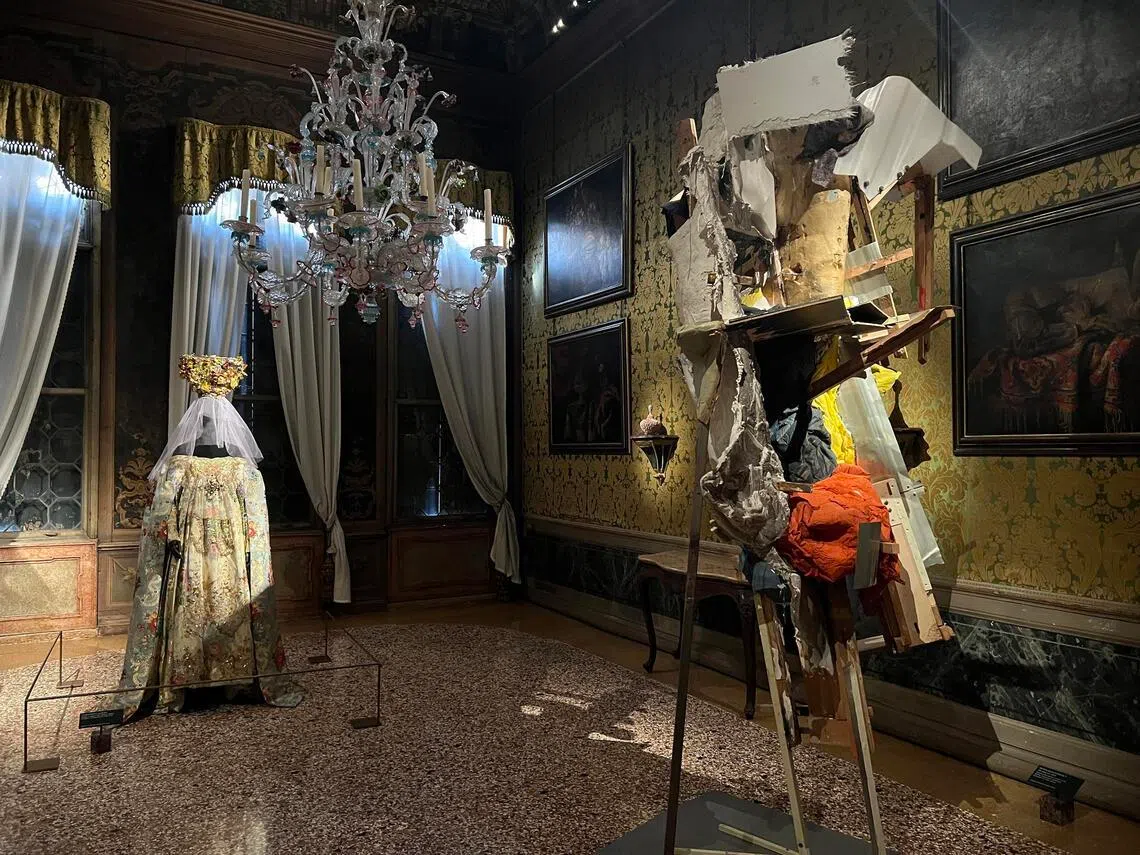
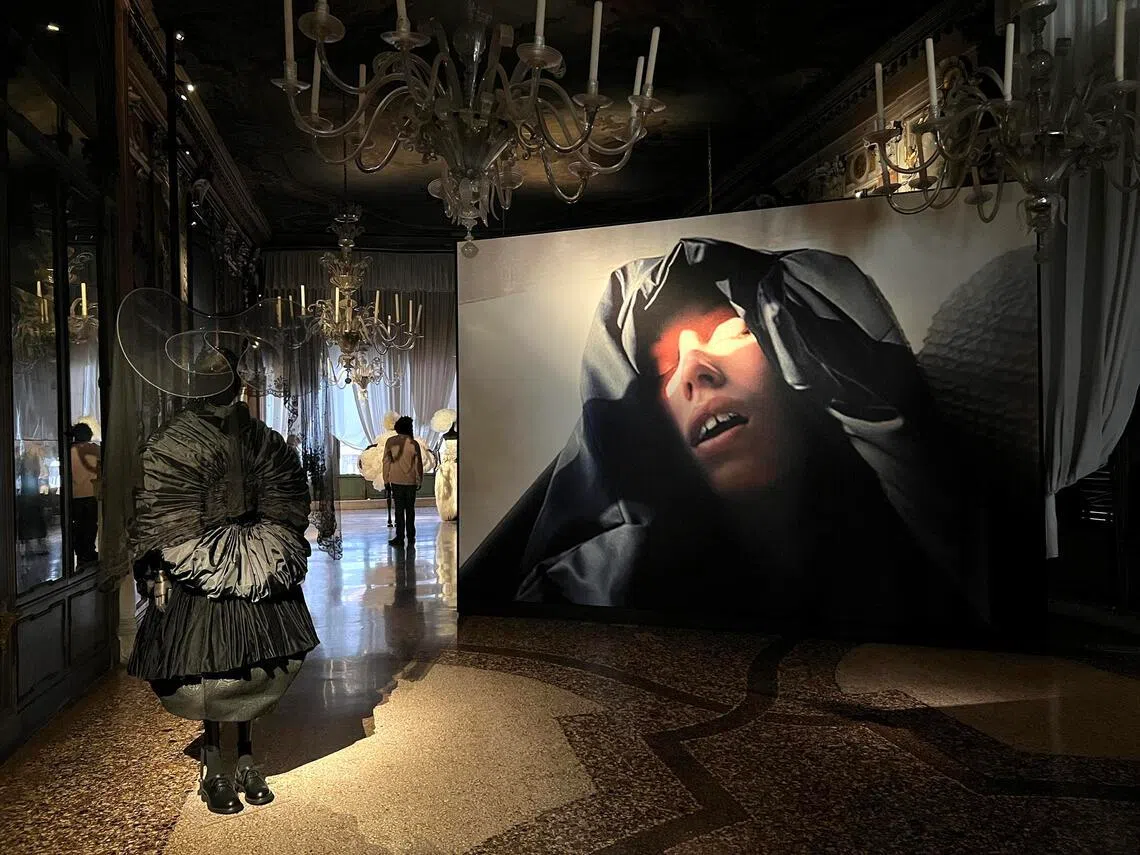
Among the most striking pieces are Christian Lacroix exquisite couture gowns – all spun from fantasy, but grounded in thousands of hours of exacting handwork.
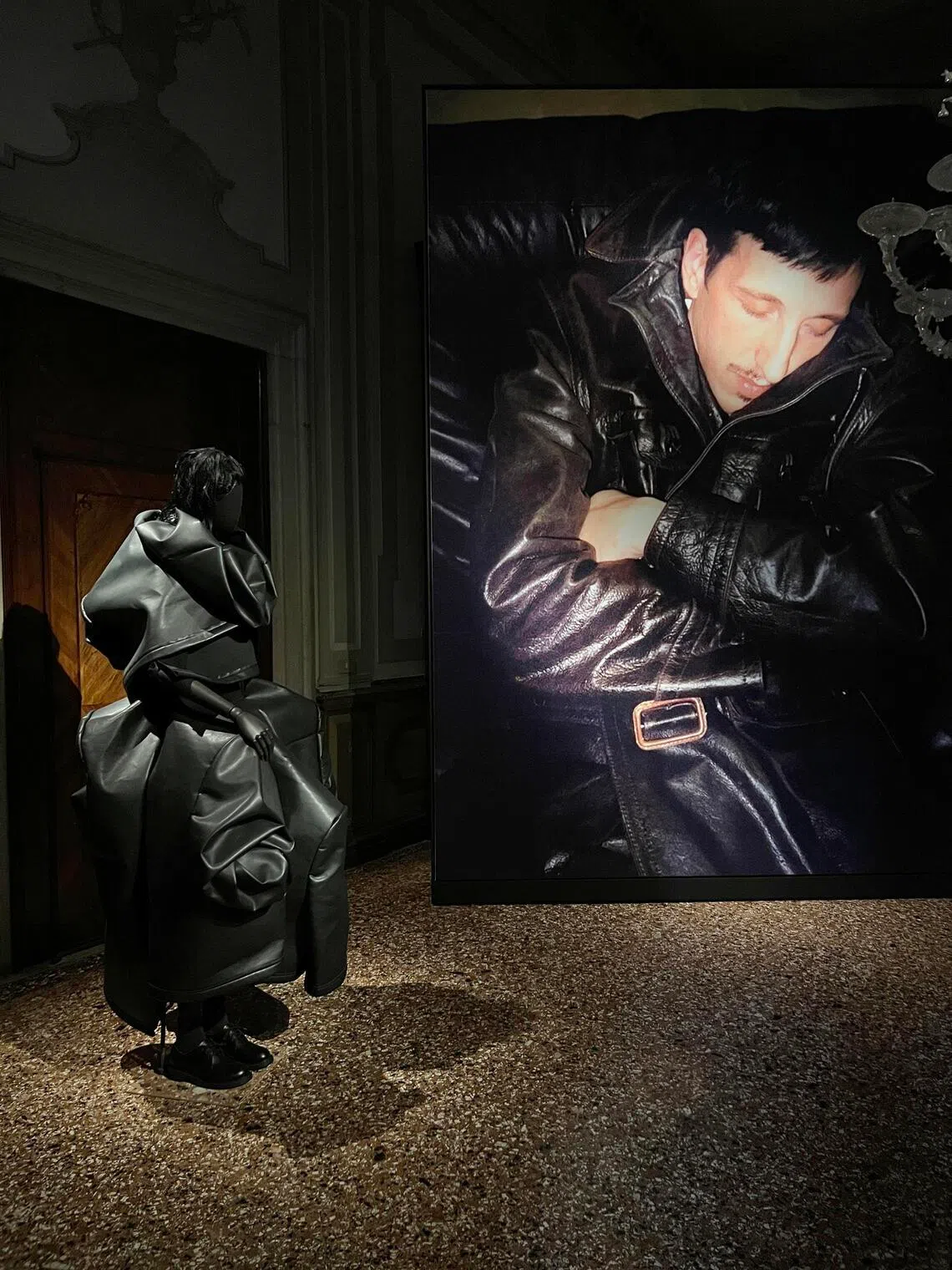
Rei Kawakubo’s Comme des Garcons pieces are cerebral, abstract counterpoints, challenging the body and questioning what beauty is allowed to look like.
Yet, Van Noten’s larger ambition is to make fashion only one part of a wider conversation.
Ceramics by Kaori Kurihara echo the organic forms in the palazzo’s frescoes. Chairs by Wendy Andreu, Nifemi Marcus-Bello and Lionel Jadot are placed in dialogue with the palace’s antique seating. Isaac Monte’s mineral-crystallised vases blur the line between nature and ornament.
This is where Fondazione Dries Van Noten feels distinct from a typical luxury expansion.
It is not a hotel, a restaurant or a branded residence. It is closer to a cultural statement that the Loewe Foundation Craft Prize (now on view at National Gallery Singapore) is also making: that craft is not inferior to art, and that making works by hand is not a nostalgic act but a lively contemporary one.
The current exhibition, titled The Only True Protest Is Beauty, runs from now till Oct 4.
Here are other Venetian showcases linked to the fashion world:
Pinault Collection
Few private collectors are making a bigger statement in Venice right now than Francois Pinault.
The French billionaire, whose Kering group owns fashion houses such as Gucci and Bottega Veneta, is presenting four major contemporary art exhibitions across Palazzo Grassi and Punta della Dogana.
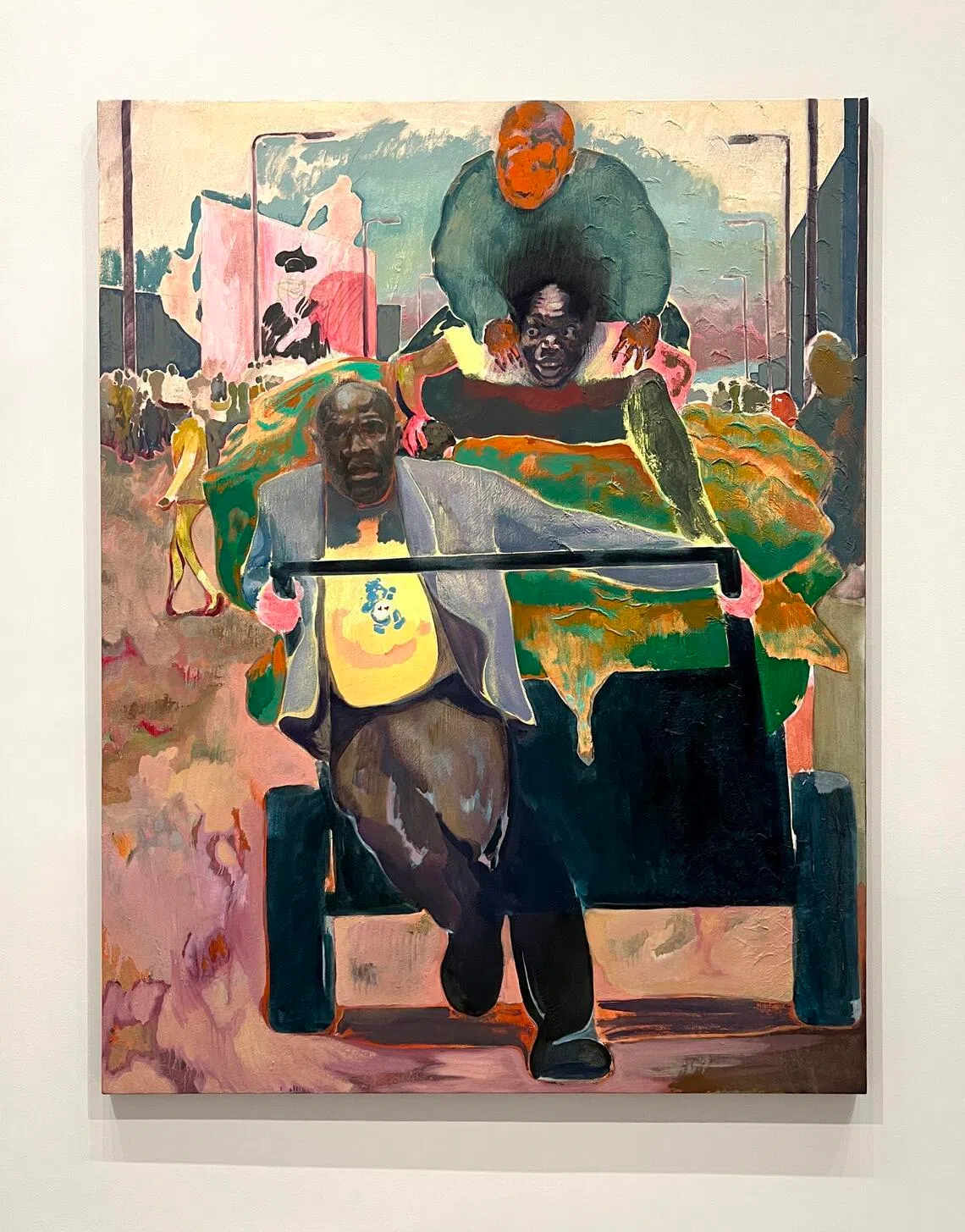
They spotlight some of the most compelling names in contemporary art: Lorna Simpson, Paulo Nazareth, Michael Armitage and Amar Kanwar. Each could easily command a major exhibition on their own, but together they make for a formidable and unmissable showcase.
Fondazione Prada
Prada boldly pairs the works of artists Arthur Jafa and Richard Prince. Both American artists are known for taking images from everyday culture – films, music, magazines, the Internet and the news – and turning them into art.
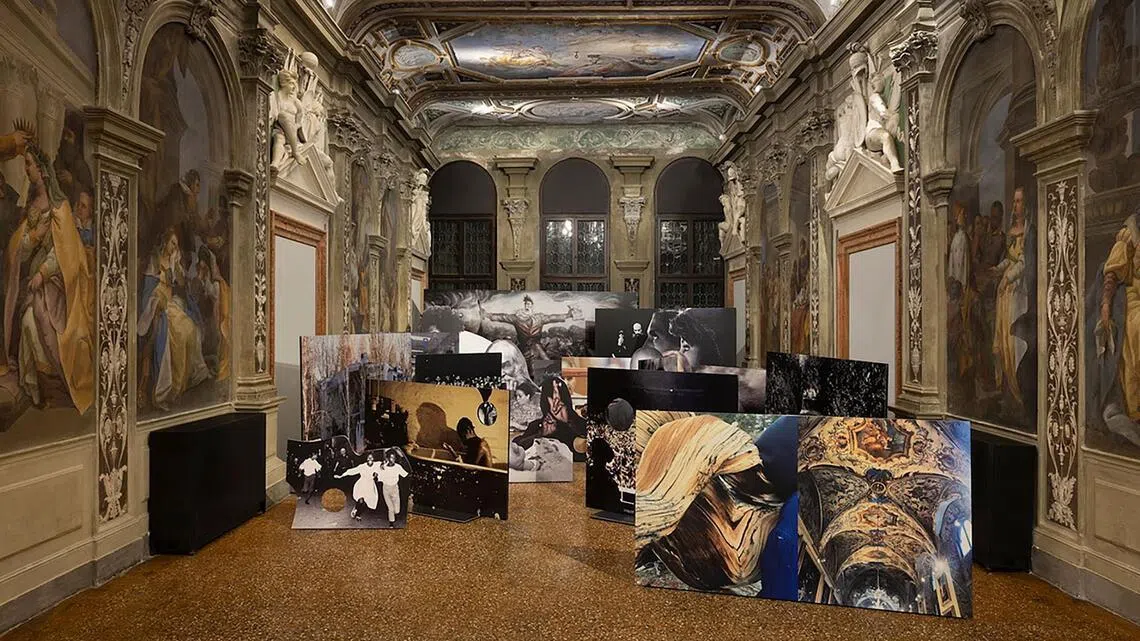
While Jafa often focuses on Black life and culture, Prince examines American mythology with focus on white masculinity and violence. The result is an unsettling exhibition about the images that shape America’s imagination – and the myths it cannot quite escape.
Decoding Asia newsletter: your guide to navigating Asia in a new global order. Sign up here to get Decoding Asia newsletter. Delivered to your inbox. Free.
Copyright SPH Media. All rights reserved.