Supersize me
Enjoy the best of a smartphone and tablet with 6-inch Android devices such as the Leagoo Shark 1 and the Oppo R9 Plus - and take a look at how these two biggies compare.
A giant with longer life
SO yet another China smartphone company is launching yet another Android phone to the market, but credit should go to Leagoo for doing something different.
Leagoo's phones are unique in that the company is trying to sell its products outside China, and do not want to be seen as simply flooding the market with products.
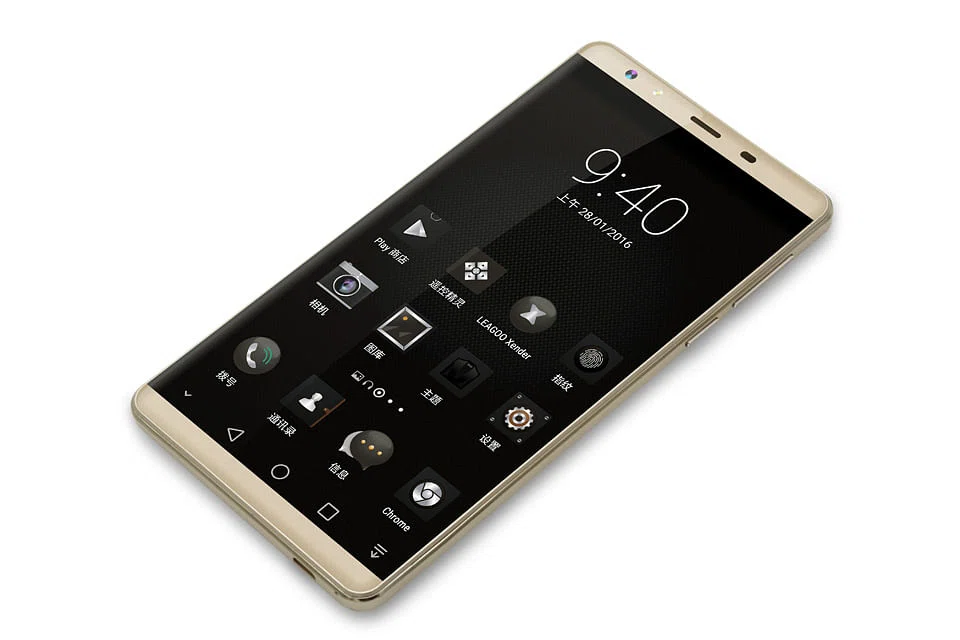
The Shark 1 is a 6-inch giant for those who still want a device with a massive display, and supporting it is an equally large 6,300 mAh battery.
That is more than twice that of the 3,020 mAh on the 5.7-inch Samsung Galaxy Note 5, and with it, there is finally a device that can remain operational after 24 hours of intensive use.
Leagoo could have easily left it at that, but it went a step further and implemented its own quick-charge feature on the device, such that a 30-minute charge can fill up around half an empty battery.
As battery technology goes, it is usually the second half of the battery that takes a whole lot longer to charge fully, but half of 6,300 mAh is still more than what some phones provide.
If you're worried about the size, the 158.6mm x 82.8mm x 8.5mm dimensions are not massive, and the thin bezel cuts down on the excess space between the screen and frame, allowing the phone to sit nicely across your front pocket or in a handbag.
More importantly, the phone costs a low S$399. A trade-off for this low price is that while the phone's frame and antennas are made of metal, the rear panel uses plastic.
The rose gold review set is beautiful, but the difference in colour between the metal and plastic bits is very obvious.
While most smartphones have moved on to offering 16MP cameras, the Shark 1 uses a slightly smaller 13MP one. But it does have a rear LED flash and a full HD display, as well as the new 2.5D raised screen, similar to what the current iPhone models have.
Compared with the 6-inch Oppo R9 Plus, the Shark 1 might seem clunky, but it is also more likely to last longer in your hands.
As a relatively young company established in 2014, Leagoo has done a decent job of applying its own user interface on the Android operating system, but it is unnecessary and there are issues it could have avoided if it had studied its competitors.
For some reason, China companies love the colour gold, so instead of a transparent app icon, the majority of the icons are encased in a gold box. Except that some use a black frame, while others adopt a white one. There doesn't seem to be an obvious reason for establishing this distinction, and it makes the app wall quite ugly.
The drop-down menu on the home screen has also been tweaked, so users need to pull it down twice, to get to options such as Wi-Fi, Bluetooth, Rotate and Location.
But the biggest bugbear is with the fingerprint sensor. While it's great that a low-cost device has a top-end feature, the implementation here is somewhat lacking.
For one thing, this phone is massive but Leagoo felt the need to place the rear sensor near the top of the device, just below the camera.
Given the way users cradle a phone with one hand, it would be a stretch to assume that they can easily use their forefinger to unlock a big device with just one hand, much less on a phone that has the sensor placed higher than normal.
The sensor should be lowered by 1cm, for the unlock gesture to feel natural.
SPECS
Leagoo Shark 1
Processor 1.3 GHz MediaTek 6753 (Octa core)
Display 6-inch IPS Full High Definition, 1,920 x 1,080, 368 PPI pixel density
Camera 13MP, f/2.0 with LED light, (Front) 5MP, f2.5 with 79-degree viewing angle
Operating System Android Lollipop 5.1 with Leagoo OS 1.2
Memory 16GB (expandable microSD up to 64GB), 3GB RAM
Battery 6,300 mAh
Price S$399
An elegant 'Selfie Expert'
THE Oppo name may not be as well-known as China's Xiaomi, but the China handset brand has been making its presence felt in the global market.
In April, Oppo made it to the Top Five list of global smartphone brands, moving 18.5 million units in the first quarter of the year, compared to just 7.3 million from the year before.
Locally, it is also one of the popular brands sold by telcos. The combination of premium materials, innovative features and borrowed design elements from the iconic iPhone has paid off, and it shows in the new R9 Plus.
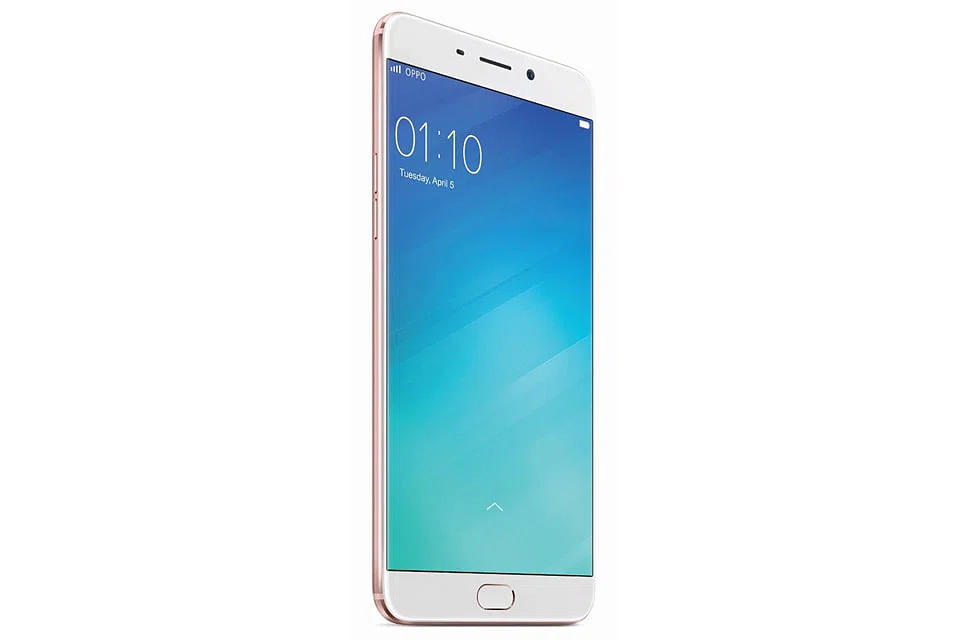
One cannot deny the close resemblance it has with the iPhone 6s Plus, from the curved edges, 2.5D elevated screen, rectangle-shaped buttons and use of a rose gold metal shell.
This 6-inch display offers a greater edge over its competitors, and it's great to see it packed in a slim frame, complete with curves in the rear panel.
Build-wise, the chamfered edges on the metal frame give it an elegance not found on the Leagoo Shark 1, and while it is taller than the 6-inch Shark 1, it is thinner and not as wide.
Where it beats many phones is its 16MP front camera, which matches the camera quality of the rear camera as well.
While it is not the first smartphone to offer such a feature, it is uncommon. The use of identical cameras puts to rest any fear that using the front camera lowers the overall quality of the images taken. Image quality is sharp on both cameras, although the rear camera has warmer colours and more details in each shot.
Oppo has dubbed this phone a "Selfie Expert", but because of its sheer size, it is not practical to use the phone with one hand, and users need both hands to snap a selfie.
On some brands, the rear fingerprint reader can double as the camera shutter, simply by tapping on it. But the R9 Plus is adopting Samsung's approach to biometrics, by having the oval-shaped Home button, located just below the screen, double as the fingerprint reader.
Thankfully, Oppo has done a great job in reducing the weight of the R9 Plus to a mere 185g, compared to the 241g of the Shark 1, making this giant screen much easier to carry around. Of course, the Shark 1 has a larger battery, which explains the weight gain.
While both 6-inch devices boast full high-definition screens, the one here has greater radiance, which brings out more vivid colour tones on images, and make videos look better.
That said, the base model here is almost twice the price of the Shark 1. Oppo phones are designed to match the looks of flagship phones from Apple, Samsung and LG, and are strategically priced to be below those devices.
The use of gesture controls in the updated ColourOS allows users to use a predetermined stroke to access a feature, such as drawing a V shape to turn on the flashlight, but not everything works.
Sliding three fingers downwards to grab a screenshot is simple, but doing more requires users to memorise more gestures, like mastering the special moves in a video game.
SPECS
Oppo R9 Plus
Processor Qualcomm Snapdragon 652 Octa core (Quad core 1.8 GHz and quad core 1.2 GHz)
Screen 6-inch Amoled Full High Definition, 1,080 x 1,920 pixels, 367 PPI pixel density
Camera (Rear) 16MP, f2.0, LED flash, (Front) 16MP, f2.0
Operating System Android 5.1 with ColourOS 3.0
Memory 64GB/128GB, 4GB RAM
Battery 4,120 mAh
Price S$769/S$849
Share with us your feedback on BT's products and services