
Superstar Gustavo Dudamel hasn't conducted much opera; but that's okay
Just named the Paris Opera's next music director, the 40-year-old Venezuelan conductor isn't the first maestro to make the jump to theatre
 Add BT as a preferred source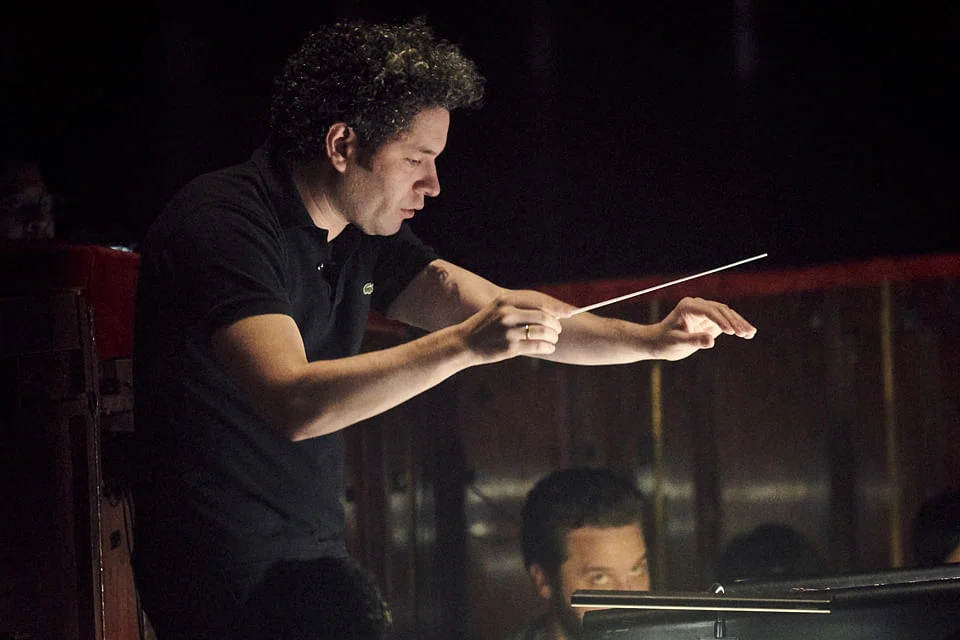
CONDUCTOR Gustavo Dudamel has accomplished so much in his blazing career that it's easy to forget he's only 40. The music world has wondered for a while what his future would hold beyond the Los Angeles Philharmonic, a hotbed of adventurousness where he has been the musical leader since 2009. Major orchestras around the world have pursued him. Anything seemed possible.
Still, the announcement last Friday that he will be the next music director of the Paris Opera was somewhat surprising. Snagging this superstar for a six-year appointment, which roughly overlaps with Dudamel's current contract in Los Angeles, is being touted as a coup for the 352-year-old company, which, like classical music institutions everywhere, is grappling with issues of relevance and diversity. Dudamel will bring dynamic musicianship and charisma to this influential post. Hopefully he will make the company a more welcoming home for new and recent operas.
Yet the elephant in the room is that he really isn't known for conducting opera. He has only appeared at the Paris Opera once, with La Bohème in 2017. It's true, he has led works at major houses in Milan, Vienna and Berlin, and in Los Angeles he has done standard and more offbeat repertory at both Walt Disney Concert Hall and the Hollywood Bowl. He made his Metropolitan Opera conducting debut in 2018 with Verdi's Otello, a performance that, if not revelatory, was seething and sensitive.
But almost all his renown has come from his exhilarating performances with symphony orchestras. Does lacking operatic experience matter in landing an important opera post?
The art of shaping a long lyrical line
Historically, European opera houses were the traditional training grounds for young conductors of all kinds. Before being entrusted with leading performances, aspiring conductors would start off coaching singers at the piano, rehearsing the chorus and assisting senior conductors. (This was the path taken by Dudamel's predecessor in Paris, Philippe Jordan, 46, who has moved to the Vienna State Opera.)
Navigate Asia in
a new global order
Get the insights delivered to your inbox.
Direct work with singers was, and remains, crucial. If all instrumentalists to some degree imitate the human voice, conductors in opera gain a special feeling for the art of shaping a long lyrical line: They learn to breathe with singers, to anticipate the melodic pace and flow of fine vocalists. Yet they must also guide, and almost rein in, those singers, lest their lines slacken with too much expression. This sensitivity develops with long practice. Opera also compels young conductors to hone their skills as musical traffic cops, coordinating singers and choristers (often spread far apart onstage) and the players in the pit.
The traditional path of learning the conducting profession through opera was exemplified by Gustav Mahler, who in his youth worked in opera houses in Prague, Leipzig and Hamburg, then rose to become the director of the Vienna State Opera and, briefly, a principal conductor at the Met. During this period, he also led major orchestras, including the New York Philharmonic from 1909 until his death in 1911. Even if he was best known for his visionary symphonies and never wrote an opera, Mahler did most of his conducting in opera houses.
Toscanini spent the first half of his long career immersed in opera, working tirelessly in Italian houses. By today's standards he would be considered a new-music specialist, since he led many premieres, including La Bohème in 1896, the year he conducted his first symphonic concert. In 1898 he became the principal conductor of the Teatro alla Scala in Milan, and left to take the chief position at the Met in 1908 before returning to La Scala. Then, in 1928, he became the music director of the New York Philharmonic, and never ran another opera house. In 1937 NBC created the NBC Symphony, an orchestra of top-rank players, for him, and its broadcasts gained a huge following (including for an influential series of opera performances).
For many opera fans, Leonard Bernstein was the one who got away. He clearly had a flair for drama, though early on he channelled that energy into his Broadway scores. Even during his college days, Bernstein was groomed for the podium by Dimitri Mitropoulos, an important mentor. And after Bernstein made his sensational, last-minute debut with the New York Philharmonic at 25, his destiny seemed set in the symphonic world.
Whipping up music drama in the concert hall
Now and then he worked in opera. His 1964 Met debut with Verdi's Falstaff was a scintillating performance, and in 1972 there he presented a boldly re-imagined, gravely compelling - some critics said ponderously slow - take on Carmen. In Vienna he had tremendous success with Der Rosenkavalier and Fidelio. But he mostly whipped up music drama in the concert hall leading major orchestras in symphonic works.
Many leading conductors have balanced work between opera houses and symphony orchestras, readily transferring techniques and styles between the two genres and repertories.
Georg Solti had storied tenures as music director at the Royal Opera in London and, for 22 momentous years, the Chicago Symphony Orchestra; Daniel Barenboim spent time at the helm of the Orchestre de Paris, the Chicago Symphony, La Scala and, since 1992, the Berlin State Opera. Riccardo Muti, formerly a driving force at La Scala, also served as music director of the Philadelphia Orchestra and continues to thrive now at the Chicago Symphony. Yannick Nézet-Séguin, the Met's current music director, is also director of the Philadelphia Orchestra; he worked at the Opéra de Montréal early in his career.
Dudamel is not the only conductor to win a major post in opera without extensive experience in the field. After 29 seasons leading the Boston Symphony Orchestra, Seiji Ozawa became the principal conductor at the Vienna State Opera in 2002. He had some significant opera credits, including leading the premiere of Messiaen's Saint François d'Assise at the Paris Opera in 1983, but was hardly famed for his theatrical work. Even James Levine, who was among the major conductors of our time most closely associated with opera, was not broadly experienced in the repertory - and hadn't come up through an opera company's ranks - when he rose quickly at the Met in the 1970s.
As Bernstein did, Dudamel instinctively conveys the drama of everything he conducts. In works like John Adams' teeming opera-oratorio The Gospel According to the Other Mary, he has demonstrated skill at handling sprawling vocal, choral and instrumental forces and bringing shape to a long, teeming score.
But does he have a feeling for, say, classic Verdian style? Can he coax an orchestra to support a singer in a deceptively simple aria with a bare oompah accompaniment?
He may well end up displaying a gift for all of this. And, even if not, the Paris Opera can bring in more experienced hands to handle such works while Dudamel focuses on his strengths. He can be a charismatic face for the company's outreach to new audiences while advancing a compelling, contemporary artistic vision.
Plus, let's not forget that he's a terrifically exciting conductor. And a good relationship between a maestro and a company can transcend a non-traditional path to the podium. During his 2017 Bohème in Paris, Dudamel recalled recently, he felt an immediate connection to the house.
"I was here one month and a half," he said, "and I was feeling like I was at home." That's the most promising sign there could be. NYTIMES
Decoding Asia newsletter: your guide to navigating Asia in a new global order. Sign up here to get Decoding Asia newsletter. Delivered to your inbox. Free.
Share with us your feedback on BT's products and services

