

Surprise ending for publishers: In 2020, business was good
 Add BT as a preferred source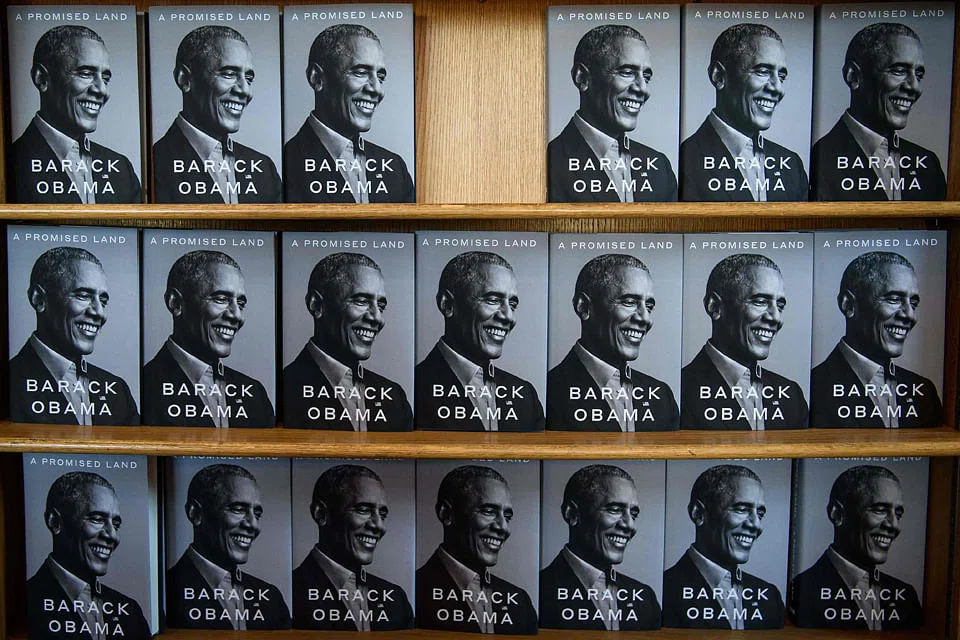
New York
LIKE everybody else, book publishers will be happy to see the end of 2020. But for many of them, the year has brought some positive news, which has been as welcome as it was surprising: Business has been good.
With so many people stuck at home and activities from concerts to movies off-limits, people have been reading a lot - or at least buying a lot of books. Print sales by units are up almost 8 per cent so far this year, according to NPD BookScan. E-books and audiobooks, which make up a smaller portion of the market, are up as well.
"I expect that at the end of the year, when you look at the final numbers," Madeline McIntosh, chief executive of Penguin Random House US, said of the industry, "it will have been the best year in a very long time."
When the United States slammed shut in March, book sales dropped sharply, but the dip did not last. While some parts of the industry such as bookstores and educational publishers have continued to struggle, demand came rushing back around June, publishing executives said.
Many of these sales went to Amazon, but big-box stores, especially Target, also did well. As essential businesses that sold things like groceries, they were allowed to stay open through the lockdowns. Dennis Abboud, chief executive of ReaderLink, a book distributor to major chains including Walmart, Target and Costco, said his company's online sales nearly quadrupled over last year.
Navigate Asia in
a new global order
Get the insights delivered to your inbox.
"It was really a tale of two cities," he said. "The beginning of the year was megasoft, and the end of the year was megastrong."
Even though the number of people commuting has plummeted this year, audiobook revenue is up more than 17 per cent over the same period in 2019, according to the Association of American Publishers, and e-book sales, which had been declining for the past several years, are up more than 16 per cent.
There have been a few particularly powerful themes in bookselling this year. The Black Lives Matter protests following the killing of George Floyd at the end of May caused a rush on books about race and anti-racism. Bookstores had trouble keeping titles in stock like How to Be an Antiracist by Ibram X Kendi, and So You Want to Talk About Race by Ijeoma Oluo.
Political books, especially about President Donald Trump, have also performed well. That was a particular boon for Simon & Schuster, which published some of the biggest presidential tell-alls of the year, including Mary L Trump's Too Much and Never Enough, which sold more than 1.35 million copies in its first week. Former president Barack Obama's memoir, A Promised Land, published by Crown, an imprint of Penguin Random House, has sold more than 3.3 million copies in North America since it was published last month, and it has also been a bestseller in Germany, France, Brazil and Sweden.
But the strength in the general interest publishing market has gone beyond a few titles and categories. New books, which in industry-speak are called the frontlist, have sold well, but so have older titles.
"There have been frontlist successes like A Promised Land or Untamed, absolutely," Ms McIntosh said of Mr Obama's book and a memoir by Glennon Doyle. "But things like The Very Hungry Caterpillar have sold more copies than we have in the past. It's just this remarkable lift of the whole market." But parts of the book world have struggled. With many churches and other houses of worship closed, the sale of religious books has dropped, according to NPD BookScan, and the travel category has tanked by more than 40 per cent in print. (Young adult fiction, on the other hand, and books on home and gardening are up more than 20 per cent.) Publishers with big educational divisions have also had a more difficult road than general interest publishers. Houghton Mifflin Harcourt, for example, announced in October that it was cutting 22 per cent of its workforce.
Independent bookstores have had an extraordinarily difficult year. Many were closed to foot traffic for months, and scrambled to turn their stores into fulfilment centres for online orders, something they were never built to do on a significant scale. Some stores reported to the American Booksellers Association earlier this year that their sales were down at least 40 per cent. But Allison Hill, the trade organisation's chief executive, said the last few weeks have been encouraging.
"The stakes were very high going into the holiday season," she said. "We won't really know where everybody stands until the holiday season is completely finished."
Barnes & Noble has also struggled in some areas. James Daunt, its chief executive, describes the performance of its New York City stores as "frankly, a total disaster". But overall, he said, things have not been as dire as expected, and - in part because of job cuts and other cost-cutting measures - he expects this year to be more profitable than last.
Nearly 5,000 employees who had worked fewer than six months with the company, most of them part time, were laid off this year. More than 100 people in the central office were also let go.
The company's stores outside cities are now performing well, and its online business got a boost when, early in the pandemic, Amazon deprioritised books and other items so it could focus on medical supplies and household staples. NYTIMES
Decoding Asia newsletter: your guide to navigating Asia in a new global order. Sign up here to get Decoding Asia newsletter. Delivered to your inbox. Free.
Share with us your feedback on BT's products and services
TRENDING NOW

Middle East-linked energy supply shocks put Asean Power Grid back in focus

Malaysia’s 8th richest man Jeffrey Cheah wants Sunway business to last 10 generations
Wing Tai, Metro outbid 5 others for Dunearn Road site with bullish S$1,625 psf ppr bid at just under S$533 million
How China’s young workers are securing their future even as AI disrupts job market, triggers pay cuts

