

Tales From Long Ago
 Add BT as a preferred source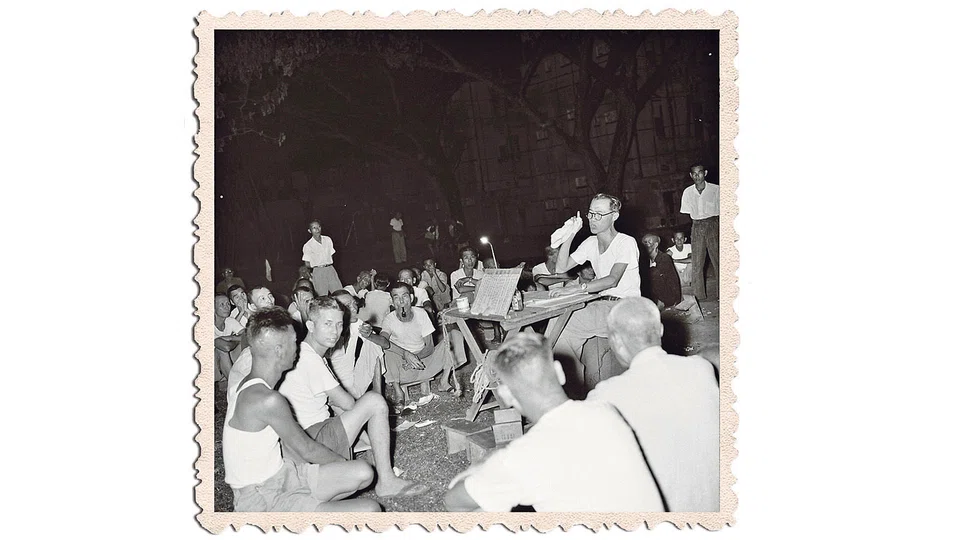
DeeperDive is a beta AI feature. Refer to full articles for the facts.
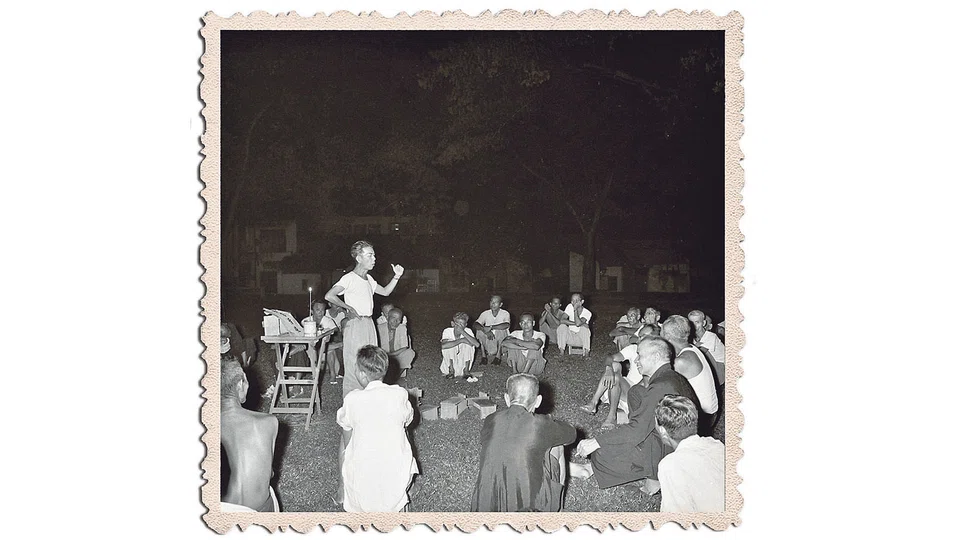
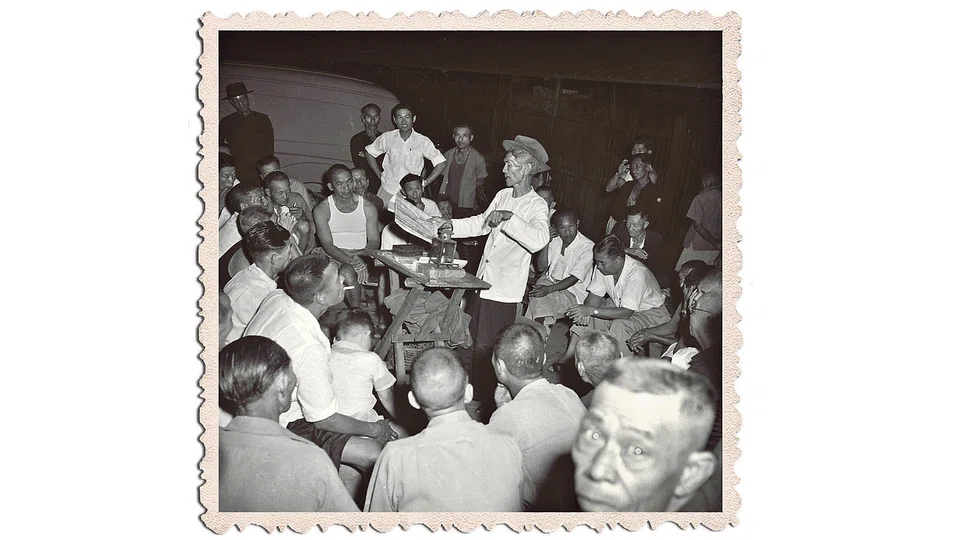
IF YOU TIME-TRAVEL to anytime to Singapore between the colonial era and the 1960s, you may spy a Chinese street storyteller. He would be in his 50s or 60s, with a bright, agile voice, like a songbird. It would be projected in Chinese dialect to crowds for several hours. He would engage his predominantly male, illiterate, and working class audience with everything from Chinese myths and historical fiction to martial arts novels and news reports.
The storyteller sets his stage in the evening - sweeping the floor, spraying water into the air to beat the heat, and spreading mats or stools. After people gather, he would light a single incense stick to keep track of the time. The stick takes about 20 minutes to burn off, after which he would collect money from everyone seated. In the 1960s, it was 5 cents per person, although those who were standing didn't have to pay and could listen to as many sessions as they desired.
Eventually, Chinese street storytellers waned in numbers with the rise of radio broadcasting. Some of them moved on to work on radio stations instead, although once the Speak Mandarin campaign took hold, story-telling in dialects eventually faded into oblivion.
Copyright SPH Media. All rights reserved.
TRENDING NOW
‘Boring’ is the new black: The stars are aligning for a Singapore stock market revival
Near sell-out launches in March boost developer sales to 1,300 units after four slow months

China pips the US if Asean is forced to choose, but analysts warn against reading it like a sports result

Genting Singapore’s Lim Kok Thay receives S$7.5 million pay package for FY2025

