

Thai chef heads home for a challenge
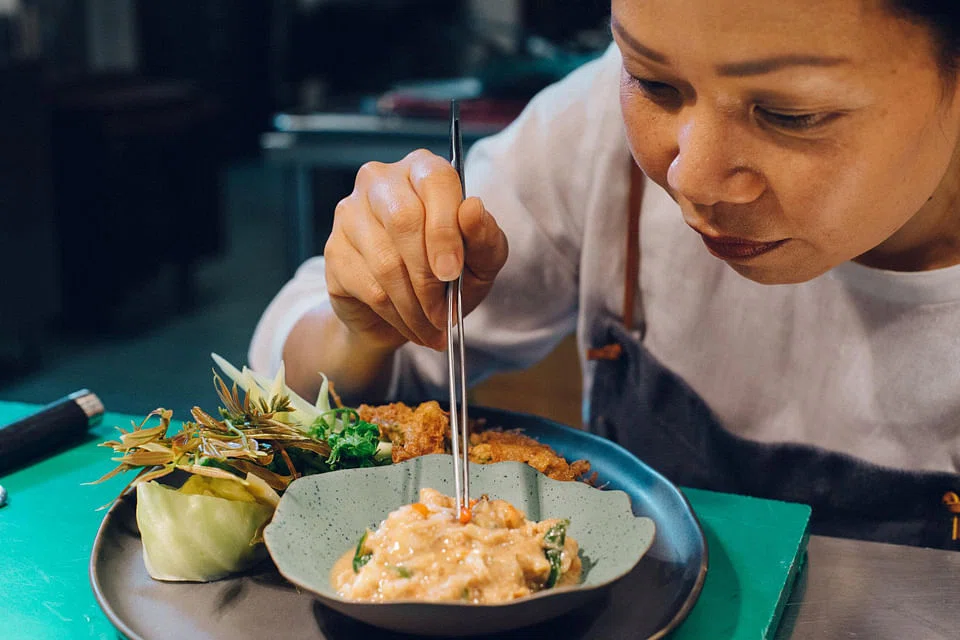
Michelin-starred chef Pim Techamuanvivit has taken her talent from San Francisco to Bangkok to head Nahm, which also has a Michelin star
Bangkok
IT was close to 2 am, and Pim Techamuanvivit could not sleep. So, like a tenacious detective, she taped huge sheets of white paper to her hotel room wall and covered them in colour-coded sticky notes, charting out her clues.
The case at hand: Devising a new menu for Nahm, the internationally acclaimed Thai fine-dining restaurant.
She shuffled dish names into clusters, aiming for a variety of flavours and techniques, imagining the pace at which family-style plates would be set on the table, then cleared. She moved the notes around, again and again, writing new ones in a mixture of Thai and English.
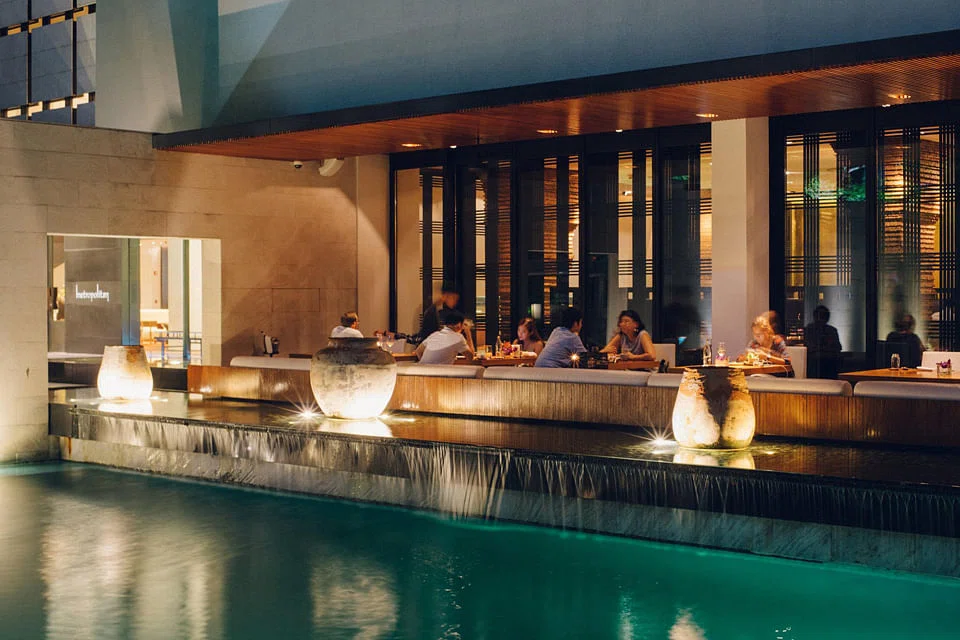
Ms Pim lives in San Francisco and opened her first restaurant, Kin Khao, at the edge of the Tenderloin district in 2014. She was recently tapped to lead Nahm by the Singaporean business mogul Christina Ong, and for more than a month she has been living in this suite, 11 stories above the restaurant in the Metropolitan Hotel, in the Sathorn district of Bangkok.
For Ms Pim, the high-profile job is both a chance and a challenge to express her precise vision of Thai fine dining on a world stage - the kind of opportunity that is rarely presented to Thai chefs.

Nahm was opened in Bangkok in 2010 and run until now by Australian chef David Thompson, who gathered and translated traditional recipes belonging to Thai families, and served his versions of them. Under his tenure, the restaurant landed on the World's 50 Best Restaurants list, and won a Michelin star, making it a destination for diners from outside Thailand.
When a customer told Ms Pim how nice it was to see Thai food back in the hands of Thai women, she was startled. Even though white chefs were more visible in the press, celebrated with top jobs and awards, Thai women had been cooking all along. "Thai cuisine has always been in the hands of Thai women," she said. "It never, ever left us."
Traditionally, culinary expertise in Thailand has been passed down from one generation to the next, earned through access to family recipes and through practice, said Thai cookbook author Leela Punyaratabandhu. "There is no standardised, formal culinary education when it comes to Thai cuisine," she said.
Ms Pim, 47, was born and raised in Bangkok. She learned to cook while in her 20s, from her mother's two elder sisters, who had learned from her grandmother. She studied more techniques and dishes with relatives and friends.
Even with that essential family tutelage and a Michelin star of her own, Ms Pim worried before starting the job in Bangkok that she would be perceived as an interloper. In Thailand, she is not as well known as she is in the United States. The bar is high, and the restaurant competition is fierce.
As Ms Leela explained it, "like anyone selling refined Thai food in Bangkok at a high price point, to bring in a Thai audience, she will have to prove that Nahm is performing at a certain level",
But she also noted that Ms Pim had a distinct advantage, as a Thai chef who lives and breathes Thai cuisine, who would be making reference to dishes from her family's recipe vault.
Any doubts that Ms Pim had about the new job passed quickly. She reminded herself that her grandmother's cooking was not only the foundation of her approach, but that it charged her work with a sense of purpose.
"I don't own this, but I inherited this," she said of Thai cuisine. "Now I'm here to keep it going."
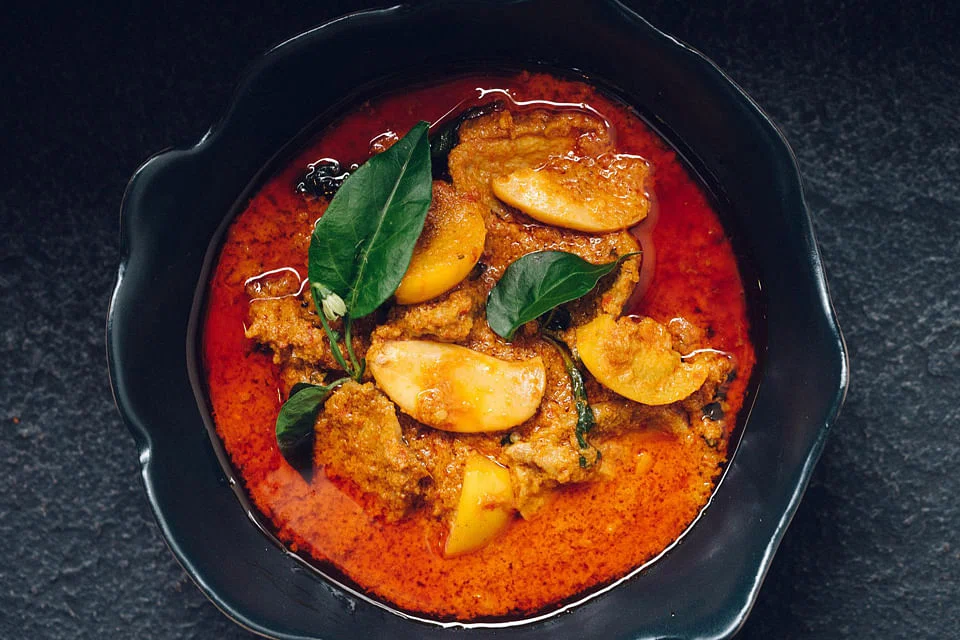
In less than a month, she has introduced many new dishes to the menu, including young, green rice folded with curry paste and banana blossom petals and cooked inside a banana leaf, which she based on a recipe that dates back to the 17th century.
She has instructed Nahm's 30 cooks how to calibrate their flavours exactly to her taste, and restructured the flow of service to include more courses. She has purchased a PacoJet, to freeze seasonal fruits and purée them as needed into smooth, airy sorbets.
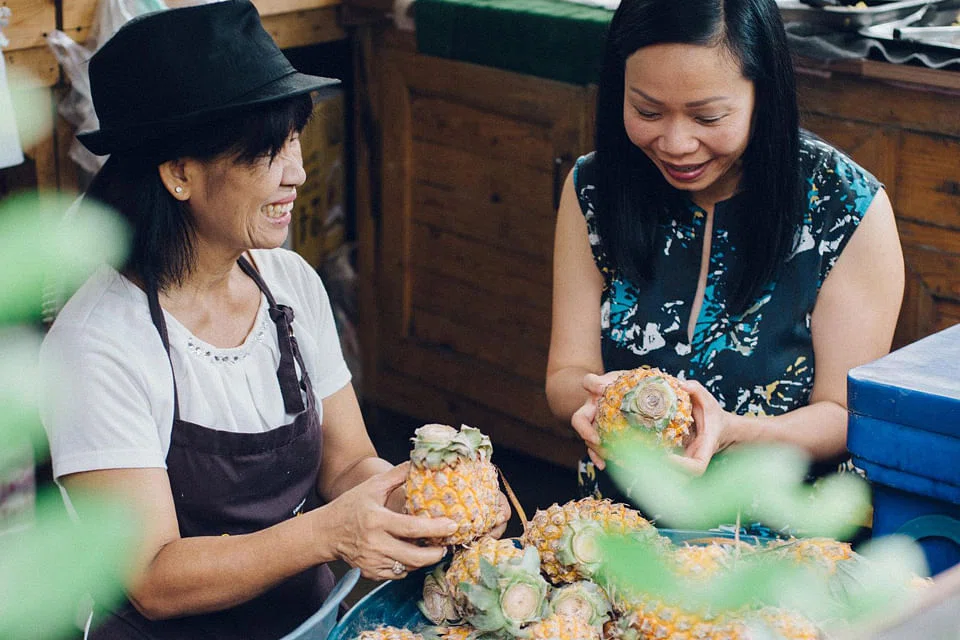
On visits to farms and markets, she has connected with small growers and tracked down new ingredients to refit Nahm's pantry: heirloom rice, rare citrus, bitter leaves, handmade palm sugars, small-batch fish sauce.
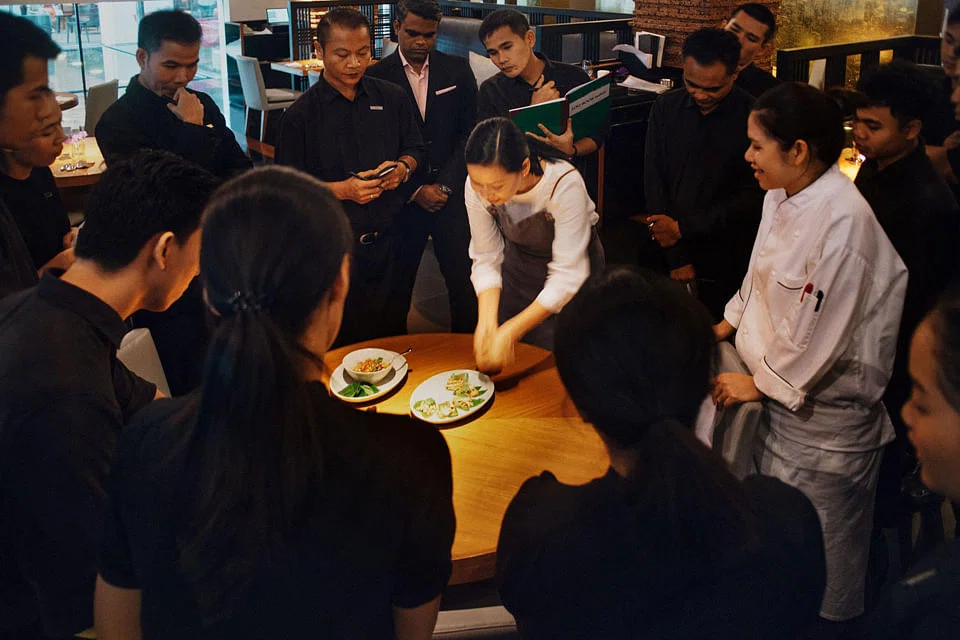
In her hotel suite, she showed the jumble of handwritten sticky notes to Suraja Ruangnukulkit, the chef de cuisine at Nahm, and Meghan Clark, the chef de cuisine of Kin Khao, who had come to Bangkok to help with the transition.
"This is how my brain works," she said as the chefs opened their notebooks and studied the chart that she had compiled in the middle of the night.
Shoes off, still in their whites from lunch service, the three women rehydrated with cold water from steel cups, and ate handfuls of sweet, airy meat floss and tiny pork-stuffed pastries from crinkly plastic bags. Together, they analysed the menu out loud.
"Do we want people to have a choice right here? Or do we want to choose for them?" "How quickly can we train everyone to change this around?" "OK, when is the curry-paste machine getting here?" Nahm used to buy its curry pastes from Aylmer Aaharn, the food company founded by Mr Thompson, the previous chef. But as part of her overhaul, Ms Pim wanted to make all the pastes from scratch.
The machine arrived at the end of the week, ready to grind piles of aromatics between two powerful, spinning stones. Though it would make the process more efficient, it still required an investment of time and attention to detail.
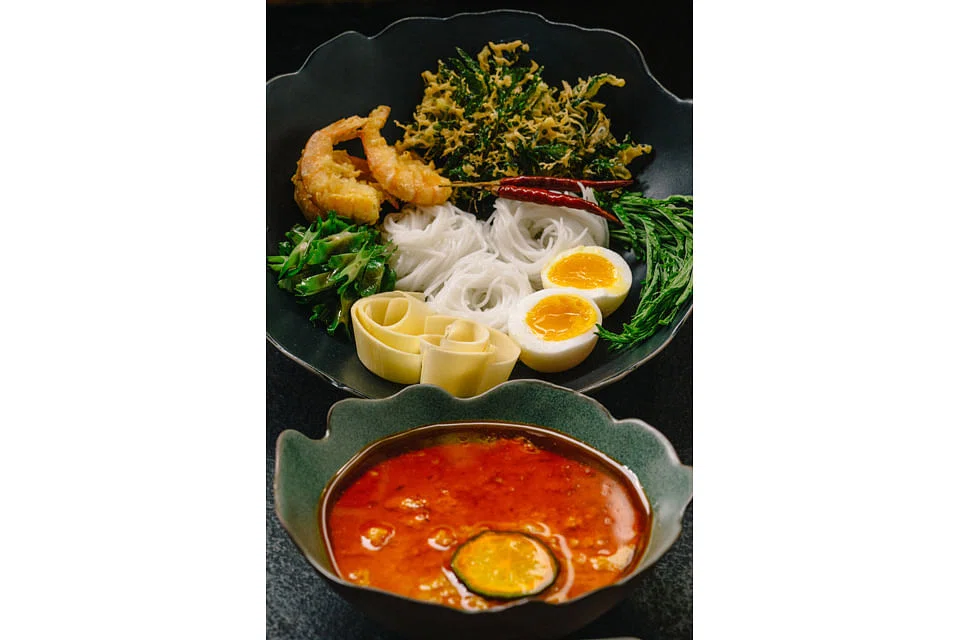
Ms Pim vividly remembers the most intricate Thai dishes from her childhood, when her extended family would gather for Sunday lunch and eat kanom jeen nam prik, lightly fermented rice noodles in a rich, gently sweet coconut sauce heightened with makrut lime and shrimp, surrounded by a bank of blanched and delicately fried vegetables, and a boiled egg with a soft, satiny yolk. It was not everyday fare.
"Elaborate dishes, like kanom jeen nam prik, that's not something you make for just two or four people," she said.
Back then, like many Thai families, her extended family lived together on the same compound. Their Sunday meals were special occasions marked by extraordinary, labour-intensive home cooking.
Now, spread out in different homes all over the city, the family is more likely to meet at a restaurant for dim sum - though her family's version of kanom jeen nam prik is already on the new menu at Nahm.
Ms Pim often talks about her brain trust of women in food: the cooks and managers who stepped up when she needed to recover and take care of herself. The family, friends and strangers who shared their food knowledge with her.
One source, Nantana Chitman, came to visit Nahm on a recent Friday, bringing along the cast-iron tools required to make traditional rice crackers.
"When Westerners make coconut milk or peel peanuts, it sounds so exciting to everyone, but that's what we normally do, and that's what our grandmothers did," Ms Nantana said. "What's the big deal?"
"It's hard for me to explain, but I'd really like to see a Thai chef making a good name for Thai food," she added. NYTIMES
Share with us your feedback on BT's products and services
TRENDING NOW

Nvidia reinstates Jensen Huang as CEO; Trump says move poses no national security risk

Indonesia’s coal tycoon Low Tuck Kwong replaced as Bayan Resources president-director

Nvidia surges 33% after reinstating Jensen Huang, reviving AI trade; stocks soar in US and Europe

Consider lowering homeownership barriers for some non-resident foreigners

